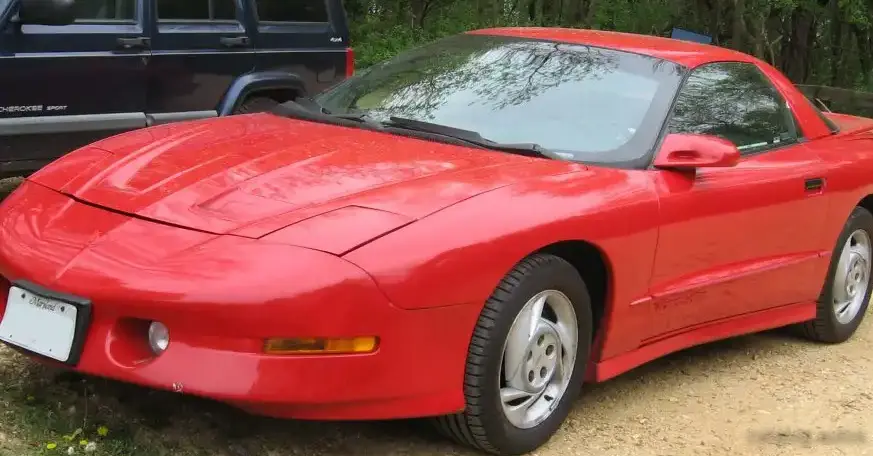
The Pontiac Firebird IV 3.4i V6 Automatic, produced between November 1992 and 1995, represented a key iteration of the fourth-generation Firebird (1993-2002). Positioned as a mid-range offering within the Firebird lineup, it aimed to provide a balance between performance and affordability. This variant utilized the 3.4-liter V6 engine paired with a four-speed automatic transmission, catering to buyers seeking a comfortable and accessible sports coupe experience. It was built on the F-body platform, shared with the Chevrolet Camaro, and played a role in Pontiac’s continued effort to maintain a presence in the American pony car market.
Technical Specifications
| Brand | Pontiac |
| Model | Firebird |
| Generation | Firebird IV |
| Type (Engine) | 3.4i V6 (148 Hp) Automatic |
| Start of production | November, 1992 |
| End of production | 1995 |
| Powertrain Architecture | Internal Combustion engine |
| Body type | Coupe |
| Seats | 4 |
| Doors | 3 |
| Fuel consumption (combined) | 8.8 l/100 km (26.7 US mpg, 32.1 UK mpg, 11.4 km/l) |
| Fuel Type | Petrol (Gasoline) |
| Maximum speed | 207 km/h (128.62 mph) |
| Weight-to-power ratio | 10.3 kg/Hp, 96.9 Hp/tonne |
| Weight-to-torque ratio | 5.9 kg/Nm, 168.2 Nm/tonne |
| Power | 148 Hp @ 4600 rpm |
| Power per litre | 44.1 Hp/l |
| Torque | 257 Nm @ 3150 rpm (189.55 lb.-ft. @ 3150 rpm) |
| Engine layout | Front, Longitudinal |
| Engine Model/Code | L32 |
| Engine displacement | 3353 cm3 (204.61 cu. in.) |
| Number of cylinders | 6 |
| Engine configuration | V-engine |
| Cylinder Bore | 92 mm (3.62 in.) |
| Piston Stroke | 84 mm (3.31 in.) |
| Compression ratio | 9:1 |
| Number of valves per cylinder | 2 |
| Fuel injection system | Multi-port manifold injection |
| Engine aspiration | Naturally aspirated engine |
| Engine oil capacity | 4.7 l (4.97 US qt | 4.14 UK qt) |
| Coolant | 11.8 l (12.47 US qt | 10.38 UK qt) |
| Kerb Weight | 1528 kg (3368.66 lbs.) |
| Max. weight | 2000 kg (4409.25 lbs.) |
| Max load | 472 kg (1040.58 lbs.) |
| Trunk (boot) space – minimum | 366 l (12.93 cu. ft.) |
| Fuel tank capacity | 59 l (15.59 US gal | 12.98 UK gal) |
| Length | 4964 mm (195.43 in.) |
| Width | 1892 mm (74.49 in.) |
| Height | 1300 mm (51.18 in.) |
| Wheelbase | 2566 mm (101.02 in.) |
| Front track | 1542 mm (60.71 in.) |
| Rear (Back) track | 1539 mm (60.59 in.) |
| Drivetrain Architecture | Rear wheel drive |
| Number of gears and type of gearbox | 4 gears, automatic transmission |
| Front suspension | Double wishbone |
| Rear suspension | Coil spring |
| Front brakes | Ventilated discs |
| Rear brakes | Disc |
| Assisting systems | ABS (Anti-lock braking system) |
| Steering type | Steering rack and pinion |
| Power steering | Hydraulic Steering |
| Tires size | 215/60 R16 V |
| Wheel rims size | 16 |
Powertrain & Engine Architecture
The heart of the Firebird IV 3.4i was the 3.4-liter (3353 cc) L32 V6 engine. This engine, part of the GM 60-degree V6 family, featured a cast iron block and aluminum cylinder heads. It utilized a multi-port fuel injection system, delivering fuel directly to each cylinder for improved efficiency and responsiveness. The engine produced 148 horsepower at 4600 rpm and 257 Nm (189.55 lb-ft) of torque at 3150 rpm. The 9:1 compression ratio was a compromise between performance and the ability to run on readily available gasoline. The engine’s valvetrain employed two valves per cylinder, a relatively simple design contributing to its reliability. The four-speed automatic transmission (likely a 4L60E) was chosen for its ease of use and suitability for everyday driving. This transmission featured electronic control for smoother shifting and improved fuel economy.
Driving Characteristics
The 3.4i V6 Automatic Firebird offered a comfortable and relatively relaxed driving experience. While not as quick as the V8-powered models, it provided adequate acceleration for most driving situations. The automatic transmission, while convenient, did result in some power loss compared to the available five-speed manual. Gear ratios were tuned for fuel efficiency and smooth cruising, rather than outright performance. The 0-60 mph time was estimated to be around 8.5-9.5 seconds, placing it firmly in the realm of a comfortable cruiser rather than a performance machine. The rear-wheel-drive layout provided a balanced feel, but the relatively modest power output meant that it wasn’t prone to excessive oversteer.
Equipment & Trim Levels
The 3.4i V6 Automatic typically came standard with features such as air conditioning, power windows and locks, and an AM/FM stereo. Interior upholstery was generally cloth, although leather options were available. The dashboard layout was typical of early 1990s GM vehicles, featuring analog gauges and a straightforward control layout. Optional extras included a premium sound system, cruise control, and a sunroof. The Firebird IV offered various trim packages that could add features like upgraded wheels, body-colored side moldings, and a rear spoiler. This specific variant was often seen as the entry-level or mid-range trim, appealing to buyers who prioritized affordability and comfort over outright performance.
Chassis & Braking
The Firebird IV utilized a double wishbone suspension in the front and a coil spring suspension in the rear. This setup provided a reasonable balance between ride comfort and handling. The 3.4i V6 models typically featured ventilated disc brakes in the front and solid disc brakes in the rear. Anti-lock braking system (ABS) was standard, enhancing safety by preventing wheel lockup during hard braking. Stabilizer bars were included at both the front and rear, helping to reduce body roll during cornering. The chassis was designed to be relatively lightweight, contributing to the car’s overall agility.
Market Reception & Comparison
The Firebird IV 3.4i V6 Automatic received mixed reviews. Critics generally praised its comfortable ride and user-friendly automatic transmission, but noted that its performance was underwhelming compared to the V8-powered models. Fuel economy was considered reasonable for a sports coupe of its era, averaging around 26.7 US mpg. Compared to the Firebird’s V6 manual counterpart, the automatic version offered less engaging driving experience but greater convenience. Against the V8 models, it provided a more affordable entry point into the Firebird lineup, but at the cost of significant performance. The Camaro, sharing the same platform and powertrain options, was often seen as a direct competitor, with buyers often choosing based on styling preferences.
Legacy
The L32 3.4L V6 engine, when paired with the 4L60E automatic transmission, proved to be a relatively reliable powertrain. While not known for exceptional longevity, it generally held up well with regular maintenance. Today, the Firebird IV 3.4i V6 Automatic is a relatively affordable classic car, appealing to enthusiasts seeking a nostalgic driving experience. Parts availability is generally good, thanks to the widespread use of GM components. However, like all vehicles of this era, it’s important to inspect for rust and ensure that all maintenance has been kept up to date. The 3.4i V6 Automatic represents a significant part of Pontiac’s history, offering a glimpse into the American sports coupe market of the early 1990s.