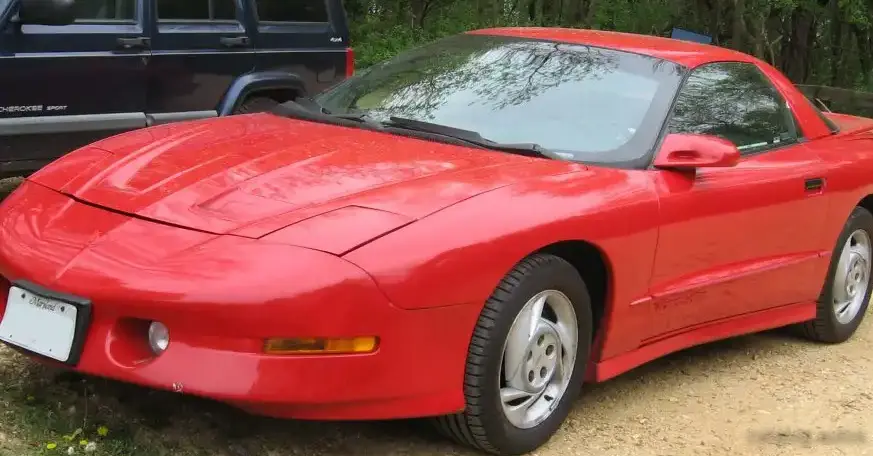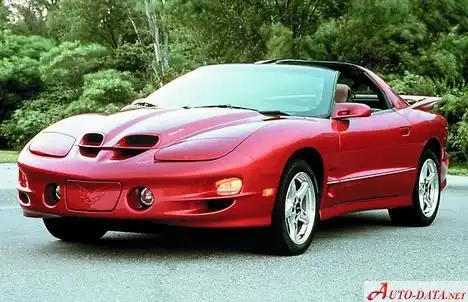
The Pontiac Firebird IV Cabrio 3.4i V6, produced for the 1995 model year, represented a continuation of the fourth-generation Firebird line. Positioned as a more accessible entry point into the Firebird range, this variant combined the 3.4-liter V6 engine with a four-speed automatic transmission, offering a blend of style and comfortable cruising. It was part of the broader Firebird redesign initiated in 1993 (the 1993-1997 model years being the fourth generation), aiming to modernize the iconic pony car for a new era. The Cabriolet body style, offering open-air driving, added to the Firebird’s appeal, particularly in warmer climates.
Technical Specifications
| Brand | Pontiac |
| Model | Firebird |
| Generation | Firebird IV Cabrio |
| Type (Engine) | 3.4i V6 (148 Hp) Automatic |
| Start of production | 1995 |
| End of production | 1995 |
| Powertrain Architecture | Internal Combustion engine |
| Body type | Cabriolet |
| Seats | 2 |
| Doors | 2 |
| Fuel consumption (combined) | 8.8 l/100 km (26.7 US mpg, 32.1 UK mpg, 11.4 km/l) |
| Fuel Type | Petrol (Gasoline) |
| Maximum speed | 207 km/h (128.62 mph) |
| Weight-to-power ratio | 10.3 kg/Hp, 96.9 Hp/tonne |
| Weight-to-torque ratio | 5.9 kg/Nm, 168.2 Nm/tonne |
| Power | 148 Hp @ 4600 rpm |
| Power per litre | 44.1 Hp/l |
| Torque | 257 Nm @ 3150 rpm (189.55 lb.-ft. @ 3150 rpm) |
| Engine layout | Front, Longitudinal |
| Engine Model/Code | L32 |
| Engine displacement | 3353 cm3 (204.61 cu. in.) |
| Number of cylinders | 6 |
| Engine configuration | V-engine |
| Cylinder Bore | 92 mm (3.62 in.) |
| Piston Stroke | 84 mm (3.31 in.) |
| Compression ratio | 9:1 |
| Number of valves per cylinder | 2 |
| Fuel injection system | Multi-port manifold injection |
| Engine aspiration | Naturally aspirated engine |
| Engine oil capacity | 3.8 l (4.02 US qt | 3.34 UK qt) |
| Coolant | 11.6 l (12.26 US qt | 10.21 UK qt) |
| Kerb Weight | 1528 kg (3368.66 lbs.) |
| Max. weight | 2000 kg (4409.25 lbs.) |
| Max load | 472 kg (1040.58 lbs.) |
| Trunk (boot) space – minimum | 365 l (12.89 cu. ft.) |
| Fuel tank capacity | 59 l (15.59 US gal | 12.98 UK gal) |
| Length | 4968 mm (195.59 in.) |
| Width | 1893 mm (74.53 in.) |
| Height | 1321 mm (52.01 in.) |
| Wheelbase | 2566 mm (101.02 in.) |
| Front track | 1542 mm (60.71 in.) |
| Rear (Back) track | 1540 mm (60.63 in.) |
| Drivetrain Architecture | Rear wheel drive |
| Number of gears and type of gearbox | 4 gears, automatic transmission |
| Front suspension | Spring Strut |
| Rear suspension | Coil spring |
| Front brakes | Ventilated discs |
| Rear brakes | Disc |
| Assisting systems | ABS (Anti-lock braking system) |
| Steering type | Steering rack and pinion |
| Power steering | Hydraulic Steering |
| Tires size | 215/60 R16 V |
| Wheel rims size | 16 |
Powertrain & Engine Architecture
The heart of the Firebird IV Cabrio 3.4i was the 3.4-liter (3353 cc) L32 V6 engine. This engine, part of GM’s 60-degree V6 family, featured a cast iron block with aluminum cylinder heads. It utilized a multi-port fuel injection system, delivering fuel directly to each cylinder for improved efficiency and performance. The engine produced 148 horsepower at 4600 rpm and 257 Nm (189.55 lb-ft) of torque at 3150 rpm. The 9:1 compression ratio was a compromise between performance and the ability to run on readily available gasoline. The engine’s valvetrain employed two valves per cylinder, operated by a single overhead camshaft. Paired with this engine was a four-speed automatic transmission, a 4L60-E unit, chosen for its smooth operation and ease of use. This transmission was a common choice for GM vehicles of the era, known for its reliability.
Driving Characteristics
The 3.4L V6 and automatic transmission combination delivered a comfortable, rather than sporty, driving experience. Acceleration was adequate for everyday driving, but noticeably slower than the higher-performance Firebird models equipped with the V8 engines. The automatic transmission, while smooth, lacked the responsiveness of a manual gearbox. Gear ratios were optimized for fuel economy and cruising, resulting in a relaxed driving style. The weight of the Firebird, approximately 1528 kg (3368.66 lbs), further contributed to the less-than-dynamic performance. Compared to the Firebird with the 5.7L V8, the 3.4L felt significantly less powerful, especially during overtaking maneuvers. However, the automatic transmission made it a more accessible option for drivers who preferred convenience over outright performance.
Equipment & Trim Levels
The Firebird IV Cabrio 3.4i typically came standard with features like air conditioning, power windows and locks, and a basic sound system. The interior featured cloth upholstery, and the dashboard layout was functional but not luxurious. Optional extras included leather upholstery, upgraded sound systems (often with a CD player), and a power driver’s seat. The Cabriolet models also featured a power-operated convertible top. The trim level was generally considered the base model for the Firebird range, offering a more affordable entry point into the Firebird lineup.
Chassis & Braking
The Firebird IV Cabrio utilized a front strut and rear coil spring suspension system. The suspension was tuned for a balance between ride comfort and handling. Front brakes were ventilated discs, providing adequate stopping power, while rear brakes were solid discs. An Anti-lock Braking System (ABS) was standard, enhancing safety. The chassis was a unibody construction, providing a reasonable level of rigidity for a convertible. Stabilizer bars were present at both the front and rear, helping to reduce body roll during cornering. The tires were typically 215/60 R16 V rated, offering a good compromise between grip and ride quality.
Market Reception & Comparison
The Firebird IV Cabrio 3.4i was generally viewed as a stylish and affordable convertible. Critics acknowledged its comfortable ride and ease of use, but often noted its lack of performance compared to the V8-powered models. Fuel economy was a strong point, averaging around 8.8 l/100 km (26.7 US mpg). Compared to the Firebird with the 5.7L V8, the 3.4L offered significantly lower running costs but a less engaging driving experience. The 3.4L was also more reliable than the V8, requiring less frequent maintenance. It appealed to buyers who prioritized style, comfort, and affordability over outright performance.
Legacy
The L32 3.4L V6 engine, when paired with the 4L60-E automatic transmission, proved to be a relatively reliable powertrain. While not known for its longevity in high-performance applications, it generally held up well in the Firebird, provided regular maintenance was performed. Today, the 1995 Firebird IV Cabrio 3.4i is a relatively affordable classic car. Parts availability is generally good, as many components are shared with other GM vehicles of the era. The car’s appeal lies in its retro styling and the open-air experience offered by the convertible top. It represents a more accessible entry point into the world of classic American muscle cars, offering a blend of style, comfort, and affordability.