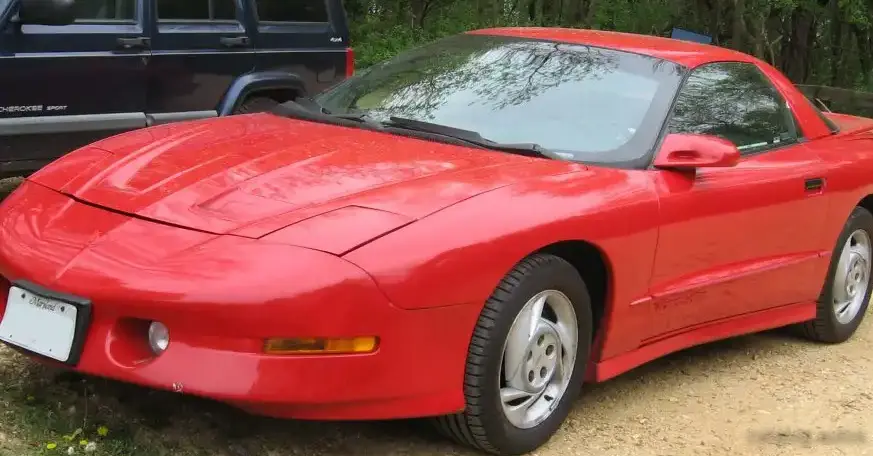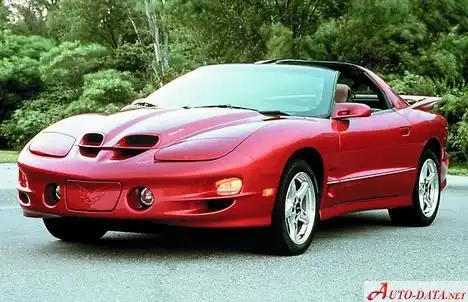
The Pontiac Firebird IV Cabrio 5.7i V8, produced from 2000 to 2002, represented the final iteration of the fourth-generation Firebird. This open-top variant, built on the F-body platform shared with the Chevrolet Camaro, offered a potent combination of performance and style. Positioned as the premium offering within the Firebird Cabriolet range, the 5.7i V8 distinguished itself from the base 3.8L V6 models with significantly increased horsepower and torque. It was a final flourish for a nameplate steeped in American muscle car history, attempting to balance modern technology with the Firebird’s traditional performance ethos.
Technical Specifications
| Brand | Pontiac |
| Model | Firebird |
| Generation | Firebird IV Cabrio |
| Type (Engine) | 5.7i V8 (329 Hp) |
| Start of production | 2000 |
| End of production | 2002 |
| Powertrain Architecture | Internal Combustion engine |
| Body type | Cabriolet |
| Seats | 4 |
| Doors | 2 |
| Fuel consumption (economy) – urban | 12.4 l/100 km (19 US mpg, 22.8 UK mpg, 8.1 km/l) |
| Fuel consumption (economy) – extra urban | 8.4 l/100 km (28 US mpg, 33.6 UK mpg, 11.9 km/l) |
| Fuel consumption (economy) – combined | 10.7 l/100 km (22 US mpg, 26.4 UK mpg, 9.3 km/l) |
| Fuel Type | Petrol (Gasoline) |
| Acceleration 0 – 100 km/h | 6 sec |
| Acceleration 0 – 62 mph | 6 sec |
| Acceleration 0 – 60 mph | 5.7 sec |
| Maximum speed | 250 km/h (155.34 mph) |
| Weight-to-power ratio | 5 kg/Hp, 201.2 Hp/tonne |
| Weight-to-torque ratio | 3.4 kg/Nm, 290.5 Nm/tonne |
| Power | 329 Hp @ 5200 rpm |
| Power per litre | 58.1 Hp/l |
| Torque | 475 Nm @ 4400 rpm (350.34 lb.-ft. @ 4400 rpm) |
| Engine layout | Front, Longitudinal |
| Engine Model/Code | LS1 |
| Engine displacement | 5665 cm3 (345.7 cu. in.) |
| Number of cylinders | 8 |
| Engine configuration | V-engine |
| Cylinder Bore | 99 mm (3.9 in.) |
| Piston Stroke | 92 mm (3.62 in.) |
| Compression ratio | 10.1:1 |
| Number of valves per cylinder | 2 |
| Fuel injection system | Multi-port manifold injection |
| Engine aspiration | Naturally aspirated engine |
| Engine oil capacity | 5.2 l (5.49 US qt | 4.58 UK qt) |
| Coolant | 11.3 l (11.94 US qt | 9.94 UK qt) |
| Kerb Weight | 1635 kg (3604.56 lbs.) |
| Trunk (boot) space – minimum | 215 l (7.59 cu. ft.) |
| Fuel tank capacity | 63 l (16.64 US gal | 13.86 UK gal) |
| Length | 4923 mm (193.82 in.) |
| Width | 1892 mm (74.49 in.) |
| Height | 1331 mm (52.4 in.) |
| Wheelbase | 2568 mm (101.1 in.) |
| Front track | 1542 mm (60.71 in.) |
| Rear (Back) track | 1539 mm (60.59 in.) |
| Drivetrain Architecture | The Internal combustion engine (ICE) drives the rear wheels of the vehicle. |
| Drive wheel | Rear wheel drive |
| Number of gears and type of gearbox | 6 gears, manual transmission |
| Front suspension | Spring Strut |
| Rear suspension | Coil spring |
| Front brakes | Ventilated discs |
| Rear brakes | Ventilated discs |
| Assisting systems | ABS (Anti-lock braking system) |
| Steering type | Steering rack and pinion |
| Power steering | Hydraulic Steering |
| Tires size | 235/55 R16 |
Powertrain & Engine Architecture
At the heart of the Firebird IV Cabrio 5.7i V8 lay the LS1 engine, a 5.7-liter (345.7 cubic inch) naturally aspirated V8. This engine, a cornerstone of General Motors’ small-block V8 family, was renowned for its robust construction and potential for performance upgrades. The LS1 featured a cast iron block with aluminum cylinder heads, a configuration that balanced durability with weight savings. It utilized a multi-port fuel injection system, delivering precise fuel metering for optimal combustion. The engine produced 329 horsepower at 5200 rpm and 475 Nm (350 lb-ft) of torque at 4400 rpm. The engine’s 10.1:1 compression ratio contributed to its spirited performance. The standard transmission was a 6-speed manual, providing drivers with full control over the engine’s power.
Driving Characteristics
The 5.7i V8-equipped Firebird Cabrio offered a distinctly engaging driving experience. Acceleration from 0 to 60 mph was achieved in approximately 5.7 seconds, making it a genuinely quick car for its time. The six-speed manual transmission allowed for precise gear selection, maximizing the engine’s power band. While the convertible body added some weight compared to the coupe, the LS1’s ample torque compensated for this, providing strong acceleration in any gear. The rear-wheel-drive configuration contributed to a balanced feel, although traction could be a concern under hard acceleration, particularly on less-than-ideal surfaces. Compared to the V6 models, the 5.7i V8 offered a significantly more visceral and rewarding driving experience, with a throaty exhaust note and a more immediate throttle response.
Equipment & Trim Levels
The Firebird IV Cabrio 5.7i V8 came reasonably well-equipped as standard. Interior features included leather upholstery, air conditioning, power windows and locks, and a premium sound system. The dashboard featured analog gauges, providing essential information at a glance. Optional extras included a power-adjustable driver’s seat, a sunroof, and upgraded audio systems. The exterior styling was characterized by its sleek lines and aggressive stance. The convertible top was power-operated and featured a glass rear window. The 5.7i V8 trim was visually differentiated from the V6 models by its unique badging and available wheel options.
Chassis & Braking
The Firebird IV Cabrio utilized a traditional front spring strut and rear coil spring suspension setup. The suspension was tuned to provide a balance between ride comfort and handling performance. Ventilated disc brakes were fitted to all four wheels, providing ample stopping power. An anti-lock braking system (ABS) was standard, enhancing safety and control during emergency braking situations. The steering was a rack-and-pinion system with hydraulic power assistance, offering precise and responsive steering feel. The car rode on 235/55 R16 tires, providing a good compromise between grip and ride quality.
Market Reception & Comparison
The Firebird IV Cabrio 5.7i V8 was generally well-received by automotive critics, who praised its powerful engine, engaging driving dynamics, and attractive styling. However, some critics noted that the interior quality was not on par with some of its competitors, such as the Ford Mustang. Fuel economy, at 19 mpg city and 28 mpg highway, was typical for a V8-powered sports car of that era. Compared to the base V6 models, the 5.7i V8 offered a substantial performance upgrade, but at a higher price point. It competed directly with the Chevrolet Camaro Z28 convertible, offering a similar level of performance and features.
Legacy
The Pontiac Firebird IV Cabrio 5.7i V8 represents the culmination of the Firebird’s long and storied history. While the Firebird nameplate was discontinued in 2002, the LS1 engine has proven to be remarkably durable and reliable. Today, the 5.7i V8-equipped Firebird Cabrio is a sought-after collectible, particularly among enthusiasts of American muscle cars. Its combination of performance, style, and relative affordability has ensured its continued popularity in the used car market. The LS1 engine’s aftermarket support remains strong, allowing owners to further enhance its performance and customize their vehicles.