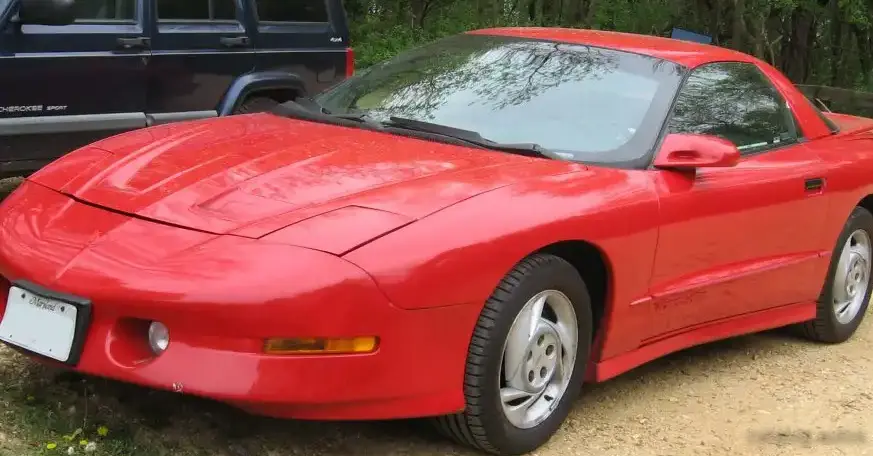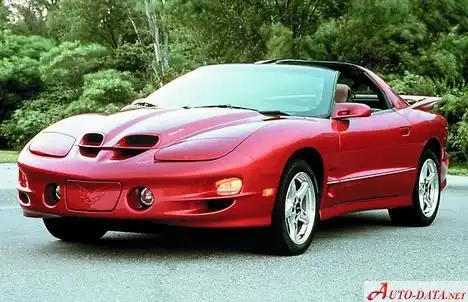
The Pontiac Firebird IV Cabrio 5.7i V8, produced between 2000 and 2002, represented the final iteration of the fourth-generation Firebird. This convertible model, equipped with the potent 5.7-liter LS1 V8 engine and a four-speed automatic transmission, occupied a performance-oriented niche within the Firebird lineup. It was positioned as a more accessible alternative to the manual transmission models, offering a blend of power and convenience. The Firebird IV, built on the F-body platform shared with the Chevrolet Camaro, aimed to deliver a modern take on the classic American pony car experience.
Technical Specifications
| Brand | Pontiac |
| Model | Firebird |
| Generation | Firebird IV Cabrio |
| Type (Engine) | 5.7i V8 (329 Hp) Automatic |
| Start of production | 2000 |
| End of production | 2002 |
| Powertrain Architecture | Internal Combustion engine |
| Body type | Cabriolet |
| Seats | 4 |
| Doors | 2 |
| Fuel consumption (urban) | 13.1 l/100 km (18 US mpg, 21.6 UK mpg, 7.6 km/l) |
| Fuel consumption (extra urban) | 9.1 l/100 km (25.8 US mpg, 31 UK mpg, 11 km/l) |
| Fuel consumption (combined) | 11.2 l/100 km (21 US mpg, 25.2 UK mpg, 8.9 km/l) |
| Fuel Type | Petrol (Gasoline) |
| Acceleration 0 – 100 km/h | 6 sec |
| Acceleration 0 – 62 mph | 6 sec |
| Acceleration 0 – 60 mph | 5.7 sec |
| Maximum speed | 250 km/h (155.34 mph) |
| Weight-to-power ratio | 5 kg/Hp, 201.2 Hp/tonne |
| Weight-to-torque ratio | 3.4 kg/Nm, 290.5 Nm/tonne |
| Power | 329 Hp @ 5200 rpm |
| Power per litre | 58.1 Hp/l |
| Torque | 475 Nm @ 4400 rpm (350.34 lb.-ft. @ 4400 rpm) |
| Engine layout | Front, Longitudinal |
| Engine Model/Code | LS1 |
| Engine displacement | 5665 cm3 (345.7 cu. in.) |
| Number of cylinders | 8 |
| Engine configuration | V-engine |
| Cylinder Bore | 99 mm (3.9 in.) |
| Piston Stroke | 92 mm (3.62 in.) |
| Compression ratio | 10.1:1 |
| Number of valves per cylinder | 2 |
| Fuel injection system | Multi-port manifold injection |
| Engine aspiration | Naturally aspirated engine |
| Engine oil capacity | 5.2 l (5.49 US qt | 4.58 UK qt) |
| Coolant capacity | 11.2 l (11.83 US qt | 9.85 UK qt) |
| Kerb Weight | 1635 kg (3604.56 lbs.) |
| Trunk (boot) space – minimum | 215 l (7.59 cu. ft.) |
| Fuel tank capacity | 63 l (16.64 US gal | 13.86 UK gal) |
| Length | 4923 mm (193.82 in.) |
| Width | 1892 mm (74.49 in.) |
| Height | 1331 mm (52.4 in.) |
| Wheelbase | 2568 mm (101.1 in.) |
| Front track | 1542 mm (60.71 in.) |
| Rear (Back) track | 1539 mm (60.59 in.) |
| Drivetrain Architecture | Rear wheel drive |
| Drive wheel | Rear wheel drive |
| Number of gears and type of gearbox | 4 gears, automatic transmission |
| Front suspension | Spring Strut |
| Rear suspension | Coil spring |
| Front brakes | Ventilated discs |
| Rear brakes | Ventilated discs |
| Assisting systems | ABS (Anti-lock braking system) |
| Steering type | Steering rack and pinion |
| Power steering | Hydraulic Steering |
| Tires size | 235/55 R16 |
| Wheel rims size | 16 |
Powertrain & Engine Architecture
At the heart of the Firebird IV Cabrio 5.7i was the LS1 V8 engine, a cornerstone of General Motors’ performance offerings in the late 1990s and early 2000s. This 5.7-liter (345.7 cubic inch) engine featured an aluminum block and cylinder heads, contributing to a relatively lightweight design. The LS1 utilized a 90-degree V-angle and employed a multi-port fuel injection system, delivering precise fuel metering for optimal combustion. The engine produced 329 horsepower at 5200 rpm and 350 lb-ft of torque at 4400 rpm. The four-speed automatic transmission (likely a 4L60E) was calibrated to provide smooth shifts and deliver power effectively to the rear wheels. While not as aggressively geared as the manual transmission options, the automatic offered a more relaxed driving experience, particularly in city traffic.
Driving Characteristics
The 5.7i automatic Firebird offered a compelling blend of performance and usability. Acceleration from 0-60 mph was achieved in around 5.7 seconds, making it a genuinely quick car for its time. The automatic transmission, while not offering the direct control of a manual, provided smooth and predictable shifts. The gear ratios were tuned for a balance between acceleration and highway cruising. Compared to the manual transmission Firebirds, the automatic version sacrificed a small degree of responsiveness, but gained in ease of driving. The LS1 engine delivered a characteristic V8 rumble and a broad torque curve, making it enjoyable to drive in a variety of situations.
Equipment & Trim Levels
The Firebird IV Cabrio 5.7i typically included standard features such as air conditioning, power windows and locks, a premium sound system, and leather upholstery. Optional extras included a sunroof, upgraded audio systems, and various cosmetic enhancements. The interior design was driver-focused, with a sporty dashboard layout and comfortable seating. The convertible top was power-operated and featured a glass rear window. The trim level generally fell in the mid-range of the Firebird lineup, offering a step up in performance and features compared to the base V6 models, but lacking some of the more exclusive options found on higher-spec trims.
Chassis & Braking
The Firebird IV Cabrio utilized a traditional front spring strut and rear coil spring suspension setup. The suspension was tuned to provide a balance between ride comfort and handling performance. The car was equipped with ventilated disc brakes on all four wheels, providing ample stopping power. An anti-lock braking system (ABS) was standard, enhancing safety and control during hard braking. The chassis was reinforced to compensate for the structural changes required for the convertible body style.
Market Reception & Comparison
The Firebird IV Cabrio 5.7i was generally well-received by automotive critics, who praised its powerful engine, comfortable ride, and attractive styling. However, some reviewers noted that the automatic transmission slightly diminished the car’s overall performance potential compared to the manual transmission models. Fuel economy was typical for a V8-powered sports car of the era, averaging around 21 mpg combined. Compared to the V6-powered Firebirds, the 5.7i offered a significant performance upgrade, but at a higher price point. Reliability was generally good, although the LS1 engine was known to occasionally experience oil consumption issues.
Legacy
The Pontiac Firebird IV Cabrio 5.7i V8 represents the final chapter in the Firebird’s storied history. While production numbers were relatively low compared to other F-body models, the 5.7i convertible remains a desirable collector’s item. The LS1 engine has proven to be remarkably durable and is still widely used in aftermarket performance applications. Today, well-maintained examples of the Firebird IV Cabrio 5.7i command a respectable price in the used car market, appealing to enthusiasts who appreciate its classic American muscle car heritage and potent V8 power.