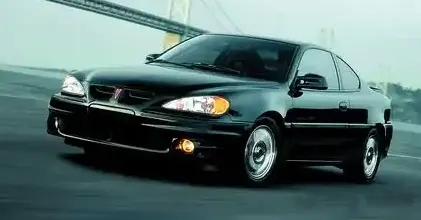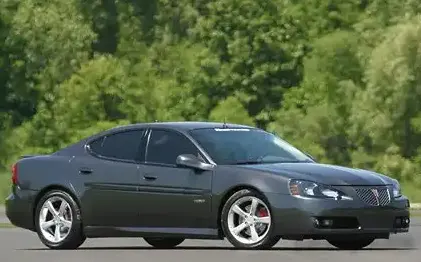
The Pontiac Grand Prix IX, produced from 2003 to 2008, represented the ninth generation of Pontiac’s long-running Grand Prix line. This generation, based on the GM W-body platform, aimed to blend sporty styling with family-friendly practicality. Within the lineup, the 3.8 i V6 12V GT, generating 203 horsepower, occupied a mid-to-upper trim level, offering a balance between performance and affordability. It served as a step up from the base models, providing more power and features while remaining below the more expensive and performance-focused trims.
Technical Specifications
| Brand | Pontiac |
| Model | Grand Prix |
| Generation | Grand Prix (IX) |
| Type (Engine) | 3.8 i V6 12V GT (203 Hp) |
| Start of production | January, 2003 |
| End of production | April, 2008 |
| Powertrain Architecture | Internal Combustion engine |
| Body type | Sedan |
| Seats | 5 |
| Doors | 4 |
| Fuel consumption (urban) | 11.8 l/100 km (19.9 US mpg) |
| Fuel consumption (extra urban) | 7.9 l/100 km (29.8 US mpg) |
| Fuel Type | Petrol (Gasoline) |
| Acceleration 0 – 100 km/h | 8.5 sec |
| Acceleration 0 – 62 mph | 8.5 sec |
| Acceleration 0 – 60 mph | 8.1 sec |
| Maximum speed | 174 km/h (108.12 mph) |
| Weight-to-power ratio | 7.9 kg/Hp |
| Weight-to-torque ratio | 5.2 kg/Nm |
| Power | 203 Hp @ 5200 rpm |
| Torque | 312 Nm @ 3600 rpm (230.12 lb.-ft. @ 3600 rpm) |
| Engine layout | Front, Transverse |
| Engine Model/Code | L26 |
| Engine displacement | 3791 cm3 (231.34 cu. in.) |
| Number of cylinders | 6 |
| Engine configuration | V-engine |
| Cylinder Bore | 96.5 mm (3.8 in.) |
| Piston Stroke | 86.4 mm (3.4 in.) |
| Compression ratio | 9.4:1 |
| Number of valves per cylinder | 2 |
| Fuel injection system | Multi-port manifold injection |
| Engine aspiration | Naturally aspirated engine |
| Engine oil capacity | 4.3 l (4.54 US qt | 3.78 UK qt) |
| Coolant | 10.6 l (11.2 US qt | 9.33 UK qt) |
| Kerb Weight | 1610 kg (3549.44 lbs.) |
| Trunk (boot) space – minimum | 454 l (16.03 cu. ft.) |
| Fuel tank capacity | 64 l (16.91 US gal | 14.08 UK gal) |
| Length | 5037 mm (198.31 in.) |
| Width | 1819 mm (71.61 in.) |
| Height | 1420 mm (55.91 in.) |
| Wheelbase | 2807 mm (110.51 in.) |
| Front track | 1565 mm (61.61 in.) |
| Rear (Back) track | 1545 mm (60.83 in.) |
| Drivetrain Architecture | Front wheel drive |
| Number of gears and type of gearbox | 4 gears, automatic transmission |
| Front suspension | Spring Strut |
| Rear suspension | Spring Strut |
| Front brakes | Ventilated discs |
| Rear brakes | Disc |
| Assisting systems | ABS (Anti-lock braking system) |
| Steering type | Steering rack and pinion |
| Tires size | 225/60 R16 |
| Wheel rims size | 5J x 16 |
Powertrain & Engine Architecture
The heart of the Grand Prix GT was the 3.8-liter (231 cubic inches) Series III V6 engine, designated the L26. This engine was a staple of GM’s mid-size offerings for many years, known for its durability and relatively simple design. The 12-valve configuration (two valves per cylinder) utilized a single overhead camshaft. Fuel delivery was managed by a multi-port fuel injection system, providing precise fuel metering for improved efficiency and performance. The L26 engine produced 203 horsepower at 5200 rpm and 230 lb-ft of torque at 3600 rpm. The engine’s transverse mounting and front-wheel-drive configuration were typical for the W-body platform. Paired with the L26 was a 4-speed automatic transmission (likely the 4T65E), chosen for its smooth operation and ease of use. This transmission was electronically controlled, adapting shift points based on driving conditions.
Driving Characteristics
The 3.8L V6 with the 4-speed automatic provided a comfortable and capable driving experience. Acceleration from 0-60 mph was achieved in approximately 8.1 seconds, making it reasonably quick for its time. While not as sporty as the Grand Prix GTP with its supercharged engine, the GT offered sufficient power for everyday driving and highway passing. The automatic transmission, while smooth, wasn’t particularly aggressive in its shift points, prioritizing comfort over outright performance. Compared to the manual transmission options available on other Grand Prix trims, the automatic traded some responsiveness for convenience. The gear ratios were tuned for fuel efficiency and relaxed cruising, rather than maximizing acceleration.
Equipment & Trim Levels
The Grand Prix GT typically included features such as air conditioning, power windows and locks, a CD player, and cruise control as standard equipment. Upholstery was generally cloth, though leather options were available. The dashboard featured a straightforward layout with analog gauges. Optional extras included a premium sound system, sunroof, and upgraded interior trim. The GT trim level aimed for a balance of features, offering more than the base models but stopping short of the luxury appointments found in the GTP.
Chassis & Braking
The Grand Prix IX utilized a front-wheel-drive layout with independent front suspension and a multi-link rear suspension. The suspension was tuned for a comfortable ride, prioritizing smoothness over sharp handling. Front brakes were ventilated discs, providing adequate stopping power, while rear brakes were solid discs. Anti-lock Braking System (ABS) was standard, enhancing safety. Stabilizer bars were included at both the front and rear to reduce body roll during cornering. The chassis was designed to provide a stable and predictable driving experience, suitable for both commuting and longer road trips.
Market Reception & Comparison
The 2003-2008 Pontiac Grand Prix GT was generally well-received by automotive critics as a practical and comfortable family sedan. The 3.8L V6 and automatic transmission combination was praised for its smooth operation and adequate power. Fuel economy was considered average for the segment, with combined MPG figures around 23-24. Compared to the supercharged GTP model, the GT offered a more affordable price point and lower running costs, but sacrificed some performance. Against competitors like the Toyota Camry and Honda Accord, the Grand Prix GT offered a more distinctive styling and a slightly more engaging driving experience, though it often lagged behind in terms of long-term reliability ratings.
Legacy
The L26 3.8L V6 engine proved to be a durable and reliable powerplant, and many Grand Prix GT models continue to operate today. While not known for exceptional fuel economy, the engine’s simplicity and robust construction contribute to its longevity. The 4T65E automatic transmission, while generally reliable, can be prone to issues with age and high mileage, particularly regarding solenoid failures. On the used car market, the Grand Prix GT represents an affordable and practical option for those seeking a comfortable and spacious sedan. Its relatively low purchase price and readily available parts make it an attractive choice for budget-conscious buyers. However, potential buyers should be aware of the potential for age-related maintenance issues and the car’s overall depreciation.