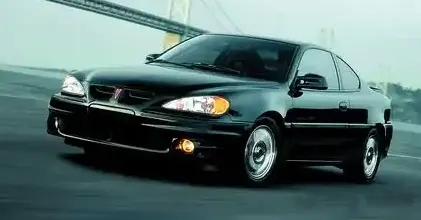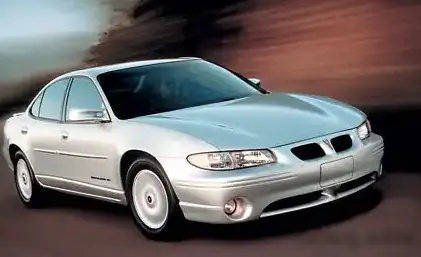
The Pontiac Grand Prix VI, produced from 1996 to 2003, represented a significant evolution in Pontiac’s flagship sedan. The “W” body platform underpinned this generation, offering a blend of performance and comfort aimed at the American family sedan market. Within the lineup, the 3.8 i V6 GT, boasting 203 horsepower, occupied a sweet spot – offering a substantial power upgrade over the base models while remaining more accessible than the later supercharged variants. This trim level targeted drivers seeking a sporty driving experience without sacrificing everyday practicality.
Technical Specifications
| Brand | Pontiac |
| Model | Grand Prix |
| Generation | Grand Prix VI (W) |
| Type (Engine) | 3.8 i V6 GT (203 Hp) |
| Start of production | 1996 |
| End of production | 2003 |
| Powertrain Architecture | Internal Combustion engine |
| Body type | Sedan |
| Seats | 5 |
| Doors | 4 |
| Fuel consumption (urban) | 11.8 l/100 km (19.9 US mpg) |
| Fuel consumption (extra urban) | 7.8 l/100 km (30.2 US mpg) |
| Fuel consumption (combined) | 9.8 l/100 km (24 US mpg) |
| Fuel Type | Petrol (Gasoline) |
| Maximum speed | 200 km/h (124.27 mph) |
| Weight-to-power ratio | 7.6 kg/Hp |
| Weight-to-torque ratio | 5 kg/Nm |
| Power | 203 Hp @ 5200 rpm |
| Power per litre | 53.5 Hp/l |
| Torque | 312 Nm @ 3600 rpm (230.12 lb.-ft. @ 3600 rpm) |
| Engine layout | Front, Transverse |
| Engine Model/Code | L36 |
| Engine displacement | 3791 cm3 (231.34 cu. in.) |
| Number of cylinders | 6 |
| Engine configuration | V-engine |
| Cylinder Bore | 96.5 mm (3.8 in.) |
| Piston Stroke | 86.4 mm (3.4 in.) |
| Compression ratio | 9.4:1 |
| Number of valves per cylinder | 2 |
| Fuel injection system | Multi-port manifold injection |
| Engine aspiration | Naturally aspirated engine |
| Engine oil capacity | 4.3 l (4.54 US qt | 3.78 UK qt) |
| Coolant capacity | 11.7 l (12.36 US qt | 10.29 UK qt) |
| Kerb Weight | 1550 kg (3417.17 lbs.) |
| Trunk (boot) space (minimum) | 455 l (16.07 cu. ft.) |
| Fuel tank capacity | 68 l (17.96 US gal | 14.96 UK gal) |
| Length | 4990 mm (196.46 in.) |
| Width | 1845 mm (72.64 in.) |
| Height | 1390 mm (54.72 in.) |
| Wheelbase | 2807 mm (110.51 in.) |
| Front track | 1565 mm (61.61 in.) |
| Rear track | 1550 mm (61.02 in.) |
| Drivetrain Architecture | Front wheel drive |
| Number of gears | 4 |
| Type of gearbox | Automatic transmission |
| Front suspension | Spring Strut |
| Rear suspension | Double wishbone |
| Front brakes | Ventilated discs |
| Rear brakes | Disc |
| Assisting systems | ABS (Anti-lock braking system) |
| Steering type | Steering rack and pinion |
| Power steering | Hydraulic Steering |
| Tires size | 205/70 R15 |
Powertrain & Engine Architecture
The heart of the Grand Prix GT was the 3.8-liter (3791 cc) L36 V6 engine. This engine, a member of the GM 3800 series, was renowned for its durability and smooth power delivery. It featured a 90-degree V-configuration, two valves per cylinder, and a cast iron block with aluminum cylinder heads. The L36 utilized a multi-port fuel injection system, delivering precise fuel metering for optimal combustion. The engine’s 9.4:1 compression ratio contributed to its respectable power output. The 4T65E four-speed automatic transmission was the standard pairing for the 3.8L V6. This transmission was electronically controlled, offering smooth shifts and adaptive shift patterns. While not known for its sportiness, the 4T65E was generally reliable and well-suited to the Grand Prix’s intended cruising role.
Driving Characteristics
The 203 horsepower and 230 lb-ft of torque provided by the 3.8L V6 and 4T65E automatic combination resulted in a comfortable and capable driving experience. Acceleration was adequate for everyday driving, with a 0-60 mph time estimated around 8.5-9.0 seconds. The automatic transmission, while smooth, did detract somewhat from the sporty feel, with noticeable shift delays compared to the available manual transmission. The gear ratios were optimized for cruising, making the Grand Prix a comfortable highway companion. Compared to the higher-output supercharged 3800 Series II engines, the GT offered a more relaxed driving experience, prioritizing fuel economy and ease of use over outright performance.
Equipment & Trim Levels
The Grand Prix GT came standard with a respectable array of features. Interior appointments typically included cloth upholstery, though leather was available as an option. Standard equipment often included air conditioning, power windows and locks, a CD player, and cruise control. Optional extras could include a sunroof, upgraded sound system, and leather-trimmed seats. The GT trim also featured a sportier suspension setup compared to the base Grand Prix, offering improved handling. The dashboard layout was typical of the era, with a focus on functionality and ease of use.
Chassis & Braking
The Grand Prix VI utilized a front-wheel-drive layout with independent front suspension featuring coil springs and a strut design. The rear suspension employed a multi-link setup, providing a comfortable ride and reasonable handling. The GT trim typically featured a thicker front stabilizer bar compared to lower trims, further enhancing handling. Braking duties were handled by ventilated discs up front and solid discs in the rear. Anti-lock brakes (ABS) were standard, providing enhanced stopping power and control in emergency situations. The steering system was a rack-and-pinion setup with hydraulic power assist, offering responsive and precise steering feel.
Market Reception & Comparison
The Grand Prix GT was generally well-received by automotive critics as a solid, comfortable, and reasonably priced family sedan. It offered a good balance of performance, features, and fuel economy. Compared to other V6-powered sedans of the era, such as the Ford Taurus and Chrysler Intrepid, the Grand Prix GT offered a slightly more sporty driving experience. Fuel economy was respectable for its class, averaging around 24 mpg combined. Reliability was generally good, although the 4T65E transmission was known to have some potential issues if not properly maintained. The supercharged Grand Prix GTP offered significantly more performance, but at a higher price point and with slightly lower fuel economy.
Legacy
The Pontiac Grand Prix VI 3.8L V6 GT remains a popular choice in the used car market, particularly for those seeking an affordable and reliable American sedan. The 3800 V6 engine is known for its longevity, and many examples have surpassed 200,000 miles with proper maintenance. While the 4T65E transmission requires regular fluid changes to prevent issues, it is generally a durable unit. The Grand Prix GT represents a high point in Pontiac’s history, offering a compelling combination of style, performance, and value. Its enduring popularity is a testament to its well-rounded design and robust powertrain.