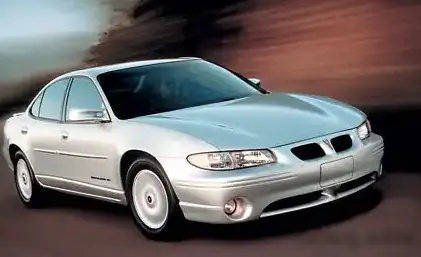
The Pontiac Grand Prix GTP, specifically the sixth generation (W-body platform) produced between 1996 and 2003, represented a performance-oriented iteration of the popular Grand Prix sedan. Positioned as the top-tier trim level, the GTP distinguished itself with a supercharged 3.8-liter V6 engine, offering a significant power upgrade over the base and mid-range models. This variant aimed to appeal to drivers seeking a blend of everyday practicality and spirited performance, competing with similar offerings from Ford and Chrysler. The 1996 model year marked the beginning of this generation, introducing a more aerodynamic design and updated interior features.
Technical Specifications
| Brand | Pontiac |
| Model | Grand Prix |
| Generation | Grand Prix VI (W) |
| Type (Engine) | 3.8 i V6 GTP (243 Hp) |
| Start of production | 1996 |
| End of production | 2003 |
| Powertrain Architecture | Internal Combustion engine |
| Body type | Sedan |
| Seats | 5 |
| Doors | 4 |
| Fuel consumption (urban) | 13.1 l/100 km (18 US mpg) |
| Fuel consumption (extra urban) | 8.4 l/100 km (28 US mpg) |
| Fuel Type | Petrol (Gasoline) |
| Acceleration 0 – 100 km/h | 8.5 sec |
| Acceleration 0 – 62 mph | 8.5 sec |
| Acceleration 0 – 60 mph | 8.1 sec |
| Maximum speed | 225 km/h (139.81 mph) |
| Weight-to-power ratio | 6.4 kg/Hp |
| Weight-to-torque ratio | 4.1 kg/Nm |
| Power | 243 Hp @ 5200 rpm |
| Torque | 380 Nm @ 3600 rpm (280.27 lb.-ft. @ 3600 rpm) |
| Engine layout | Front, Transverse |
| Engine Model/Code | L67 |
| Engine displacement | 3791 cm3 (231.34 cu. in.) |
| Number of cylinders | 6 |
| Engine configuration | V-engine |
| Cylinder Bore | 96.5 mm (3.8 in.) |
| Piston Stroke | 86.4 mm (3.4 in.) |
| Compression ratio | 8.5:1 |
| Number of valves per cylinder | 2 |
| Fuel injection system | Multi-port manifold injection |
| Engine aspiration | Supercharger |
| Engine oil capacity | 4.3 l (4.54 US qt | 3.78 UK qt) |
| Coolant capacity | 11.7 l (12.36 US qt | 10.29 UK qt) |
| Kerb Weight | 1550 kg (3417.17 lbs.) |
| Trunk (boot) space | 455 l (16.07 cu. ft.) |
| Fuel tank capacity | 68 l (17.96 US gal | 14.96 UK gal) |
| Length | 4990 mm (196.46 in.) |
| Width | 1845 mm (72.64 in.) |
| Height | 1390 mm (54.72 in.) |
| Wheelbase | 2805 mm (110.43 in.) |
| Front track | 1565 mm (61.61 in.) |
| Rear track | 1550 mm (61.02 in.) |
| Drivetrain Architecture | Front wheel drive |
| Number of gears | 4 |
| Gearbox type | Automatic transmission |
| Front suspension | Spring Strut |
| Rear suspension | Double wishbone |
| Front brakes | Ventilated discs |
| Rear brakes | Disc |
| Steering type | Steering rack and pinion |
| Power steering | Hydraulic |
| Tires size | 225/60 R16 |
Powertrain & Engine Architecture
The heart of the Grand Prix GTP was the 3.8-liter (3791 cc) L67 V6 engine. This engine was a member of Pontiac’s “Series III” engine family, and was notable for its Eaton M90 supercharger. The supercharger, a roots-type blower, provided significant boost, contributing to the engine’s 243 horsepower and 280 lb-ft of torque. Fuel delivery was managed by a multi-port fuel injection system. The engine featured a cast iron block with aluminum cylinder heads, and a 8.5:1 compression ratio. The 4T65E four-speed automatic transmission was the sole transmission option for the GTP. This transmission was electronically controlled and featured overdrive for improved highway fuel economy. The transmission was tuned to provide smooth shifts, but some critics noted it could feel slightly hesitant during quick acceleration.
Driving Characteristics
The Grand Prix GTP offered a noticeable performance advantage over other Grand Prix trims. The supercharged engine provided strong acceleration, with 0-60 mph times consistently in the low 8-second range. While not a dedicated sports car, the GTP delivered a responsive driving experience. The automatic transmission, while generally smooth, didn’t offer the same level of control as a manual gearbox. The front-wheel-drive layout could exhibit some torque steer under hard acceleration. The suspension was tuned for a balance between comfort and handling, providing a reasonably compliant ride while still offering decent body control in corners. The steering was light and precise, making the car easy to maneuver.
Equipment & Trim Levels
The GTP trim came standard with a number of features designed to enhance both comfort and convenience. These included leather upholstery, power-adjustable front seats, air conditioning, a premium sound system, and alloy wheels. Optional extras included a sunroof, upgraded sound system with CD changer, and traction control. The interior featured a sporty design with metallic accents and a unique instrument cluster. The GTP also benefited from a more aggressive exterior styling package, including a rear spoiler and unique front fascia.
Chassis & Braking
The Grand Prix GTP utilized a front-wheel-drive chassis with independent front suspension featuring coil springs and a strut design. The rear suspension employed a multi-link setup with coil springs. This configuration aimed to provide a comfortable ride while maintaining reasonable handling characteristics. Braking duties were handled by ventilated disc brakes at all four corners, providing adequate stopping power. Anti-lock brakes (ABS) were standard equipment. The GTP typically featured a slightly stiffer suspension tuning compared to lower trims, contributing to improved handling.
Market Reception & Comparison
The Grand Prix GTP was generally well-received by automotive critics. It was praised for its strong performance, comfortable ride, and well-equipped interior. However, some reviewers criticized the automatic transmission for its occasional hesitation and the front-wheel-drive layout for its tendency to exhibit torque steer. Compared to the base and mid-range Grand Prix models, the GTP offered a significant performance upgrade, but at a higher price point. It competed directly with other performance-oriented sedans such as the Ford Taurus SHO and the Chrysler 300M. Fuel economy was reasonable for a V6-powered sedan, averaging around 18 mpg in the city and 28 mpg on the highway.
Legacy
The Pontiac Grand Prix GTP, particularly the 3.8L supercharged variant, has developed a following among enthusiasts. The L67 engine is known for its durability and potential for modification. While the 4T65E transmission can be prone to failure if not properly maintained, it is generally considered reliable when serviced regularly. Today, well-maintained GTP models are sought after by collectors and enthusiasts looking for a comfortable and capable American performance sedan. The car represents a unique era in Pontiac’s history, offering a blend of performance, practicality, and distinctive styling.