
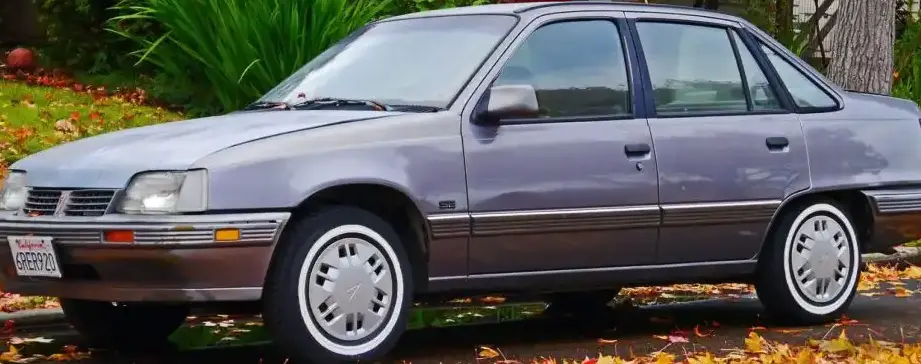
The Pontiac LeMans 1.6, produced from 1988 to 1993, represented the entry-level offering within the LeMans lineup during its final generation. Positioned as an affordable and economical compact sedan, it served as a successor to the previous Citation and Phoenix models, aiming to provide basic transportation for budget-conscious buyers. This variant, powered by the 1.6-liter L73 engine and typically paired with a 3-speed automatic transmission, occupied the lower end of the performance spectrum for the LeMans, focusing on fuel efficiency rather than outright speed. It was a key component of Pontiac’s strategy to offer a range of vehicles catering to diverse consumer needs within the General Motors portfolio.
Technical Specifications
| Brand | Pontiac |
| Model | LeMans |
| Generation | LeMans (Final Generation) |
| Type (Engine) | 1.6 (74 Hp) |
| Start of Production | 1988 |
| End of Production | 1993 |
| Powertrain Architecture | Internal Combustion Engine |
| Body Type | Sedan |
| Fuel Type | Petrol (Gasoline) |
| Power | 74 Hp |
| Engine Model/Code | L73 |
| Engine Aspiration | Naturally Aspirated |
| Engine Oil Capacity | 4.3 l (4.54 US qt | 3.78 UK qt) |
| Coolant Capacity | 7.5 l (7.93 US qt | 6.6 UK qt) |
Powertrain & Engine Architecture
The heart of the LeMans 1.6 was the General Motors L73 engine, a 1.6-liter (97 cubic inch) inline-four cylinder powerplant. This engine was a relatively simple design, utilizing a single overhead camshaft (SOHC) and two valves per cylinder. Fuel delivery was managed by a throttle body injection (TBI) system, a cost-effective alternative to multi-port fuel injection common in higher-trim models. The TBI system, while less precise than MPFI, contributed to the engine’s simplicity and ease of maintenance. The L73 produced 74 horsepower at approximately 5200 rpm and 86 lb-ft of torque at 3600 rpm. The engine block was constructed of cast iron, while the cylinder head was aluminum, helping to reduce overall weight.
The most common transmission pairing for the 1.6-liter engine was a GM 3-speed automatic transmission (model 3T45). This transmission was chosen for its affordability and smooth operation, prioritizing comfort over performance. The 3T45 featured a torque converter for smooth launches and gear changes. Manual transmission options were available in some years, but the automatic was overwhelmingly preferred by LeMans buyers seeking convenience.
Driving Characteristics
The 1.6-liter LeMans, particularly with the automatic transmission, was not designed for spirited driving. Acceleration was modest, with 0-60 mph times estimated to be around 13-15 seconds. The 3-speed automatic transmission’s gear ratios were optimized for fuel economy rather than quick acceleration. The first gear was relatively tall, prioritizing smooth take-offs, while the overdrive third gear helped to lower engine speeds at highway cruising speeds. The engine felt strained when attempting to accelerate quickly, and passing maneuvers required careful planning. Compared to the later 2.2-liter engine options available in the LeMans, the 1.6-liter felt significantly underpowered. However, the automatic transmission provided a comfortable and predictable driving experience, making it suitable for city driving and commuting.
Equipment & Trim Levels
The LeMans 1.6 typically came with a fairly basic level of standard equipment. Interior upholstery was usually cloth, with a simple dashboard layout featuring analog gauges. Standard features generally included an AM/FM radio, manual windows and door locks, and a basic steering wheel. Air conditioning was often an optional extra, as were power windows and upgraded sound systems. The base trim level offered minimal frills, focusing on providing essential transportation at the lowest possible price. Higher trim levels, such as the LE, offered additional features like upgraded interior trim, better sound systems, and sometimes even cruise control, but these were rarely paired with the 1.6-liter engine.
Chassis & Braking
The LeMans utilized a front-wheel-drive layout with an independent MacPherson strut suspension in the front and a semi-independent twist-beam suspension in the rear. The suspension was tuned for comfort rather than handling precision. The front suspension featured coil springs and a stabilizer bar, while the rear suspension used coil springs. Braking was typically accomplished with front disc brakes and rear drum brakes. The drum brakes on the rear were a cost-saving measure, and contributed to a slightly longer stopping distance compared to models equipped with rear disc brakes. Steering was power-assisted, making it relatively easy to maneuver at low speeds.
Market Reception & Comparison
The LeMans 1.6 was generally viewed as a practical and affordable option in the compact sedan segment. Critics acknowledged its low price point and decent fuel economy (estimated around 26 mpg city / 36 mpg highway), but often criticized its lack of power and basic interior. Compared to other compact sedans of the era, such as the Ford Escort or Chevrolet Cavalier, the LeMans 1.6 offered a similar level of value, but often lagged behind in terms of performance and refinement. The 2.2-liter LeMans models, while more expensive, offered a significantly more enjoyable driving experience and were often preferred by buyers who prioritized performance. The 1.6-liter version primarily appealed to buyers who were solely focused on minimizing their transportation costs.
Legacy
The Pontiac LeMans 1.6, while not a particularly memorable or groundbreaking vehicle, served its purpose as an affordable and reliable means of transportation for many buyers during the late 1980s and early 1990s. The L73 engine, while simple, proved to be reasonably durable and relatively easy to maintain. Today, these vehicles are relatively rare and often found in well-worn condition. However, their simplicity and affordability make them appealing to enthusiasts looking for a classic, budget-friendly project car. Parts availability is generally good, as many components were shared with other GM vehicles of the era. The LeMans 1.6 represents a snapshot of a time when basic, economical transportation was a primary concern for many car buyers.
