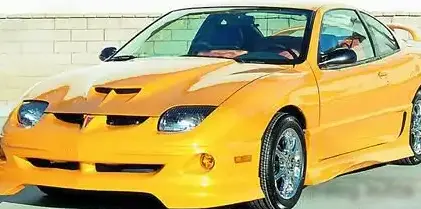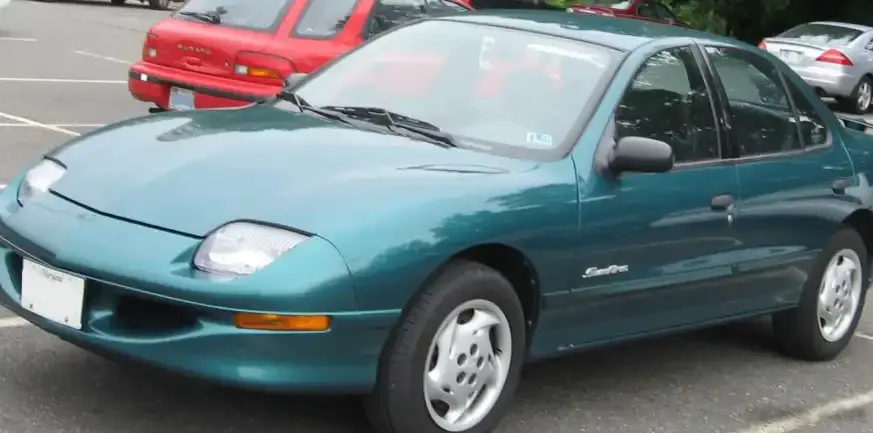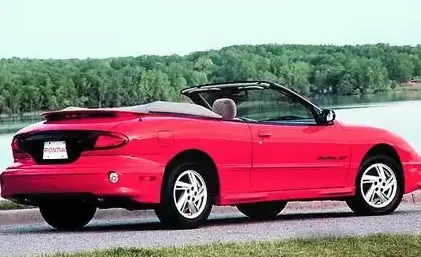
The Pontiac Sunfire Cabrio 2.2i, produced between 1995 and 1999, represented a relatively affordable entry into the North American convertible market. Part of the second generation Sunfire (1995-2001), the Cabriolet offered open-air motoring to a broader audience than many of its competitors. It was built on the GM J-body platform, shared with models like the Chevrolet Cavalier and Oldsmobile Beretta, and aimed to provide a stylish and accessible option for buyers seeking a fun, everyday vehicle. The 2.2i variant, equipped with a 2.2-liter inline-four engine and a three-speed automatic transmission, occupied a middle ground within the Sunfire Cabrio lineup, offering a balance between performance and fuel economy.
Technical Specifications
| Brand | Pontiac |
| Model | Sunfire |
| Generation | Sunfire Cabrio |
| Type (Engine) | 2.2 i (122 Hp) |
| Start of production | 1995 |
| End of production | 1999 |
| Powertrain Architecture | Internal Combustion engine |
| Body type | Cabriolet |
| Seats | 5 |
| Doors | 2 |
| Fuel Type | Petrol (Gasoline) |
| Weight-to-power ratio | 10.5 kg/Hp, 94.9 Hp/tonne |
| Weight-to-torque ratio | 7.3 kg/Nm, 137 Nm/tonne |
| Power | 122 Hp @ 5200 rpm |
| Power per litre | 55.7 Hp/l |
| Torque | 176 Nm @ 4000 rpm, 129.81 lb.-ft. @ 4000 rpm |
| Engine layout | Front, Transverse |
| Engine Model/Code | LN2 |
| Engine displacement | 2190 cm3, 133.64 cu. in. |
| Number of cylinders | 4 |
| Engine configuration | Inline |
| Cylinder Bore | 89 mm, 3.5 in. |
| Piston Stroke | 88 mm, 3.46 in. |
| Compression ratio | 9:1 |
| Number of valves per cylinder | 2 |
| Fuel injection system | Multi-port manifold injection |
| Engine aspiration | Naturally aspirated engine |
| Valvetrain | DOHC |
| Engine oil capacity | 3.8 l, 4.02 US qt | 3.34 UK qt |
| Coolant | 9.8 l, 10.36 US qt | 8.62 UK qt |
| Kerb Weight | 1285 kg, 2832.94 lbs |
| Trunk (boot) space – minimum | 280 l, 9.89 cu. ft |
| Fuel tank capacity | 58 l, 15.32 US gal | 12.76 UK gal |
| Length | 4622 mm, 181.97 in |
| Width | 1738 mm, 68.43 in |
| Height | 1369 mm, 53.9 in |
| Wheelbase | 2644 mm, 104.09 in |
| Front track | 1462 mm, 57.56 in |
| Rear (Back) track | 1442 mm, 56.77 in |
| Drivetrain Architecture | The Internal combustion engine (ICE) drives the front wheels of the vehicle. |
| Drive wheel | Front wheel drive |
| Number of gears and type of gearbox | 3 gears, automatic transmission |
| Front suspension | Wishbone |
| Rear suspension | Trailing arm |
| Front brakes | Ventilated discs |
| Rear brakes | Drum |
| Assisting systems | ABS (Anti-lock braking system) |
| Steering type | Steering rack and pinion |
| Power steering | Hydraulic Steering |
| Tires size | 195/65 R15 |
Powertrain & Engine Architecture
The heart of the Sunfire Cabrio 2.2i was the LN2 engine, a 2.2-liter inline-four cylinder powerplant. This engine utilized a multi-port fuel injection system, delivering fuel directly to each intake port for improved efficiency and responsiveness. The engine featured a double overhead camshaft (DOHC) valvetrain, operating two valves per cylinder, contributing to its respectable power output for its displacement. The 9:1 compression ratio was a typical value for the era, balancing performance and fuel economy. Paired with this engine was a three-speed automatic transmission, a common choice for buyers prioritizing ease of use over outright performance. This transmission was designed for smooth, comfortable shifts, but lacked the responsiveness of a manual gearbox or more modern automatic transmissions.
Driving Characteristics
The 122 horsepower and 176 Nm (129.81 lb-ft) of torque produced by the 2.2i engine provided adequate, but not exhilarating, performance in the Sunfire Cabrio. Acceleration was modest, with a focus on smooth cruising rather than quick bursts of speed. The three-speed automatic transmission, while providing convenience, resulted in noticeable gear changes and a lack of the close ratios found in manual transmissions or more advanced automatics. Compared to the available 2.3-liter engine option, the 2.2i offered less power and a slightly slower 0-60 mph time. However, it provided better fuel economy and a more relaxed driving experience. The front-wheel-drive configuration offered predictable handling, but wasn’t particularly sporty.
Equipment & Trim Levels
The Sunfire Cabrio 2.2i typically came standard with features like power steering, air conditioning, and an AM/FM stereo. The interior featured cloth upholstery, and the dashboard layout was functional, if somewhat basic. Optional extras included features like upgraded sound systems, power windows and locks, and a tilt steering wheel. The Cabriolet trim generally offered a slightly more upscale appearance than the standard Sunfire coupe, with features like a more refined interior trim and unique exterior badging. The convertible top was manually operated, a cost-saving measure that helped keep the price competitive.
Chassis & Braking
The Sunfire Cabrio utilized a front-wheel-drive chassis with an independent wishbone suspension in the front and a trailing arm suspension in the rear. This suspension setup provided a reasonably comfortable ride, but wasn’t designed for aggressive cornering. The braking system consisted of ventilated discs in the front and drum brakes in the rear. Anti-lock brakes (ABS) were available as an option, enhancing safety by preventing wheel lockup during hard braking. The relatively lightweight construction of the vehicle helped to offset the limitations of the braking system.
Market Reception & Comparison
The Sunfire Cabrio 2.2i was generally well-received as an affordable and stylish convertible. Critics noted its comfortable ride and ease of use, but also pointed out its lack of outright performance. Compared to other convertibles on the market, such as the Mazda Miata, the Sunfire Cabrio offered more interior space and practicality, but lacked the Miata’s sporty handling. Against other J-body-based vehicles, like the Chevrolet Cavalier, the Sunfire Cabrio offered the appeal of open-air motoring at a relatively accessible price point. Fuel economy was considered average for the time, and reliability was generally good, although some owners reported issues with the automatic transmission over the long term.
Legacy
Today, the Pontiac Sunfire Cabrio 2.2i is considered a relatively affordable and accessible classic car. The LN2 engine is known for its durability, although regular maintenance is essential to prevent issues. The three-speed automatic transmission can be prone to wear and tear, and finding replacement parts may become increasingly difficult. The Sunfire Cabrio represents a snapshot of 1990s automotive design and engineering, offering a nostalgic driving experience for those seeking a simple, fun, and affordable convertible. While not a performance icon, it remains a popular choice for enthusiasts looking for a classic American convertible that won’t break the bank.