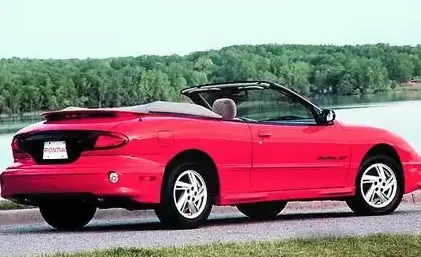
The Pontiac Sunfire Coupe 2.3i 16V, produced between 1994 and 1996, represented a key offering in Pontiac’s compact car lineup. Positioned as a sporty, affordable coupe, it was part of the first generation of the Sunfire, which shared its J-body platform with other General Motors vehicles like the Chevrolet Cavalier and Oldsmobile Beretta. This particular variant, equipped with the 2.3-liter inline-four engine and a four-speed automatic transmission, aimed to provide a balance of performance and convenience for the North American market. It served as a step up from the base model Sunfire, offering more power than the lower-displacement engines available.
Technical Specifications
| Brand | Pontiac |
| Model | Sunfire |
| Generation | Sunfire Coupe |
| Type (Engine) | 2.3i 16V (147 Hp) Automatic |
| Start of production | 1994 |
| End of production | 1996 |
| Powertrain Architecture | Internal Combustion engine |
| Body type | Coupe |
| Seats | 5 |
| Doors | 2 |
| Fuel Type | Petrol (Gasoline) |
| Weight-to-power ratio | 8.7 kg/Hp, 114.6 Hp/tonne |
| Weight-to-torque ratio | 6.8 kg/Nm, 148.1 Nm/tonne |
| Power | 147 Hp @ 6000 rpm |
| Power per litre | 65 Hp/l |
| Torque | 190 Nm @ 4800 rpm (140.14 lb.-ft. @ 4800 rpm) |
| Engine layout | Front, Transverse |
| Engine Model/Code | LD2 |
| Engine displacement | 2260 cm3 (137.91 cu. in.) |
| Number of cylinders | 4 |
| Engine configuration | Inline |
| Cylinder Bore | 92 mm (3.62 in.) |
| Piston Stroke | 85 mm (3.35 in.) |
| Compression ratio | 9.5:1 |
| Number of valves per cylinder | 4 |
| Fuel injection system | Multi-port manifold injection |
| Engine aspiration | Naturally aspirated engine |
| Valvetrain | DOHC |
| Engine oil capacity | 4.3 l (4.54 US qt | 3.78 UK qt) |
| Coolant | 10 l (10.57 US qt | 8.8 UK qt) |
| Kerb Weight | 1283 kg (2828.53 lbs) |
| Trunk (boot) space – minimum | 351 l (12.4 cu. ft.) |
| Fuel tank capacity | 58 l (15.32 US gal | 12.76 UK gal) |
| Length | 4622 mm (181.97 in.) |
| Width | 1738 mm (68.43 in.) |
| Height | 1351 mm (53.19 in.) |
| Wheelbase | 2644 mm (104.09 in.) |
| Front track | 1462 mm (57.56 in.) |
| Rear (Back) track | 1442 mm (56.77 in.) |
| Drivetrain Architecture | The Internal combustion engine (ICE) drives the front wheels of the vehicle. |
| Drive wheel | Front wheel drive |
| Number of gears and type of gearbox | 4 gears, automatic transmission |
| Front suspension | Wishbone |
| Rear suspension | Trailing arm |
| Front brakes | Ventilated discs |
| Rear brakes | Drum |
| Assisting systems | ABS (Anti-lock braking system) |
| Steering type | Steering rack and pinion |
| Power steering | Hydraulic Steering |
| Tires size | 195/65 R15 |
| Wheel rims size | 15 |
Powertrain & Engine Architecture
The heart of the Sunfire 2.3i was the LD2 engine, a 2.3-liter inline-four cylinder powerplant. This engine featured a dual overhead camshaft (DOHC) valvetrain operating 16 valves (four per cylinder), contributing to its relatively high output for its displacement. The LD2 utilized multi-port fuel injection, a common technology in the mid-1990s, which improved fuel atomization and efficiency compared to earlier throttle-body injection systems. The 9.5:1 compression ratio was a compromise between performance and the fuel quality available in the US market. Paired with this engine was a four-speed automatic transmission, a 4T40 or similar GM unit. This transmission was chosen for its ease of use and broad appeal, though it wasn’t known for particularly sporty or quick shifts.
Driving Characteristics
The 147 horsepower and 190 Nm (140 lb-ft) of torque delivered by the 2.3-liter engine and automatic transmission provided adequate, but not exhilarating, performance. Acceleration from 0 to 60 mph was typically in the 9-10 second range. The automatic transmission’s gear ratios were geared towards fuel economy and smooth cruising rather than aggressive acceleration. Compared to the five-speed manual transmission option, the automatic resulted in a noticeable decrease in responsiveness and a slight reduction in fuel efficiency. The Sunfire 2.3i Automatic wasn’t intended to be a performance leader; it was designed for comfortable and practical transportation.
Equipment & Trim Levels
The Sunfire 2.3i Automatic typically came standard with features like air conditioning, power steering, an AM/FM stereo, and cloth upholstery. Optional extras included power windows and locks, a upgraded sound system, and a sunroof. Interior trim was generally basic, reflecting the car’s affordable price point. The dashboard layout was functional, with clearly marked gauges and controls. The 2.3i trim level generally sat in the middle of the Sunfire lineup, offering more features than the base models but falling short of the more expensive, sport-oriented trims.
Chassis & Braking
The Sunfire Coupe utilized a front-wheel-drive layout with an independent wishbone front suspension and a trailing arm rear suspension. This suspension setup provided a reasonable balance of ride comfort and handling. Braking duties were handled by ventilated discs at the front and drum brakes at the rear. Anti-lock braking system (ABS) was available, and became increasingly common as a standard feature towards the end of the production run. The steering was rack-and-pinion, providing decent feel and responsiveness. The standard tire size was 195/65R15, mounted on 15-inch steel wheels.
Market Reception & Comparison
The Pontiac Sunfire 2.3i Automatic was generally well-received as an affordable and practical coupe. Critics noted its comfortable ride and adequate performance, but also pointed out its somewhat bland styling and unremarkable interior. Compared to other trims in the Sunfire lineup, the 2.3i Automatic offered a good compromise between price and performance. The 2.3L engine was considered more reliable than the smaller 2.2L engine, and offered a noticeable power increase. Fuel economy was respectable for the time, averaging around 22-28 mpg in mixed driving. Compared to competitors like the Honda Civic Coupe and Toyota Celica, the Sunfire offered a lower price point but lacked the same level of refinement and brand cachet.
Legacy
The Pontiac Sunfire, and specifically the 2.3i Automatic variant, has become a relatively affordable and accessible classic car. The LD2 engine is known for its durability and relatively simple maintenance requirements. While not a highly sought-after collector’s item, well-maintained examples can still provide reliable transportation. Common issues include oil leaks, worn suspension components, and corrosion in areas prone to rust. The automatic transmission, while generally reliable, can experience issues with solenoid failure or slipping. Today, the Sunfire 2.3i Automatic represents a snapshot of 1990s American automotive design and engineering, offering a nostalgic driving experience for those seeking an affordable and relatively simple coupe.