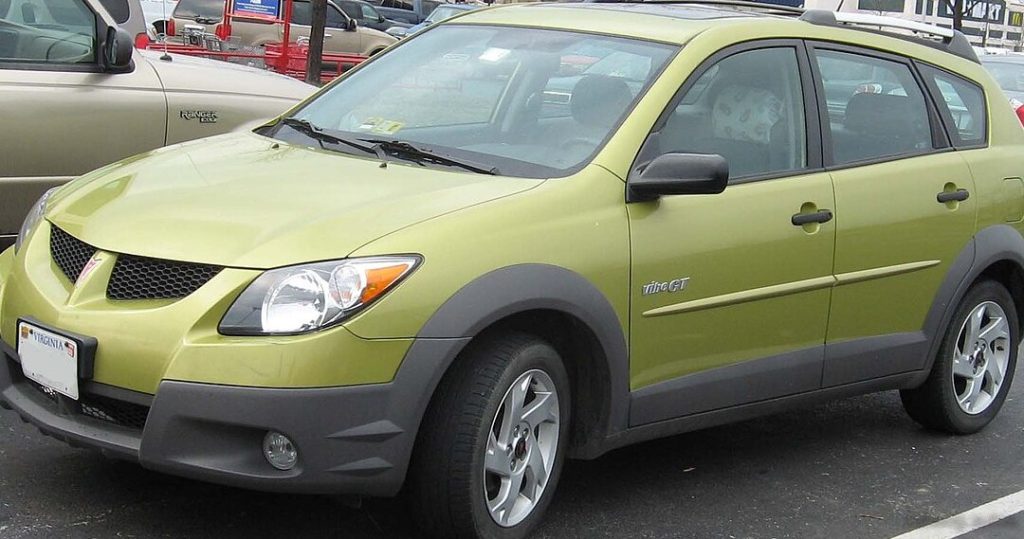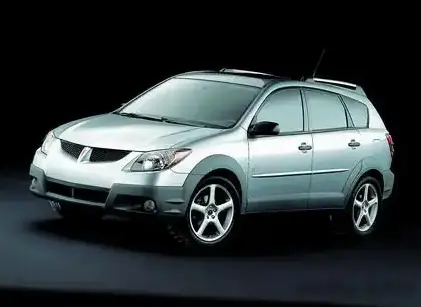
The Pontiac Vibe 1.8 i 16V, produced from 2002 to 2008, represented a significant entry for General Motors into the compact wagon segment. Developed as part of a joint venture with Toyota – sharing its platform and many components with the Toyota Matrix – the Vibe aimed to offer a practical and affordable vehicle for North American consumers. This particular variant, equipped with the 1.8-liter inline-four engine producing 182 horsepower, occupied a mid-range position within the Vibe lineup, offering a balance between performance and fuel efficiency. It was positioned above the base model and below any potential performance-oriented trims, appealing to buyers seeking a versatile and reasonably powerful wagon.
Technical Specifications
| Brand | Pontiac |
| Model | Vibe |
| Generation | Vibe |
| Type (Engine) | 1.8 i 16V (182 Hp) |
| Start of production | January, 2002 |
| End of production | 2008 |
| Powertrain Architecture | Internal Combustion engine |
| Body type | Station wagon (estate) |
| Seats | 5 |
| Doors | 5 |
| Fuel consumption (urban) | 11.2 l/100 km (21 US mpg) |
| Fuel consumption (extra urban) | 8.4 l/100 km (28 US mpg) |
| Fuel Type | Petrol (Gasoline) |
| Acceleration 0 – 100 km/h | 8.5 sec |
| Acceleration 0 – 62 mph | 8.5 sec |
| Acceleration 0 – 60 mph | 8.1 sec |
| Maximum speed | 210 km/h (130.49 mph) |
| Weight-to-power ratio | 7 kg/Hp |
| Weight-to-torque ratio | 7.2 kg/Nm |
| Power | 182 Hp @ 7600 rpm |
| Torque | 176 Nm @ 6800 rpm (129.81 lb.-ft. @ 6800 rpm) |
| Engine layout | Front, Transverse |
| Engine Model/Code | LNK |
| Engine displacement | 1794 cm3 (109.48 cu. in.) |
| Number of cylinders | 4 |
| Engine configuration | Inline |
| Cylinder Bore | 82 mm (3.23 in.) |
| Piston Stroke | 85 mm (3.35 in.) |
| Compression ratio | 11.5:1 |
| Number of valves per cylinder | 4 |
| Fuel injection system | Multi-port manifold injection |
| Engine aspiration | Naturally aspirated engine |
| Valvetrain | DOHC |
| Engine oil capacity | 4.4 l (4.65 US qt | 3.87 UK qt) |
| Coolant capacity | 6.7 l (7.08 US qt | 5.9 UK qt) |
| Kerb Weight | 1275 kg (2810.89 lbs.) |
| Trunk (boot) space – minimum | 870 l (30.72 cu. ft.) |
| Trunk (boot) space – maximum | 1620 l (57.21 cu. ft.) |
| Fuel tank capacity | 55 l (14.53 US gal | 12.1 UK gal) |
| Length | 4365 mm (171.85 in.) |
| Width | 1775 mm (69.88 in.) |
| Height | 1580 mm (62.2 in.) |
| Wheelbase | 2600 mm (102.36 in.) |
| Front track | 1515 mm (59.65 in.) |
| Rear track | 1495 mm (58.86 in.) |
| Drivetrain Architecture | Front wheel drive |
| Number of gears | 6 |
| Gearbox type | Manual transmission |
| Front suspension | Spring Strut |
| Rear suspension | Suspension with traction connecting levers |
| Front brakes | Ventilated discs |
| Rear brakes | Disc |
| Assisting systems | ABS (Anti-lock braking system) |
| Steering type | Steering rack and pinion |
| Power steering | Hydraulic Steering |
| Tires size | 205/55 R16 |
Introduction
The Pontiac Vibe, and specifically the 1.8 i 16V variant, was a product of GM’s partnership with Toyota, sharing the MC platform with the Toyota Matrix. Production spanned from 2002 through 2008, and the Vibe aimed to provide a more affordable and uniquely styled alternative to the Matrix. The 1.8L engine option was a key component of the Vibe’s appeal, offering a balance of power and fuel economy that resonated with a broad range of buyers. The wagon body style provided ample cargo space, making it a practical choice for families and individuals with active lifestyles.
Powertrain & Engine Architecture
At the heart of the Vibe 1.8 i 16V lies the 1ZZ-FE inline-four engine, a 1.8-liter (1794 cc) powerplant. This engine, also found in various Toyota models, is characterized by its lightweight aluminum block and cylinder head, contributing to overall vehicle efficiency. The engine utilizes a multi-port fuel injection system, delivering fuel directly to each intake port for optimized combustion. The engine features a double overhead camshaft (DOHC) valvetrain with four valves per cylinder, enhancing volumetric efficiency and contributing to the engine’s 182 horsepower output at 7600 rpm and 176 Nm (129.81 lb-ft) of torque at 6800 rpm. The engine code ‘LNK’ is specific to the Pontiac Vibe application. This variant was exclusively offered with a 6-speed manual transmission, providing drivers with precise control over gear selection and contributing to a more engaging driving experience.
Driving Characteristics
The 1.8-liter engine, paired with the 6-speed manual transmission, provided the Vibe with respectable acceleration. The 0-60 mph sprint was achieved in approximately 8.1 seconds, making it competitive within its class. The manual transmission allowed for efficient use of the engine’s powerband, offering responsive acceleration and good passing power. Compared to a hypothetical lower-powered engine option, the 1.8L provided a more confident and enjoyable driving experience, particularly when fully loaded or traveling uphill. While not a sports car, the Vibe 1.8 i 16V offered a balanced and capable driving experience for everyday use. The gear ratios were tuned for a blend of fuel efficiency and performance, with taller gears for highway cruising and shorter gears for quicker acceleration.
Equipment & Trim Levels
The Pontiac Vibe 1.8 i 16V typically came standard with features such as air conditioning, power windows and locks, and an AM/FM stereo system. Higher trim levels offered options like a CD player, upgraded upholstery, and alloy wheels. Interior materials were generally durable and practical, reflecting the Vibe’s focus on value and functionality. The dashboard layout was straightforward and user-friendly, with easy-to-read gauges and well-placed controls. Available options included a sunroof, cruise control, and a premium sound system. Safety features included dual front airbags and anti-lock brakes (ABS).
Chassis & Braking
The Vibe utilized a MacPherson strut front suspension and a torsion beam rear suspension. This setup provided a comfortable ride quality while maintaining reasonable handling characteristics. The front suspension featured coil springs and a stabilizer bar to reduce body roll during cornering. The rear suspension was designed to maximize cargo space and provide a stable platform for carrying loads. Braking duties were handled by ventilated discs at the front and solid discs at the rear, providing adequate stopping power for the vehicle’s weight and performance. The ABS system helped to maintain steering control during emergency braking situations.
Market Reception & Comparison
The Pontiac Vibe 1.8 i 16V was generally well-received by automotive critics as a practical and affordable wagon. It was praised for its spacious interior, fuel efficiency, and reliable Toyota-derived powertrain. Compared to the Toyota Matrix, the Vibe offered a slightly more aggressive exterior styling and a lower price point. However, some critics noted that the interior materials were not as refined as those found in some competing vehicles. Fuel economy was a strong point, averaging around 21 mpg in the city and 28 mpg on the highway. Reliability was also a key strength, thanks to the proven Toyota engine and transmission.
Legacy
The Pontiac Vibe, and particularly the 1.8 i 16V variant, has proven to be a durable and reliable vehicle in the used car market. The 1ZZ-FE engine is known for its longevity, and with proper maintenance, can easily exceed 200,000 miles. The 6-speed manual transmission is also considered to be robust and reliable. Today, used Vibe models are often sought after by budget-conscious buyers looking for a practical and dependable wagon. While the Pontiac brand is no longer in production, the Vibe remains a testament to the successful collaboration between General Motors and Toyota, offering a compelling combination of value, reliability, and versatility.