
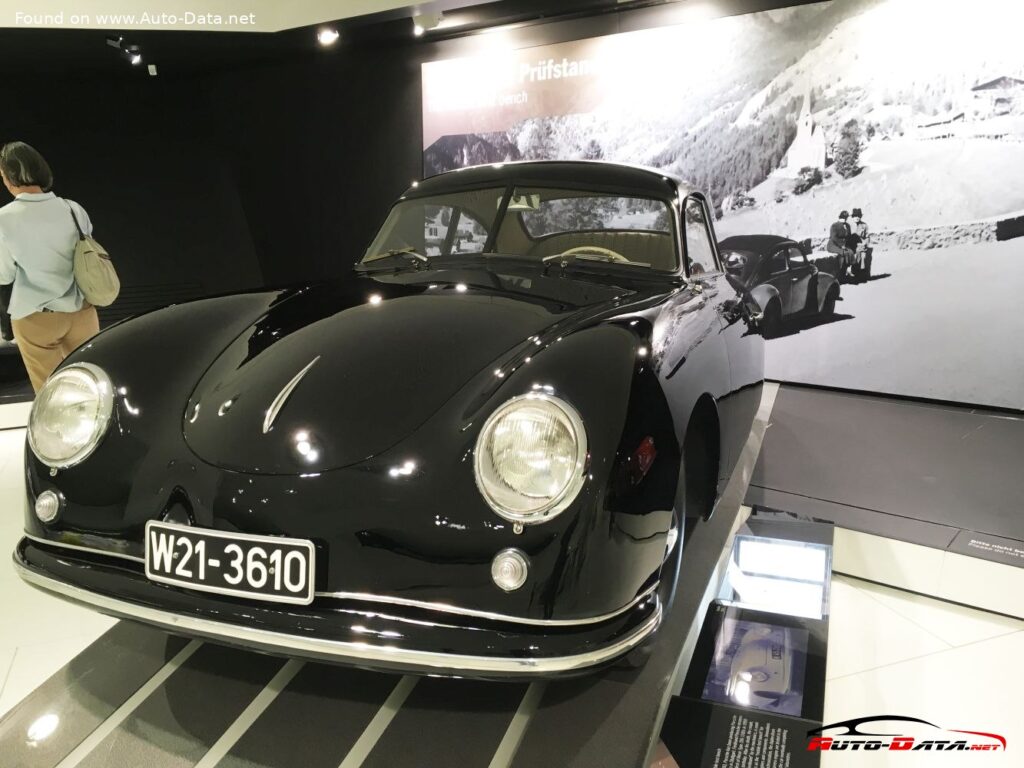
The Porsche 356 Coupe 1500 (55 Hp) represents a pivotal chapter in automotive history, embodying the nascent spirit of the Porsche brand and setting the stage for decades of engineering excellence. Introduced in 1950, this particular variant of the first-generation Porsche 356 Coupe emerged as a testament to Ferdinand Porsche’s vision of creating lightweight, agile, and robust sports cars. While its roots lay in post-war Europe, the 356 quickly garnered international acclaim, appealing to enthusiasts who valued its distinctive design, innovative engineering, and engaging driving dynamics. This model, produced until 1955, served as a foundational grand tourer, establishing Porsche’s reputation for performance and precision at a time when many manufacturers were still recovering from wartime production. The 356 Coupe’s blend of modest power with exceptional handling characteristics made it a formidable contender on both road and track, laying the groundwork for the legendary marque it would become.
Engine and Performance Characteristics of the Porsche 356 Coupe 1500 (55 Hp)
At the heart of the 1950-1955 Porsche 356 Coupe 1500 (55 Hp) lies a truly iconic powerplant: a rear-mounted, longitudinally-positioned 1.5-liter (1488 cm3, or 90.8 cubic inches) flat-four boxer engine. This configuration, a hallmark of Porsche engineering, allowed for a low center of gravity and excellent weight distribution, contributing significantly to the car’s renowned handling. The naturally aspirated engine, featuring an OHV (Overhead Valve) valvetrain and a carburettor fuel injection system, produced a modest but highly effective 55 horsepower at 4400 revolutions per minute. With a compression ratio of 6.5:1 and two valves per cylinder, this engine was a marvel of efficiency and reliability for its era, delivering a power per liter figure of 37 horsepower.
Despite what might seem like a modest power output by modern standards, the 356 Coupe 1500 (55 Hp) was remarkably sprightly thanks to its featherlight curb weight of just 1686.54 pounds (765 kg). This combination resulted in an impressive weight-to-power ratio of 13.9 kg per horsepower, or 71.9 horsepower per tonne. Such an advantageous power-to-weight ratio translated into spirited performance for its time. The car could accelerate from 0 to 60 miles per hour in a respectable 13.9 seconds, with 0 to 62 mph (100 km/h) taking 14.6 seconds. Its top speed of 103.77 miles per hour (167 km/h) further solidified its status as a genuine sports car capable of sustained high-speed touring.
Power was delivered to the rear wheels via a robust and engaging 4-speed manual transmission, offering the driver direct control over the car’s performance. The drivetrain architecture, with the internal combustion engine driving the rear wheels, was a classic sports car setup that emphasized driver involvement and dynamic balance. Fuel economy for the 356 Coupe 1500 (55 Hp) was also commendable for its time, with a combined consumption figure ranging from 29.4 to 26.1 US miles per gallon (8-9 liters per 100 km). This blend of efficiency and performance made the 356 an ideal choice for both spirited driving and longer journeys, further cementing its appeal as a versatile grand tourer. The engine’s oil capacity was 3.7 US quarts (3.5 liters), ensuring adequate lubrication for its durable operation.
Design Heritage and Features
The Porsche 356 Coupe 1500 (55 Hp) is instantly recognizable by its distinctive and timeless “bathtub” styling, a design that has profoundly influenced subsequent Porsche models. As a 2-door coupe with seating for two, its aesthetic was driven by both elegance and aerodynamic efficiency, a critical factor in achieving its performance figures with relatively low horsepower. The car’s dimensions contributed to its compact and agile stance: a length of 152.36 inches (3870 mm), a width of 65.16 inches (1655 mm), and a height of 51.18 inches (1300 mm). Its relatively short wheelbase of 82.68 inches (2100 mm) further enhanced its nimble handling characteristics, allowing for a minimum turning circle of just 33.46 feet (10.2 meters).
Underneath its graceful exterior, the 356 Coupe incorporated advanced chassis and suspension technology for its era. Both the front and rear suspensions utilized torsion bars, a sophisticated system that provided a superior balance of ride comfort and sporting handling compared to many contemporary leaf spring setups. This innovative suspension design, combined with a front track of 49.21 inches (1250 mm) and a rear track of 50.79 inches (1290 mm), gave the 356 its characteristic stability and cornering prowess. The ride height, or ground clearance, was 6.89 inches (175 mm), offering sufficient clearance for varying road conditions.
Braking performance was handled by drum brakes on all four wheels, each measuring 280 mm. While drum brakes are less common in modern performance vehicles, the system on the 356 was entirely adequate for its weight and speed capabilities, providing reliable stopping power. The steering system featured a worm-reduction unit, complemented by hydraulic power steering. This detail is notable for a vehicle of the early 1950s, suggesting a forward-thinking approach to enhancing driver comfort and maneuverability. The interior, while minimalist by today’s standards, was meticulously crafted with a focus on driver ergonomics and functionality, reflecting its purpose as a serious driving machine rather than a mere mode of transport. The 356’s design language, characterized by smooth curves, integrated fenders, and a sloping roofline, not only defined the brand’s aesthetic for decades but also contributed significantly to its aerodynamic profile, a crucial element in its performance envelope. The 55-liter (14.53 US gallon) fuel tank provided a generous range, suitable for grand touring adventures.
Technical Specifications
| Brand | Porsche |
| Model | 356 |
| Generation | 356 Coupe |
| Type (Engine) | 1500 (55 Hp) |
| Start of production | 1950 year |
| End of production | 1955 year |
| Powertrain Architecture | Internal Combustion engine |
| Body type | Coupe |
| Seats | 2 |
| Doors | 2 |
| Fuel consumption (economy) – combined | 29.4 – 26.1 US mpg (8-9 l/100 km) |
| Fuel Type | Petrol (Gasoline) |
| Acceleration 0 – 60 mph | 13.9 sec |
| Acceleration 0 – 62 mph (0-100 km/h) | 14.6 sec |
| Maximum speed | 103.77 mph (167 km/h) |
| Weight-to-power ratio | 13.9 kg/Hp, 71.9 Hp/tonne |
| Power | 55 Hp @ 4400 rpm |
| Power per liter | 37 Hp/l |
| Engine layout | Rear, Longitudinal |
| Engine displacement | 1488 cm3 (90.8 cu. in.) |
| Number of cylinders | 4 |
| Engine configuration | Boxer |
| Cylinder Bore | 3.15 in. (80 mm) |
| Piston Stroke | 2.91 in. (74 mm) |
| Compression ratio | 6.5:1 |
| Number of valves per cylinder | 2 |
| Fuel injection system | Carburettor |
| Engine aspiration | Naturally aspirated engine |
| Valvetrain | OHV |
| Engine oil capacity | 3.7 US qt (3.5 l) |
| Kerb Weight | 1686.54 lbs (765 kg) |
| Max. weight | 2645.55 lbs (1200 kg) |
| Max load | 959.01 lbs (435 kg) |
| Fuel tank capacity | 14.53 US gal (55 l) |
| Length | 152.36 in. (3870 mm) |
| Width | 65.16 in. (1655 mm) |
| Height | 51.18 in. (1300 mm) |
| Wheelbase | 82.68 in. (2100 mm) |
| Front track | 49.21 in. (1250 mm) |
| Rear (Back) track | 50.79 in. (1290 mm) |
| Ride height (ground clearance) | 6.89 in. (175 mm) |
| Minimum turning circle (turning diameter) | 33.46 ft. (10.2 m) |
| Drivetrain Architecture | The Internal combustion engine (ICE) drives the rear wheels of the vehicle. |
| Drive wheel | Rear wheel drive |
| Number of gears and type of gearbox | 4 gears, manual transmission |
| Front suspension | Torsion |
| Rear suspension | Torsion |
| Front brakes | Drum, 280 mm |
| Rear brakes | Drum, 280 mm |
| Steering type | Worm-reduction unit |
| Power steering | Hydraulic Steering |
