
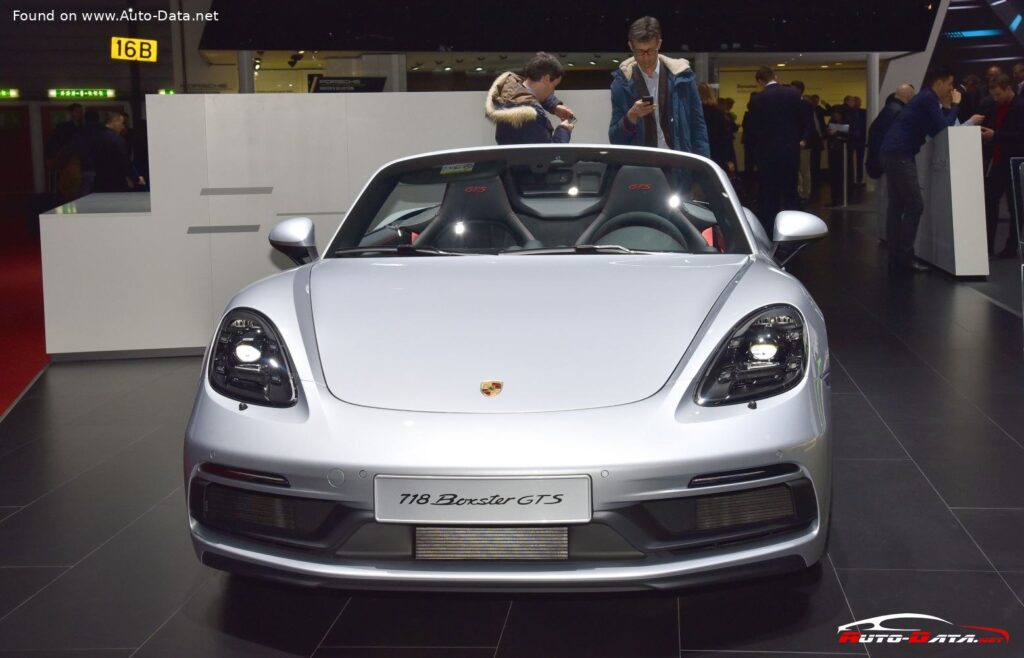
The Porsche 718 Boxster (982) T 2.0 (300 Hp) represents a compelling chapter in the illustrious history of Porsche’s mid-engine roadster, embodying a purist approach to open-top driving. Introduced in December 2018 and produced until June 2020, this specific variant of the 718 Boxster (982) generation carved out a niche for enthusiasts who prioritize driving dynamics and a direct connection to the road. Positioned within the luxury sports car segment, the 718 Boxster T, where ‘T’ stands for ‘Touring,’ harks back to Porsche’s philosophy of offering a focused, lightweight, and agile machine. It combines the exhilaration of a convertible with the precision engineering synonymous with the Stuttgart marque, delivering an unadulterated driving experience designed to captivate on both road and track. This model, with its potent 2.0-liter turbocharged engine, was crafted to be a driver’s car first and foremost, emphasizing performance and handling over excessive luxury, while still retaining the premium feel expected of a Porsche.
Engineering Prowess: The Porsche 718 Boxster (982) T 2.0 (300 Hp) Powertrain
At the heart of the Porsche 718 Boxster (982) T 2.0 (300 Hp) lies a meticulously engineered 2.0-liter, turbocharged flat-four boxer engine, designated with the model code DDPB. This powertrain architecture is a testament to Porsche’s commitment to innovation, blending traditional boxer engine characteristics with modern forced induction technology. Mounted in a mid-longitudinal layout, the engine’s placement is crucial for the Boxster’s renowned balance and agile handling, contributing to its low center of gravity and ideal weight distribution. The engine’s displacement of 1988 cubic centimeters (121.32 cu. in.) is optimized to deliver both spirited performance and respectable efficiency.
The power output of this sophisticated engine is an impressive 300 horsepower, peaking at a high 7500 rpm, showcasing its free-revving nature. This translates to an exceptional power-per-liter ratio of 150.9 horsepower per liter, highlighting the engine’s efficiency in generating power from its compact size. Torque is equally impressive, with 280.27 lb.-ft. (380 Nm) available across a broad rev range, from 2150 to 4500 rpm. This wide torque band is a significant advantage of the turbocharger and intercooler system, ensuring robust acceleration and flexibility in various driving conditions, minimizing the typical lag associated with turbocharged units.
Performance figures for the 718 Boxster T are indicative of its sporting intentions. The car can sprint from 0 to 60 mph in a mere 4.8 seconds (0-100 km/h in 5.1 seconds), a testament to its potent engine and efficient power delivery through its standard 6-speed manual transmission. This manual gearbox reinforces the “Touring” philosophy, providing an engaging and tactile driving experience that many enthusiasts crave. The top speed is an exhilarating 170.88 mph (275 km/h), allowing the Boxster T to confidently assert itself on open roads or track days.
Despite its performance capabilities, the Porsche 718 Boxster (982) T 2.0 (300 Hp) also demonstrates a commendable focus on fuel economy and emissions. With a combined fuel consumption rating of 29 US mpg (8.1 l/100 km), it offers a surprising degree of efficiency for a high-performance sports car. Urban driving yields 20.8 US mpg (11.3 l/100 km), while extra-urban cruising can achieve an impressive 37.3 US mpg (6.3 l/100 km). CO2 emissions are rated at 187 g/km, adhering to the Euro 6d-TEMP emission standard, reflecting Porsche’s commitment to environmental responsibility. The engine features direct fuel injection and a 9.5:1 compression ratio, further enhancing efficiency and power delivery. A particulate filter is also integrated into the engine systems, ensuring compliance with modern emission regulations. The engine oil capacity stands at 6.02 US quarts (5.7 liters), crucial for maintaining optimal performance and longevity.
Design, Dynamics, and Driver-Centric Features
The design of the Porsche 718 Boxster (982) T 2.0 (300 Hp) is a masterful blend of timeless Porsche aesthetics and contemporary functionality, all wrapped in a sleek, two-door cabriolet body. Its proportions are classically sporty: a length of 172.4 inches (4379 mm), a width of 70.91 inches (1801 mm) (78.5 inches / 1994 mm including mirrors), and a low height of 49.76 inches (1264 mm). The wheelbase of 97.44 inches (2475 mm) contributes to its compact footprint and inherent agility, making it exceptionally nimble on winding roads. The drag coefficient (Cd) of 0.31 indicates careful aerodynamic sculpting, contributing to both stability at high speeds and fuel efficiency.
As a “T” model, the 718 Boxster T is distinguished by a philosophy of minimalism and enhanced driving dynamics. While the data doesn’t explicitly detail interior features, the “T” trim typically implies a focus on essential performance elements, often including lightweight components, a sport-tuned chassis, and a more direct driving experience. The driver-centric cockpit is designed to place all controls intuitively within reach, fostering a deep connection between driver and machine. Despite its performance focus, the Boxster T still offers practical elements such as a trunk space of 5.3 cubic feet (150 liters), adequate for weekend getaways.
The vehicle’s dynamic capabilities are further supported by its robust chassis and suspension components. The drivetrain architecture ensures that the internal combustion engine drives the rear wheels, a configuration revered by driving purists for its engaging characteristics. Stopping power is managed by ventilated disc brakes on both the front and rear axles, complemented by an Anti-lock Braking System (ABS) for assured control under hard braking. The steering system is a precise steering rack and pinion setup, utilizing electric power steering to provide responsive feedback and effortless maneuverability at lower speeds, without sacrificing feel at higher velocities.
The Boxster T rides on a staggered wheel and tire setup, optimizing grip and handling. The front features 235/45 ZR18 tires on 8J x 18 wheel rims, while the rear utilizes wider 265/45 ZR18 tires on 9.5J x 18 rims. This configuration is crucial for translating the engine’s power to the road effectively and providing exceptional cornering stability. The kerb weight of 2976.24 lbs (1350 kg) contributes to an impressive weight-to-power ratio of 4.5 kg/Hp (222.2 Hp/tonne) and a weight-to-torque ratio of 3.6 kg/Nm (281.5 Nm/tonne), indicating a highly responsive and potent machine. The maximum allowable weight is 3648.65 lbs (1655 kg), allowing for a maximum load of 672.41 lbs (305 kg), accommodating driver, passenger, and luggage. The fuel tank capacity of 14.27 US gallons (54 liters) provides a respectable cruising range, further enhancing its touring capabilities. Overall, the Porsche 718 Boxster (982) T 2.0 (300 Hp) stands as a meticulously crafted sports car, blending high performance, engaging dynamics, and the iconic open-top experience that defines the Boxster legend.
Technical Specifications
| Brand | Porsche |
| Model | 718 |
| Generation | 718 Boxster (982) |
| Type (Engine) | T 2.0 (300 Hp) |
| Start of production | December, 2018 year |
| End of production | June, 2020 year |
| Powertrain Architecture | Internal Combustion engine |
| Body type | Cabriolet |
| Seats | 2 |
| Doors | 2 |
| Fuel consumption (economy) – urban | 20.8 US mpg (11.3 l/100 km) |
| Fuel consumption (economy) – extra urban | 37.3 US mpg (6.3 l/100 km) |
| Fuel consumption (economy) – combined | 29 US mpg (8.1 l/100 km) |
| CO2 emissions | 187 g/km |
| Fuel Type | Petrol (Gasoline) |
| Acceleration 0 – 60 mph | 4.8 sec |
| Acceleration 0 – 100 km/h | 5.1 sec |
| Maximum speed | 170.88 mph (275 km/h) |
| Emission standard | Euro 6d – TEMP |
| Weight-to-power ratio | 4.5 kg/Hp, 222.2 Hp/tonne |
| Weight-to-torque ratio | 3.6 kg/Nm, 281.5 Nm/tonne |
| Power | 300 Hp @ 7500 rpm |
| Power per liter | 150.9 Hp/l |
| Torque | 280.27 lb.-ft. (380 Nm) @ 2150-4500 rpm |
| Engine layout | Middle, Longitudinal |
| Engine Model/Code | DDPB |
| Engine displacement | 121.32 cu. in. (1988 cm3) |
| Number of cylinders | 4 |
| Engine configuration | Boxer |
| Cylinder Bore | 3.58 in. (91 mm) |
| Piston Stroke | 3.01 in. (76.4 mm) |
| Compression ratio | 9.5:1 |
| Number of valves per cylinder | 4 |
| Fuel injection system | Direct injection |
| Engine aspiration | Turbocharger, Intercooler |
| Engine oil capacity | 6.02 US qt (5.7 l) |
| Engine systems | Particulate filter |
| Kerb Weight | 2976.24 lbs (1350 kg) |
| Max. weight | 3648.65 lbs (1655 kg) |
| Max load | 672.41 lbs (305 kg) |
| Trunk (boot) space – minimum | 5.3 cu. ft. (150 l) |
| Fuel tank capacity | 14.27 US gal (54 l) |
| Length | 172.4 in. (4379 mm) |
| Width | 70.91 in. (1801 mm) |
| Width including mirrors | 78.5 in. (1994 mm) |
| Height | 49.76 in. (1264 mm) |
| Wheelbase | 97.44 in. (2475 mm) |
| Front track | 60.16 in. (1528 mm) |
| Rear (Back) track | 60.39 in. (1534 mm) |
| Drag coefficient (Cd) | 0.31 |
| Drivetrain Architecture | The Internal combustion engine (ICE) drives the rear wheels of the vehicle. |
| Drive wheel | Rear wheel drive |
| Number of gears and type of gearbox | 6 gears, manual transmission |
| Front brakes | Ventilated discs |
| Rear brakes | Ventilated discs |
| Assisting systems | ABS (Anti-lock braking system) |
| Steering type | Steering rack and pinion |
| Power steering | Electric Steering |
| Tires size | 235/45 ZR18; 265/45 ZR18 |
| Wheel rims size | 8J x 18; 9.5J x 18 |
