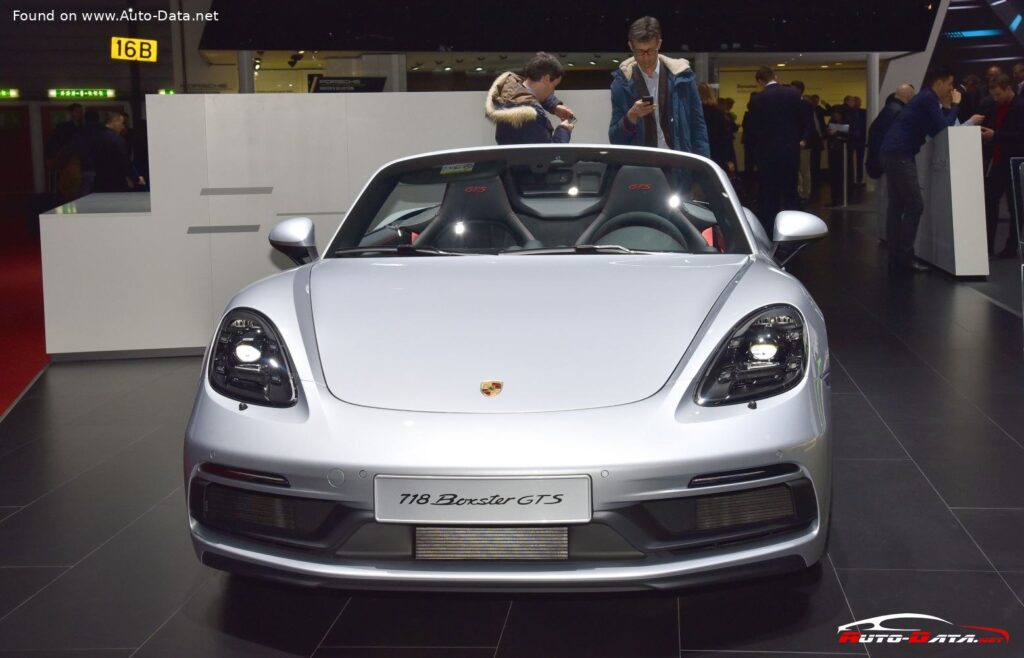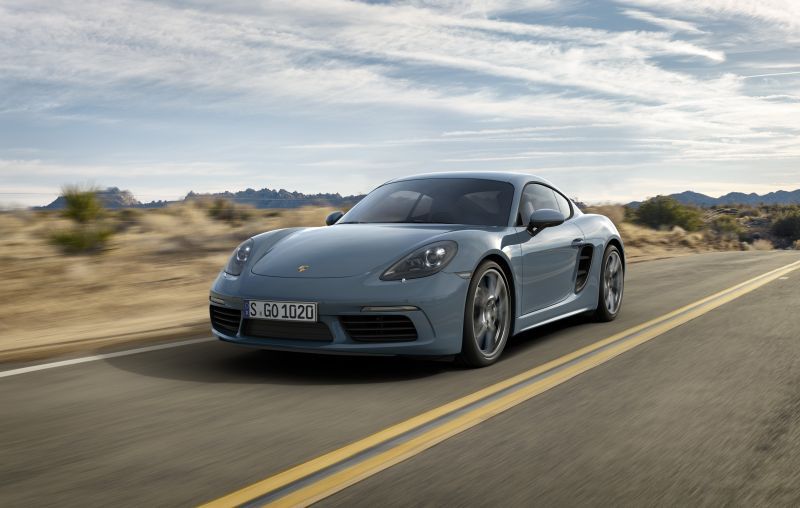
The Porsche 718 Cayman (982) 2.0 (300 Hp) represents a pivotal moment in the storied history of Porsche’s mid-engine sports car lineup. Launched in September 2016 as part of the 982 generation, this iteration of the Cayman marked a significant departure from its predecessors, most notably with the adoption of a turbocharged flat-four engine, replacing the naturally aspirated flat-six units that had long defined the Boxster and Cayman experience. Positioned as a pure driver’s car, the 718 Cayman (982) 2.0 (300 Hp) aimed to deliver exhilarating performance, precise handling, and everyday usability within the competitive premium sports coupe segment. Its introduction brought a renewed focus on efficiency and a broader torque curve, aligning with contemporary automotive trends while striving to uphold Porsche’s legendary dynamic prowess. This particular variant, produced until August 2018, served as the entry point into the 718 Cayman range, offering a compelling blend of power and agility.
Engine and Performance of the Porsche 718 Cayman (982)
At the heart of the Porsche 718 Cayman (982) 2.0 (300 Hp) lies its revolutionary powertrain: a 2.0-liter turbocharged flat-four engine. This engine, designated with the code MDD.PB, represents a significant engineering feat, as Porsche embraced forced induction for its entry-level sports cars. The flat-four, or Boxer, configuration is a hallmark of Porsche engineering, providing a low center of gravity that significantly contributes to the car’s exceptional handling characteristics. With a displacement of 1988 cm³ (121.32 cu. in.), this compact yet potent engine delivers a formidable 300 horsepower at 6500 rpm, translating to an impressive power output of 150.9 horsepower per liter. This figure is particularly noteworthy for a production engine of its size, showcasing Porsche’s expertise in maximizing power density.
Perhaps even more impactful than the peak horsepower is the substantial torque output: 380 Nm (280.27 lb-ft) available across a remarkably broad rev range, from 1950 rpm all the way up to 4500 rpm. This wide torque band is a direct benefit of the turbocharger and intercooler system, providing instant throttle response and relentless acceleration from low engine speeds, a characteristic often absent in naturally aspirated engines. The result is a highly flexible and tractable engine that makes the 718 Cayman (982) 2.0 (300 Hp) incredibly responsive in various driving scenarios, from spirited canyon carving to daily commuting. The maximum engine speed of 7500 rpm allows for enthusiastic revving, while the direct injection fuel system ensures precise fuel delivery and optimal combustion efficiency. The engine features a bore of 91 mm and a stroke of 76.4 mm, with a compression ratio of 9.5:1, and four valves per cylinder, all contributing to its robust performance and efficiency.
Performance metrics for the 718 Cayman (982) 2.0 (300 Hp) are indicative of a true sports car. It accelerates from 0 to 60 mph in a swift 4.8 seconds, with the 0 to 100 km/h sprint taking 5.1 seconds. The car continues to pull strongly, reaching 200 km/h in just 18.3 seconds. Its top speed is electronically limited to 275 km/h (170.88 mph), ensuring exhilarating high-speed performance. Power is sent to the rear wheels via a standard 6-speed manual transmission, offering an engaging and direct driving experience that purists highly appreciate. This drivetrain architecture, with the engine mounted longitudinally in the middle, perfectly balances the car’s weight distribution, further enhancing its dynamic capabilities. The weight-to-power ratio stands at an impressive 4.5 kg/Hp (224.7 Hp/tonne), underscoring its lightweight design and potent engine. Despite its performance focus, the 718 Cayman (982) 2.0 (300 Hp) also demonstrates commendable fuel economy, with a combined rating of 7.4 l/100 km (31.8 US mpg), and CO2 emissions of 168 g/km, meeting Euro 6 emission standards.
Design and Features of the 718 Cayman (982)
The design of the Porsche 718 Cayman (982) 2.0 (300 Hp) is an evolution of its acclaimed predecessor, featuring sharper lines, more pronounced air intakes, and a generally more aggressive stance that underscores its performance credentials. As a two-door coupe, the 718 Cayman maintains its iconic profile, characterized by its sleek silhouette and purposeful proportions. The mid-engine layout not only dictates the car’s superb balance but also influences its unique design, with distinct front and rear luggage compartments – a 11.8 cu. ft. (334 l) trunk space, making it surprisingly practical for a sports car. The exterior dimensions are compact yet assertive: a length of 4379 mm (172.4 in.), a width of 1801 mm (70.91 in.) (1994 mm or 78.5 in. including mirrors), and a low height of 1286 mm (50.63 in.). These dimensions, combined with a wheelbase of 2475 mm (97.44 in.), contribute to its agile and responsive feel on the road. The drag coefficient (Cd) of 0.30 highlights its aerodynamic efficiency, crucial for both performance and fuel economy.
Underneath its sculpted bodywork, the 718 Cayman (982) 2.0 (300 Hp) boasts a sophisticated chassis designed for precision and driver engagement. The suspension system features independent McPherson struts with coil springs and anti-roll bars at both the front and rear, providing exceptional body control and ride comfort. This setup is optimized for dynamic driving, allowing the car to corner with remarkable flatness and stability. Stopping power is provided by ventilated disc brakes on both the front and rear axles, ensuring consistent and powerful deceleration, complemented by an Anti-lock Braking System (ABS) for enhanced safety during aggressive braking maneuvers. The steering system is a rack and pinion type with electric power steering, offering precise feedback and variable assistance that adapts to driving conditions, enhancing maneuverability and driver confidence. The minimum turning circle of 10.98 m (36.02 ft) further underscores its agility in tight spaces.
The 718 Cayman (982) 2.0 (300 Hp) comes equipped with a set of performance tires, sized 235/45 ZR 18 at the front and wider 265/45 ZR 18 at the rear, mounted on 18-inch alloy wheel rims (8J x 18 ET 57 front; 9.5J x 18 ET 49 rear). This staggered setup optimizes grip and handling, particularly under acceleration and cornering. Inside, the cabin is a testament to Porsche’s focus on driver-centric design, featuring high-quality materials, ergonomic controls, and comfortable seating for two occupants. While the data provided focuses on technical specifications, it’s understood that Porsche vehicles of this era included a range of modern conveniences and safety features, such as advanced infotainment systems, climate control, and various driver aids, tailored to the premium sports car market. The overall package of the 718 Cayman (982) 2.0 (300 Hp) combines a striking design with meticulously engineered features, culminating in a highly capable and rewarding driving machine.
Technical Specifications
| Brand | Porsche |
| Model | 718 |
| Generation | 718 Cayman (982) |
| Type (Engine) | 2.0 (300 Hp) |
| Start of production | September, 2016 year |
| End of production | August, 2018 year |
| Powertrain Architecture | Internal Combustion engine |
| Body type | Coupe |
| Seats | 2 |
| Doors | 2 |
| Fuel consumption (economy) – urban | 9.9 l/100 km (23.8 US mpg) |
| Fuel consumption (economy) – extra urban | 6 l/100 km (39.2 US mpg) |
| Fuel consumption (economy) – combined | 7.4 l/100 km (31.8 US mpg) |
| CO2 emissions | 168 g/km |
| Fuel Type | Petrol (Gasoline) |
| Acceleration 0 – 60 mph | 4.8 sec |
| Acceleration 0 – 100 km/h | 5.1 sec |
| Acceleration 0 – 200 km/h | 18.3 sec |
| Maximum speed | 275 km/h (170.88 mph) |
| Emission standard | Euro 6 |
| Weight-to-power ratio | 4.5 kg/Hp (224.7 Hp/tonne) |
| Weight-to-torque ratio | 3.5 kg/Nm (284.6 Nm/tonne) |
| Power | 300 Hp @ 6500 rpm |
| Power per litre | 150.9 Hp/l |
| Torque | 380 Nm @ 1950-4500 rpm (280.27 lb.-ft.) |
| Maximum engine speed | 7500 rpm |
| Engine layout | Middle, Longitudinal |
| Engine Model/Code | MDD.PB |
| Engine displacement | 1988 cm³ (121.32 cu. in.) |
| Number of cylinders | 4 |
| Engine configuration | Boxer |
| Cylinder Bore | 91 mm (3.58 in.) |
| Piston Stroke | 76.4 mm (3.01 in.) |
| Compression ratio | 9.5:1 |
| Number of valves per cylinder | 4 |
| Fuel injection system | Direct injection |
| Engine aspiration | Turbocharger, Intercooler |
| Engine oil capacity | 5.7 l (6.02 US qt) |
| Kerb Weight | 1335 kg (2943.17 lbs.) |
| Max. weight | 1655 kg (3648.65 lbs.) |
| Max load | 320 kg (705.48 lbs.) |
| Trunk (boot) space – minimum | 334 l (11.8 cu. ft.) |
| Fuel tank capacity | 54 l (14.27 US gal) |
| Length | 4379 mm (172.4 in.) |
| Width | 1801 mm (70.91 in.) |
| Width including mirrors | 1994 mm (78.5 in.) |
| Height | 1286 mm (50.63 in.) |
| Wheelbase | 2475 mm (97.44 in.) |
| Front track | 1515 mm (59.65 in.) |
| Rear (Back) track | 1532 mm (60.31 in.) |
| Drag coefficient (Cd) | 0.30 |
| Minimum turning circle (turning diameter) | 10.98 m (36.02 ft) |
| Drivetrain Architecture | Internal combustion engine drives the rear wheels. |
| Drive wheel | Rear wheel drive |
| Number of gears and type of gearbox | 6 gears, manual transmission |
| Front suspension | Independent, type McPherson with coil spring and anti-roll bar |
| Rear suspension | McPherson |
| Front brakes | Ventilated discs |
| Rear brakes | Ventilated discs |
| Assisting systems | ABS (Anti-lock braking system) |
| Steering type | Steering rack and pinion |
| Power steering | Electric Steering |
| Tires size | 235/45 ZR 18; 265/45 ZR 18 |
| Wheel rims size | 8J x 18 ET 57; 9.5J x 18 ET 49 |