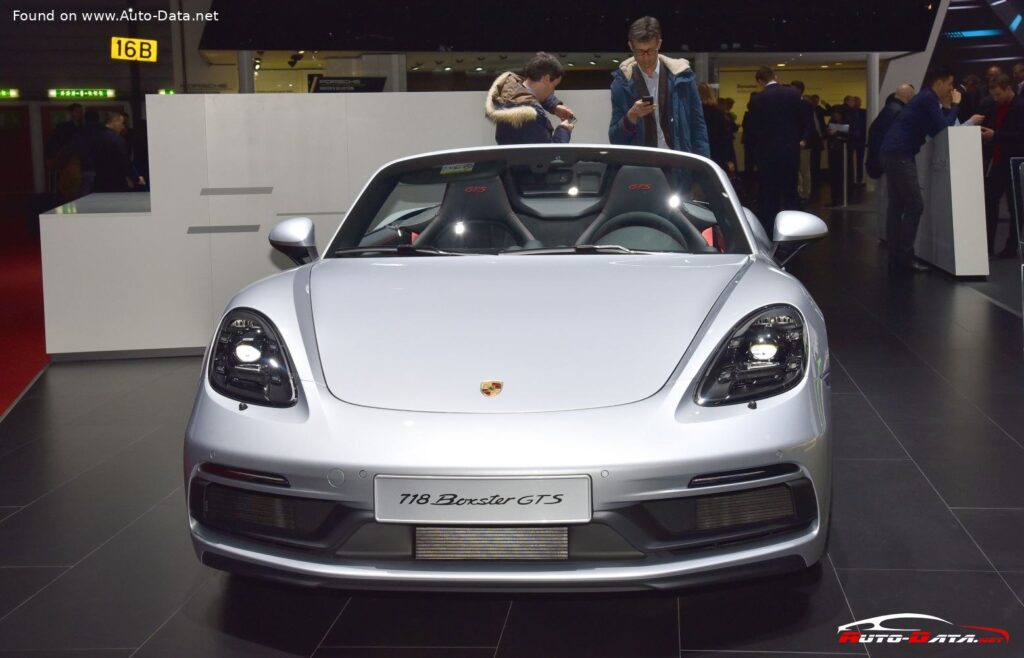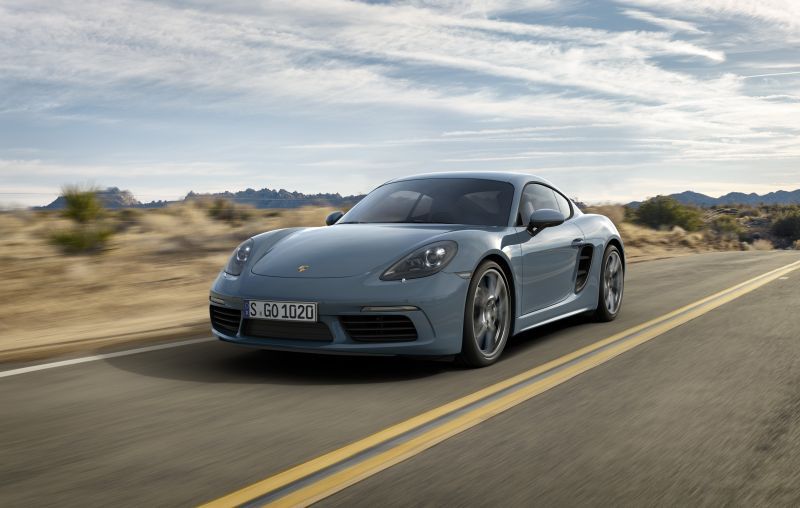
The Porsche 718 Cayman GTS 4.0 (982) represents a return to form for the Cayman line, specifically lauded for reintroducing a naturally aspirated flat-six engine. Launched in September 2020, this variant sits at the top of the 718 Cayman range, offering a more engaging and visceral driving experience compared to the turbocharged four-cylinder models. Positioned in the premium sports car segment, the 718 Cayman GTS 4.0 competes with vehicles like the Chevrolet Corvette, BMW M2, and Audi TT RS, appealing to enthusiasts who prioritize driving dynamics and a connection to the machine.
Porsche 718 Cayman GTS 4.0: A Return to Naturally Aspirated Power
The 982 generation Cayman, introduced in 2016, initially moved away from the traditional flat-six engines favored by Porsche purists, opting for turbocharged four-cylinder units. However, demand for a naturally aspirated option led to the development of the GTS 4.0. This model is not simply a higher-powered version of existing Caymans; it’s a deliberate engineering statement, prioritizing driver engagement and a classic Porsche feel. The “4.0” designation refers to the engine displacement, a key selling point for those seeking a more authentic sports car experience.
Engine & Performance
The heart of the 718 Cayman GTS 4.0 is its 3,995 cc (243.79 cu. in.) naturally aspirated flat-six engine, derived from the 911 Carrera S. This engine produces 400 horsepower at 7,000 rpm and 420 Nm (309.78 lb.-ft.) of torque between 5,000 and 6,500 rpm. The engine’s power-to-liter ratio is an impressive 100.1 hp/l. Power is delivered to the rear wheels via a standard six-speed manual transmission, although a seven-speed PDK dual-clutch transmission is available as an option. The rear-wheel-drive configuration contributes to the car’s balanced handling characteristics. Performance figures are notable, with a 0-60 mph acceleration time of 4.3 seconds, a 0-100 km/h time of 4.5 seconds, and a top speed of 293 km/h (182.06 mph). The engine’s responsiveness and the satisfying sound of the naturally aspirated intake and exhaust are central to the GTS 4.0’s appeal. The weight-to-power ratio is 3.5 kg/Hp, and the weight-to-torque ratio is 3.3 kg/Nm.
Design & Features
The 718 Cayman GTS 4.0 maintains the classic mid-engine, two-seat coupe body style synonymous with the Cayman lineage. Its design emphasizes aerodynamic efficiency and a low center of gravity. Key exterior features include a unique front fascia with larger air intakes, blacked-out trim elements, and a prominent rear diffuser. The car rides on 20-inch alloy wheels, with staggered tire sizes (235/35 ZR20 front, 265/35 ZR20 rear) to maximize grip. Inside, the GTS 4.0 features sport seats upholstered in Alcantara, a GT Sport steering wheel, and various trim accents that distinguish it from other 718 models. Modern features include Porsche Communication Management (PCM) with navigation, Apple CarPlay integration, and available advanced driver-assistance systems. Safety features include ABS, Porsche Stability Management (PSM), and a suite of airbags. The trunk offers 270 liters (9.53 cu. ft.) of storage space, suitable for weekend getaways.
Technical Specifications
| Brand | Porsche |
| Model | 718 |
| Generation | 718 Cayman (982) |
| Type | GTS 4.0 (400 Hp) |
| Start of production | September, 2020 |
| Powertrain Architecture | Internal Combustion engine |
| Body type | Coupe |
| Seats | 2 |
| Doors | 2 |
| Fuel consumption (economy) – urban (NEDC) | 14.7 l/100 km (16 US mpg, 19.2 UK mpg, 6.8 km/l) |
| Fuel consumption (economy) – extra urban (NEDC) | 8.5 l/100 km (27.7 US mpg, 33.2 UK mpg, 11.8 km/l) |
| Fuel consumption (economy) – combined (NEDC) | 10.8 l/100 km (21.8 US mpg, 26.2 UK mpg, 9.3 km/l) |
| CO2 emissions (NEDC) | 246 g/km |
| Fuel Type | Petrol (Gasoline) |
| Acceleration 0 – 100 km/h | 4.5 sec |
| Acceleration 0 – 62 mph | 4.5 sec |
| Acceleration 0 – 60 mph | 4.3 sec |
| Acceleration 0 – 200 km/h | 14.1 sec |
| Maximum speed | 293 km/h (182.06 mph) |
| Emission standard | Euro 6d-ISC-FCM |
| Weight-to-power ratio | 3.5 kg/Hp |
| Weight-to-torque ratio | 3.3 kg/Nm |
| Power | 400 Hp @ 7000 rpm |
| Power per litre | 100.1 Hp/l |
| Torque | 420 Nm @ 5000-6500 rpm (309.78 lb.-ft. @ 5000-6500 rpm) |
| Maximum engine speed | 7800 rpm |
| Engine layout | Middle, Longitudinal |
| Engine Model/Code | DKDA |
| Engine displacement | 3995 cm3 (243.79 cu. in.) |
| Number of cylinders | 6 |
| Engine configuration | Boxer |
| Cylinder Bore | 102.01 mm (4.02 in.) |
| Piston Stroke | 81.51 mm (3.21 in.) |
| Compression ratio | 13:1 |
| Number of valves per cylinder | 4 |
| Fuel injection system | Direct injection |
| Engine aspiration | Naturally aspirated engine |
| Engine oil capacity | 8 l (8.45 US qt | 7.04 UK qt) |
| Kerb Weight | 1405 kg (3097.49 lbs.) |
| Max. weight | 1700 kg (3747.86 lbs.) |
| Max load | 295 kg (650.36 lbs.) |
| Trunk (boot) space – minimum | 270 l (9.53 cu. ft.) |
| Fuel tank capacity | 64 l (16.91 US gal | 14.08 UK gal) |
| Length | 4405 mm (173.43 in.) |
| Width | 1801 mm (70.91 in.) |
| Width including mirrors | 1994 mm (78.5 in.) |
| Height | 1276 mm (50.24 in.) |
| Wheelbase | 2475 mm (97.44 in.) |
| Front track | 1527 mm (60.12 in.) |
| Rear (Back) track | 1535 mm (60.43 in.) |
| Drag coefficient (Cd) | 0.31 |
| Minimum turning circle (turning diameter) | 10.98 m (36.02 ft.) |
| Drive wheel | Rear wheel drive |
| Number of gears and type of gearbox | 6 gears, manual transmission |
| Front suspension | Independent coil spring |
| Rear suspension | Independent coil spring |
| Front brakes | Ventilated discs, 350×34 mm |
| Rear brakes | Ventilated discs, 330×28 mm |
| Front wheel tires | 235/35 ZR20 88Y |
| Rear wheel tires | 265/35 ZR20 95Y |
| Front wheel rims | 8.5J x 20 |
| Rear wheel rims | 10.5J x 20 |
The Porsche 718 Cayman GTS 4.0 represents a compelling offering for driving enthusiasts. By prioritizing a naturally aspirated engine and delivering a balanced, engaging driving experience, Porsche has created a sports car that appeals to those who value connection and visceral performance over outright speed or technological complexity. It stands as a testament to the enduring appeal of the classic Porsche formula.