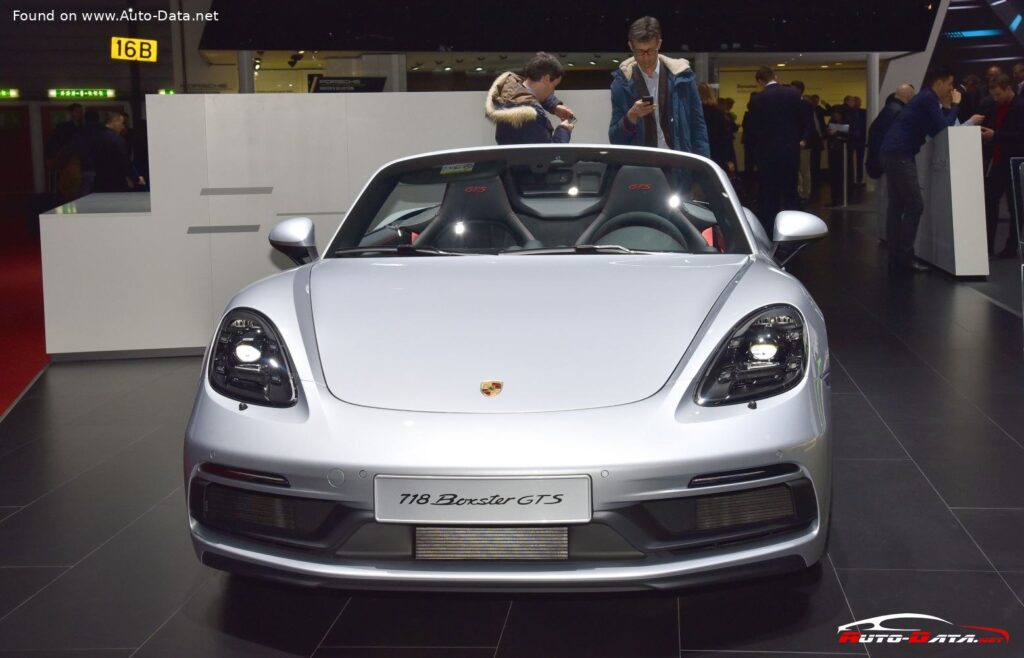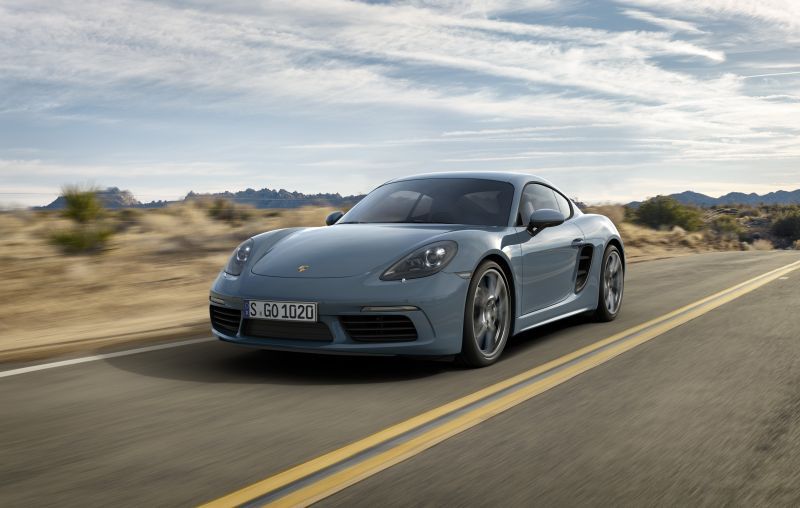
The Porsche 718 Cayman (982) S 2.5, introduced in June 2020, represents the second generation of the 718 Cayman, a mid-engine sports car positioned below the 911 in Porsche’s lineup. This model, specifically the ‘S’ variant with the 2.5-liter turbocharged flat-four engine and Porsche Doppelkupplung (PDK) dual-clutch transmission, is designed to deliver a focused driving experience, blending performance with everyday usability. The 718 Cayman competes with other compact sports cars like the Audi TT RS, BMW M2, and Chevrolet Corvette, offering a distinctive Porsche aesthetic and engineering pedigree.
Porsche 718 Cayman (982) S 2.5: An Overview
The 982 generation Cayman marked a significant shift for the model line, moving away from naturally aspirated six-cylinder engines to a range of turbocharged four-cylinder engines. This change, while initially met with some criticism from purists, allowed Porsche to improve fuel efficiency and broaden the powerband. The ‘S’ model, with its larger 2.5-liter engine, delivers a substantial 350 horsepower, making it a compelling option for drivers seeking a thrilling sports car experience. The Cayman’s mid-engine layout contributes to its balanced handling and responsive driving dynamics, characteristics that have become synonymous with the Porsche brand.
Engine & Performance
At the heart of the 718 Cayman S 2.5 lies a 2.5-liter horizontally opposed (boxer) four-cylinder engine, designated MDD.NC. This engine utilizes direct fuel injection and a single turbocharger with an intercooler to produce 350 horsepower at 6500 rpm and 309.78 lb.-ft. of torque between 2100 and 4500 rpm. The power-to-liter ratio is an impressive 140.2 hp/l. The engine’s maximum speed is rated at 7500 rpm. This powerplant is coupled with Porsche’s seven-speed PDK dual-clutch transmission, which provides incredibly quick and smooth gear changes. Acceleration from 0 to 60 mph takes between 4.0 and 4.2 seconds, while 0-100 km/h is achieved in 4.2-4.4 seconds. The car can reach a top speed of 177.09 mph (285 km/h). The weight-to-power ratio of 4 kg/hp and weight-to-torque ratio of 3.3 kg/Nm further enhance the car’s performance capabilities. The engine also incorporates a Start & Stop system and a particulate filter to meet stringent emissions standards (Euro 6d-ISC-FCM).
Design & Features
The 718 Cayman S 2.5 is a two-door, two-seat coupe characterized by its sleek and aerodynamic design. The mid-engine layout necessitates a distinctive silhouette, with a low hood line and pronounced rear fenders. The body is constructed primarily of aluminum and high-strength steel to minimize weight while maximizing structural rigidity. The car’s drag coefficient is 0.31, contributing to its efficiency at higher speeds. Inside, the Cayman offers a driver-focused cockpit with supportive seats and a modern infotainment system. While prioritizing performance, the 718 Cayman S 2.5 also provides a usable amount of storage space, with a minimum trunk capacity of 9.71 cubic feet (275 liters). Safety features include ABS (Anti-lock Braking System) and a comprehensive suite of driver-assistance technologies. The car’s electric power steering provides precise and responsive control. The front suspension utilizes an independent McPherson strut design, while the rear also employs a McPherson strut setup. Ventilated disc brakes are used on all four wheels, with 330×34 mm rotors at the front and 299×20 mm rotors at the rear.
Technical Specifications
| Brand | Porsche |
| Model | 718 |
| Generation | 718 Cayman (982) |
| Type (Engine) | S 2.5 (350 Hp) PDK |
| Start of production | June, 2020 |
| Powertrain Architecture | Internal Combustion engine |
| Body type | Coupe |
| Seats | 2 |
| Doors | 2 |
| Fuel consumption (economy) – urban | 12.3 l/100 km (19.1 US mpg, 23 UK mpg, 8.1 km/l) |
| Fuel consumption (economy) – extra urban | 7 l/100 km (33.6 US mpg, 40.4 UK mpg, 14.3 km/l) |
| Fuel consumption (economy) – combined | 8.8 l/100 km (26.7 US mpg, 32.1 UK mpg, 11.4 km/l) |
| CO2 emissions | 200 g/km |
| Fuel Type | Petrol (Gasoline) |
| Acceleration 0 – 100 km/h | 4.2-4.4 sec |
| Acceleration 0 – 62 mph | 4.2-4.4 sec |
| Acceleration 0 – 60 mph | 4.0-4.2 sec |
| Acceleration 0 – 200 km/h | 14.7-15.0 sec |
| Maximum speed | 285 km/h (177.09 mph) |
| Emission standard | Euro 6d-ISC-FCM |
| Weight-to-power ratio | 4 kg/Hp, 252.7 Hp/tonne |
| Weight-to-torque ratio | 3.3 kg/Nm, 303.2 Nm/tonne |
| Power | 350 Hp @ 6500 rpm |
| Power per litre | 140.2 Hp/l |
| Torque | 420 Nm @ 2100-4500 rpm (309.78 lb.-ft. @ 2100-4500 rpm) |
| Maximum engine speed | 7500 rpm |
| Engine layout | Middle, Longitudinal |
| Engine Model/Code | MDD.NC |
| Engine displacement | 2497 cm3 (152.38 cu. in.) |
| Number of cylinders | 4 |
| Engine configuration | Boxer |
| Cylinder Bore | 102.01 mm (4.02 in.) |
| Piston Stroke | 76.4 mm (3.01 in.) |
| Compression ratio | 9.5:1 |
| Number of valves per cylinder | 4 |
| Fuel injection system | Direct injection |
| Engine aspiration | Turbocharger, Intercooler |
| Engine oil capacity | 5.7 l (6.02 US qt | 5.02 UK qt) |
| Kerb Weight | 1385 kg (3053.4 lbs.) |
| Max. weight | 1695 kg (3736.84 lbs.) |
| Max load | 310 kg (683.43 lbs.) |
| Trunk (boot) space – minimum | 275 l (9.71 cu. ft.) |
| Fuel tank capacity | 64 l (16.91 US gal | 14.08 UK gal) |
| Length | 4379 mm (172.4 in.) |
| Width | 1801 mm (70.91 in.) |
| Width including mirrors | 1994 mm (78.5 in.) |
| Height | 1284 mm (50.55 in.) |
| Wheelbase | 2475 mm (97.44 in.) |
| Front track | 1515 mm (59.65 in.) |
| Rear (Back) track | 1540 mm (60.63 in.) |
| Drag coefficient (Cd) | 0.31 |
| Minimum turning circle (turning diameter) | 10.98 m (36.02 ft.) |
| Drive wheel | Rear wheel drive |
| Number of gears and type of gearbox | 7 gears, automatic transmission PDK |
| Front suspension | Independent type McPherson |
| Rear suspension | McPherson |
| Front brakes | Ventilated discs, 330×34 mm |
| Rear brakes | Ventilated discs, 299×20 mm |
| Tires size | Front wheel tires: 235/40 ZR19 Rear wheel tires: 265/40 ZR19 |
| Wheel rims size | Front wheel rims: 8J x 19 Rear wheel rims: 10J x 19 |
The Porsche 718 Cayman S 2.5 (982) continues to be a benchmark in the sports car segment, offering a compelling combination of performance, handling, and everyday usability. Its mid-engine layout, powerful turbocharged engine, and advanced technology make it a desirable choice for driving enthusiasts.