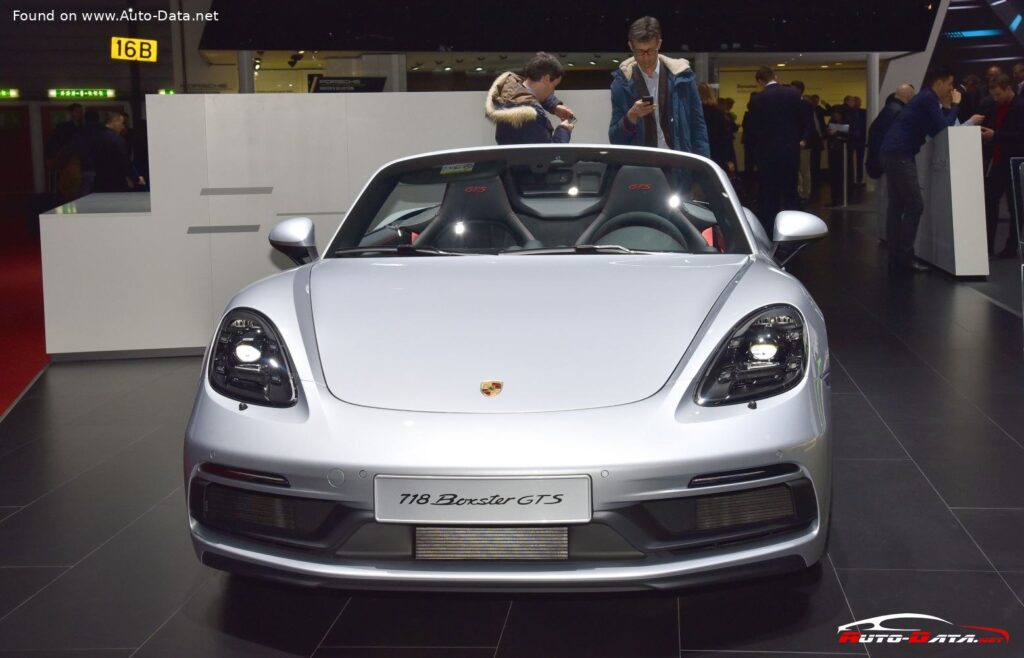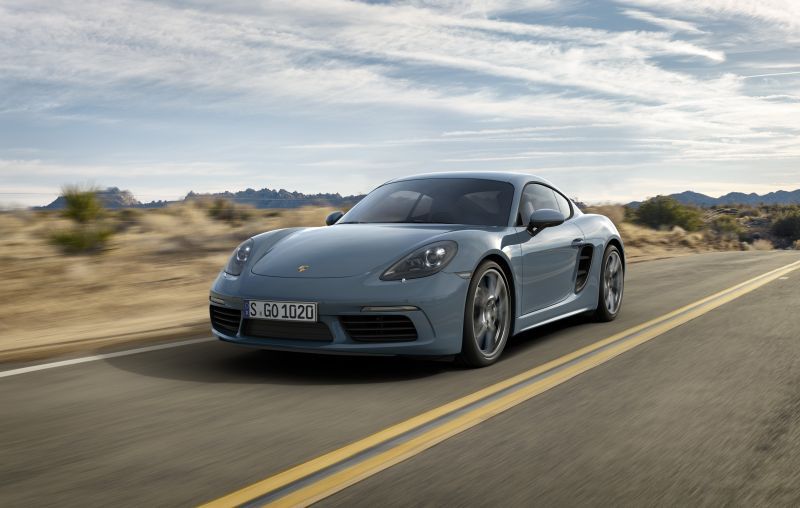
The Porsche 718 Cayman (982) T 2.0, produced from December 2018 to June 2020, represents a focused iteration of Porsche’s mid-engine sports car. Positioned within the compact sports car segment, the 718 Cayman series marked Porsche’s return to turbocharged four-cylinder engines, a move that sparked debate among enthusiasts but ultimately delivered improved efficiency and performance. The “T” designation, historically used by Porsche, signifies a ‘Touring’ model – a lighter, more driver-focused version emphasizing agility and a purist driving experience. This particular variant, equipped with a 2.0-liter turbocharged engine producing 300 horsepower and paired with Porsche’s dual-clutch PDK transmission, aimed to deliver a compelling blend of performance and everyday usability.
Porsche 718 Cayman (982) T 2.0: A Driver-Focused Sports Car
The 982 generation of the Cayman, launched in 2016, was a significant departure from its predecessor, the 981. While the 981 Cayman and Boxster shared many components, the 982 models received a complete engine overhaul, adopting a range of turbocharged four-cylinder engines sourced from Porsche’s collaboration with Audi. The 718 Cayman T 2.0 specifically targeted drivers seeking a more engaging experience without sacrificing the refinement expected from the Porsche brand. It achieved this through weight reduction, a standard mechanical limited-slip differential, and a sport-tuned suspension. The model was primarily sold in Europe and North America, becoming a popular choice for those seeking a true sports car experience.
Engine & Performance
At the heart of the 718 Cayman T 2.0 lies a 1,988 cc (121.32 cubic inches) turbocharged boxer-four engine, designated DDPB. This engine produces 300 horsepower at 7,500 rpm and 380 Nm (280.27 lb.-ft.) of torque between 2,150 and 4,500 rpm. The turbocharger and intercooler work in concert to deliver responsive acceleration and a broad torque curve. Power is delivered to the rear wheels via Porsche’s seven-speed PDK (Porsche Doppelkupplung) dual-clutch transmission, known for its incredibly fast and smooth gear changes. This combination allows for a 0-60 mph (0-96 km/h) acceleration time of 4.5 seconds, and a 0-100 km/h (0-62 mph) time of 4.7 seconds. The car achieves a maximum speed of 275 km/h (170.88 mph). The engine’s power-to-weight ratio is an impressive 4.6 kg/Hp, and the torque-to-weight ratio is 3.6 kg/Nm. Fuel economy is rated at 7.9 l/100 km (29.8 US mpg, 35.8 UK mpg) combined, with CO2 emissions of 180 g/km, meeting Euro 6d – TEMP emission standards.
Design & Features
The 718 Cayman T 2.0 is a two-door, two-seat coupe with a mid-engine layout. This configuration contributes to its exceptional balance and handling characteristics. The body is constructed primarily of aluminum and steel, resulting in a kerb weight of 1,380 kg (3,042.38 lbs). Visually, the T model distinguishes itself with subtle styling cues, including a sport design package, 20-inch wheels (optional), and a unique interior trim. The interior focuses on a driver-centric layout, with supportive seats, a sporty steering wheel, and a modern infotainment system. Practicality is enhanced by a modest amount of luggage space, offering 150 liters (5.3 cu. ft.) with the seats up and 275 liters (9.71 cu. ft.) with the rear seats folded down. Safety features include ABS (Anti-lock Braking System), ventilated disc brakes on all four wheels, and an electric power steering system. The drag coefficient of 0.30 contributes to aerodynamic efficiency.
Technical Specifications
| Brand | Porsche |
| Model | 718 |
| Generation | 718 Cayman (982) |
| Type (Engine) | T 2.0 (300 Hp) PDK |
| Start of production | December, 2018 |
| End of production | June, 2020 |
| Powertrain Architecture | Internal Combustion engine |
| Body type | Coupe |
| Seats | 2 |
| Doors | 2 |
| Fuel consumption (economy) – urban | 10.5 l/100 km (22.4 US mpg, 26.9 UK mpg, 9.5 km/l) |
| Fuel consumption (economy) – extra urban | 6.4 l/100 km (36.8 US mpg, 44.1 UK mpg, 15.6 km/l) |
| Fuel consumption (economy) – combined | 7.9 l/100 km (29.8 US mpg, 35.8 UK mpg, 12.7 km/l) |
| CO2 emissions | 180 g/km |
| Fuel Type | Petrol (Gasoline) |
| Acceleration 0 – 100 km/h | 4.7 sec |
| Acceleration 0 – 62 mph | 4.7 sec |
| Acceleration 0 – 60 mph | 4.5 sec |
| Maximum speed | 275 km/h (170.88 mph) |
| Emission standard | Euro 6d – TEMP |
| Weight-to-power ratio | 4.6 kg/Hp, 217.4 Hp/tonne |
| Weight-to-torque ratio | 3.6 kg/Nm, 275.4 Nm/tonne |
| Power | 300 Hp @ 7500 rpm |
| Power per litre | 150.9 Hp/l |
| Torque | 380 Nm @ 2150-4500 rpm (280.27 lb.-ft. @ 2150-4500 rpm) |
| Engine layout | Middle, Longitudinal |
| Engine Model/Code | DDPB |
| Engine displacement | 1988 cm3 (121.32 cu. in.) |
| Number of cylinders | 4 |
| Engine configuration | Boxer |
| Cylinder Bore | 91 mm (3.58 in.) |
| Piston Stroke | 76.4 mm (3.01 in.) |
| Compression ratio | 9.5:1 |
| Number of valves per cylinder | 4 |
| Fuel injection system | Direct injection |
| Engine aspiration | Turbocharger, Intercooler |
| Engine oil capacity | 5.7 l (6.02 US qt | 5.02 UK qt) |
| Kerb Weight | 1380 kg (3042.38 lbs.) |
| Max. weight | 1685 kg (3714.79 lbs.) |
| Max load | 305 kg (672.41 lbs.) |
| Trunk (boot) space – minimum | 150 l (5.3 cu. ft.) |
| Trunk (boot) space – maximum | 275 l (9.71 cu. ft.) |
| Fuel tank capacity | 54 l (14.27 US gal | 11.88 UK gal) |
| Length | 4379 mm (172.4 in.) |
| Width | 1801 mm (70.91 in.) |
| Width including mirrors | 1994 mm (78.5 in.) |
| Height | 1276 mm (50.24 in.) |
| Wheelbase | 2475 mm (97.44 in.) |
| Front track | 1528 mm (60.16 in.) |
| Rear (Back) track | 1534 mm (60.39 in.) |
| Drag coefficient (Cd) | 0.30 |
| Drive wheel | Rear wheel drive |
| Number of gears and type of gearbox | 7 gears, automatic transmission PDK |
| Front brakes | Ventilated discs |
| Rear brakes | Ventilated discs |
| Tires size | 235/45 ZR18; 265/45 ZR18 |
| Wheel rims size | 8J x 18; 9.5J x 18 |