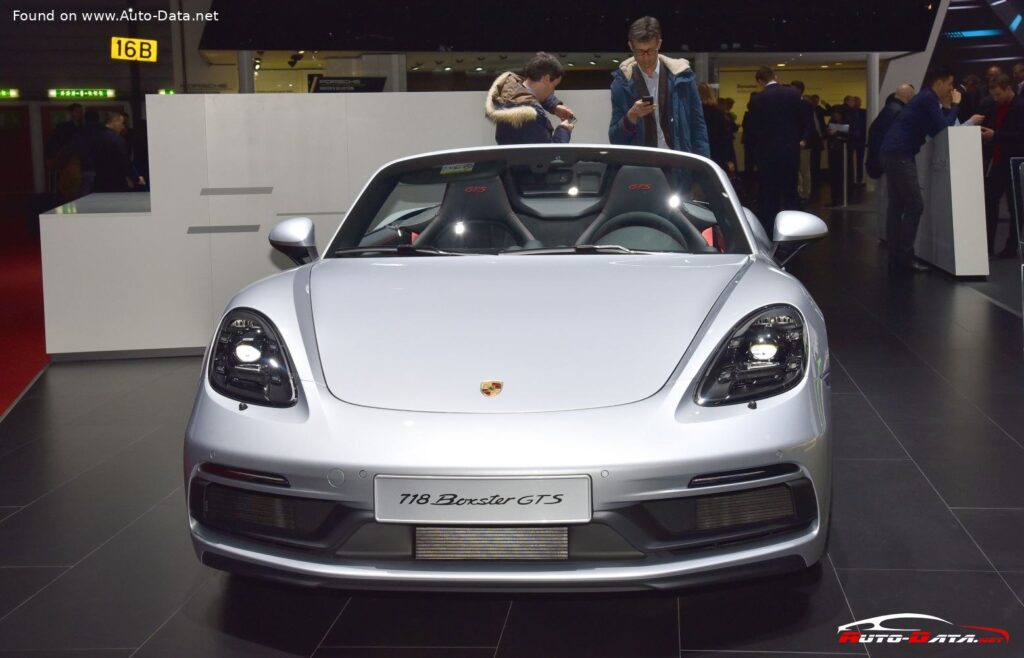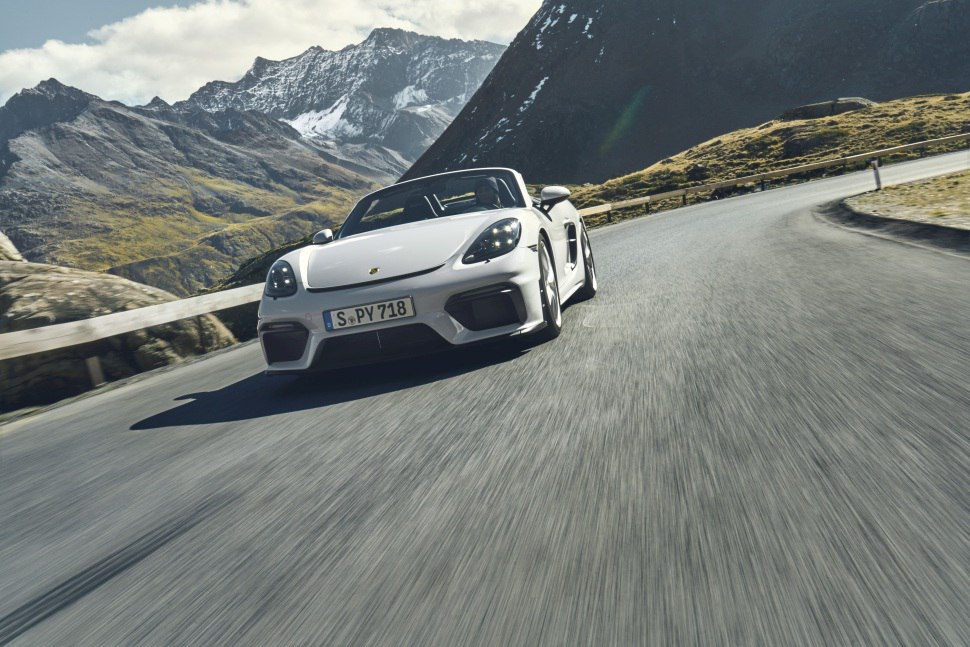
The Porsche 718 Spyder (982) 4.0, produced from 2019 to September 2020, represents a focused, high-performance iteration of Porsche’s mid-engine roadster. Positioned above the standard 718 Boxster in Porsche’s lineup, the Spyder prioritizes driving engagement and track capability over everyday comfort. It’s a direct descendant of Porsche’s long line of open-top sports cars, harking back to the iconic 356 Speedster and 718 RSK, offering a visceral driving experience reminiscent of those classic models. The 4.0 designation refers to the naturally aspirated 4.0-liter flat-six engine, a significant upgrade over the turbocharged four-cylinder engines found in other 718 variants.
Porsche 718 Spyder (982) 4.0: A Return to Roots
The 718 Spyder’s development was driven by a desire to recapture the spirit of Porsche’s earlier, naturally aspirated sports cars. In a market increasingly dominated by turbocharged engines, Porsche engineers opted for a larger displacement, naturally aspirated flat-six to deliver a more linear power delivery and a more engaging soundtrack. This decision aligned with a growing demand from enthusiasts for a purer driving experience. While the 718 range initially faced criticism for moving away from the traditional flat-six engine, the Spyder served as a compelling demonstration of the benefits of this configuration. The Spyder is exclusively offered as a two-seater cabriolet with a manually operated soft top, emphasizing its focus on driver involvement.
Engine & Performance
The heart of the 718 Spyder is its 3,995 cc (243.79 cu. in.) naturally aspirated flat-six engine, designated DKDA. This engine produces 420 horsepower at 7,600 rpm and 420 Nm (309.78 lb.-ft.) of torque between 5,000 and 6,800 rpm. The engine’s power-to-liter ratio is an impressive 105.1 hp/l. The engine is longitudinally mounted in a mid-engine configuration, contributing to excellent balance and handling. Power is delivered to the rear wheels via a six-speed manual transmission, further enhancing the driver’s connection to the car. Acceleration from 0 to 60 mph takes just 4.2 seconds, while 0-100 km/h is achieved in 4.4 seconds. The car boasts a maximum speed of 301 km/h (187.03 mph). The engine incorporates direct fuel injection and an intercooler to optimize performance and efficiency. It also features a start/stop system and a particulate filter to meet stringent emission standards (Euro 6d-TEMP-EVAP-ISC).
Design & Features
The 718 Spyder features a distinctive design that sets it apart from other 718 models. The most prominent visual cue is the high-cut windscreen and the low-slung roofline, which contribute to its aggressive stance. The soft top is manually operated, a deliberate choice to reduce weight and complexity. The body is constructed primarily of aluminum, further minimizing weight. Aerodynamic enhancements, including a larger rear spoiler and a redesigned front fascia, improve downforce and stability at high speeds. Inside, the Spyder features sport seats with enhanced bolstering to provide support during spirited driving. The interior is finished with high-quality materials, including leather and Alcantara. While focused on performance, the Spyder still offers modern amenities such as an infotainment system and climate control. Safety features include ABS (Anti-lock braking system) and electric power steering. The trunk space is relatively limited at 120 liters (4.24 cu. ft.), reflecting the car’s performance-oriented design.
Technical Specifications
| Brand | Porsche |
| Model | 718 |
| Generation | 718 Spyder (982) |
| Type (Engine) | 4.0 (420 Hp) |
| Start of production | 2019 |
| End of production | September, 2020 |
| Powertrain Architecture | Internal Combustion engine |
| Body type | Cabriolet |
| Seats | 2 |
| Doors | 2 |
| Fuel consumption (economy) – urban (NEDC) | 15.6 l/100 km (15.1 US mpg, 18.1 UK mpg, 6.4 km/l) |
| Fuel consumption (economy) – extra urban (NEDC) | 8.1 l/100 km (29 US mpg, 34.9 UK mpg, 12.3 km/l) |
| Fuel consumption (economy) – combined (NEDC) | 10.9 l/100 km (21.6 US mpg, 25.9 UK mpg, 9.2 km/l) |
| CO2 emissions (NEDC) | 249 g/km |
| Fuel Type | Petrol (Gasoline) |
| Acceleration 0 – 100 km/h | 4.4 sec |
| Acceleration 0 – 62 mph | 4.4 sec |
| Acceleration 0 – 60 mph | 4.2 sec |
| Maximum speed | 301 km/h (187.03 mph) |
| Emission standard | Euro 6d-TEMP-EVAP-ISC |
| Weight-to-power ratio | 3.4 kg/Hp, 295.8 Hp/tonne |
| Weight-to-torque ratio | 3.4 kg/Nm, 295.8 Nm/tonne |
| Power | 420 Hp @ 7600 rpm |
| Power per litre | 105.1 Hp/l |
| Torque | 420 Nm @ 5000-6800 rpm (309.78 lb.-ft. @ 5000-6800 rpm) |
| Engine layout | Middle, Longitudinal |
| Engine Model/Code | DKDA |
| Engine displacement | 3995 cm3 (243.79 cu. in.) |
| Number of cylinders | 6 |
| Engine configuration | Boxer |
| Cylinder Bore | 102 mm (4.02 in.) |
| Piston Stroke | 81.5 mm (3.21 in.) |
| Fuel injection system | Direct injection |
| Engine aspiration | Turbocharger, Intercooler |
| Engine oil capacity | 8 l (8.45 US qt | 7.04 UK qt) |
| Kerb Weight | 1420 kg (3130.56 lbs.) |
| Max. weight | 1720 kg (3791.95 lbs.) |
| Max load | 300 kg (661.39 lbs.) |
| Trunk (boot) space – minimum | 120 l (4.24 cu. ft.) |
| Fuel tank capacity | 64 l (16.91 US gal | 14.08 UK gal) |
| Length | 4430 mm (174.41 in.) |
| Width | 1801 mm (70.91 in.) |
| Width including mirrors | 1994 mm (78.5 in.) |
| Height | 1258 mm (49.53 in.) |
| Wheelbase | 2484 mm (97.8 in.) |
| Front track | 1538 mm (60.55 in.) |
| Rear (Back) track | 1534 mm (60.39 in.) |
| Drag coefficient (Cd) | 0.34 |
| Drivetrain Architecture | The Internal combustion engine (ICE) drives the rear wheels of the vehicle. |
| Drive wheel | Rear wheel drive |
| Number of gears and type of gearbox | 6 gears, manual transmission |
| Front suspension | Independent coil spring, Transverse stabilizer |
| Rear suspension | Independent coil spring, Transverse stabilizer |
| Front brakes | Ventilated discs, 380 mm |
| Rear brakes | Ventilated discs, 380 mm |
| Assisting systems | ABS (Anti-lock braking system) |
| Steering type | Steering rack and pinion |
| Power steering | Electric Steering |
| Tires size | 245/35 ZR20 95Y; 295/30 ZR20 101Y |
| Wheel rims size | 20 |
The Porsche 718 Spyder (982) 4.0 represents a compelling offering for driving enthusiasts seeking a pure, engaging, and high-performance roadster experience. Its naturally aspirated engine, manual transmission, and focused design make it a standout model in a segment increasingly dominated by turbocharged alternatives.