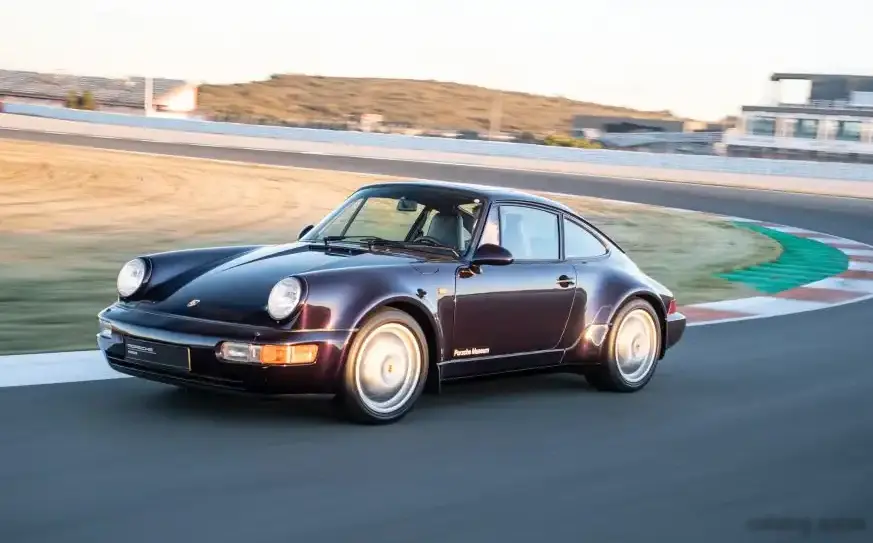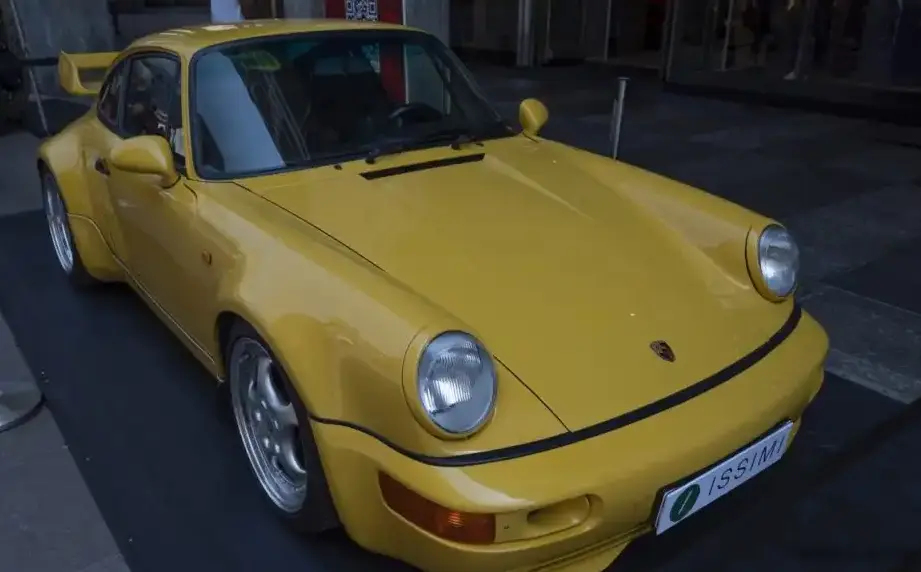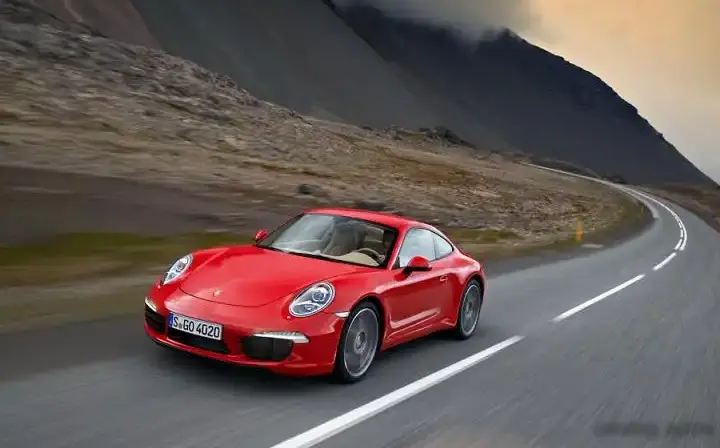
The Porsche 911 Carrera 3.4, producing 350 horsepower, represents a pivotal iteration of the iconic 911 lineage. Introduced as part of the 991 generation, produced from 2011 to 2015, this model served as the standard bearer for the 911 range, offering a compelling blend of performance, luxury, and everyday usability. It occupied the entry-level position within the 991 lineup, providing access to the 911 experience while offering a more attainable price point compared to the higher-performance Carrera S or specialized models like the Turbo. This variant was primarily aimed at enthusiasts seeking a pure sports car experience with a focus on driver engagement.
Technical Specifications
| Brand | Porsche |
| Model | 911 |
| Generation | 911 (991) |
| Type (Engine) | Carrera 3.4 (350 Hp) |
| Start of production | 2011 |
| End of production | 2015 |
| Powertrain Architecture | Internal Combustion engine |
| Body type | Coupe |
| Seats | 4 |
| Doors | 2 |
| Fuel consumption (economy) – urban | 12.4 l/100 km (19 US mpg, 22.8 UK mpg, 8.1 km/l) |
| Fuel consumption (economy) – extra urban | 7 l/100 km (33.6 US mpg, 40.4 UK mpg, 14.3 km/l) |
| Fuel consumption (economy) – combined | 9 l/100 km (26.1 US mpg, 31.4 UK mpg, 11.1 km/l) |
| CO2 emissions | 211 g/km |
| Fuel Type | Petrol (Gasoline) |
| Acceleration 0 – 100 km/h | 4.8 sec |
| Acceleration 0 – 62 mph | 4.8 sec |
| Acceleration 0 – 60 mph | 4.6 sec |
| Maximum speed | 289 km/h (179.58 mph) |
| Emission standard | Euro 6 |
| Weight-to-power ratio | 4 kg/Hp, 250 Hp/tonne |
| Weight-to-torque ratio | 3.6 kg/Nm, 278.6 Nm/tonne |
| Power | 350 Hp @ 7400 rpm |
| Power per litre | 101.9 Hp/l |
| Torque | 390 Nm @ 5600 rpm (287.65 lb.-ft. @ 5600 rpm) |
| Engine layout | Middle, Longitudinal |
| Engine Model/Code | MA1.04 |
| Engine displacement | 3436 cm3 (209.68 cu. in.) |
| Number of cylinders | 6 |
| Engine configuration | Boxer |
| Cylinder Bore | 97 mm (3.82 in.) |
| Piston Stroke | 77.5 mm (3.05 in.) |
| Compression ratio | 12.5:1 |
| Number of valves per cylinder | 4 |
| Fuel injection system | Direct injection |
| Engine aspiration | Naturally aspirated engine |
| Engine oil capacity | 7.5 l (7.93 US qt | 6.6 UK qt) |
| Coolant | 29 l (30.64 US qt | 25.52 UK qt) |
| Kerb Weight | 1400 kg (3086.47 lbs.) |
| Max. weight | 1795 kg (3957.3 lbs.) |
| Max load | 395 kg (870.83 lbs.) |
| Trunk (boot) space – minimum | 340 l (12.01 cu. ft.) |
| Fuel tank capacity | 64 l (16.91 US gal | 14.08 UK gal) |
| Length | 4491 mm (176.81 in.) |
| Width | 1808 mm (71.18 in.) |
| Height | 1303 mm (51.3 in.) |
| Wheelbase | 2450 mm (96.46 in.) |
| Front track | 1532 mm (60.31 in.) |
| Rear (Back) track | 1518 mm (59.76 in.) |
| Drag coefficient (Cd) | 0.29 |
| Drivetrain Architecture | Rear wheel drive |
| Number of gears and type of gearbox | 7 gears, manual transmission |
| Front suspension | Independent, type McPherson with coil spring and anti-roll bar |
| Rear suspension | Independent multi-link suspension |
| Front brakes | Ventilated discs |
| Rear brakes | Ventilated discs |
| Assisting systems | ABS (Anti-lock braking system) |
| Steering type | Steering rack and pinion |
| Tires size | 235/40 ZR19; 285/35 ZR19 |
| Wheel rims size | 8.5J x 19; 11J x 19 |
Powertrain & Engine Architecture
At the heart of the 911 Carrera 3.4 lies the MA1.04 engine, a 3.4-liter naturally aspirated flat-six (boxer) engine. This engine is a direct evolution of the previous generation’s powerplant, benefiting from advancements in direct fuel injection and variable valve timing. The direct injection system, a key feature, allows for precise fuel delivery, enhancing both power and efficiency. The engine produces 350 horsepower at 7,400 rpm and 287.65 lb-ft of torque at 5,600 rpm. The engine’s flat-six configuration contributes to a low center of gravity, improving handling characteristics. The 7-speed manual transmission was standard, offering precise gear changes and a direct connection to the engine. While a PDK dual-clutch transmission was available as an option, the manual gearbox remained a popular choice for purists.
Driving Characteristics
The 911 Carrera 3.4 delivers a distinctly engaging driving experience. While not as brutally fast as the Carrera S, it provides ample power for spirited driving on both the road and the track. The engine’s responsiveness and the precise manual gearbox contribute to a feeling of control and connection. The rear-wheel-drive layout, a hallmark of the 911, provides excellent traction and balance. Compared to the more powerful Carrera S, the 3.4-liter engine feels more accessible and forgiving, making it a more approachable sports car for a wider range of drivers. The gear ratios are well-matched, providing strong acceleration in each gear. The exhaust note is characteristically Porsche – a refined yet sporty sound that enhances the driving experience.
Equipment & Trim Levels
The base 911 Carrera 3.4 came standard with a comprehensive list of features, including partial leather upholstery, automatic climate control, a touchscreen infotainment system, and bi-xenon headlights. Optional extras were plentiful, allowing buyers to personalize their vehicles. Popular options included a sunroof, heated seats, a navigation system, and upgraded sound systems. Interior trim options ranged from standard black leather to a variety of two-tone color combinations. The exterior was typically finished in a solid color, with metallic paints available at an extra cost. Sport Chrono Package was a popular option, adding a sport mode, launch control, and a stopwatch.
Chassis & Braking
The 991 generation 911 featured a redesigned chassis that was both lighter and stiffer than its predecessor. The suspension system consists of independent McPherson struts at the front and a multi-link setup at the rear. This configuration provides excellent ride quality and handling. Ventilated disc brakes are standard on all four wheels, providing ample stopping power. Porsche’s ABS system and stability control system work in conjunction to enhance safety and control. The steering is precise and responsive, providing excellent feedback to the driver.
Market Reception & Comparison
The 911 Carrera 3.4 was well-received by automotive critics, who praised its performance, handling, and overall refinement. It was often lauded as a benchmark for sports cars in its class. Compared to the Carrera S, the 3.4-liter model offered a more affordable entry point into the 911 world, while still delivering a thrilling driving experience. Fuel economy was respectable for a sports car, averaging around 26.1 US mpg in combined driving. Reliability has generally been good, although regular maintenance is essential to keep the engine and other components in optimal condition.
Legacy
The 991 Carrera 3.4 has proven to be a durable and reliable sports car. On the used car market, these models remain highly sought after by enthusiasts. The naturally aspirated engine and manual transmission are particularly prized by collectors and drivers who appreciate a traditional sports car experience. With proper maintenance, these engines are known to be long-lasting. The 991 generation 911, and the Carrera 3.4 in particular, represents a sweet spot in the 911 lineage, offering a compelling blend of performance, luxury, and usability.