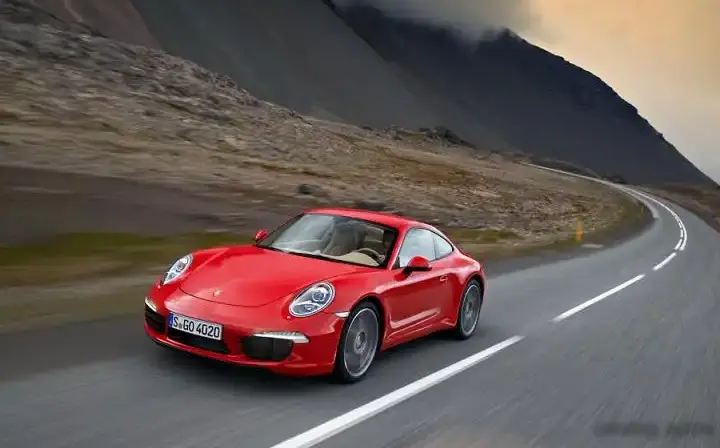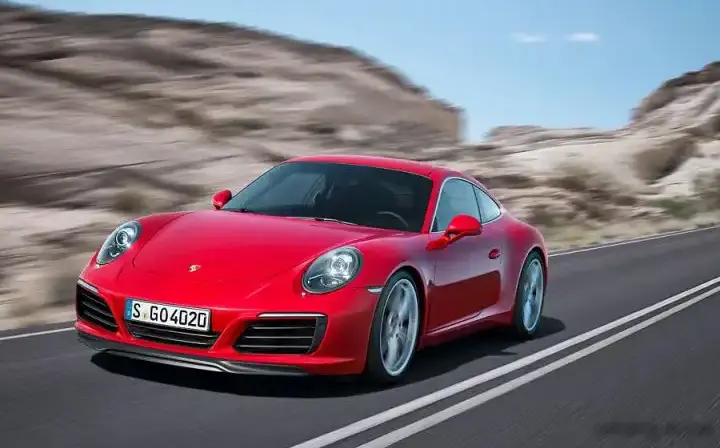
The Porsche 911 Carrera 4 GTS 3.0, produced from 2017 to 2018, represents a compelling blend of performance and everyday usability within the 991.2 generation of Porsche’s iconic sports car. Positioned as a high-performance variant within the Carrera 4 lineup, the GTS bridged the gap between the standard Carrera 4 and the more track-focused 911 Turbo models. It offered increased power, enhanced handling, and a more aggressive aesthetic, appealing to drivers seeking a thrilling experience without sacrificing the 911’s renowned refinement. This model year saw a mid-cycle refresh (991.2) of the 911, introducing turbocharged engines across the Carrera range, a significant departure from the naturally aspirated engines of previous generations.
Technical Specifications
| Brand | Porsche |
| Model | 911 |
| Generation | 911 (991 II) |
| Type (Engine) | Carrera 4 GTS 3.0 (450 Hp) |
| Start of production | 2017 |
| End of production | 2018 |
| Powertrain Architecture | Internal Combustion engine |
| Body type | Coupe |
| Seats | 4 |
| Doors | 2 |
| Fuel consumption (economy) – urban | 13 l/100 km (18.1 US mpg, 21.7 UK mpg, 7.7 km/l) |
| Fuel consumption (economy) – extra urban | 7.4 l/100 km (31.8 US mpg, 38.2 UK mpg, 13.5 km/l) |
| Fuel consumption (economy) – combined | 9.5 l/100 km (24.8 US mpg, 29.7 UK mpg, 10.5 km/l) |
| CO2 emissions | 216 g/km |
| Fuel Type | Petrol (Gasoline) |
| Acceleration 0 – 100 km/h | 4 sec |
| Acceleration 0 – 62 mph | 4 sec |
| Acceleration 0 – 60 mph | 3.8 sec |
| Acceleration 0 – 200 km/h | 13.6 sec |
| Maximum speed | 310 km/h (192.63 mph) |
| Emission standard | Euro 6 |
| Weight-to-power ratio | 3.3 kg/Hp, 301 Hp/tonne |
| Weight-to-torque ratio | 2.7 kg/Nm, 367.9 Nm/tonne |
| Power | 450 Hp @ 6500 rpm |
| Power per litre | 151 Hp/l |
| Torque | 550 Nm @ 2150-5000 rpm (405.66 lb.-ft. @ 2150-5000 rpm) |
| Maximum engine speed | 7500 rpm |
| Engine layout | Rear, Longitudinal |
| Engine Model/Code | MDC.JA |
| Engine displacement | 2981 cm3 (181.91 cu. in.) |
| Number of cylinders | 6 |
| Engine configuration | Boxer |
| Cylinder Bore | 91 mm (3.58 in.) |
| Piston Stroke | 76.4 mm (3.01 in.) |
| Compression ratio | 10:1 |
| Number of valves per cylinder | 4 |
| Fuel injection system | Direct injection |
| Engine aspiration | BiTurbo, Intercooler |
| Engine oil capacity | 8 l (8.45 US qt | 7.04 UK qt) |
| Coolant | 28.3 l (29.9 US qt | 24.9 UK qt) |
| Kerb Weight | 1495 kg (3295.91 lbs.) |
| Max. weight | 1950 kg (4299.01 lbs.) |
| Max load | 455 kg (1003.1 lbs.) |
| Trunk (boot) space – maximum | 385 l (13.6 cu. ft.) |
| Fuel tank capacity | 67 l (17.7 US gal | 14.74 UK gal) |
| Length | 4528 mm (178.27 in.) |
| Width | 1852 mm (72.91 in.) |
| Width including mirrors | 1978 mm (77.87 in.) |
| Height | 1284 mm (50.55 in.) |
| Wheelbase | 2450 mm (96.46 in.) |
| Front track | 1541 mm (60.67 in.) |
| Rear (Back) track | 1544 mm (60.79 in.) |
| Drag coefficient (Cd) | 0.31 |
| Minimum turning circle (turning diameter) | 11.1 m (36.42 ft.) |
| Drive wheel | All wheel drive (4×4) |
| Number of gears and type of gearbox | 7 gears, manual transmission |
| Front suspension | Independent type McPherson |
| Rear suspension | Independent multi-link suspension |
| Front brakes | Ventilated discs |
| Rear brakes | Ventilated discs |
| Assisting systems | ABS (Anti-lock braking system) |
| Steering type | Steering rack and pinion |
| Power steering | Electric Steering |
| Tires size | 245/35 ZR 20; 305/30 ZR 20 |
| Wheel rims size | 9J x 20; 12J x 20 |
Powertrain & Engine Architecture
The heart of the 911 Carrera 4 GTS 3.0 is the 2.981-liter twin-turbocharged flat-six engine, designated as the MDC.JA. This engine represents a significant shift for the 911, moving away from naturally aspirated power. The twin-turbocharging system utilizes two BorgWarner turbochargers, providing a broad torque curve and enhanced responsiveness. Direct fuel injection ensures precise fuel delivery, optimizing combustion efficiency and power output. The engine produces 450 horsepower at 6,500 rpm and 550 Nm (405.66 lb-ft) of torque between 2,150 and 5,000 rpm. The 7-speed manual transmission was standard, offering precise gear changes and a more engaging driving experience. Porsche also offered a 7-speed PDK dual-clutch transmission as an option, providing faster shifts and enhanced efficiency.
Driving Characteristics
The 911 Carrera 4 GTS 3.0 delivers a thrilling driving experience characterized by its potent acceleration and precise handling. The all-wheel-drive system provides excellent traction, particularly in adverse weather conditions. The GTS benefits from Porsche Active Suspension Management (PASM), which electronically adjusts the damping characteristics to optimize ride comfort and handling. Compared to the standard Carrera 4, the GTS features a more aggressive suspension setup, lowering the ride height by 10mm and stiffening the springs and dampers. This results in reduced body roll and improved cornering stability. The turbochargers provide instant throttle response, and the engine pulls strongly throughout the rev range. The manual transmission offers a satisfyingly mechanical feel, while the PDK transmission delivers lightning-fast shifts.
Equipment & Trim Levels
The Carrera 4 GTS came standard with a comprehensive list of features, including a sport exhaust system, Porsche Communication Management (PCM) with a 7-inch touchscreen display, and partial leather upholstery. The interior featured sport seats with enhanced bolstering, providing excellent support during spirited driving. Optional extras included full leather upholstery, adaptive cruise control, a Burmester sound system, and carbon fiber interior trim. The GTS also featured unique exterior styling cues, such as a sport design package with larger air intakes and a rear spoiler. Wheel options included a variety of 20-inch alloy wheels, adding to the car’s aggressive appearance.
Chassis & Braking
The 911 Carrera 4 GTS utilizes a lightweight chassis construction, incorporating aluminum and high-strength steel. The suspension features independent McPherson struts at the front and a multi-link setup at the rear. The GTS benefits from larger brakes compared to the standard Carrera 4, with ventilated discs at all four corners. Porsche Ceramic Composite Brakes (PCCB) were available as an option, offering even greater stopping power and fade resistance. The steering system is a power-assisted rack-and-pinion setup, providing precise and responsive steering feel.
Market Reception & Comparison
The 911 Carrera 4 GTS 3.0 was widely praised by automotive critics for its exceptional performance, handling, and refinement. It was lauded as a sweet spot in the 911 lineup, offering a compelling balance between everyday usability and track-day capability. Compared to the standard Carrera 4, the GTS provided a noticeable increase in power and a more engaging driving experience. Compared to the 911 Turbo, the GTS offered a more visceral and connected driving experience, albeit with slightly less outright performance. Fuel economy was respectable for a high-performance sports car, with combined fuel consumption of around 24.8 US mpg.
Legacy
The 911 Carrera 4 GTS 3.0 has proven to be a reliable and durable sports car. The twin-turbocharged engine has demonstrated good long-term reliability, although regular maintenance is essential. The PDK transmission is also known for its robustness. On the used car market, the 991.2 GTS models, including the Carrera 4 GTS, command a premium due to their performance and desirability. These cars are sought after by enthusiasts who appreciate the blend of modern technology and classic 911 driving dynamics. The introduction of turbocharging in the 991.2 generation marked a significant turning point in the 911’s history, and the Carrera 4 GTS 3.0 represents a particularly well-executed example of this new era.