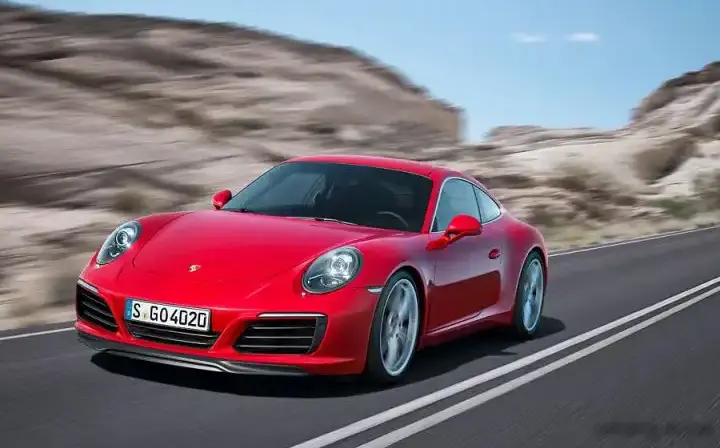
The Porsche 911 Carrera 4S 3.0, equipped with the dual-clutch PDK transmission and producing 420 horsepower, represents a significant evolution within the 991.2 generation of the iconic 911. Introduced for the 2017 model year (though technically spanning 2015-2018 as the 991.2 lifecycle began), this variant occupied a sweet spot in the 911 lineup, offering a compelling blend of performance, all-weather capability, and everyday usability. It built upon the foundation laid by the 991.1, incorporating a downsized and turbocharged engine, refined chassis components, and updated technology. The Carrera 4S 3.0 was positioned as a premium offering, sitting above the base Carrera models and below the more focused Carrera GTS and track-oriented Carrera S variants.
Technical Specifications
| Brand | Porsche |
| Model | 911 |
| Generation | 911 (991 II) |
| Type (Engine) | Carrera 4S 3.0 (420 Hp) PDK |
| Start of production | 2015 year |
| End of production | 2018 year |
| Powertrain Architecture | Internal Combustion engine |
| Body type | Coupe |
| Seats | 4 |
| Doors | 2 |
| Fuel consumption (economy) – urban | 10.3 l/100 km (22.8 US mpg, 27.4 UK mpg, 9.7 km/l) |
| Fuel consumption (economy) – extra urban | 6.6 l/100 km (35.6 US mpg, 42.8 UK mpg, 15.2 km/l) |
| Fuel consumption (economy) – combined | 7.9 l/100 km (29.8 US mpg, 35.8 UK mpg, 12.7 km/l) |
| CO2 emissions | 180 g/km |
| Fuel Type | Petrol (Gasoline) |
| Acceleration 0 – 100 km/h | 4 sec |
| Acceleration 0 – 62 mph | 4 sec |
| Acceleration 0 – 60 mph | 3.8 sec |
| Maximum speed | 303 km/h (188.28 mph) |
| Emission standard | Euro 6 |
| Weight-to-power ratio | 3.6 kg/Hp, 278.1 Hp/tonne |
| Weight-to-torque ratio | 3 kg/Nm, 331.1 Nm/tonne |
| Power | 420 Hp @ 6500 rpm |
| Power per litre | 140.9 Hp/l |
| Torque | 500 Nm @ 1700-5000 rpm (368.78 lb.-ft. @ 1700-5000 rpm) |
| Engine layout | Rear, Longitudinal |
| Engine Model/Code | MA2.01, MA2.02 |
| Engine displacement | 2981 cm3 (181.91 cu. in.) |
| Number of cylinders | 6 |
| Engine configuration | Boxer |
| Cylinder Bore | 91 mm (3.58 in.) |
| Piston Stroke | 76.4 mm (3.01 in.) |
| Compression ratio | 10:1 |
| Number of valves per cylinder | 4 |
| Fuel injection system | Direct injection |
| Engine aspiration | BiTurbo, Intercooler |
| Engine oil capacity | 8 l (8.45 US qt | 7.04 UK qt) |
| Coolant | 28.3 l (29.9 US qt | 24.9 UK qt) |
| Kerb Weight | 1510 kg (3328.98 lbs.) |
| Max. weight | 1965 kg (4332.08 lbs.) |
| Max load | 455 kg (1003.1 lbs.) |
| Trunk (boot) space – minimum | 125 l (4.41 cu. ft.) |
| Trunk (boot) space – maximum | 260 l (9.18 cu. ft.) |
| Fuel tank capacity | 67 l (17.7 US gal | 14.74 UK gal) |
| Length | 4499 mm (177.13 in.) |
| Width | 1852 mm (72.91 in.) |
| Width with mirrors folded | 1978 mm (77.87 in.) |
| Height | 1298 mm (51.1 in.) |
| Wheelbase | 2450 mm (96.46 in.) |
| Front track | 1543 mm (60.75 in.) |
| Rear (Back) track | 1558 mm (61.34 in.) |
| Drag coefficient (Cd) | 0.30 |
| Drive wheel | All wheel drive (4×4) |
| Number of gears and type of gearbox | 7 gears, automatic transmission PDK |
| Front suspension | Independent type McPherson |
| Rear suspension | Independent multi-link suspension |
| Front brakes | Ventilated discs |
| Rear brakes | Ventilated discs |
| Assisting systems | ABS (Anti-lock braking system) |
| Steering type | Steering rack and pinion |
| Power steering | Electric Steering |
| Tires size | 245/35 ZR 20; 305/30 ZR 20 |
| Wheel rims size | 8.5J x 20; 11.5J x 20 |
Powertrain & Engine Architecture
The heart of the 911 Carrera 4S 3.0 is the 3.0-liter twin-turbocharged flat-six engine, designated as the MA2.01 or MA2.02 depending on minor revisions. This engine represented a departure from the naturally aspirated engines of previous generations, embracing forced induction to deliver increased power and torque while improving fuel efficiency. The engine utilizes direct fuel injection, ensuring precise fuel delivery and optimized combustion. The twin-turbocharger setup, with one turbocharger per cylinder bank, minimizes turbo lag and provides a broad, flat torque curve. The engine produces 420 horsepower at 6500 rpm and 368 lb-ft of torque available from a low 1700 rpm all the way to 5000 rpm. The seven-speed Porsche Doppelkupplung (PDK) dual-clutch transmission is standard, offering incredibly fast and smooth gear changes. This transmission features a sophisticated electronic control unit that adapts to driving style and conditions.
Driving Characteristics
The 911 Carrera 4S 3.0 PDK delivers a remarkably refined yet exhilarating driving experience. The all-wheel-drive system provides exceptional traction, particularly in inclement weather, making it a usable sports car year-round. The PDK transmission contributes to rapid acceleration, with 0-60 mph times consistently around 3.8 seconds. The twin-turbocharged engine provides a surge of power throughout the rev range, eliminating the need for constant downshifting. Compared to the naturally aspirated 991.1 Carrera S, the 991.2 offers more readily available torque, making it feel more responsive in everyday driving situations. While some purists lamented the loss of the naturally aspirated engine’s sound and linear power delivery, the 991.2 Carrera 4S offers a broader appeal with its increased performance and usability.
Equipment & Trim Levels
The Carrera 4S 3.0 came standard with a generous array of features, including a leather interior, bi-xenon headlights, a touchscreen infotainment system with navigation, and Porsche Active Suspension Management (PASM). Optional extras were plentiful, allowing buyers to personalize their vehicles. Popular options included sport seats, a sunroof, adaptive cruise control, and various interior trim packages. The Carrera 4S also benefited from Porsche’s extensive customization program, allowing buyers to select from a wide range of colors, materials, and finishes.
Chassis & Braking
The 991.2 Carrera 4S features a sophisticated chassis designed for both performance and comfort. The suspension utilizes independent McPherson struts at the front and a multi-link setup at the rear. Porsche Active Suspension Management (PASM) electronically adjusts the damping characteristics based on road conditions and driving style. The braking system consists of ventilated discs at all four corners, providing ample stopping power. Porsche Ceramic Composite Brakes (PCCB) were available as an option for even greater braking performance.
Market Reception & Comparison
The 911 Carrera 4S 3.0 was widely praised by automotive critics for its performance, handling, and refinement. It was consistently ranked among the best sports cars in its class. Compared to the base Carrera models, the 4S offered superior traction and stability thanks to its all-wheel-drive system. Compared to the more powerful Carrera GTS, the 4S provided a more balanced and accessible driving experience, with a slightly softer suspension and less aggressive power delivery. Fuel economy was respectable for a sports car of this caliber, averaging around 29.8 US mpg in combined driving.
Legacy
The 911 Carrera 4S 3.0 represents a pivotal moment in the 911’s evolution, marking the transition to turbocharged engines. These models have proven to be relatively reliable, with the twin-turbocharged engine generally holding up well over time. The PDK transmission is also known for its durability. On the used car market, the 991.2 Carrera 4S commands a premium due to its performance, all-weather capability, and relative rarity compared to the base Carrera models. It remains a highly sought-after sports car for enthusiasts who appreciate a blend of performance, luxury, and everyday usability.