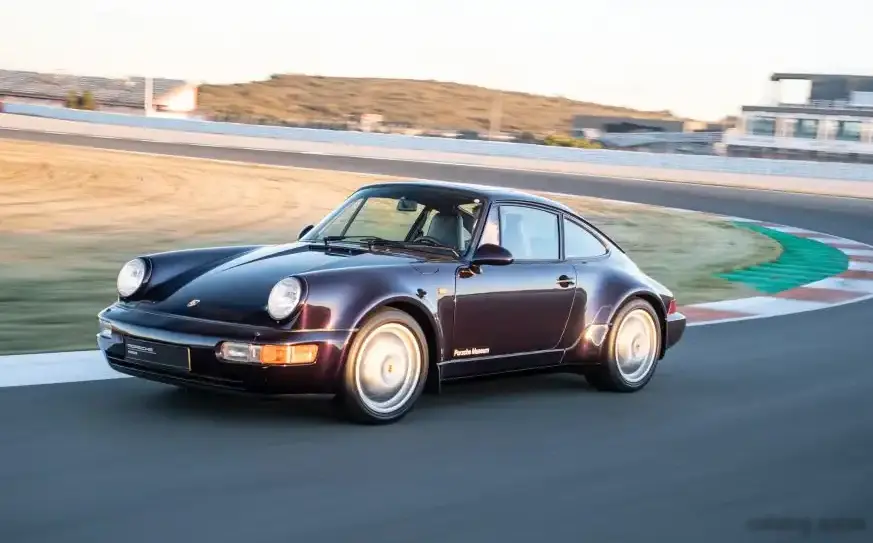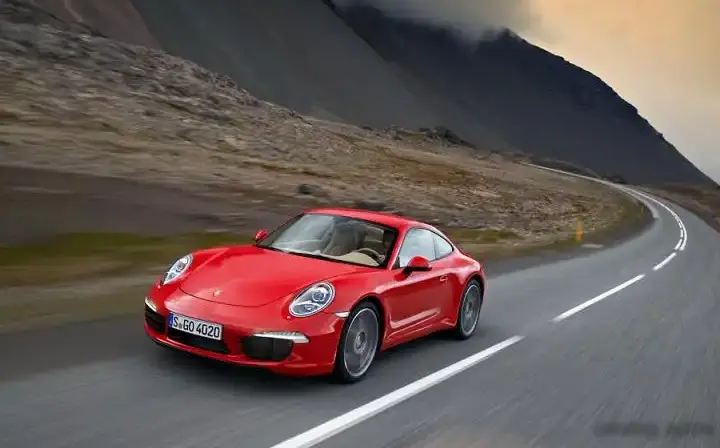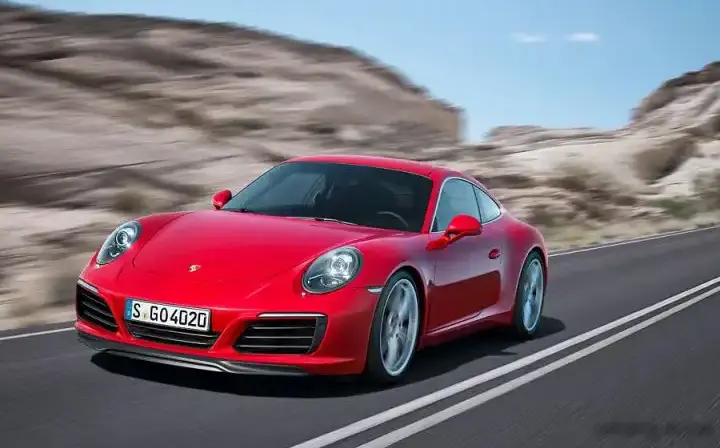
The Porsche 911 Carrera GTS 3.0, produced from 2017 to 2018, represents a compelling iteration of the 991.2 generation 911. Positioned as a performance-focused variant within the broader Carrera lineup, the GTS bridged the gap between the standard Carrera models and the more track-oriented GT3. It offered a significant increase in power and a more aggressive aesthetic, appealing to drivers seeking a heightened Porsche experience without the extreme focus of the GT models. This particular version, equipped with the 3.0-liter twin-turbocharged flat-six engine producing 450 horsepower, was available with both a seven-speed manual and a seven-speed Porsche Doppelkupplung (PDK) dual-clutch automatic transmission. This article will focus on the variant equipped with the PDK transmission.
Technical Specifications
| Brand | Porsche |
| Model | 911 |
| Generation | 911 (991 II) |
| Type (Engine) | Carrera GTS 3.0 (450 Hp) |
| Start of production | 2017 |
| End of production | 2018 |
| Powertrain Architecture | Internal Combustion engine |
| Body type | Coupe |
| Seats | 4 |
| Doors | 2 |
| Fuel consumption (economy) – urban | 12.9 l/100 km (18.2 US mpg, 21.9 UK mpg, 7.8 km/l) |
| Fuel consumption (economy) – extra urban | 7.3 l/100 km (32.2 US mpg, 38.7 UK mpg, 13.7 km/l) |
| Fuel consumption (economy) – combined | 9.4 l/100 km (25 US mpg, 30.1 UK mpg, 10.6 km/l) |
| CO2 emissions | 212 g/km |
| Fuel Type | Petrol (Gasoline) |
| Acceleration 0 – 100 km/h | 4.1 sec |
| Acceleration 0 – 62 mph | 4.1 sec |
| Acceleration 0 – 60 mph | 3.9 sec |
| Acceleration 0 – 200 km/h | 13.2 sec |
| Maximum speed | 312 km/h (193.87 mph) |
| Emission standard | Euro 6 |
| Weight-to-power ratio | 3.2 kg/Hp, 310.3 Hp/tonne |
| Weight-to-torque ratio | 2.6 kg/Nm, 379.3 Nm/tonne |
| Power | 450 Hp @ 6500 rpm |
| Power per litre | 151 Hp/l |
| Torque | 550 Nm @ 2150-5000 rpm (405.66 lb.-ft. @ 2150-5000 rpm) |
| Maximum engine speed | 7500 rpm |
| Engine layout | Rear, Longitudinal |
| Engine Model/Code | MDC.JA |
| Engine displacement | 2981 cm3 (181.91 cu. in.) |
| Number of cylinders | 6 |
| Engine configuration | Boxer |
| Cylinder Bore | 91 mm (3.58 in.) |
| Piston Stroke | 76.4 mm (3.01 in.) |
| Compression ratio | 10:1 |
| Number of valves per cylinder | 4 |
| Fuel injection system | Direct injection |
| Engine aspiration | BiTurbo, Intercooler |
| Engine oil capacity | 8 l (8.45 US qt | 7.04 UK qt) |
| Coolant | 28.3 l (29.9 US qt | 24.9 UK qt) |
| Kerb Weight | 1450 kg (3196.7 lbs.) |
| Max. weight | 1920 kg (4232.88 lbs.) |
| Max load | 470 kg (1036.17 lbs.) |
| Trunk (boot) space – maximum | 385 l (13.6 cu. ft.) |
| Fuel tank capacity | 64 l (16.91 US gal | 14.08 UK gal) |
| Length | 4528 mm (178.27 in.) |
| Width | 1852 mm (72.91 in.) |
| Width including mirrors | 1978 mm (77.87 in.) |
| Height | 1284 mm (50.55 in.) |
| Wheelbase | 2450 mm (96.46 in.) |
| Front track | 1541 mm (60.67 in.) |
| Rear (Back) track | 1544 mm (60.79 in.) |
| Drag coefficient (Cd) | 0.31 |
| Minimum turning circle (turning diameter) | 11.1 m (36.42 ft.) |
| Drivetrain Architecture | Rear wheel drive |
| Drive wheel | Rear wheel drive |
| Number of gears and type of gearbox | 7 gears, PDK (dual-clutch) |
| Front suspension | Independent type McPherson |
| Rear suspension | Independent multi-link suspension |
| Front brakes | Ventilated discs |
| Rear brakes | Ventilated discs |
| Assisting systems | ABS (Anti-lock braking system) |
| Steering type | Steering rack and pinion |
| Power steering | Electric Steering |
| Tires size | 245/35 ZR 20; 305/30 ZR 20 |
| Wheel rims size | 9J x 20; 12J x 20 |
INTRODUCTION
The 991.2 generation Porsche 911, launched in late 2016, represented a significant mid-cycle refresh of the hugely successful 991 platform. The introduction of turbocharged engines across the Carrera range was the most notable change, and the Carrera GTS 3.0, debuting in 2017, benefited greatly from this new powertrain. Built on the 1HX0 platform, the GTS 3.0 aimed to deliver a more engaging and visceral driving experience than the standard Carrera models, while remaining a practical and relatively comfortable grand tourer. The PDK transmission option provided quicker shifts and enhanced performance, making it a popular choice for drivers who frequently engaged in spirited driving or track days.
Powertrain & Engine Architecture
At the heart of the Carrera GTS 3.0 lies the MDC.JA engine, a 3.0-liter twin-turbocharged flat-six. This engine replaced the naturally aspirated 3.8-liter engine found in earlier 991 Carreras. The twin-turbocharging system utilizes two BorgWarner turbochargers, one for each bank of cylinders, providing a more immediate and broader torque curve. Direct fuel injection is employed for precise fuel delivery and improved efficiency. The engine boasts a compression ratio of 10:1 and features four valves per cylinder. The PDK seven-speed dual-clutch transmission is a marvel of engineering, offering incredibly fast and smooth gear changes. It operates with two separate clutches, one for odd-numbered gears and one for even-numbered gears, allowing for pre-selection of the next gear and virtually seamless shifts. The PDK also includes a launch control function for optimal acceleration from a standstill.
Driving Characteristics
The Carrera GTS 3.0 with PDK delivers a thrilling driving experience. The twin-turbocharged engine provides a substantial surge of power throughout the rev range, with peak torque available from a low 2150 rpm. The PDK transmission complements this power delivery perfectly, providing lightning-fast shifts that keep the engine in its optimal power band. Compared to the standard Carrera, the GTS feels noticeably more responsive and engaging. While the manual transmission offered a more traditional Porsche experience, the PDK allowed for quicker acceleration and more consistent lap times on a track. The gear ratios are optimized for both acceleration and cruising, providing a balance between performance and efficiency. The sport exhaust system, standard on the GTS, adds a distinctive and aggressive exhaust note, further enhancing the driving experience.
Equipment & Trim Levels
The Carrera GTS 3.0 came generously equipped as standard. Interior features included sport seats with enhanced bolstering, a sport steering wheel, and partial leather upholstery. The Porsche Communication Management (PCM) system with a 7-inch touchscreen display provided navigation, infotainment, and vehicle settings control. Standard exterior features included a more aggressive front fascia, wider rear fenders, and a rear ducktail spoiler. Optional extras were plentiful, including full leather interiors, carbon fiber trim, adaptive suspension (Porsche Active Suspension Management – PASM), and various wheel upgrades. The Sport Chrono Package, a popular option, added a dashboard stopwatch, launch control, and a Sport Response button for even quicker acceleration.
Chassis & Braking
The GTS benefited from a chassis tuned for enhanced performance. It featured Porsche Active Suspension Management (PASM) as standard, lowering the ride height by 10mm compared to the standard Carrera. The suspension geometry was also optimized for improved handling and stability. Braking duties were handled by ventilated discs on all four wheels, providing ample stopping power. Larger brake rotors and upgraded calipers were available as options. The GTS also featured a mechanically locking rear differential, enhancing traction and cornering performance. The steering system was precise and responsive, providing excellent feedback to the driver.
Market Reception & Comparison
The Carrera GTS 3.0 was widely praised by automotive critics for its performance, handling, and overall driving experience. It was seen as a sweet spot in the 911 lineup, offering a significant step up in performance from the standard Carrera without the extreme focus of the GT3. Compared to the standard Carrera, the GTS offered more power, a more aggressive aesthetic, and a more engaging driving experience. Compared to the 911 Targa 4, the GTS offered a more focused and sporty driving experience, albeit with less open-air enjoyment. Fuel economy was respectable for a high-performance sports car, averaging around 25 mpg in combined driving. Reliability was generally good, although some owners reported minor issues with the cooling system and turbochargers.
Legacy
The 991.2 Carrera GTS 3.0 has proven to be a highly desirable and collectible 911 variant. The combination of its powerful engine, engaging driving dynamics, and relatively practical nature has made it a favorite among Porsche enthusiasts. The PDK transmission has proven to be durable and reliable, and well-maintained examples continue to command strong prices in the used car market. The 991.2 GTS represents a significant milestone in the evolution of the 911, showcasing Porsche’s commitment to performance, innovation, and driving pleasure.