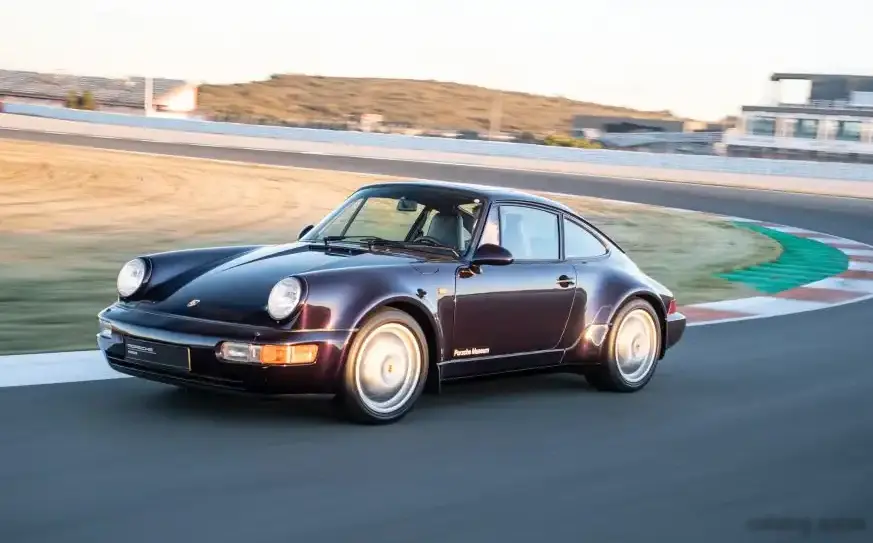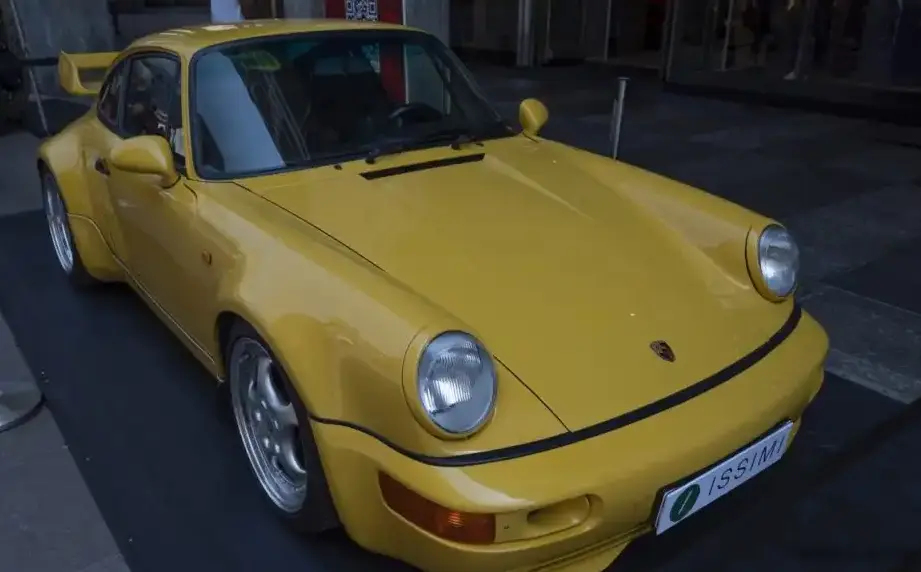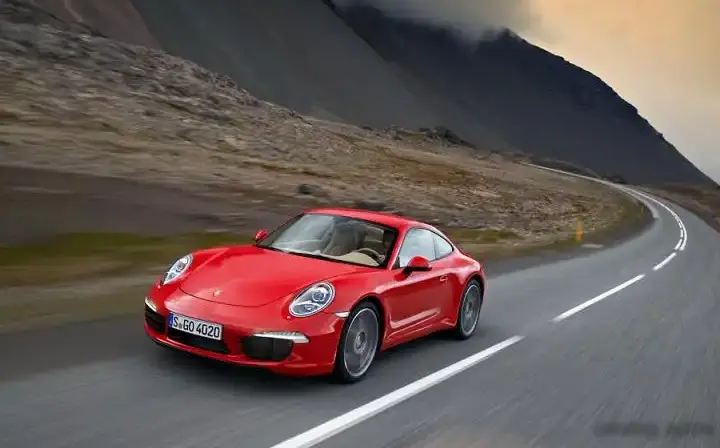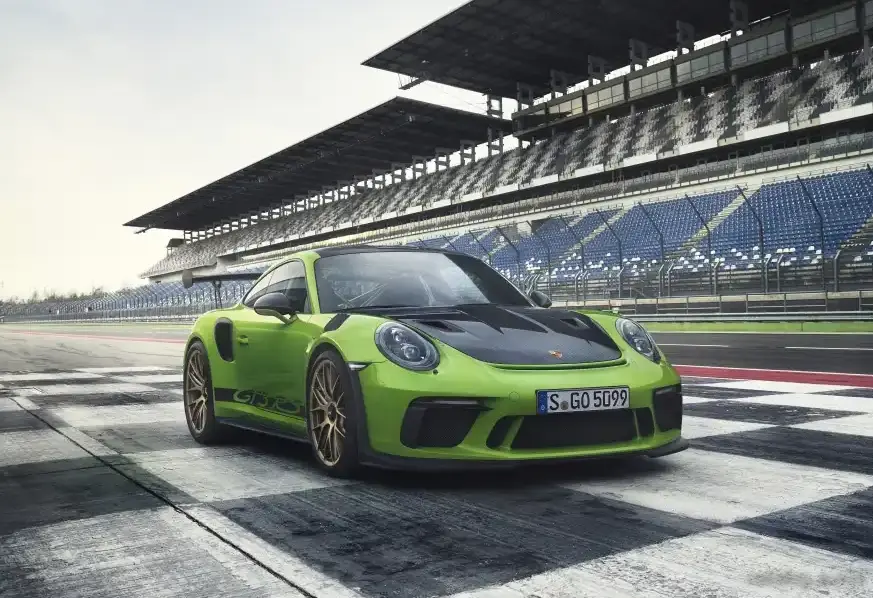
The Porsche 911 (991.2) GT3 4.0, produced for the 2018 model year, represents the pinnacle of naturally aspirated performance within the 991.2 generation of Porsche’s iconic sports car. Building upon the already focused 911 GT3, the 4.0-liter variant offered a significant power increase and a return to a more visceral driving experience, appealing to enthusiasts who favored the purity of a high-revving engine over forced induction. It was positioned as the ultimate track-focused 911 of its time, slotting above the standard GT3 and below the even more extreme GT3 RS. Production was limited, adding to its exclusivity and collectibility.
Technical Specifications
| Brand | Porsche |
| Model | 911 |
| Generation | 911 (991 II) |
| Type (Engine) | GT3 4.0 (500 Hp) |
| Start of production | 2017 year |
| End of production | 2018 year |
| Powertrain Architecture | Internal Combustion engine |
| Body type | Coupe |
| Seats | 2 |
| Doors | 2 |
| Fuel consumption (economy) – urban | 19.7 l/100 km (11.9 US mpg, 14.3 UK mpg, 5.1 km/l) |
| Fuel consumption (economy) – extra urban | 8.8 l/100 km (26.7 US mpg, 32.1 UK mpg, 11.4 km/l) |
| Fuel consumption (economy) – combined | 12.9 l/100 km (18.2 US mpg, 21.9 UK mpg, 7.8 km/l) |
| CO2 emissions | 290 g/km |
| Fuel Type | Petrol (Gasoline) |
| Acceleration 0 – 100 km/h | 3.9 sec |
| Acceleration 0 – 62 mph | 3.9 sec |
| Acceleration 0 – 60 mph | 3.7 sec |
| Acceleration 0 – 200 km/h | 11.4 sec |
| Maximum speed | 320 km/h (198.84 mph) |
| Emission standard | Euro 6 |
| Weight-to-power ratio | 2.8 kg/Hp, 353.9 Hp/tonne |
| Weight-to-torque ratio | 3.1 kg/Nm, 325.5 Nm/tonne |
| Power | 500 Hp @ 8250 rpm |
| Power per litre | 125.1 Hp/l |
| Torque | 460 Nm @ 6000 rpm (339.28 lb.-ft. @ 6000 rpm) |
| Maximum engine speed | 9000 rpm |
| Engine layout | Rear, Longitudinal |
| Engine Model/Code | MDG.GA |
| Engine displacement | 3996 cm3 (243.85 cu. in.) |
| Number of cylinders | 6 |
| Engine configuration | Boxer |
| Cylinder Bore | 102 mm (4.02 in.) |
| Piston Stroke | 81.5 mm (3.21 in.) |
| Compression ratio | 13.3:1 |
| Number of valves per cylinder | 4 |
| Fuel injection system | Direct injection |
| Engine aspiration | Naturally aspirated engine |
| Engine oil capacity | 6.8 l (7.19 US qt | 5.98 UK qt) |
| Coolant | 28 l (29.59 US qt | 24.64 UK qt) |
| Kerb Weight | 1413 kg (3115.13 lbs.) |
| Max. weight | 1760 kg (3880.14 lbs.) |
| Max load | 347 kg (765 lbs.) |
| Trunk (boot) space – minimum | 125 l (4.41 cu. ft.) |
| Fuel tank capacity | 64 l (16.91 US gal | 14.08 UK gal) |
| Length | 4562 mm (179.61 in.) |
| Width | 1852 mm (72.91 in.) |
| Width including mirrors | 1978 mm (77.87 in.) |
| Height | 1271 mm (50.04 in.) |
| Wheelbase | 2457 mm (96.73 in.) |
| Front track | 1551 mm (61.06 in.) |
| Rear (Back) track | 1555 mm (61.22 in.) |
| Ride height (ground clearance) | 88 mm (3.46 in.) |
| Drag coefficient (Cd) | 0.33 |
| Minimum turning circle (turning diameter) | 11.1 m (36.42 ft.) |
| Approach angle | 6.3° |
| Departure angle | 9.5° |
| Ramp-over (brakeover) angle | 10.3° |
| Drivetrain Architecture | The Internal combustion engine (ICE) drives the rear wheels of the vehicle. |
| Drive wheel | Rear wheel drive |
| Number of gears and type of gearbox | 6 gears, manual transmission |
| Front suspension | Independent type McPherson |
| Rear suspension | Independent multi-link suspension |
| Front brakes | Ventilated discs |
| Rear brakes | Ventilated discs |
| Assisting systems | ABS (Anti-lock braking system) |
| Steering type | Steering rack and pinion |
| Tires size | 245/35 ZR20; 305/30 ZR20 |
| Wheel rims size | 9J x 20; 12J x 20 |
INTRODUCTION
The 991.2 GT3 4.0 arrived as a swan song for the naturally aspirated 911 engine. Porsche had already begun embracing turbocharging across the 911 range, and the 4.0 represented a final, glorious expression of the traditional flat-six formula. Based on the 991.2 generation (2016-2019), the GT3 4.0 was only available for the 2018 model year, making it a particularly sought-after vehicle among Porsche collectors and driving enthusiasts. It was exclusively offered with a six-speed manual transmission, reinforcing its focus on driver engagement.
Powertrain & Engine Architecture
The heart of the GT3 4.0 is its 4.0-liter naturally aspirated flat-six engine, designated MDG.GA. This engine is directly derived from the unit used in the 911 R, but with further refinements to optimize power and responsiveness. It boasts a 13.3:1 compression ratio and utilizes direct fuel injection. The engine produces 500 horsepower at 8,250 rpm and 339 lb-ft of torque at 6,000 rpm, with a redline extending to a thrilling 9,000 rpm. Unlike the standard 991.2 GT3, which offered a PDK dual-clutch transmission option, the 4.0 was exclusively paired with a six-speed manual gearbox, featuring a single-mass flywheel for improved throttle response. The engine’s dry-sump lubrication system ensures reliable oil supply even under extreme cornering forces.
Driving Characteristics
The GT3 4.0 delivers a driving experience that is both exhilarating and remarkably balanced. The manual transmission encourages active participation, demanding precise shifts to extract the most from the engine’s powerband. The engine’s responsiveness is exceptional, building to a crescendo as it approaches its 9,000 rpm redline. Compared to the PDK-equipped GT3, the 4.0 feels more raw and connected, offering a more immersive driving experience. The chassis is finely tuned, providing exceptional grip and stability, while the steering is precise and communicative. The car feels incredibly planted, inspiring confidence on both the road and the track. The gear ratios are optimized for performance, allowing for quick acceleration and maintaining high speeds on the highway.
Equipment & Trim Levels
The GT3 4.0 came generously equipped, focusing on performance and weight reduction. Standard features included a lightweight interior with carbon fiber trim, sport seats, and a Club Sport package, which added a roll bar, six-point harnesses, and a fire extinguisher. Optional extras included a front lift system, carbon ceramic brakes, and various customization options through Porsche’s “Personalization Plus” program. The interior was relatively spartan compared to other 911 models, prioritizing functionality over luxury. The focus was on creating a driver-focused environment, with minimal distractions.
Chassis & Braking
The GT3 4.0 features a track-tuned chassis with a lowered ride height and stiffer springs and dampers compared to the standard 911. It utilizes Porsche Active Suspension Management (PASM) to continuously adjust damping based on road conditions and driving style. The braking system consists of ventilated discs at all four corners, providing exceptional stopping power. Optional carbon ceramic brakes (PCCB) offer even greater fade resistance for track use. The car’s lightweight construction, achieved through the use of aluminum and carbon fiber components, contributes to its agile handling and overall performance.
Market Reception & Comparison
The GT3 4.0 was widely praised by automotive critics for its exceptional performance, engaging driving experience, and visceral engine. It was lauded as a return to the classic 911 formula, offering a pure and unfiltered driving experience. Compared to the standard GT3, the 4.0 offered a significant power increase and a more focused driving experience. While the PDK-equipped GT3 offered quicker lap times in some scenarios, the 4.0’s manual transmission appealed to enthusiasts who valued driver involvement. Fuel economy, as expected, was not a priority, with combined figures around 18.2 US mpg. Reliability has proven to be generally good, typical of Porsche engineering, though preventative maintenance is crucial.
Legacy
The Porsche 911 (991.2) GT3 4.0 has quickly become a highly sought-after collector’s item. Its limited production run, combined with its exceptional performance and driving experience, has driven up its value in the used car market. It represents a significant moment in Porsche history, marking the end of an era for naturally aspirated 911 engines. The 4.0 is remembered as a true driver’s car, offering a visceral and engaging experience that is increasingly rare in modern automobiles. Its robust powertrain, when properly maintained, is expected to provide years of reliable performance, solidifying its status as a future classic.