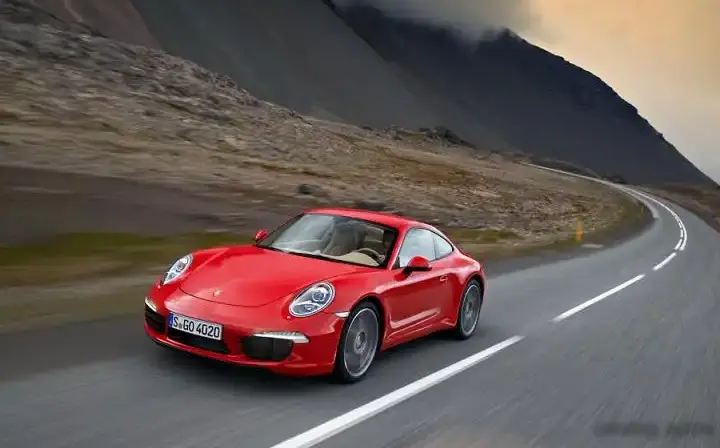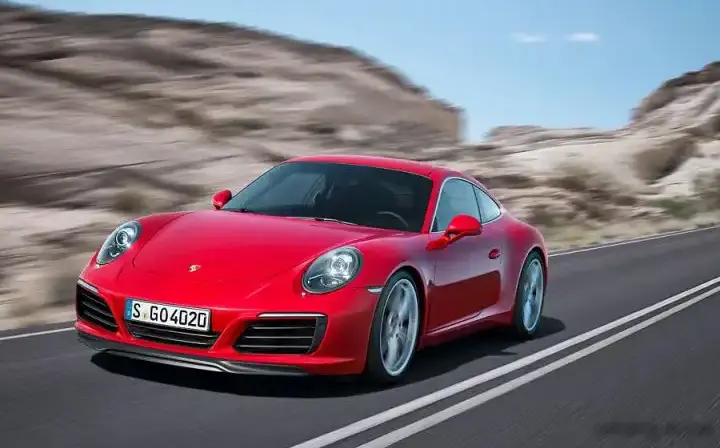
The Porsche 911 Turbo (991 II) 3.8, produced from 2015 to 2018, represents a significant evolution of Porsche’s iconic sports car. Falling within the second generation of the 991 series, this variant occupied the performance apex of the 911 lineup, positioned above the Carrera and Carrera S models. It offered a substantial increase in power and technological sophistication compared to its predecessors, solidifying the 911 Turbo’s reputation as a daily-drivable supercar. The “II” designation signifies the mid-cycle refresh of the 991 generation, bringing with it updated styling, enhanced interior features, and improvements to the engine and transmission.
Technical Specifications
| Brand | Porsche |
| Model | 911 |
| Generation | 911 (991 II) |
| Type (Engine) | Turbo 3.8 (540 Hp) PDK |
| Start of production | 2015 |
| End of production | 2018 |
| Powertrain Architecture | Internal Combustion engine |
| Body type | Coupe |
| Seats | 4 |
| Doors | 2 |
| Fuel consumption (economy) – urban | 11.8 l/100 km (19.9 US mpg, 23.9 UK mpg, 8.5 km/l) |
| Fuel consumption (economy) – extra urban | 7.5 l/100 km (31.4 US mpg, 37.7 UK mpg, 13.3 km/l) |
| Fuel consumption (economy) – combined | 9.1 l/100 km (25.8 US mpg, 31 UK mpg, 11 km/l) |
| CO2 emissions | 212 g/km |
| Fuel Type | Petrol (Gasoline) |
| Acceleration 0 – 100 km/h | 3 sec |
| Acceleration 0 – 62 mph | 3 sec |
| Acceleration 0 – 60 mph | 2.9 sec |
| Maximum speed | 320 km/h (198.84 mph) |
| Emission standard | Euro 6 |
| Weight-to-power ratio | 3 kg/Hp, 338.6 Hp/tonne |
| Weight-to-torque ratio | 2.2 kg/Nm, 445.1 Nm/tonne |
| Power | 540 Hp @ 6400 rpm |
| Power per litre | 142.1 Hp/l |
| Torque | 710 Nm @ 2250-4000 rpm (523.67 lb.-ft. @ 2250-4000 rpm) |
| Engine layout | Rear, Longitudinal |
| Engine Model/Code | MDA.BA |
| Engine displacement | 3800 cm3 (231.89 cu. in.) |
| Number of cylinders | 6 |
| Engine configuration | Boxer |
| Cylinder Bore | 102 mm (4.02 in.) |
| Piston Stroke | 77.5 mm (3.05 in.) |
| Compression ratio | 9.8:1 |
| Number of valves per cylinder | 4 |
| Fuel injection system | Direct injection |
| Engine aspiration | BiTurbo, Intercooler |
| Engine oil capacity | 7.5 l (7.93 US qt | 6.6 UK qt) |
| Kerb Weight | 1595 kg (3516.37 lbs.) |
| Max. weight | 2010 kg (4431.29 lbs.) |
| Max load | 415 kg (914.92 lbs.) |
| Trunk (boot) space – minimum | 115 l (4.06 cu. ft.) |
| Trunk (boot) space – maximum | 260 l (9.18 cu. ft.) |
| Fuel tank capacity | 68 l (17.96 US gal | 14.96 UK gal) |
| Length | 4507 mm (177.44 in.) |
| Width | 1880 mm (74.02 in.) |
| Width including mirrors | 1978 mm (77.87 in.) |
| Height | 1297 mm (51.06 in.) |
| Wheelbase | 2450 mm (96.46 in.) |
| Front track | 1541 mm (60.67 in.) |
| Rear (Back) track | 1590 mm (62.6 in.) |
| Drag coefficient (Cd) | 0.31 |
| Drive wheel | All wheel drive (4×4) |
| Number of gears and type of gearbox | 7 gears, automatic transmission PDK |
| Front suspension | Independent type McPherson |
| Rear suspension | Independent multi-link suspension |
| Front brakes | Ventilated discs |
| Rear brakes | Ventilated discs |
| Assisting systems | ABS (Anti-lock braking system) |
| Steering type | Steering rack and pinion |
| Tires size | 245/35 ZR 20; 305/30 ZR 20 |
| Wheel rims size | 9J x 20; 11.5J x 20 |
Powertrain & Engine Architecture
At the heart of the 911 Turbo (991 II) lies a 3.8-liter twin-turbocharged flat-six engine, designated as the MDA.BA. This engine builds upon the foundation of the previous 991 Turbo, but with revised turbochargers and fuel injection systems to deliver an increased output of 540 horsepower and 523.67 lb-ft of torque. The engine utilizes direct fuel injection, ensuring precise fuel delivery and optimized combustion. The boxer configuration, with its horizontally opposed cylinders, contributes to a lower center of gravity, enhancing handling and stability. The twin-turbo setup employs variable turbine geometry (VTG) to provide rapid response and minimize turbo lag. The engine is paired exclusively with Porsche’s seven-speed PDK (Porsche Doppelkupplung) dual-clutch automatic transmission. This transmission offers incredibly fast and smooth gear changes, contributing significantly to the car’s acceleration and overall driving experience.
Driving Characteristics
The 911 Turbo (991 II) delivers a driving experience that is both exhilarating and remarkably composed. The PDK transmission, combined with the potent twin-turbo engine, allows for blistering acceleration – 0 to 60 mph in just 2.9 seconds. The all-wheel-drive system provides exceptional traction, ensuring confident handling in a variety of conditions. While the PDK transmission offers automatic shifting, drivers can also take control using paddle shifters, allowing for precise gear selection. Compared to the naturally aspirated 911 Carrera models, the Turbo offers a significantly broader torque curve, providing effortless power delivery throughout the rev range. The suspension is tuned for a balance between comfort and performance, offering a surprisingly compliant ride for a car of this caliber.
Equipment & Trim Levels
The 911 Turbo (991 II) came standard with a comprehensive array of features, including a leather interior, sport seats, a touchscreen infotainment system, and a premium sound system. Optional extras were plentiful, allowing buyers to personalize their vehicles to a high degree. These included carbon fiber interior trim, adaptive cruise control, a sport exhaust system, and various exterior customization options. The interior featured a driver-focused cockpit with clear instrumentation and intuitive controls.
Chassis & Braking
The 911 Turbo (991 II) features a sophisticated chassis designed to maximize performance and handling. The suspension utilizes Porsche Active Suspension Management (PASM), which electronically adjusts the damping characteristics based on road conditions and driving style. The car is equipped with ventilated disc brakes on all four wheels, providing exceptional stopping power. Larger brake rotors and calipers were standard compared to the Carrera models, ensuring consistent performance even under demanding conditions. The steering system is precise and responsive, providing excellent feedback to the driver.
Market Reception & Comparison
The 911 Turbo (991 II) was widely praised by automotive critics for its exceptional performance, refined handling, and luxurious interior. It was consistently ranked among the top supercars of its era. Compared to the standard 911 Carrera and Carrera S models, the Turbo offered a significant performance advantage, but at a considerably higher price point. The Turbo S variant, with even more power and exclusive features, represented the ultimate expression of the 991 II platform. Fuel economy, while not a primary concern for buyers in this segment, was respectable for a car of its performance capabilities.
Legacy
The Porsche 911 Turbo (991 II) 3.8 remains a highly sought-after vehicle in the used car market. Its robust powertrain and build quality have proven to be reliable over time, although regular maintenance is essential. The PDK transmission is generally considered to be very durable, but it is important to follow Porsche’s recommended service intervals. The 991 II generation represents a sweet spot in the 911 lineage, offering a blend of modern technology, exhilarating performance, and classic Porsche design. It continues to be regarded as a benchmark for high-performance sports cars.