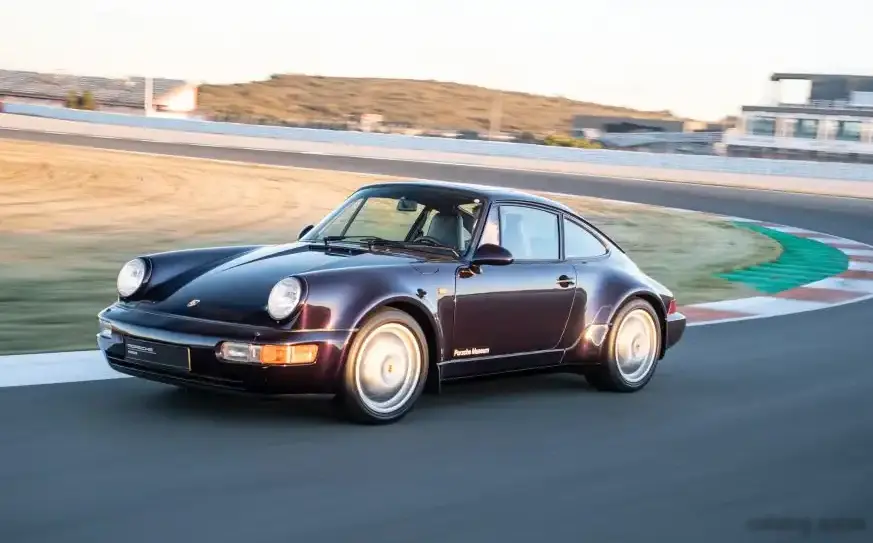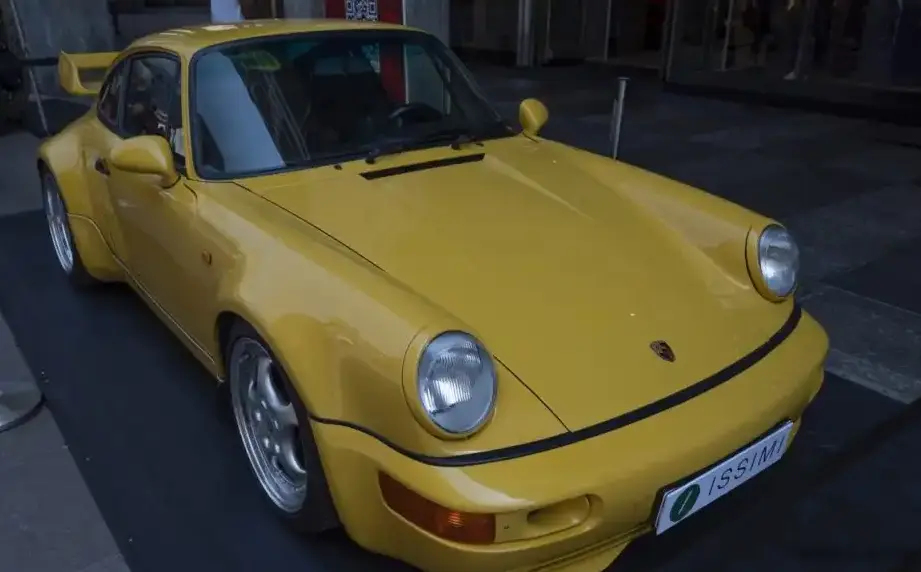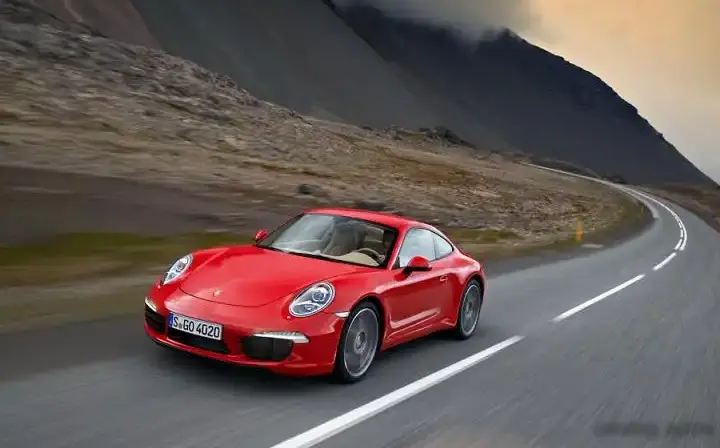
The Porsche 911 Turbo (991) 3.8, produced from 2013 to 2016, represents a significant evolution in the iconic 911 lineage. Positioned as the performance flagship within the 991 generation, it bridged the gap between the standard Carrera models and the even more extreme Turbo S. This variant showcased Porsche’s commitment to blending everyday usability with exhilarating performance, offering a compelling package for drivers seeking a high-performance sports car capable of both track days and comfortable long-distance cruising. The 991 generation itself was a major redesign, incorporating a longer wheelbase, a lower ride height, and a more sophisticated chassis compared to its 997 predecessor.
Technical Specifications
| Brand | Porsche |
| Model | 911 |
| Generation | 911 (991) |
| Type (Engine) | Turbo 3.8 (520 Hp) PDK |
| Start of production | 2013 |
| End of production | 2016 |
| Powertrain Architecture | Internal Combustion engine |
| Body type | Coupe |
| Seats | 4 |
| Doors | 2 |
| Fuel consumption (economy) – urban | 16.6 l/100 km (14.2 US mpg, 17 UK mpg, 6 km/l) |
| Fuel consumption (economy) – extra urban | 11.8 l/100 km (19.9 US mpg, 23.9 UK mpg, 8.5 km/l) |
| Fuel consumption (economy) – combined | 14.1 l/100 km (16.7 US mpg, 20 UK mpg, 7.1 km/l) |
| Fuel Type | Petrol (Gasoline) |
| Maximum speed | 312 km/h (193.87 mph) |
| Weight-to-power ratio | 3.1 kg/Hp, 326 Hp/tonne |
| Weight-to-torque ratio | 2.4 kg/Nm, 413.8 Nm/tonne |
| Power | 520 Hp @ 6000-6500 rpm |
| Torque | 660 Nm @ 1950-5000 rpm (486.79 lb.-ft. @ 1950-5000 rpm) |
| Engine layout | Front, Transverse |
| Engine Model/Code | MA1.71 |
| Number of cylinders | 6 |
| Engine configuration | Boxer |
| Compression ratio | 9.8:1 |
| Number of valves per cylinder | 4 |
| Fuel injection system | Direct injection |
| Engine aspiration | Twin-Turbo, Intercooler |
| Engine oil capacity | 7.5 l (7.93 US qt, 6.6 UK qt) |
| Coolant | 26.3 l (27.79 US qt, 23.14 UK qt) |
| Kerb Weight | 1595 kg (3516.37 lbs) |
| Max. weight | 1990 kg (4387.2 lbs) |
| Max load | 395 kg (870.83 lbs) |
| Trunk (boot) space – maximum | 115 l (4.06 cu. ft.) |
| Fuel tank capacity | 68 l (17.96 US gal, 14.96 UK gal) |
| Length | 4506 mm (177.4 in) |
| Width | 1880 mm (74.02 in) |
| Height | 1295 mm (50.98 in) |
| Wheelbase | 2450 mm (96.46 in) |
| Drag coefficient (Cd) | 0.31 |
| Minimum turning circle (turning diameter) | 10.4 m (34.12 ft) |
| Drive wheel | All wheel drive (4×4) |
| Number of gears and type of gearbox | 7 gears, automatic transmission PDK |
| Front suspension | Independent type McPherson |
| Rear suspension | Independent multi-link suspension |
| Front brakes | Ventilated discs, 380 mm |
| Rear brakes | Ventilated discs, 380 mm |
| Assisting systems | ABS (Anti-lock braking system) |
| Steering type | Steering rack and pinion |
| Power steering | Electric Steering |
| Tires size | 245/35 ZR20; 305/30 R20 |
| Wheel rims size | 8.5J x 20; 11J x 20 |
Powertrain & Engine Architecture
At the heart of the 911 Turbo (991) 3.8 lies the MA1.71 engine, a 3.8-liter twin-turbocharged flat-six (boxer) engine. This engine utilizes direct fuel injection, a technology that precisely meters fuel directly into the combustion chamber, improving efficiency and power output. The twin-turbocharger setup employs variable turbine geometry (VTG) to optimize boost pressure across the engine’s rev range, minimizing turbo lag and providing a broad torque curve. The engine produces 520 horsepower at 6000-6500 rpm and a substantial 660 Nm (486.79 lb-ft) of torque available from a low 1950 rpm all the way to 5000 rpm. This broad torque band is a key characteristic of the engine, contributing to its exceptional responsiveness. The engine is paired exclusively with Porsche’s seven-speed PDK (Porsche Doppelkupplung) dual-clutch transmission. The PDK offers incredibly fast and smooth gear changes, enhancing both acceleration and driving engagement.
Driving Characteristics
The 911 Turbo (991) 3.8 delivers a driving experience that is both exhilarating and surprisingly manageable. The combination of all-wheel drive and the PDK transmission provides exceptional traction and launch control, allowing for blistering acceleration. Porsche’s engineers carefully tuned the PDK’s gear ratios to complement the engine’s power delivery, ensuring that there’s always ample torque available in any gear. Compared to the naturally aspirated Carrera models, the Turbo offers a significantly more potent surge of power, particularly in the mid-range. While the Turbo S variant offered even more power and performance, the 3.8-liter Turbo provided a compelling balance between outright speed and everyday usability. The all-wheel-drive system distributes power to all four wheels, enhancing stability and cornering grip, making it a confident performer in various weather conditions.
Equipment & Trim Levels
The 911 Turbo (991) 3.8 came standard with a comprehensive list of features, reflecting its position as the performance flagship. Standard equipment included a sport exhaust system, Porsche Active Suspension Management (PASM), and a sport steering wheel. The interior featured leather upholstery, power-adjustable sport seats, and a high-end audio system. Numerous options were available, allowing buyers to personalize their vehicles. These included carbon fiber interior trim, adaptive cruise control, a sunroof, and various exterior customization options. The interior design was focused on the driver, with a clear and intuitive layout of controls.
Chassis & Braking
The 991 Turbo’s chassis was engineered to handle the increased power and performance. It featured a wider track than the standard Carrera models, contributing to improved stability. The suspension system utilized Porsche Active Suspension Management (PASM), which electronically adjusts the damping characteristics based on driving conditions and driver input. The braking system consisted of ventilated discs on all four wheels, with larger rotors and more powerful calipers compared to the Carrera models. The front brakes measured 380mm, while the rear brakes were also 380mm. This provided exceptional stopping power and fade resistance, even under demanding driving conditions.
Market Reception & Comparison
The 911 Turbo (991) 3.8 was widely praised by automotive critics for its exceptional performance, handling, and refinement. It was lauded as a benchmark in the sports car segment, offering a compelling combination of speed, luxury, and usability. Compared to the naturally aspirated Carrera models, the Turbo offered a significant performance upgrade, but at a higher price point. The Turbo S variant, with its even more powerful engine, was positioned as the ultimate expression of 911 performance. Fuel economy, while not a primary concern for buyers in this segment, was respectable for a high-performance sports car, averaging around 16.7 US mpg in combined driving.
Legacy
The 911 Turbo (991) 3.8 has proven to be a reliable and durable sports car. The MA1.71 engine, while complex, has demonstrated good long-term reliability when properly maintained. The PDK transmission has also proven to be robust and dependable. In the used car market, the 991 Turbo remains a highly sought-after model, commanding premium prices. Its combination of performance, luxury, and Porsche’s legendary engineering make it a desirable choice for enthusiasts seeking a high-performance sports car with a proven track record.