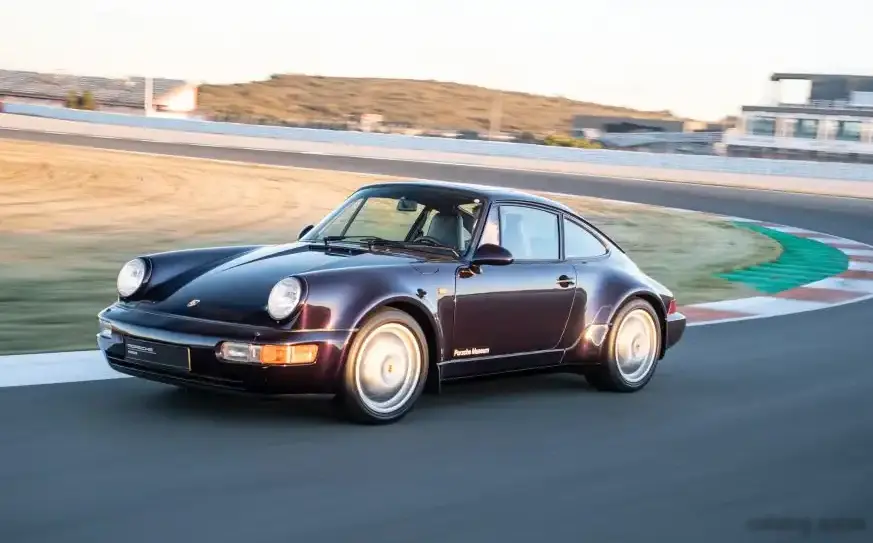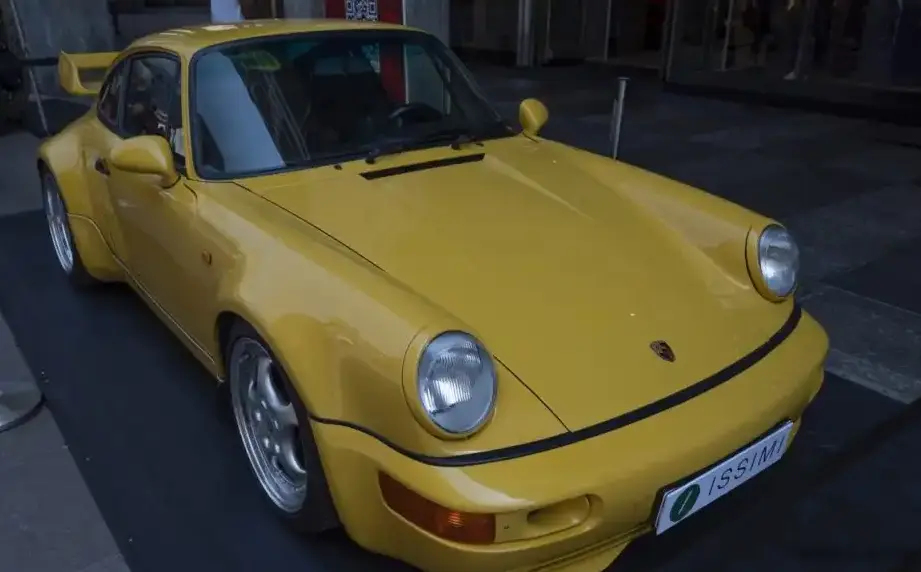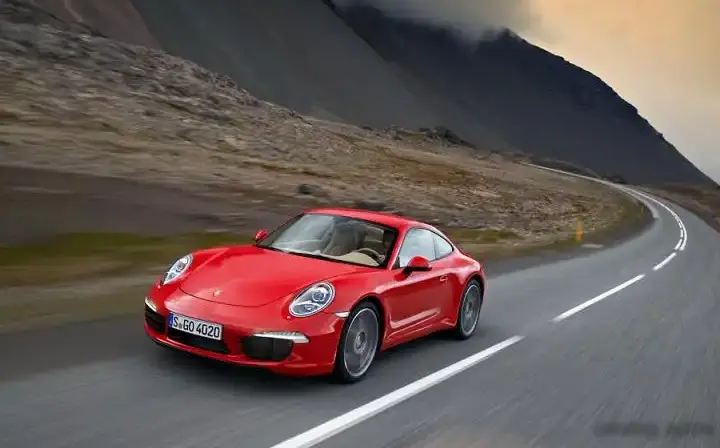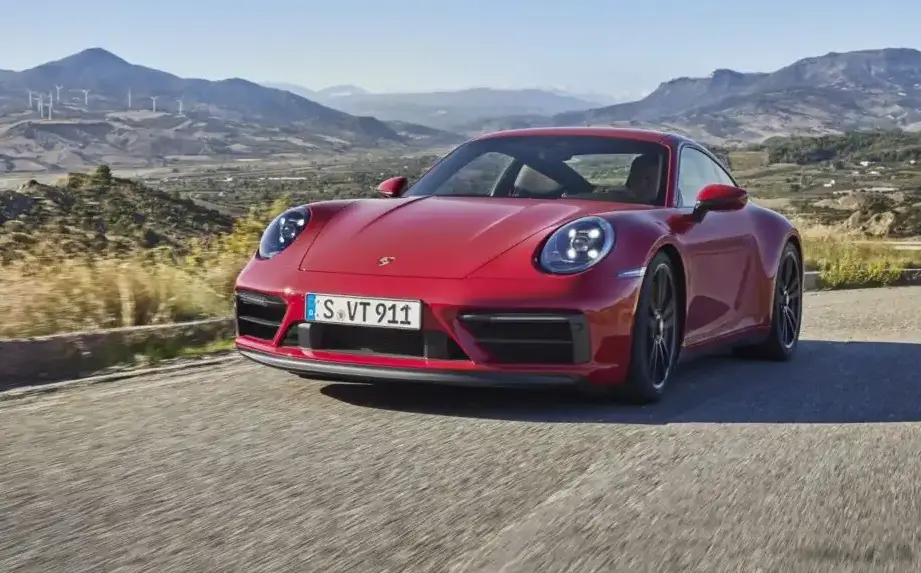
The Porsche 911 Carrera T 3.0, introduced in October 2022 and produced through May 2024, represents a focused, driver-oriented variant within the 992 generation of Porsche’s iconic sports car. Positioned as a performance-enhanced model bridging the gap between the base Carrera and the more track-focused GT3, the Carrera T (for “Touring”) emphasizes lightweight construction, a more engaging driving experience, and a purist aesthetic. It builds upon the foundation of the 992 platform, known for its blend of modern technology and classic 911 characteristics, offering a compelling option for enthusiasts seeking a visceral connection to the road.
Technical Specifications
| Brand | Porsche |
| Model | 911 |
| Generation | 911 (992) |
| Type (Engine) | Carrera T 3.0 (385 Hp) |
| Start of production | October, 2022 |
| End of production | May, 2024 |
| Powertrain Architecture | Internal Combustion engine |
| Body type | Coupe |
| Seats | 4 |
| Doors | 2 |
| Combined fuel consumption (WLTP) | 10.3-10.9 l/100 km (22.8 – 21.6 US mpg, 27.4 – 25.9 UK mpg, 9.7 – 9.2 km/l) |
| CO2 emissions (WLTP) | 234-247 g/km |
| Fuel consumption (urban) | 15 l/100 km (15.7 US mpg, 18.8 UK mpg, 6.7 km/l) |
| Fuel consumption (extra urban) | 7.3 l/100 km (32.2 US mpg, 38.7 UK mpg, 13.7 km/l) |
| Fuel consumption (combined) | 10.2 l/100 km (23.1 US mpg, 27.7 UK mpg, 9.8 km/l) |
| CO2 emissions (NEDC) | 232 g/km |
| Fuel Type | Petrol (Gasoline) |
| Acceleration 0 – 100 km/h | 4.5 sec |
| Acceleration 0 – 62 mph | 4.5 sec |
| Acceleration 0 – 60 mph | 4.3 sec |
| Acceleration 0 – 200 km/h | 15.1 sec |
| Maximum speed | 291 km/h (180.82 mph) |
| Emission standard | Euro 6d-ISC-FCM |
| Weight-to-power ratio | 3.8 kg/Hp, 261.9 Hp/tonne |
| Weight-to-torque ratio | 3.3 kg/Nm, 306.1 Nm/tonne |
| Power | 385 Hp @ 6500 rpm |
| Torque | 450 Nm @ 1950-5000 rpm (331.9 lb.-ft. @ 1950-5000 rpm) |
| Maximum engine speed | 7500 rpm |
| Engine layout | Rear, Longitudinal |
| Engine Model/Code | DKCA |
| Engine displacement | 2981 cm3 (181.91 cu. in.) |
| Number of cylinders | 6 |
| Engine configuration | Boxer |
| Cylinder Bore | 91 mm (3.58 in.) |
| Piston Stroke | 76.4 mm (3.01 in.) |
| Number of valves per cylinder | 4 |
| Fuel injection system | Direct injection |
| Engine aspiration | BiTurbo, Intercooler |
| Engine oil capacity | 8.3 l (8.77 US qt | 7.3 UK qt) |
| Kerb Weight | 1470 kg (3240.8 lbs.) |
| Max. weight | 1850 kg (4078.55 lbs.) |
| Max load | 380 kg (837.76 lbs.) |
| Trunk (boot) space – minimum | 132 l (4.66 cu. ft.) |
| Fuel tank capacity | 64 l (16.91 US gal | 14.08 UK gal) |
| Length | 4530 mm (178.35 in.) |
| Width | 1852 mm (72.91 in.) |
| Width including mirrors | 2024 mm (79.69 in.) |
| Height | 1293 mm (50.91 in.) |
| Wheelbase | 2450 mm (96.46 in.) |
| Ride height (ground clearance) | 115 mm (4.53 in.) |
| Drag coefficient (Cd) | 0.30 |
| Minimum turning circle | 11.2 m (36.75 ft.) |
| Front suspension | Independent, type McPherson with coil spring and anti-roll bar |
| Rear suspension | Independent multi-link spring suspension with stabilizer |
| Front brakes | Ventilated discs, 330 mm |
| Rear brakes | Ventilated discs, 330 mm |
| Drive wheel | Rear wheel drive |
| Number of gears | 7 gears, manual transmission |
| Front tires | 245/35 ZR20 |
| Rear tires | 305/30 ZR21 |
Powertrain & Engine Architecture
The Carrera T 3.0 is powered by Porsche’s 3.0-liter twin-turbocharged flat-six engine, designated the DKCA. This engine produces 385 horsepower at 6,500 rpm and 450 Nm (331.9 lb-ft) of torque between 1,950 and 5,000 rpm. The engine utilizes direct fuel injection and variable turbine geometry (VTG) turbochargers to optimize both power delivery and efficiency. The VTG technology allows the turbochargers to adjust their geometry based on engine speed and load, improving responsiveness and reducing turbo lag. The engine is mounted longitudinally at the rear of the vehicle, a hallmark of the 911 design. The Carrera T exclusively comes with a seven-speed manual transmission, emphasizing driver engagement. This transmission features a shorter throw and a more direct feel compared to the standard Carrera.
Driving Characteristics
The Carrera T’s driving experience is defined by its lightweight construction and responsive powertrain. Porsche achieved weight reduction through several measures, including the use of lighter seats, reduced sound insulation, and a smaller battery. The manual transmission further enhances the connection between driver and machine. The shorter gear ratios contribute to quicker acceleration, while the precise shift action provides a satisfying tactile experience. Compared to the standard Carrera, the Carrera T feels noticeably more agile and eager to change direction. While not as brutally fast as the 911 Turbo models, the Carrera T offers a balanced and rewarding driving experience that prioritizes feel and control.
Equipment & Trim Levels
The Carrera T comes standard with a number of performance-oriented features, including Porsche Active Suspension Management (PASM) which lowers the ride height by 10mm, a mechanical rear-axle differential lock, and Porsche Torque Vectoring Plus (PTV Plus). Inside, the Carrera T features sport seats with enhanced bolstering, a GT sport steering wheel, and a simplified interior design. Upholstery is typically a combination of black leather and fabric, with red accents. Optional extras include carbon fiber trim, full leather interiors, and a variety of performance upgrades such as carbon ceramic brakes and a sport exhaust system.
Chassis & Braking
The Carrera T utilizes a sophisticated chassis design featuring independent suspension at all four corners. The front suspension employs a McPherson strut design with coil springs and an anti-roll bar, while the rear suspension utilizes a multi-link setup with a stabilizer bar. The braking system consists of ventilated discs on all four wheels, providing ample stopping power. The Carrera T also benefits from Porsche’s 4-wheel steering system, which enhances agility and stability at both low and high speeds.
Market Reception & Comparison
The Carrera T was generally well-received by automotive critics, who praised its engaging driving dynamics, responsive powertrain, and purist character. It was often lauded as the sweet spot in the 992 lineup for drivers who prioritize feel and connection over outright speed. Compared to the standard Carrera, the T offered a more focused and rewarding driving experience at a relatively modest price premium. Compared to the more powerful Carrera S or GTS models, the T provided a more balanced and accessible performance profile, making it a compelling option for both track days and spirited road driving. Fuel economy, while not a primary concern for 911 buyers, was comparable to other Carrera models.
Legacy
The 992 Carrera T has quickly established itself as a desirable variant within the 911 community. Its combination of performance, handling, and driver engagement has made it a favorite among enthusiasts. The DKCA engine, while not the most powerful in the 911 range, is known for its reliability and durability. On the used car market, Carrera T models tend to command a premium over standard Carreras, reflecting their limited production numbers and desirable specifications. The 992 Carrera T represents a continuation of Porsche’s long tradition of offering focused, driver-oriented sports cars that deliver a truly visceral driving experience.