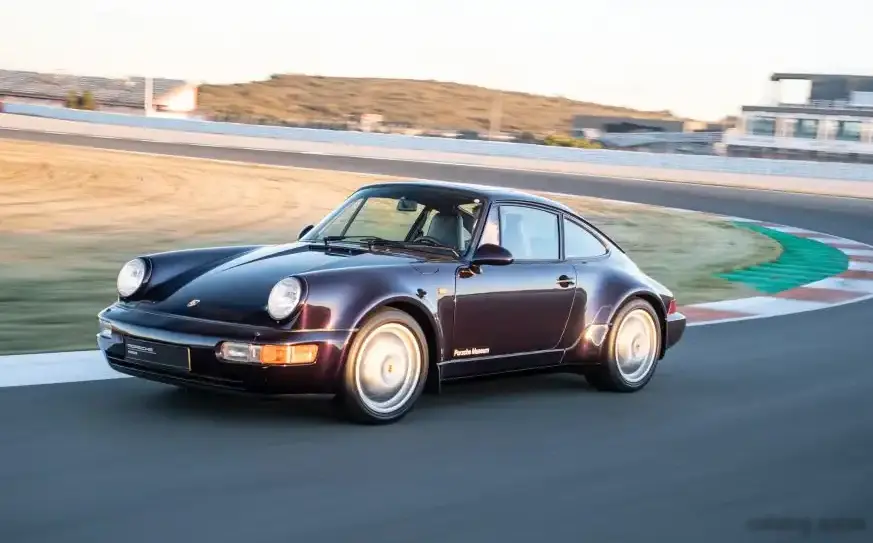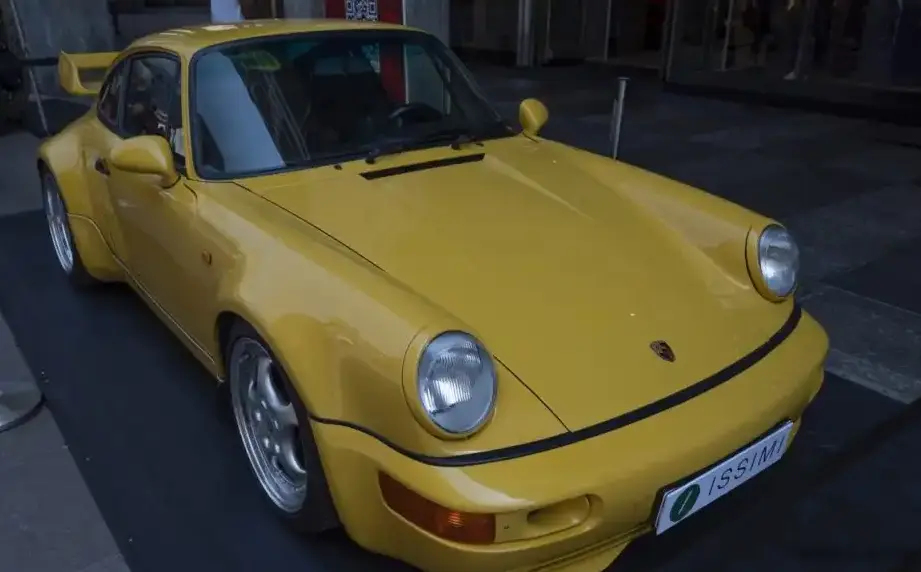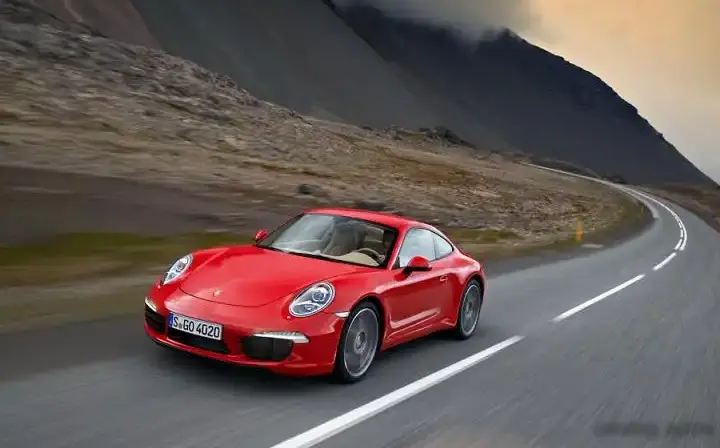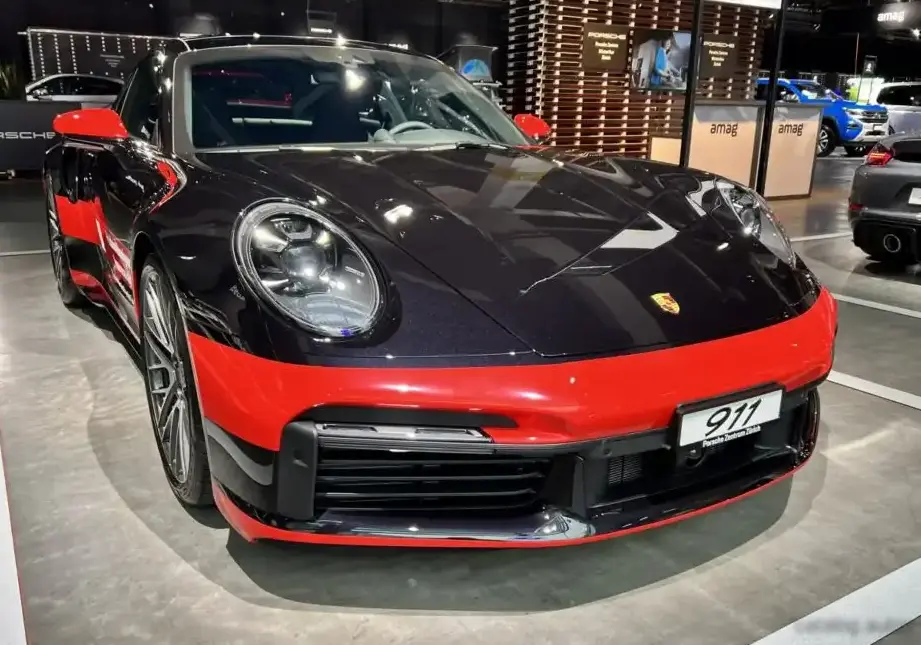
The Porsche 911 Turbo (992) 3.8, producing 580 horsepower, represents the pinnacle of performance within the 992 generation of Porsche’s iconic sports car. Introduced in July 2020 and continuing through May 2024, this variant builds upon the established 911 formula with significant advancements in turbocharging technology and drivetrain sophistication. It occupies the top tier of the 992 lineup, positioned above the Carrera and Carrera S models, offering a substantial increase in power and performance. The 992 generation itself marked a significant evolution for the 911, incorporating a wider body, updated interior technology, and enhanced aerodynamic efficiency.
Technical Specifications
| Brand | Porsche |
| Model | 911 |
| Generation | 911 (992) |
| Type (Engine) | Turbo 3.8 (580 Hp) PDK |
| Start of production | July, 2020 |
| End of production | May, 2024 |
| Powertrain Architecture | Internal Combustion engine |
| Body type | Coupe |
| Seats | 4 |
| Doors | 2 |
| Fuel consumption (economy) – urban (NEDC) | 15.3 l/100 km (15.4 US mpg, 18.5 UK mpg, 6.5 km/l) |
| Fuel consumption (economy) – extra urban (NEDC) | 8.7 l/100 km (27 US mpg, 32.5 UK mpg, 11.5 km/l) |
| Fuel consumption (economy) – combined (NEDC) | 11.1 l/100 km (21.2 US mpg, 25.4 UK mpg, 9 km/l) |
| CO2 emissions (NEDC) | 254 g/km |
| Fuel Type | Petrol (Gasoline) |
| Acceleration 0 – 100 km/h | 2.8 sec |
| Acceleration 0 – 62 mph | 2.8 sec |
| Acceleration 0 – 60 mph | 2.7 sec |
| Acceleration 0 – 200 km/h | 9.7 sec |
| Maximum speed | 320 km/h (198.84 mph) |
| Emission standard | Euro 6d-ISC-FCM |
| Weight-to-power ratio | 2.8 kg/Hp, 353.7 Hp/tonne |
| Weight-to-torque ratio | 2.2 kg/Nm, 457.3 Nm/tonne |
| Power | 580 Hp @ 6500 rpm |
| Power per litre | 154.9 Hp/l |
| Torque | 750 Nm @ 2250-4500 rpm (553.17 lb.-ft. @ 2250-4500 rpm) |
| Maximum engine speed | 7200 rpm |
| Engine layout | Rear, Longitudinal |
| Engine Model/Code | DKEA |
| Engine displacement | 3745 cm3 (228.53 cu. in.) |
| Number of cylinders | 6 |
| Engine configuration | Boxer |
| Cylinder Bore | 102 mm (4.02 in.) |
| Piston Stroke | 76.4 mm (3.01 in.) |
| Compression ratio | 8.7:1 |
| Number of valves per cylinder | 4 |
| Fuel injection system | Direct injection |
| Engine aspiration | BiTurbo, Intercooler |
| Engine oil capacity | 8.3 l (8.77 US qt | 7.3 UK qt) |
| Kerb Weight | 1640 kg (3615.58 lbs.) |
| Max. weight | 2040 kg (4497.43 lbs.) |
| Max load | 400 kg (881.85 lbs.) |
| Trunk (boot) space – minimum | 264 l (9.32 cu. ft.) |
| Fuel tank capacity | 67 l (17.7 US gal | 14.74 UK gal) |
| Length | 4535 mm (178.54 in.) |
| Width | 1900 mm (74.8 in.) |
| Width including mirrors | 2024 mm (79.69 in.) |
| Height | 1303 mm (51.3 in.) |
| Wheelbase | 2450 mm (96.46 in.) |
| Front track | 1583 mm (62.32 in.) |
| Rear (Back) track | 1600 mm (62.99 in.) |
| Drag coefficient (Cd) | 0.33 |
| Minimum turning circle (turning diameter) | 10.9 m (35.76 ft.) |
| Drivetrain Architecture | The Internal combustion engine (ICE) drives permanently the four wheels of the vehicle. |
| Drive wheel | All wheel drive (4×4) |
| Number of gears and type of gearbox | 8 gears, automatic transmission PDK |
| Front suspension | Independent type McPherson |
| Rear suspension | Independent multi-link suspension |
| Front brakes | Ventilated discs, 408 mm |
| Rear brakes | Ventilated discs, 380 mm |
| Assisting systems | ABS (Anti-lock braking system) |
| Steering type | Steering rack and pinion |
| Power steering | Electric Steering |
| Tires size | Front wheel tires: 255/35 ZR20 Rear wheel tires: 315/30 ZR21 |
| Wheel rims size | Front wheel rims: 9 J x 20 Rear wheel rims: 11.5 J x 21 |
Powertrain & Engine Architecture
At the heart of the 911 Turbo (992) 3.8 lies a 3.8-liter twin-turbocharged flat-six engine, designated as the DKEA engine code. This engine represents a significant upgrade over previous Turbo models, featuring larger turbochargers and an improved intercooler system for increased airflow and efficiency. The engine utilizes direct fuel injection, ensuring precise fuel delivery and optimized combustion. The valvetrain employs four valves per cylinder, contributing to enhanced volumetric efficiency and power output. The engine is mounted longitudinally in the rear of the vehicle, a hallmark of the 911 design. The 8-speed Porsche Doppelkupplung (PDK) dual-clutch transmission is standard, providing incredibly fast and smooth gear changes. This PDK unit is specifically tuned for the Turbo model, with revised gear ratios to maximize acceleration and responsiveness.
Driving Characteristics
The 911 Turbo (992) 3.8 delivers an exhilarating driving experience characterized by its immense power and precise handling. The twin-turbochargers provide a broad torque curve, with peak torque of 750 Nm (553 lb-ft) available from 2250 to 4500 rpm. This results in virtually instantaneous acceleration, with a 0-60 mph time of just 2.7 seconds. The PDK transmission contributes to this performance, offering seamless shifts and allowing the driver to maintain optimal engine speed. Compared to the naturally aspirated Carrera models, the Turbo offers significantly more power and torque, resulting in a much more aggressive and capable driving experience. While the Carrera S with the Sport Chrono package offers a sporty feel, the Turbo’s power delivery is in a different league. The all-wheel-drive system ensures excellent traction, even in challenging conditions.
Equipment & Trim Levels
The 911 Turbo (992) 3.8 comes standard with a comprehensive list of features, reflecting its position as the flagship model. Standard interior appointments include leather upholstery, power-adjustable sports seats, a Bose surround sound system, and a Porsche Communication Management (PCM) infotainment system with a 10.9-inch touchscreen display. Optional extras are extensive, including adaptive cruise control, a sport exhaust system, carbon fiber interior trim, and various customization options through Porsche’s “Personalization Plus” program. The interior design emphasizes a driver-focused layout with high-quality materials and meticulous attention to detail.
Chassis & Braking
The 911 Turbo (992) features a sophisticated chassis designed to handle its immense power. It utilizes an independent McPherson strut suspension at the front and an independent multi-link suspension at the rear. Porsche Active Suspension Management (PASM) is standard, allowing the driver to adjust the damping characteristics to suit their preferences. Braking performance is equally impressive, with ventilated discs measuring 408 mm at the front and 380 mm at the rear. The braking system incorporates Porsche Ceramic Composite Brakes (PCCB) as an optional upgrade, offering even greater stopping power and fade resistance. The car’s electronic stability control system is finely tuned to provide a balance between safety and performance.
Market Reception & Comparison
The 911 Turbo (992) 3.8 has been widely praised by automotive critics for its exceptional performance, handling, and refinement. Reviewers consistently highlight its blistering acceleration, precise steering, and comfortable ride quality. Compared to other high-performance sports cars, the 911 Turbo stands out for its everyday usability and practicality. While its fuel economy of 11.1 l/100 km (21.2 US mpg) is not particularly impressive, it is reasonable considering its performance capabilities. Reliability has been generally good, although the complex turbocharging system and advanced technology require regular maintenance.
Legacy
The 911 Turbo (992) 3.8 represents a significant milestone in the evolution of the 911. Its advanced technology, exceptional performance, and refined driving experience have cemented its status as one of the most desirable sports cars on the market. On the used car market, these models hold their value well, reflecting their desirability and limited production numbers. The DKEA engine, while complex, has proven to be relatively robust when properly maintained, ensuring that these 911 Turbos will continue to provide thrilling performance for years to come.