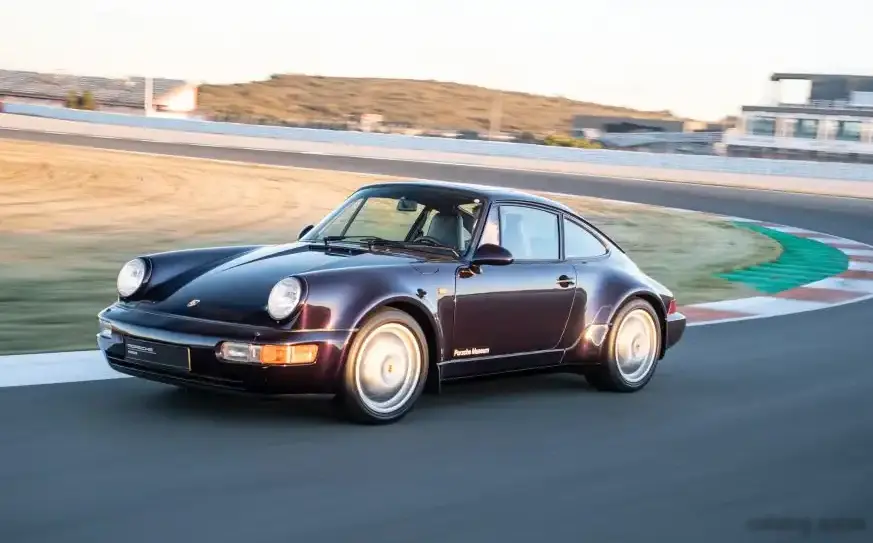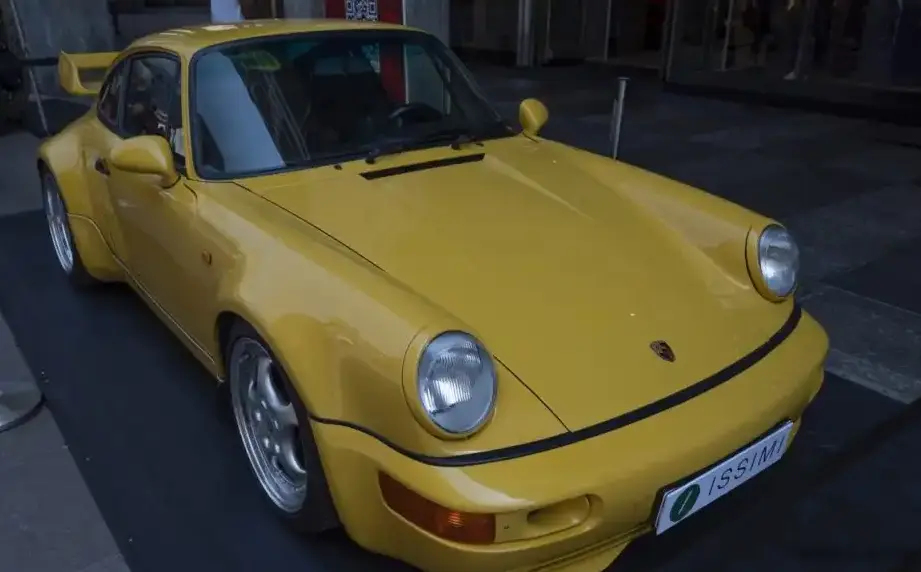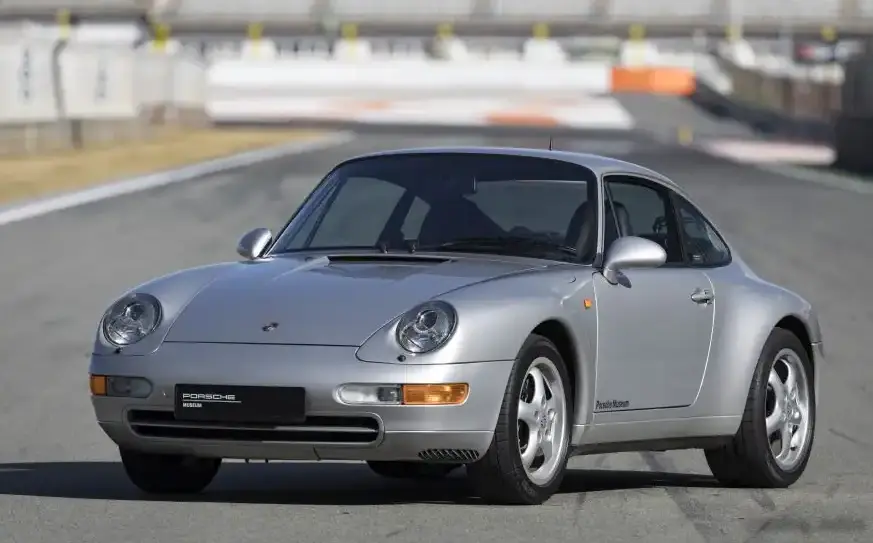
The Porsche 911 (993) Carrera 3.6, equipped with the Tiptronic S automatic transmission, represents a pivotal moment in the 911 lineage. Produced from 1995 to 1997, this variant bridged the gap between the traditional, air-cooled 911s and the fully modernized 996 generation. It was the final iteration of the classic air-cooled flat-six engine, offering a blend of performance and relative ease of use thanks to the automatic gearbox. Within the 993 range, the 3.6 Carrera Tiptronic occupied a mid-range position, offering a step up in power and refinement from the base 3.0-liter models, but remaining more accessible than the higher-performance Turbo or GT2 versions.
Technical Specifications
| Brand | Porsche |
| Model | 911 |
| Generation | 911 (993) |
| Type (Engine) | Carrera 3.6 (285 Hp) Tiptronic |
| Start of production | 1995 |
| End of production | 1997 |
| Powertrain Architecture | Internal Combustion engine |
| Body type | Coupe |
| Seats | 4 |
| Doors | 2 |
| Fuel consumption (economy) – urban | 18.2 l/100 km (12.9 US mpg, 15.5 UK mpg, 5.5 km/l) |
| Fuel consumption (economy) – extra urban | 8.7 l/100 km (27 US mpg, 32.5 UK mpg, 11.5 km/l) |
| Fuel consumption (economy) – combined | 12.2 l/100 km (19.3 US mpg, 23.2 UK mpg, 8.2 km/l) |
| Fuel Type | Petrol (Gasoline) |
| Acceleration 0 – 100 km/h | 5.4 sec |
| Acceleration 0 – 62 mph | 5.4 sec |
| Acceleration 0 – 60 mph | 5.1 sec |
| Maximum speed | 275 km/h (170.88 mph) |
| Weight-to-power ratio | 4.9 kg/Hp, 204.3 Hp/tonne |
| Weight-to-torque ratio | 4.1 kg/Nm, 243.7 Nm/tonne |
| Power | 285 Hp @ 6100 rpm |
| Power per litre | 79.2 Hp/l |
| Torque | 340 Nm @ 5250 rpm (250.77 lb.-ft. @ 5250 rpm) |
| Engine layout | Rear, Longitudinal |
| Engine Model/Code | M64.22 |
| Engine displacement | 3600 cm3 (219.69 cu. in.) |
| Number of cylinders | 6 |
| Engine configuration | Boxer |
| Cylinder Bore | 100 mm (3.94 in.) |
| Piston Stroke | 76.4 mm (3.01 in.) |
| Compression ratio | 11.3:1 |
| Number of valves per cylinder | 2 |
| Fuel injection system | Multi-port manifold injection |
| Engine aspiration | Naturally aspirated engine |
| Valvetrain | SOHC |
| Engine oil capacity | 9 l (9.51 US qt | 7.92 UK qt) |
| Kerb Weight | 1395 kg (3075.45 lbs.) |
| Max. weight | 1710 kg (3769.9 lbs.) |
| Max load | 315 kg (694.46 lbs.) |
| Trunk (boot) space – maximum | 123 l (4.34 cu. ft.) |
| Length | 4245 mm (167.13 in.) |
| Width | 1735 mm (68.31 in.) |
| Height | 1300 mm (51.18 in.) |
| Wheelbase | 2272 mm (89.45 in.) |
| Front track | 1405 mm (55.31 in.) |
| Rear (Back) track | 1444 mm (56.85 in.) |
| Drivetrain Architecture | The Internal combustion engine (ICE) drives the rear wheels of the vehicle. |
| Drive wheel | Rear wheel drive |
| Number of gears and type of gearbox | 4 gears, automatic transmission Tiptronic S |
| Front suspension | Independent type McPherson |
| Rear suspension | Independent multi-link suspension |
| Front brakes | Ventilated discs |
| Rear brakes | Ventilated discs |
| Assisting systems | ABS (Anti-lock braking system), Hydraulic Steering |
| Tires size | 205/55 R16; 245/45 R16 |
| Wheel rims size | 7J x 16; 9J x 16 |
Powertrain & Engine Architecture
At the heart of the 993 Carrera 3.6 Tiptronic lies the M64.22 engine, a 3.6-liter naturally aspirated flat-six. This engine represented the culmination of decades of air-cooled 911 development. It featured a displacement increase over previous generations, achieved through a larger bore and stroke. The engine utilized a multi-port fuel injection system, carefully tuned to deliver a balance of power and drivability. The valvetrain employed a single overhead camshaft (SOHC) design, a characteristic of the traditional 911 engine architecture. The Tiptronic S transmission was a four-speed automatic with a manual shift mode, allowing drivers some control over gear selection. This transmission was a significant upgrade over earlier Porsche automatics, offering smoother shifts and quicker response times. It used a torque converter and electronic controls to optimize gear changes based on throttle position and vehicle speed.
Driving Characteristics
The 993 Carrera 3.6 Tiptronic offered a distinct driving experience compared to its manual transmission counterparts and other 993 variants. While the manual versions provided a more engaging and direct connection to the engine, the Tiptronic offered a more relaxed and accessible driving style. The automatic transmission, while quick for its time, did introduce a slight performance penalty. Acceleration from 0-60 mph took approximately 5.1 seconds, slightly slower than the manual version. The Tiptronic’s gear ratios were optimized for both acceleration and cruising, providing adequate power for highway passing and comfortable long-distance driving. However, some enthusiasts found the automatic transmission less responsive and less involving than the traditional manual gearbox.
Equipment & Trim Levels
The Carrera 3.6 Tiptronic came standard with a well-appointed interior featuring leather upholstery, power windows, power steering, and an upgraded audio system. Optional extras included a sunroof, heated seats, and a more comprehensive sound system. The dashboard layout was typical of the 993 generation, with a classic five-gauge instrument cluster providing essential information to the driver. Exterior features included a body-colored front and rear spoiler, and alloy wheels. The Tiptronic models often featured a slightly more luxurious trim level compared to the base Carrera models, reflecting their higher price point.
Chassis & Braking
The 993 Carrera 3.6 Tiptronic utilized a sophisticated chassis design featuring independent suspension at all four wheels. The front suspension employed McPherson struts, while the rear suspension utilized a multi-link setup. This configuration provided excellent handling and ride comfort. Braking duties were handled by ventilated disc brakes on all four wheels, providing ample stopping power. An Anti-lock Braking System (ABS) was standard, enhancing safety and stability. The suspension was tuned to complement the car’s weight and power, offering a balanced and predictable driving experience.
Market Reception & Comparison
The 993 Carrera 3.6 Tiptronic was generally well-received by automotive critics. It was praised for its refined driving experience, comfortable interior, and the iconic 911 styling. However, some critics noted the performance disadvantage compared to the manual transmission versions. Compared to the base 3.0-liter Carrera, the 3.6 offered a significant power increase and improved performance. Against the more expensive Turbo and GT2 models, the 3.6 Tiptronic provided a more accessible entry point into the 993 range. Fuel economy was reasonable for a sports car of its era, averaging around 19.3 US mpg in combined driving.
Legacy
The Porsche 911 (993) Carrera 3.6 Tiptronic holds a special place in Porsche history as the last of the air-cooled 911s. The M64.22 engine is renowned for its reliability and durability, and well-maintained examples continue to provide years of driving pleasure. In the used car market, the 993 Carrera 3.6 Tiptronic commands a premium price, reflecting its rarity and collectibility. While the manual transmission versions are generally more sought after by enthusiasts, the Tiptronic offers a unique and enjoyable driving experience that appeals to a wider range of drivers. The 993 generation, as a whole, is widely regarded as one of the best 911s ever produced, and the Carrera 3.6 Tiptronic represents a significant chapter in the car’s storied history.