Technical Specifications
| Brand | Porsche |
| Model | 911 |
| Generation | 911 (993) |
| Type (Engine) | GT2 3.6 (430 Hp) |
| Start of production | 1995 |
| End of production | 1997 |
| Powertrain Architecture | Internal Combustion engine |
| Body type | Coupe |
| Seats | 2 |
| Doors | 2 |
| Fuel Type | Petrol (Gasoline) |
| Acceleration 0 – 100 km/h | 4.4 sec |
| Acceleration 0 – 62 mph | 4.4 sec |
| Acceleration 0 – 60 mph | 4.2 sec |
| Maximum speed | 295 km/h (183.3 mph) |
| Weight-to-power ratio | 3 kg/Hp, 333.3 Hp/tonne |
| Weight-to-torque ratio | 2.4 kg/Nm, 418.6 Nm/tonne |
| Power | 430 Hp @ 5750 rpm |
| Power per litre | 119.4 Hp/l |
| Torque | 540 Nm @ 4500 rpm (398.28 lb.-ft. @ 4500 rpm) |
| Engine layout | Rear, Longitudinal |
| Engine displacement | 3600 cm3 (219.69 cu. in.) |
| Number of cylinders | 6 |
| Engine configuration | Boxer |
| Cylinder Bore | 100 mm (3.94 in.) |
| Piston Stroke | 76.4 mm (3.01 in.) |
| Compression ratio | 8:1 |
| Number of valves per cylinder | 2 |
| Fuel injection system | Multi-port manifold injection |
| Engine aspiration | Turbocharger |
| Valvetrain | SOHC |
| Engine oil capacity | 11.5 l (12.15 US qt | 10.12 UK qt) |
| Kerb Weight | 1290 kg (2843.96 lbs.) |
| Max. weight | 1840 kg (4056.51 lbs.) |
| Max load | 550 kg (1212.54 lbs.) |
| Trunk (boot) space – minimum | 123 l (4.34 cu. ft.) |
| Fuel tank capacity | 92 l (24.3 US gal | 20.24 UK gal) |
| Length | 4245 mm (167.13 in.) |
| Width | 1855 mm (73.03 in.) |
| Height | 1270 mm (50 in.) |
| Wheelbase | 2272 mm (89.45 in.) |
| Front track | 1475 mm (58.07 in.) |
| Rear (Back) track | 1550 mm (61.02 in.) |
| Drivetrain Architecture | The Internal combustion engine (ICE) drives the rear wheels of the vehicle. |
| Drive wheel | Rear wheel drive |
| Number of gears and type of gearbox | 6 gears, manual transmission |
| Front suspension | Independent type McPherson |
| Rear suspension | Independent multi-link suspension |
| Front brakes | Ventilated discs |
| Rear brakes | Ventilated discs |
| Assisting systems | ABS (Anti-lock braking system) |
| Steering type | Steering rack and pinion |
| Power steering | Hydraulic Steering |
| Tires size | 235/40 ZR18; 285/35 ZR18 |
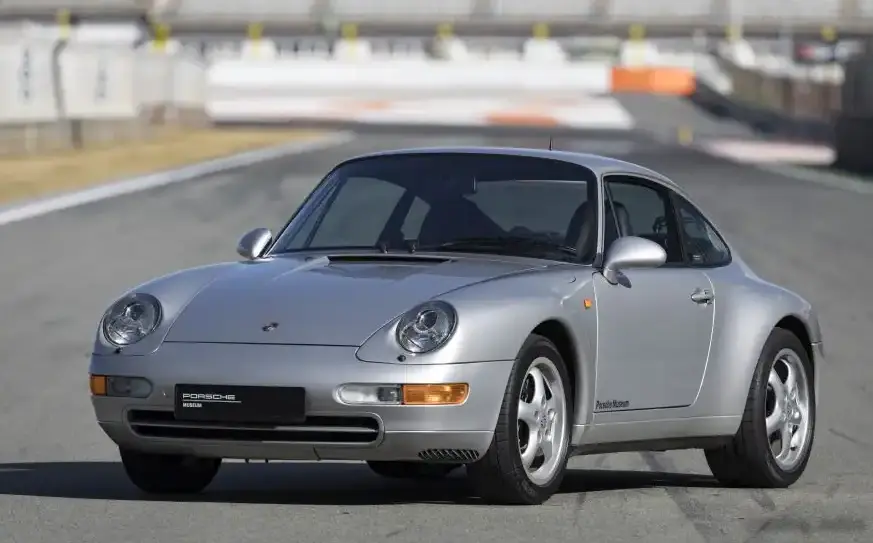
The Porsche 911 (993) GT2 3.6, produced from 1995 to 1997, represents a pivotal moment in the evolution of Porsche’s iconic sports car. Built upon the 993 generation 911 platform, the GT2 was a homologation special, created to meet regulations for racing in the BPR Global GT Series. It was designed to be a no-compromise, track-focused machine, bridging the gap between the standard 993 and the full-blown racing versions. The 3.6-liter variant, producing 430 horsepower, is considered by many enthusiasts to be the sweet spot of the 993 GT2 lineage, offering a thrilling driving experience with a degree of usability not found in later, more extreme iterations.
Powertrain & Engine Architecture
At the heart of the 993 GT2 3.6 lies a 3.6-liter, twin-turbocharged flat-six engine, designated as the M64/60. This engine builds upon the foundation of the standard 993 Turbo’s engine, but with significant modifications for increased performance. Key changes included larger turbochargers, an upgraded intercooler system, and revised engine management software. The engine utilizes a single overhead camshaft (SOHC) design per cylinder bank, operating with two valves per cylinder. Fuel delivery is managed by a multi-port fuel injection system. The engine’s 8:1 compression ratio is a compromise between performance and reliability, necessary to handle the increased boost pressures. The engine is mounted longitudinally in the rear of the vehicle, driving the rear wheels exclusively. The sole transmission option was a robust 6-speed manual gearbox, chosen for its durability and direct connection to the driver.
Driving Characteristics
The 993 GT2 3.6 delivers a raw and visceral driving experience. The twin-turbochargers provide a noticeable surge of power, but unlike some modern turbocharged engines, there’s a degree of turbo lag. Once the turbos spool up, however, the acceleration is relentless. The 430 horsepower and 398 lb-ft of torque propel the car from 0 to 60 mph in around 4.2 seconds, and on to a top speed of 183 mph. The manual gearbox is precise and engaging, requiring a skilled driver to extract the most from the engine. The suspension is firm, prioritizing handling over comfort, and the steering is direct and communicative. Compared to the standard 993 or even the 993 Turbo, the GT2 feels significantly more focused and demanding to drive. It’s a car that rewards precision and skill, and punishes mistakes.
Equipment & Trim Levels
The 993 GT2 3.6 was sparsely equipped, reflecting its track-focused nature. Standard features included sport seats, a three-spoke steering wheel, and a basic audio system. Air conditioning was optional, as were power windows and central locking. The interior was largely devoid of superfluous luxuries, with a focus on functionality. The exterior was equally minimalist, with a distinctive rear wing, wider wheel arches, and a front splitter designed to improve aerodynamics. Paint options were limited, typically consisting of solid colors like black, white, and red. The overall aim was to reduce weight and maximize performance.
Chassis & Braking
The chassis of the 993 GT2 3.6 is based on the standard 993, but with several key modifications. The suspension was significantly stiffened, with firmer springs and dampers. The track was widened, and larger wheels and tires were fitted – 235/40 ZR18 at the front and 285/35 ZR18 at the rear – to improve grip. The braking system featured ventilated discs at all four corners, providing ample stopping power. An Anti-lock Braking System (ABS) was standard. The car’s weight was minimized through the use of lightweight materials and the deletion of non-essential components. The combination of these chassis and braking upgrades resulted in a car that was exceptionally stable and capable on the track.
Market Reception & Comparison
The 993 GT2 3.6 was widely praised by automotive journalists for its performance and handling. Critics noted its raw power, precise steering, and exceptional grip. However, it was also acknowledged that the car was not for the faint of heart, requiring a skilled driver to fully appreciate its capabilities. Compared to the standard 993 Turbo, the GT2 offered significantly more performance, but at the expense of everyday usability. The GT2 was also more expensive than the Turbo, positioning it as a niche product for serious enthusiasts. Fuel economy was predictably poor, reflecting the car’s high-performance nature.
Legacy
The Porsche 911 (993) GT2 3.6 is now a highly sought-after collector’s car. Its limited production numbers and exceptional driving experience have made it a favorite among Porsche enthusiasts. The M64/60 engine is known to be relatively robust, but requires regular maintenance to ensure its longevity. Finding original, unmodified examples is becoming increasingly difficult, as many cars have been modified or used extensively on the track. Today, the 993 GT2 3.6 represents a high watermark in the evolution of the 911, and a testament to Porsche’s commitment to building uncompromising sports cars.