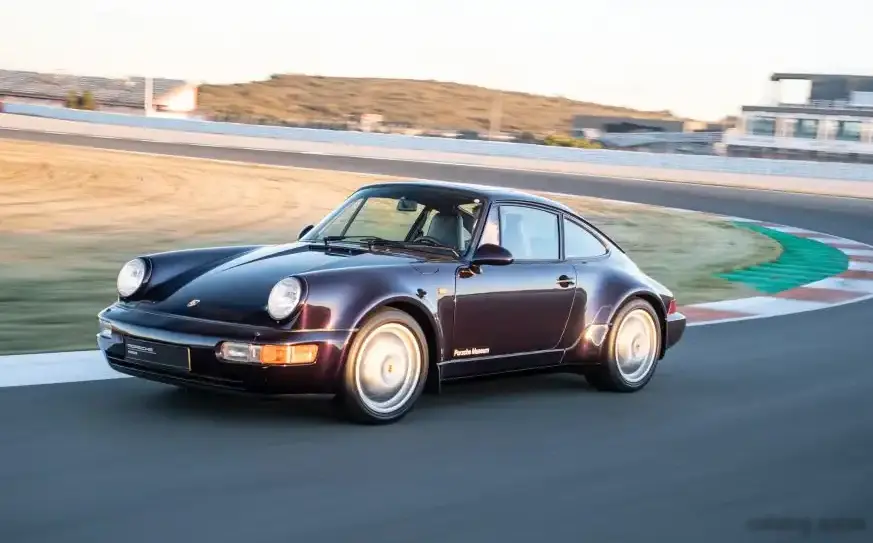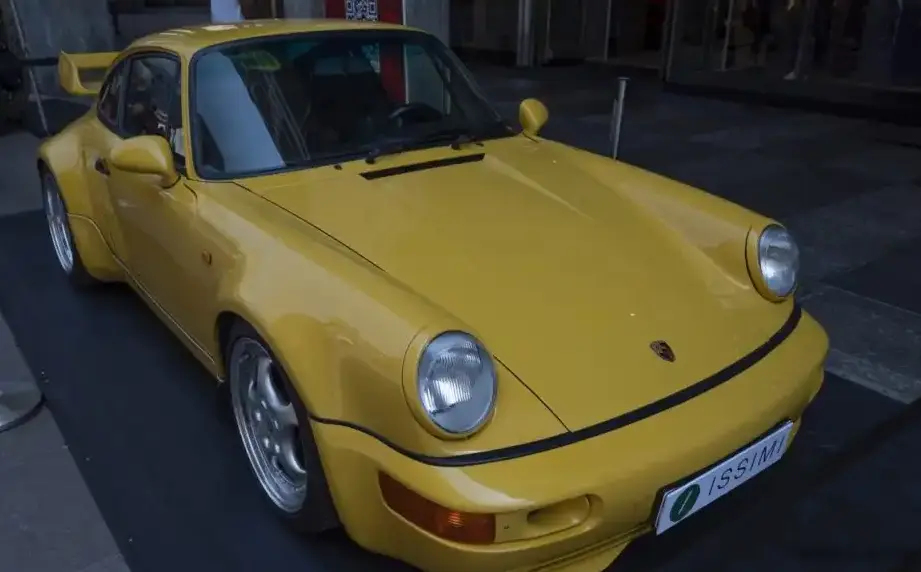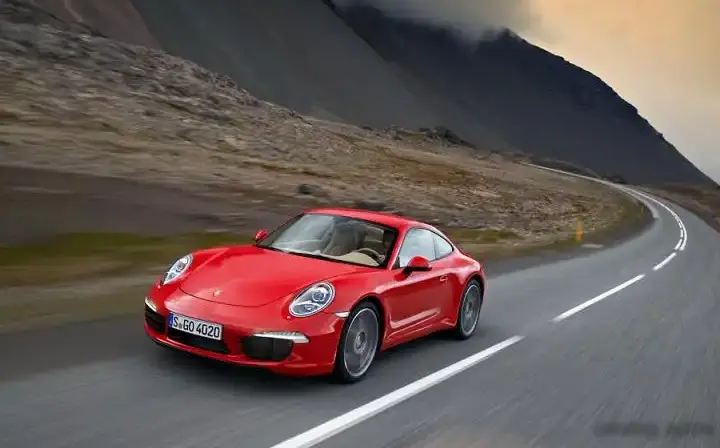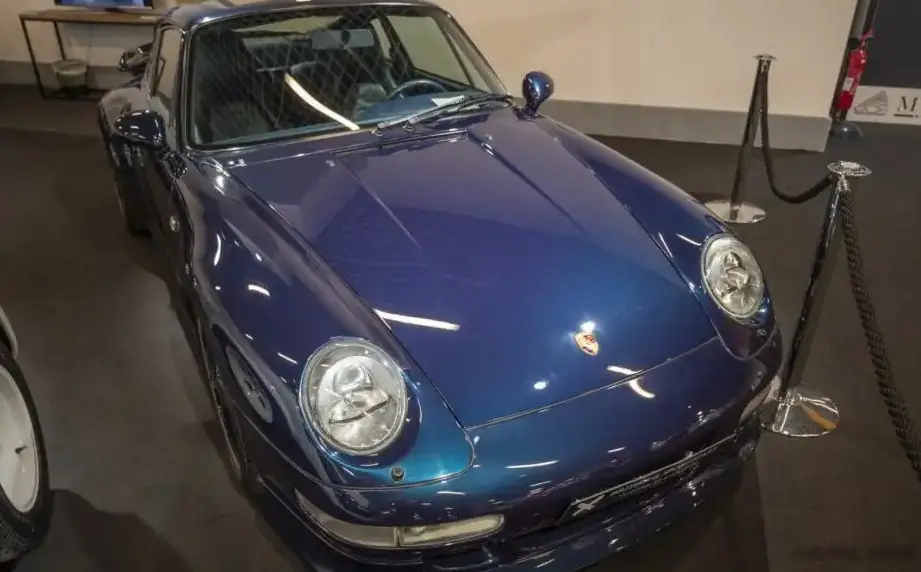
The Porsche 911 (993) Turbo 3.6, produced from 1995 to 1998, represents the pinnacle of the 993 generation and the last of the air-cooled 911s. It was the flagship model, offering significantly increased performance over the standard 993 Carrera models. Positioned as the ultimate expression of the 911 formula, the Turbo 3.6 catered to enthusiasts seeking uncompromising performance and exclusivity. It marked a transition period for Porsche, bridging the gap between the classic air-cooled era and the more modern water-cooled designs that followed. The 993 platform itself was a significant leap forward, introducing a completely redesigned chassis and suspension compared to its predecessor, the 964.
Technical Specifications
| Brand | Porsche |
| Model | 911 |
| Generation | 911 (993) |
| Type (Engine) | Turbo 3.6 (408 Hp) |
| Start of production | 1995 |
| End of production | 1998 |
| Powertrain Architecture | Internal Combustion engine |
| Body type | Coupe |
| Seats | 4 |
| Doors | 2 |
| Fuel consumption (economy) – urban | 23.5 l/100 km (10 US mpg, 12 UK mpg, 4.3 km/l) |
| Fuel consumption (economy) – extra urban | 11.2 l/100 km (21 US mpg, 25.2 UK mpg, 8.9 km/l) |
| Fuel consumption (economy) – combined | 15.7 l/100 km (15 US mpg, 18 UK mpg, 6.4 km/l) |
| Fuel Type | Petrol (Gasoline) |
| Acceleration 0 – 100 km/h | 4.5 sec |
| Acceleration 0 – 62 mph | 4.5 sec |
| Acceleration 0 – 60 mph | 4.3 sec |
| Maximum speed | 290 km/h (180.2 mph) |
| Weight-to-power ratio | 3.7 kg/Hp, 272 Hp/tonne |
| Weight-to-torque ratio | 2.8 kg/Nm, 360 Nm/tonne |
| Power | 408 Hp @ 5750 rpm |
| Power per litre | 113.3 Hp/l |
| Torque | 540 Nm @ 4500 rpm (398.28 lb.-ft. @ 4500 rpm) |
| Engine layout | Rear, Longitudinal |
| Engine Model/Code | M64.60 |
| Engine displacement | 3600 cm3 (219.69 cu. in.) |
| Number of cylinders | 6 |
| Engine configuration | Boxer |
| Cylinder Bore | 100 mm (3.94 in.) |
| Piston Stroke | 76.4 mm (3.01 in.) |
| Compression ratio | 8:1 |
| Number of valves per cylinder | 2 |
| Fuel injection system | Multi-port manifold injection |
| Engine aspiration | Turbocharger |
| Valvetrain | DOHC |
| Engine oil capacity | 11.5 l (12.15 US qt | 10.12 UK qt) |
| Kerb Weight | 1500 kg (3306.93 lbs.) |
| Max. weight | 1840 kg (4056.51 lbs.) |
| Max load | 340 kg (749.57 lbs.) |
| Trunk (boot) space – maximum | 123 l (4.34 cu. ft.) |
| Length | 4245 mm (167.13 in.) |
| Width | 1795 mm (70.67 in.) |
| Height | 1285 mm (50.59 in.) |
| Wheelbase | 2272 mm (89.45 in.) |
| Front track | 1411 mm (55.55 in.) |
| Rear (Back) track | 1504 mm (59.21 in.) |
| Drive wheel | All wheel drive (4×4) |
| Number of gears and type of gearbox | 6 gears, manual transmission |
| Front suspension | Independent type McPherson |
| Rear suspension | Independent multi-link suspension |
| Front brakes | Ventilated discs |
| Rear brakes | Ventilated discs |
| Assisting systems | ABS (Anti-lock braking system), Hydraulic Steering |
| Tires size | 225/40 R18; 285/30 R18 |
| Wheel rims size | 8J x 18; 10J x 18 |
Powertrain & Engine Architecture
The heart of the 993 Turbo 3.6 is the M64.60, a 3.6-liter twin-turbocharged flat-six engine. This engine represented a significant evolution of the previous 3.3-liter turbo engine found in the 964 Turbo. The key upgrade was the increase in displacement, achieved through a larger bore and stroke. Both turbochargers utilized variable geometry turbine (VGT) technology, allowing for optimized boost pressure across the rev range, minimizing turbo lag and maximizing power delivery. The engine featured Bosch Motronic engine management, controlling multi-port fuel injection and ignition timing. The compression ratio was lowered to 8:1 to accommodate the increased boost pressure. The engine’s dry-sump lubrication system, a hallmark of Porsche engineering, ensured consistent oil supply even under extreme cornering forces. The sole transmission option was a robust 6-speed manual gearbox, designed to handle the substantial torque output.
Driving Characteristics
The 993 Turbo 3.6 delivered a driving experience that was both exhilarating and demanding. The twin-turbochargers provided a surge of power that was not immediate, but rather built progressively as the revs climbed. This characteristic, while different from naturally aspirated engines, offered a unique and addictive power delivery. The all-wheel-drive system provided exceptional traction, allowing the car to put its power down effectively, even on less-than-ideal surfaces. The 6-speed manual gearbox was precise and engaging, requiring skillful operation to extract the most from the engine. Compared to the standard Carrera models, the Turbo 3.6 offered a significantly more focused and aggressive driving experience. While the Carrera models prioritized everyday usability, the Turbo 3.6 was unapologetically performance-oriented. The suspension was firmer, and the steering was more direct, providing a greater sense of connection to the road.
Equipment & Trim Levels
The 993 Turbo 3.6 was relatively sparsely equipped compared to modern luxury cars, reflecting its focus on performance. Standard features included leather upholstery, power windows, power steering, and an anti-lock braking system (ABS). Air conditioning was also standard. Optional extras included a sunroof, a limited-slip differential, and various customization options through Porsche’s “Exclusive” program, allowing customers to personalize their cars with unique interior and exterior finishes. The interior layout was functional and driver-focused, with clear analog gauges and a straightforward dashboard design. The seats were supportive and offered excellent bolstering, essential for handling the car’s considerable performance capabilities.
Chassis & Braking
The 993 Turbo 3.6 benefited from the significantly improved chassis of the 993 generation. The redesigned suspension featured independent McPherson struts at the front and a multi-link setup at the rear, providing improved handling and ride comfort. The all-wheel-drive system distributed power to all four wheels, enhancing traction and stability. Braking duties were handled by ventilated disc brakes on all four corners, providing ample stopping power. The ABS system helped to prevent wheel lockup during hard braking, further enhancing safety. The car’s relatively lightweight construction, thanks to the extensive use of aluminum in the chassis and body panels, contributed to its agile handling characteristics.
Market Reception & Comparison
The 993 Turbo 3.6 was widely praised by automotive critics for its exceptional performance and driving dynamics. It was considered to be one of the fastest and most capable sports cars of its time. Compared to the 964 Turbo, the 993 Turbo 3.6 offered a significant improvement in performance, handling, and refinement. While the 993 Carrera models offered a more accessible entry point into the 911 world, the Turbo 3.6 represented the ultimate expression of the 911 formula. Fuel economy was, unsurprisingly, not a strong point, with combined fuel consumption averaging around 15.7 l/100 km. However, this was considered acceptable given the car’s performance capabilities.
Legacy
The Porsche 911 (993) Turbo 3.6 holds a special place in Porsche history as the last of the air-cooled 911s. Its combination of classic 911 styling, exhilarating performance, and advanced technology has made it a highly sought-after collector’s car. The M64.60 engine is known for its durability and reliability, provided it is properly maintained. Today, well-maintained examples of the 993 Turbo 3.6 command high prices in the used car market, reflecting their rarity and desirability. It remains a benchmark for sports car performance and a testament to Porsche’s engineering prowess.