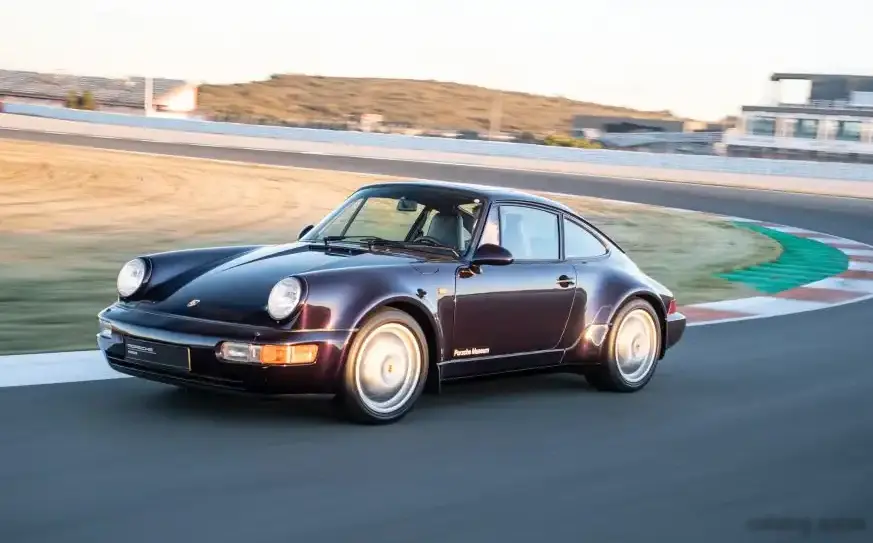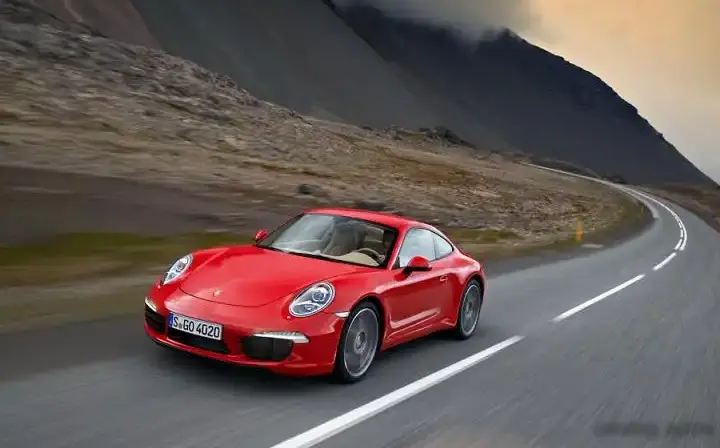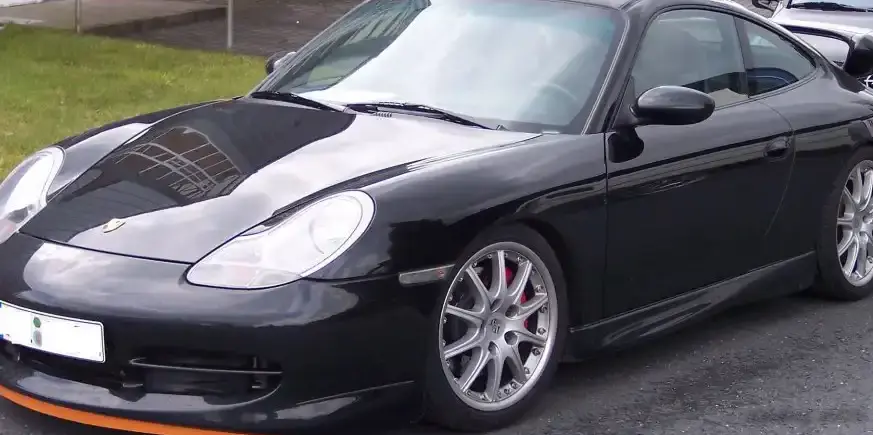
The Porsche 911 (996) Carrera 4 3.4, produced from 1998 to 2001, represents a significant evolution in the iconic 911 lineage. This variant, part of the 996 generation (1997-2004), was Porsche’s first complete redesign of the 911 since the original 1964 model. The Carrera 4 3.4 distinguished itself through its all-wheel-drive system and 3.4-liter flat-six engine, offering a blend of performance and all-weather capability. It occupied a mid-range position within the 996 lineup, sitting above the base Carrera 2 and below the more powerful Carrera 4S and Turbo models. The introduction of water cooling for the engine was a major departure from previous 911s, addressing concerns about cooling efficiency and emissions.
Technical Specifications
| Brand | Porsche |
| Model | 911 |
| Generation | 911 (996) |
| Type (Engine) | Carrera 4 3.4 (300 Hp) |
| Start of production | 1998 |
| End of production | 2001 |
| Powertrain Architecture | Internal Combustion engine |
| Body type | Coupe |
| Seats | 4 |
| Doors | 2 |
| Fuel consumption (economy) – urban | 17.4 l/100 km (13.5 US mpg, 16.2 UK mpg, 5.7 km/l) |
| Fuel consumption (economy) – extra urban | 8.8 l/100 km (26.7 US mpg, 32.1 UK mpg, 11.4 km/l) |
| Fuel Type | Petrol (Gasoline) |
| Acceleration 0 – 100 km/h | 5.2 sec |
| Acceleration 0 – 62 mph | 5.2 sec |
| Acceleration 0 – 60 mph | 4.9 sec |
| Maximum speed | 280 km/h (173.98 mph) |
| Weight-to-power ratio | 4.6 kg/Hp, 218.2 Hp/tonne |
| Weight-to-torque ratio | 3.9 kg/Nm, 254.5 Nm/tonne |
| Power | 300 Hp @ 6800 rpm |
| Power per litre | 88.6 Hp/l |
| Torque | 350 Nm @ 4600 rpm (258.15 lb.-ft. @ 4600 rpm) |
| Engine layout | Rear, Longitudinal |
| Engine Model/Code | M96.01, M96.04 |
| Engine displacement | 3387 cm3 (206.69 cu. in.) |
| Number of cylinders | 6 |
| Engine configuration | Boxer |
| Cylinder Bore | 96 mm (3.78 in.) |
| Piston Stroke | 78 mm (3.07 in.) |
| Compression ratio | 11.3:1 |
| Number of valves per cylinder | 4 |
| Fuel injection system | Multi-port manifold injection |
| Engine aspiration | Naturally aspirated engine |
| Engine oil capacity | 8.3 l (8.77 US qt, 7.3 UK qt) |
| Coolant | 22.5 l (23.78 US qt, 19.8 UK qt) |
| Kerb Weight | 1375 kg (3031.36 lbs.) |
| Max. weight | 1775 kg (3913.21 lbs.) |
| Max load | 400 kg (881.85 lbs.) |
| Trunk (boot) space – maximum | 100 l (3.53 cu. ft.) |
| Fuel tank capacity | 64 l (16.91 US gal, 14.08 UK gal) |
| Length | 4430 mm (174.41 in.) |
| Width | 1765 mm (69.49 in.) |
| Height | 1305 mm (51.38 in.) |
| Wheelbase | 2350 mm (92.52 in.) |
| Front track | 1455 mm (57.28 in.) |
| Rear (Back) track | 1500 mm (59.06 in.) |
| Ride height (ground clearance) | 100 mm (3.94 in.) |
| Drag coefficient (Cd) | 0.30 |
| Minimum turning circle (turning diameter) | 10.6 m (34.78 ft.) |
| Drive wheel | All wheel drive (4×4) |
| Number of gears and type of gearbox | 6 gears, manual transmission |
| Front suspension | Independent type McPherson |
| Rear suspension | Independent multi-link suspension |
| Front brakes | Ventilated discs |
| Rear brakes | Ventilated discs |
| Assisting systems | ABS (Anti-lock braking system) |
| Steering type | Steering rack and pinion |
| Power steering | Hydraulic Steering |
| Tires size | 205/50 R17; 255/40 R17 |
| Wheel rims size | 7J x 17; 9J x 17 |
Powertrain & Engine Architecture
The heart of the 996 Carrera 4 3.4 is the M96.01 or M96.04 3.4-liter naturally aspirated flat-six engine. This engine represented a significant departure from the air-cooled engines of previous 911 generations. The water cooling system allowed for tighter tolerances and improved thermal management, contributing to increased power and reduced emissions. The engine utilizes a multi-port fuel injection system, delivering fuel directly into the intake ports. The valvetrain features four valves per cylinder, enhancing breathing and overall engine efficiency. The 6-speed manual transmission was standard, providing precise gear changes and a direct connection to the engine. The all-wheel-drive system employs a viscous coupling to distribute power between the front and rear axles, enhancing traction and stability, particularly in adverse weather conditions.
Driving Characteristics
The 996 Carrera 4 3.4 offered a refined and capable driving experience. While not as brutally fast as the Carrera 4S or Turbo models, the 300 horsepower engine provided ample power for spirited driving. Acceleration from 0 to 60 mph took approximately 4.9 seconds, and the car could reach a top speed of 174 mph. The all-wheel-drive system instilled confidence in various driving conditions, providing enhanced grip and stability. The manual transmission offered precise shifts, allowing drivers to fully exploit the engine’s powerband. Compared to the base Carrera 2, the Carrera 4 offered improved traction and handling, but at the expense of slightly increased weight. The gear ratios were well-matched to the engine’s characteristics, providing strong acceleration in all gears.
Equipment & Trim Levels
The Carrera 4 3.4 came standard with a comprehensive list of features, including leather upholstery, power windows, power locks, and a basic audio system. Optional extras included a sunroof, heated seats, navigation system, and upgraded audio systems. Interior trim options allowed buyers to personalize their vehicles. The dashboard layout was relatively straightforward, with clearly marked gauges and controls. The seats provided good support and comfort for both driver and passenger. The overall interior ambiance was one of understated luxury and functionality.
Chassis & Braking
The 996 Carrera 4 3.4 featured an independent suspension system, with McPherson struts at the front and a multi-link setup at the rear. This suspension design provided a comfortable ride while maintaining excellent handling characteristics. Ventilated disc brakes were fitted to all four wheels, providing ample stopping power. The anti-lock braking system (ABS) further enhanced safety by preventing wheel lockup during hard braking. The chassis was constructed from a combination of steel and aluminum, providing a balance of strength and lightweight construction. The rear track was slightly wider than the front track, contributing to improved stability.
Market Reception & Comparison
The 996 Carrera 4 3.4 was generally well-received by automotive critics. It was praised for its performance, handling, and all-weather capability. However, some critics noted that the engine lacked the character of previous air-cooled 911s. Compared to the base Carrera 2, the Carrera 4 offered improved traction and stability, making it a more practical choice for drivers in colder climates. Fuel economy was reasonable for a sports car of its caliber, averaging around 18 mpg in combined driving. Reliability was generally good, although some owners reported issues with the intermediate shaft (IMS) bearing, a common problem with early 996 models.
Legacy
The 996 Carrera 4 3.4 remains a popular choice among Porsche enthusiasts today. Its combination of performance, all-wheel-drive capability, and relative affordability makes it an attractive option in the used car market. While the IMS bearing issue is a concern, it can be addressed with a preventative upgrade. The 996 generation as a whole is credited with modernizing the 911 and paving the way for future generations. The Carrera 4 3.4 represents a significant milestone in the evolution of this iconic sports car, offering a compelling blend of performance, practicality, and Porsche heritage.