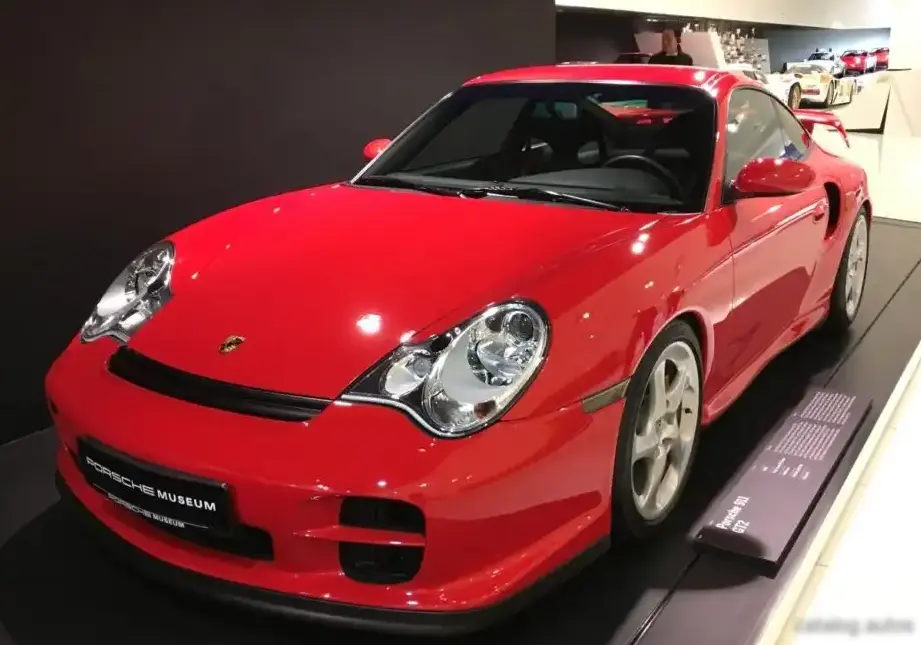
The Porsche 911 (996) GT2 3.6, produced from 2001 to 2006, represents a focused, high-performance iteration of Porsche’s iconic sports car. Falling within the facelifted 996 generation (introduced in 2001), the GT2 was designed as a road-legal version of Porsche’s racing technology, bridging the gap between the standard 911 and the full-blown RSR race car. It was positioned as the most extreme 911 available at the time, offering a raw and uncompromising driving experience. The 996 GT2 was primarily sold in European and North American markets, appealing to enthusiasts seeking a track-capable machine with a significant performance advantage over other 911 variants.
Technical Specifications
| Brand | Porsche |
| Model | 911 |
| Generation | 911 (996, facelift 2001) |
| Type (Engine) | GT2 3.6 (483 Hp) |
| Start of production | 2001 |
| End of production | 2006 |
| Powertrain Architecture | Internal Combustion engine |
| Body type | Coupe |
| Seats | 2 |
| Doors | 2 |
| Fuel consumption (economy) – urban | 18.9 l/100 km (12.4 US mpg, 14.9 UK mpg, 5.3 km/l) |
| Fuel consumption (economy) – extra urban | 9.3 l/100 km (25.3 US mpg, 30.4 UK mpg, 10.8 km/l) |
| Fuel consumption (economy) – combined | 12.9 l/100 km (18.2 US mpg, 21.9 UK mpg, 7.8 km/l) |
| CO2 emissions | 309 g/km |
| Fuel Type | Petrol (Gasoline) |
| Acceleration 0 – 100 km/h | 4.1 sec |
| Acceleration 0 – 62 mph | 4.1 sec |
| Acceleration 0 – 60 mph | 3.9 sec |
| Maximum speed | 315 km/h (195.73 mph) |
| Weight-to-power ratio | 2.9 kg/Hp, 340.1 Hp/tonne |
| Weight-to-torque ratio | 2.2 kg/Nm, 450.7 Nm/tonne |
| Power | 483 Hp @ 5700 rpm |
| Power per litre | 134.2 Hp/l |
| Torque | 640 Nm @ 3500-4500 rpm (472.04 lb.-ft. @ 3500-4500 rpm) |
| Engine layout | Rear, Longitudinal |
| Engine Model/Code | M96.70 |
| Engine displacement | 3600 cm3 (219.69 cu. in.) |
| Number of cylinders | 6 |
| Engine configuration | Boxer |
| Compression ratio | 9.4:1 |
| Number of valves per cylinder | 4 |
| Fuel injection system | Multi-port manifold injection |
| Engine aspiration | Turbocharger, Intercooler |
| Engine oil capacity | 8.8 l (9.3 US qt | 7.74 UK qt) |
| Coolant | 28 l (29.59 US qt | 24.64 UK qt) |
| Kerb Weight | 1420 kg (3130.56 lbs.) |
| Max. weight | 1730 kg (3814 lbs.) |
| Max load | 310 kg (683.43 lbs.) |
| Trunk (boot) space – maximum | 110 l (3.88 cu. ft.) |
| Fuel tank capacity | 89 l (23.51 US gal | 19.58 UK gal) |
| Length | 4450 mm (175.2 in.) |
| Width | 1830 mm (72.05 in.) |
| Height | 1275 mm (50.2 in.) |
| Wheelbase | 2355 mm (92.72 in.) |
| Drag coefficient (Cd) | 0.34 |
| Drivetrain Architecture | Rear wheel drive |
| Number of gears and type of gearbox | 6 gears, manual transmission |
| Front suspension | Independent type McPherson |
| Rear suspension | Independent multi-link suspension |
| Front brakes | Ventilated discs |
| Rear brakes | Ventilated discs |
| Assisting systems | ABS (Anti-lock braking system) |
| Steering type | Steering rack and pinion |
| Power steering | Hydraulic Steering |
| Tires size | 235/40 ZR18; 315/30 ZR18 |
| Wheel rims size | 8.5J x 18; 12J x 18 |
Powertrain & Engine Architecture
The heart of the 996 GT2 is the M96.70 3.6-liter twin-turbocharged flat-six engine. This engine builds upon the Mezger design, renowned for its robustness and performance potential. Unlike the standard 996, the GT2 eschewed all-wheel drive in favor of a rear-wheel-drive layout, contributing to a lighter overall weight and a more direct driving feel. The engine featured a single turbocharger and intercooler, producing 483 horsepower at 5700 rpm and 472 lb-ft of torque between 3500 and 4500 rpm. Fuel is delivered via a multi-port fuel injection system. The engine’s compression ratio is 9.4:1. The sole transmission option was a six-speed manual gearbox, chosen for its responsiveness and driver engagement.
Driving Characteristics
The 996 GT2 delivers a visceral and demanding driving experience. The rear-wheel-drive configuration, combined with the substantial power output, requires respect and skill. Acceleration is breathtaking, with 0-60 mph times consistently under 4 seconds. The manual transmission provides precise gear changes, and the engine’s torque curve ensures strong acceleration throughout the rev range. However, the GT2’s lack of electronic stability control (a deliberate design choice) and its sensitive throttle response can make it challenging to control at the limit, particularly for inexperienced drivers. The car feels significantly more raw and connected to the road than other 911 variants.
Equipment & Trim Levels
The 996 GT2 was relatively sparsely equipped compared to other 911 models, reflecting its focus on performance. Standard features included sport seats, a basic audio system, and air conditioning. Options were available, including carbon fiber interior trim, a sports steering wheel, and upgraded sound systems. However, Porsche deliberately avoided offering many luxury features to keep the weight down. The interior was functional and driver-focused, with minimal distractions. The exterior was characterized by its aggressive styling, including a prominent rear wing, unique front and rear bumpers, and wider wheel arches.
Chassis & Braking
The GT2’s chassis was significantly upgraded compared to the standard 911. It featured a stiffer suspension, larger anti-roll bars, and revised dampers. The braking system consisted of ventilated discs at all four corners, providing ample stopping power. ABS was standard, but traction control was deliberately omitted to allow experienced drivers to fully exploit the car’s performance potential. The car rode on 18-inch wheels with high-performance tires (235/40 ZR18 front, 315/30 ZR18 rear), maximizing grip and handling.
Market Reception & Comparison
The 996 GT2 was widely praised by automotive journalists for its exceptional performance and engaging driving experience. Critics noted its raw power, precise handling, and track-focused character. However, its lack of electronic aids and its demanding nature were also acknowledged. Compared to the 996 Turbo, the GT2 offered more power and a more focused driving experience, but at the expense of everyday usability. The GT2 was also significantly more expensive than other 911 variants, positioning it as a niche product for serious enthusiasts. Fuel economy, while not a primary concern for GT2 buyers, was relatively poor at around 18.2 US mpg combined.
Legacy
The 996 GT2 is now considered a highly collectible Porsche. Its limited production numbers and its reputation as a pure, uncompromising sports car have made it a sought-after vehicle among enthusiasts. The M96.70 engine, while robust, requires diligent maintenance, particularly regarding oil changes and IMS bearing inspection. Well-maintained examples command high prices in the used car market. The 996 GT2 paved the way for future generations of Porsche GT models, establishing a lineage of high-performance, track-focused 911s that continue to this day. It remains a benchmark for analog driving experiences in the modern automotive landscape.