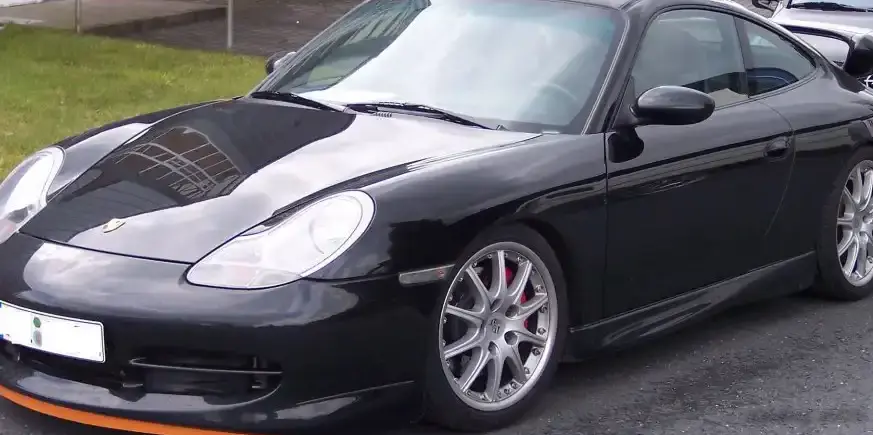
The Porsche 911 (996) GT3 3.6, produced from 1999 to 2001, represents a pivotal moment in the evolution of Porsche’s iconic sports car. Derived from the 996 generation 911, the GT3 was conceived as a focused, track-oriented machine, bridging the gap between the standard 911 models and the more extreme racing variants. It marked Porsche’s return to a naturally aspirated, high-revving engine philosophy for the 911, and laid the groundwork for the GT3 lineage that continues today. The 996 GT3 was initially offered only as a coupe, and quickly gained a reputation for its raw performance and uncompromising driving experience.
Technical Specifications
| Brand | Porsche |
| Model | 911 |
| Generation | 911 (996) |
| Type (Engine) | GT3 3.6 (360 Hp) |
| Start of production | 1999 |
| End of production | 2001 |
| Powertrain Architecture | Internal Combustion engine |
| Body type | Coupe |
| Seats | 2 |
| Doors | 2 |
| Fuel consumption (economy) – urban | 20.1 l/100 km (11.7 US mpg, 14.1 UK mpg, 5 km/l) |
| Fuel consumption (economy) – extra urban | 8.9 l/100 km (26.4 US mpg, 31.7 UK mpg, 11.2 km/l) |
| Fuel consumption (economy) – combined | 12.9 l/100 km (18.2 US mpg, 21.9 UK mpg, 7.8 km/l) |
| Fuel Type | Petrol (Gasoline) |
| Acceleration 0 – 100 km/h | 4.8 sec |
| Acceleration 0 – 62 mph | 4.8 sec |
| Acceleration 0 – 60 mph | 4.6 sec |
| Maximum speed | 302 km/h (187.65 mph) |
| Weight-to-power ratio | 3.8 kg/Hp, 266.7 Hp/tonne |
| Weight-to-torque ratio | 3.6 kg/Nm, 274.1 Nm/tonne |
| Power | 360 Hp @ 7200 rpm |
| Power per litre | 100 Hp/l |
| Torque | 370 Nm @ 5000 rpm (272.9 lb.-ft. @ 5000 rpm) |
| Engine layout | Rear, Longitudinal |
| Engine Model/Code | M96.76 |
| Engine displacement | 3600 cm3 (219.69 cu. in.) |
| Number of cylinders | 6 |
| Engine configuration | Boxer |
| Cylinder Bore | 100 mm (3.94 in.) |
| Piston Stroke | 76.4 mm (3.01 in.) |
| Compression ratio | 11.7:1 |
| Number of valves per cylinder | 4 |
| Fuel injection system | Multi-port manifold injection |
| Engine aspiration | Naturally aspirated engine |
| Engine oil capacity | 8.8 l (9.3 US qt | 7.74 UK qt) |
| Coolant | 28 l (29.59 US qt | 24.64 UK qt) |
| Kerb Weight | 1350 kg (2976.24 lbs.) |
| Max. weight | 1630 kg (3593.53 lbs.) |
| Max load | 280 kg (617.29 lbs.) |
| Trunk (boot) space – maximum | 110 l (3.88 cu. ft.) |
| Fuel tank capacity | 89 l (23.51 US gal | 19.58 UK gal) |
| Length | 4430 mm (174.41 in.) |
| Width | 1765 mm (69.49 in.) |
| Height | 1270 mm (50 in.) |
| Wheelbase | 2350 mm (92.52 in.) |
| Front track | 1475 mm (58.07 in.) |
| Rear (Back) track | 1495 mm (58.86 in.) |
| Drag coefficient (Cd) | 0.30 |
| Drivetrain Architecture | The Internal combustion engine (ICE) drives the rear wheels of the vehicle. |
| Drive wheel | Rear wheel drive |
| Number of gears and type of gearbox | 6 gears, manual transmission |
| Front suspension | Independent type McPherson |
| Rear suspension | Independent multi-link suspension |
| Front brakes | Ventilated discs |
| Rear brakes | Ventilated discs |
| Assisting systems | ABS (Anti-lock braking system) |
| Steering type | Steering rack and pinion |
| Power steering | Hydraulic Steering |
| Tires size | 225/40 R18; 285/30 R18 |
Powertrain & Engine Architecture
At the heart of the 996 GT3 3.6 lies the M96.76 engine, a 3.6-liter naturally aspirated flat-six. This engine was a significant departure from the earlier 996 models, which primarily utilized smaller displacement engines and, increasingly, turbocharging. The M96.76 featured a dry-sump lubrication system, a hallmark of Porsche’s high-performance engines, ensuring consistent oil supply during aggressive cornering. It employed multi-port fuel injection and a higher compression ratio (11.7:1) compared to standard 996 variants. The engine produced 360 horsepower at 7,200 rpm and 273 lb-ft of torque at 5,000 rpm. The sole transmission option was a six-speed manual gearbox, chosen for its direct connection and driver engagement. The gearbox featured shorter ratios than those found in other 996 models, contributing to the GT3’s quicker acceleration.
Driving Characteristics
The 996 GT3 3.6 delivered a visceral driving experience. The naturally aspirated engine demanded to be revved, rewarding drivers with a linear power delivery and a distinctive flat-six howl. While not possessing the outright torque of turbocharged engines, the GT3’s responsiveness and willingness to climb to its 7,800 rpm redline made it incredibly engaging on both the road and the track. The shorter gear ratios of the six-speed manual transmission kept the engine within its powerband, maximizing acceleration. Compared to the standard 996 Carrera, the GT3 felt significantly more agile and communicative, thanks to its stiffer suspension and more direct steering. The lack of sound deadening, a deliberate design choice to reduce weight, further enhanced the sense of connection to the car.
Equipment & Trim Levels
The 996 GT3 3.6 was purposefully minimalist in its equipment levels. Porsche focused on reducing weight and enhancing performance, rather than luxury features. Standard equipment included sport seats, a three-spoke steering wheel, and a basic audio system. Air conditioning was often specified as an option, but many early examples were delivered without it to save weight. The interior was largely devoid of the leather and wood trim found in more luxurious 911 variants. Optional extras included a Club Sport package, which deleted the rear seats, added a roll cage, and included a six-point harness, further emphasizing the car’s track-focused intentions.
Chassis & Braking
The GT3’s chassis was heavily revised compared to the standard 996. It featured a stiffer suspension with firmer springs and dampers, lowering the ride height and reducing body roll. Larger diameter brake rotors and upgraded calipers provided significantly improved stopping power. The rear wheels were wider than those on other 996 models, accommodating larger tires for increased grip. The GT3 retained the 911’s signature rear-wheel drive layout and utilized a fully independent suspension system, with McPherson struts at the front and a multi-link setup at the rear. ABS was standard, but traction control was deliberately omitted to allow drivers full control over the car’s dynamics.
Market Reception & Comparison
The 996 GT3 3.6 was widely praised by automotive journalists for its exceptional handling, responsive engine, and raw driving experience. It was seen as a return to the classic 911 ethos, offering a pure and engaging driving experience that had been somewhat diluted in other contemporary sports cars. Compared to the standard 996 Carrera, the GT3 was significantly more expensive, reflecting its higher performance and more focused nature. It also differed from the 996 Turbo, which offered more outright power and acceleration but lacked the GT3’s natural balance and driver involvement. Fuel economy, while not a primary concern for GT3 buyers, was reasonable for a high-performance sports car, averaging around 18.2 US mpg in combined driving.
Legacy
The 996 GT3 3.6 established the GT3 as a highly desirable and collectible Porsche model. Its success paved the way for subsequent generations of GT3s, each building upon the foundation laid by the original. Today, the 996 GT3 3.6 is highly sought after by enthusiasts and collectors, commanding premium prices in the used car market. The M96.76 engine, while generally reliable, is known to be susceptible to intermediate shaft bearing failure if not properly maintained. However, preventative maintenance and upgrades can mitigate this risk. The 996 GT3 remains a benchmark for naturally aspirated sports car performance and a testament to Porsche’s commitment to driving purity.