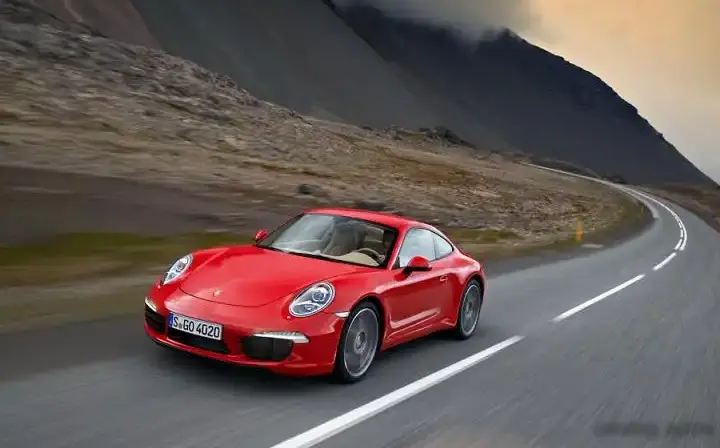
The Porsche 911 Carrera 3.6 (345 hp) with the Porsche Doppelkupplung (PDK) transmission represents a significant evolution within the 997 generation of the iconic 911. Introduced as part of the facelift in 2008 and continuing through 2012, this variant aimed to blend the classic 911 driving experience with enhanced performance and efficiency through the adoption of Porsche’s advanced dual-clutch transmission technology. It occupied a central position in the 997.2 lineup, offering a step up in performance from the base Carrera models while remaining more accessible than the higher-performance Carrera S or the track-focused GT3 variants.
Technical Specifications
| Brand | Porsche |
| Model | 911 |
| Generation | 911 (997, facelift 2008) |
| Type (Engine) | Carrera 3.6 (345 Hp) PDK |
| Start of production | 2008 |
| End of production | 2012 |
| Powertrain Architecture | Internal Combustion engine |
| Body type | Coupe |
| Seats | 4 |
| Doors | 2 |
| Fuel consumption (economy) – urban | 14.7 l/100 km (16 US mpg, 19.2 UK mpg, 6.8 km/l) |
| Fuel consumption (economy) – extra urban | 7 l/100 km (33.6 US mpg, 40.4 UK mpg, 14.3 km/l) |
| Fuel consumption (economy) – combined | 9.8 l/100 km (24 US mpg, 28.8 UK mpg, 10.2 km/l) |
| Fuel Type | Petrol (Gasoline) |
| Acceleration 0 – 100 km/h | 4.7 sec |
| Acceleration 0 – 62 mph | 4.7 sec |
| Acceleration 0 – 60 mph | 4.5 sec |
| Maximum speed | 287 km/h (178.33 mph) |
| Emission standard | Euro 5 |
| Weight-to-power ratio | 4.2 kg/Hp, 238.8 Hp/tonne |
| Weight-to-torque ratio | 3.7 kg/Nm, 269.9 Nm/tonne |
| Power | 345 Hp @ 6500 rpm |
| Power per litre | 95.5 Hp/l |
| Torque | 390 Nm @ 4400 rpm (287.65 lb.-ft. @ 4400 rpm) |
| Engine layout | Rear, Longitudinal |
| Engine Model/Code | MA1.02 |
| Engine displacement | 3614 cm3 (220.54 cu. in.) |
| Number of cylinders | 6 |
| Engine configuration | Boxer |
| Compression ratio | 12.5:1 |
| Number of valves per cylinder | 4 |
| Fuel injection system | Direct injection |
| Engine aspiration | Naturally aspirated engine |
| Valvetrain | DOHC |
| Engine oil capacity | 7.5 l (7.93 US qt | 6.6 UK qt) |
| Coolant | 28.9 l (30.54 US qt | 25.43 UK qt) |
| Kerb Weight | 1445 kg (3185.68 lbs.) |
| Max. weight | 1850 kg (4078.55 lbs.) |
| Max load | 405 kg (892.87 lbs.) |
| Trunk (boot) space – maximum | 135 l (4.77 cu. ft.) |
| Fuel tank capacity | 64 l (16.91 US gal | 14.08 UK gal) |
| Length | 4435 mm (174.61 in.) |
| Width | 1808 mm (71.18 in.) |
| Height | 1310 mm (51.57 in.) |
| Wheelbase | 2350 mm (92.52 in.) |
| Drag coefficient (Cd) | 0.29 |
| Minimum turning circle | 10.9 m (35.76 ft.) |
| Drivetrain Architecture | Rear wheel drive |
| Number of gears and type of gearbox | 7 gears, automatic transmission PDK |
| Front suspension | Independent type McPherson |
| Rear suspension | Independent multi-link suspension |
| Front brakes | Ventilated discs, 330 mm |
| Rear brakes | Ventilated discs, 330 mm |
| Assisting systems | ABS (Anti-lock braking system) |
| Steering type | Steering rack and pinion |
| Power steering | Hydraulic Steering |
| Tires size | 235/40 R18ZR; 265/40 R18ZR |
| Wheel rims size | 8J x 18; 10.5J x 18 |
Powertrain & Engine Architecture
At the heart of the 997.2 Carrera 3.6 PDK lies the MA1.02 engine, a 3.6-liter naturally aspirated flat-six. This engine builds upon the foundation of the previous 997.1 generation, but incorporates direct fuel injection (DFI) – a key upgrade for improved efficiency and power delivery. The DFI system, operating at pressures up to 120 bar, atomizes the fuel directly into the combustion chamber, allowing for more precise control of the air-fuel mixture. The engine utilizes a dual overhead camshaft (DOHC) valvetrain with four valves per cylinder, optimizing airflow for increased horsepower. The engine produces 345 horsepower at 6,500 rpm and 390 Nm (287.65 lb-ft) of torque at 4,400 rpm.
The defining feature of this variant is the seven-speed Porsche Doppelkupplung (PDK) transmission. This dual-clutch transmission offers incredibly fast and smooth gear changes, providing both automatic and manual shifting capabilities via steering wheel-mounted paddles. Unlike a traditional automatic transmission with a torque converter, the PDK uses two separate clutches – one for even-numbered gears and one for odd-numbered gears – allowing for pre-selection of the next gear, resulting in near-instantaneous shifts. The PDK’s programming prioritizes both performance and efficiency, adapting to the driver’s style and road conditions.
Driving Characteristics
The 911 Carrera 3.6 PDK delivers a distinctly engaging driving experience. The PDK transmission eliminates the traditional dip in power associated with torque converter automatics, providing a more linear and responsive acceleration. While not as raw or visceral as the six-speed manual transmission available in other Carrera models, the PDK offers a level of convenience and speed that appeals to a broader range of drivers. The 0-60 mph time of around 4.5 seconds is a testament to the powertrain’s capabilities. The gear ratios are optimized for both acceleration and cruising, providing ample torque in everyday driving situations. The rear-wheel-drive configuration and the 911’s inherent balance contribute to precise handling and a confident feel on winding roads.
Equipment & Trim Levels
The Carrera 3.6 PDK typically came standard with a well-appointed interior featuring partial leather upholstery, automatic climate control, a basic audio system, and power-adjustable seats. Optional extras were plentiful, allowing buyers to personalize their 911. Popular options included a full leather interior, navigation system, sport seats, a Bose audio system, and various exterior customization options. The Carrera 3.6 PDK could also be equipped with the Sport Chrono Package, which added a sport mode, launch control, and a stopwatch, further enhancing the driving experience.
Chassis & Braking
The 997.2 Carrera utilizes an independent suspension system with McPherson struts at the front and a multi-link setup at the rear. This configuration provides a comfortable ride while maintaining excellent handling characteristics. The braking system consists of ventilated discs on all four wheels, providing ample stopping power. Anti-lock braking system (ABS) is standard. The Carrera 3.6 PDK typically featured 18-inch wheels with tire sizes of 235/40 ZR at the front and 265/40 ZR at the rear.
Market Reception & Comparison
The 911 Carrera 3.6 PDK was generally well-received by automotive critics. The PDK transmission was praised for its speed, smoothness, and efficiency. While some purists preferred the engagement of the manual transmission, the PDK broadened the 911’s appeal to drivers seeking a more convenient and refined experience. Compared to the base Carrera with a manual transmission, the PDK offered quicker acceleration and improved fuel economy. Compared to the Carrera S, the 3.6 offered a more accessible price point while still delivering a thrilling driving experience.
Legacy
The 997.2 Carrera 3.6 PDK has proven to be a reliable and durable sports car. The MA1.02 engine, while requiring regular maintenance, is generally considered robust. The PDK transmission, when properly maintained, is also known for its longevity. In the used car market, these models remain highly sought after, commanding a premium due to their blend of performance, refinement, and iconic Porsche heritage. The 997 generation, and particularly the 3.6 PDK variant, is often considered a sweet spot in the 911 lineage, offering a classic Porsche experience with modern technology and usability.