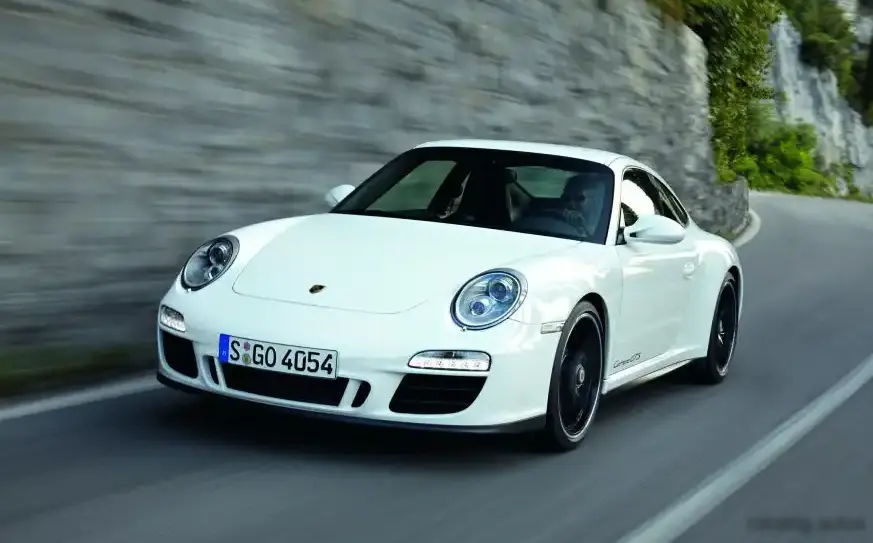
The Porsche 911 Carrera GTS 3.8, produced from 2010 to 2011, represents a high-performance variant within the 997 generation (facelift) of Porsche’s iconic sports car. Positioned above the standard Carrera and Carrera S models, the GTS aimed to bridge the gap between those trims and the more track-focused GT3. It offered a significant increase in power and a more focused driving experience while retaining a degree of everyday usability. The 997.2 generation, introduced in 2009, benefited from direct fuel injection and an updated engine management system, improvements carried over to the GTS.
Technical Specifications
| Brand | Porsche |
| Model | 911 |
| Generation | 911 (997, facelift 2008) |
| Type (Engine) | Carrera GTS 3.8 (408 Hp) |
| Start of production | 2010 |
| End of production | 2011 |
| Powertrain Architecture | Internal Combustion engine |
| Body type | Coupe |
| Seats | 4 |
| Doors | 2 |
| Fuel consumption (economy) – urban | 15.9 l/100 km (14.8 US mpg, 17.8 UK mpg, 6.3 km/l) |
| Fuel consumption (economy) – extra urban | 7.6 l/100 km (30.9 US mpg, 37.2 UK mpg, 13.2 km/l) |
| Fuel consumption (economy) – combined | 10.6 l/100 km (22.2 US mpg, 26.6 UK mpg, 9.4 km/l) |
| CO2 emissions | 250 g/km |
| Fuel Type | Petrol (Gasoline) |
| Acceleration 0 – 100 km/h | 4.8 sec |
| Acceleration 0 – 62 mph | 4.8 sec |
| Acceleration 0 – 60 mph | 4.6 sec |
| Maximum speed | 306 km/h (190.14 mph) |
| Emission standard | Euro 5 |
| Weight-to-power ratio | 3.5 kg/Hp, 287.3 Hp/tonne |
| Weight-to-torque ratio | 3.4 kg/Nm, 295.8 Nm/tonne |
| Power | 408 Hp @ 7300 rpm |
| Power per litre | 107.4 Hp/l |
| Torque | 420 Nm @ 4200 rpm (309.78 lb.-ft. @ 4200 rpm) |
| Engine layout | Rear, Longitudinal |
| Engine Model/Code | MA1.01S |
| Engine displacement | 3800 cm3 (231.89 cu. in.) |
| Number of cylinders | 6 |
| Engine configuration | Boxer |
| Compression ratio | 12.5:1 |
| Number of valves per cylinder | 4 |
| Fuel injection system | Direct injection |
| Engine oil capacity | 7.5 l (7.93 US qt | 6.6 UK qt) |
| Coolant | 28.9 l (30.54 US qt | 25.43 UK qt) |
| Kerb Weight | 1420 kg (3130.56 lbs) |
| Max. weight | 1825 kg (4023.44 lbs) |
| Max load | 405 kg (892.87 lbs) |
| Trunk (boot) space – maximum | 105 l (3.71 cu. ft) |
| Fuel tank capacity | 67 l (17.7 US gal | 14.74 UK gal) |
| Length | 4435 mm (174.61 in) |
| Width | 1852 mm (72.91 in) |
| Height | 1300 mm (51.18 in) |
| Wheelbase | 2350 mm (92.52 in) |
| Drag coefficient (Cd) | 0.30 |
| Minimum turning circle | 10.9 m (35.76 ft) |
| Drivetrain Architecture | Rear wheel drive |
| Number of gears and type of gearbox | 6 gears, manual transmission |
| Front suspension | Independent type McPherson |
| Rear suspension | Independent multi-link suspension |
| Front brakes | Ventilated discs, 330 mm |
| Rear brakes | Ventilated discs, 330 mm |
| Assisting systems | ABS (Anti-lock braking system) |
| Steering type | Steering rack and pinion |
| Power steering | Hydraulic Steering |
| Tires size | 235/35 ZR19; 305/30 ZR19 |
| Wheel rims size | 8.5J x 19; 11J x 19 |
Powertrain & Engine Architecture
At the heart of the 911 Carrera GTS 3.8 lies a 3.8-liter naturally aspirated flat-six engine, designated the MA1.01S. This engine builds upon the advancements introduced in the 997.2 generation, most notably direct fuel injection (DFI). DFI allows for more precise fuel metering, resulting in improved combustion efficiency and increased power output. The engine produces 408 horsepower at 7,300 rpm and 420 Nm (309.78 lb-ft) of torque at 4,200 rpm. The engine features a compression ratio of 12.5:1 and utilizes a four-valve-per-cylinder configuration. The engine is mounted longitudinally at the rear of the vehicle, a defining characteristic of the 911. The standard transmission for the GTS was a six-speed manual, although a five-speed Tiptronic S automatic transmission was available as an option. The automatic transmission featured manual shift capability.
Driving Characteristics
The 911 Carrera GTS 3.8 delivers a noticeably more engaging driving experience than the standard Carrera. The increased power output, combined with the relatively lightweight construction of the 997, results in brisk acceleration – 0 to 60 mph in approximately 4.6 seconds. The manual transmission offers precise shifts, and the engine responds eagerly to throttle inputs. While the GTS doesn’t possess the raw, track-focused intensity of the GT3, it provides a compelling balance of performance and usability. The suspension is tuned for a firmer ride than the base Carrera, enhancing handling and cornering stability. The optional Sport Chrono Package further sharpens the driving experience with features like launch control and a sport mode that adjusts throttle response and suspension settings.
Equipment & Trim Levels
The Carrera GTS came standard with a number of features designed to enhance both performance and aesthetics. These included the wider body from the Carrera 4 models, 19-inch alloy wheels, sport seats, a sport exhaust system, and Porsche Active Suspension Management (PASM). Interior trim options included leather upholstery in a variety of colors, along with aluminum or carbon fiber accents. Optional extras included a navigation system, Bose audio system, and various customization options through Porsche’s “Personalization” program. The GTS was positioned as a premium trim level, offering a more comprehensive equipment list than the base Carrera and Carrera S.
Chassis & Braking
The 911 Carrera GTS utilizes a fully independent suspension system. The front suspension employs McPherson struts, while the rear features a multi-link setup. Porsche Active Suspension Management (PASM) was standard, allowing the driver to adjust the damper settings for a more comfortable or sportier ride. Braking duties are handled by ventilated disc brakes on all four wheels. The front brakes measure 330 mm in diameter, while the rear brakes are also 330 mm. The GTS benefits from a robust braking system capable of delivering strong stopping power. The car’s weight distribution is carefully balanced, contributing to its excellent handling characteristics.
Market Reception & Comparison
The 911 Carrera GTS 3.8 was well-received by automotive critics, who praised its increased performance, engaging driving dynamics, and refined interior. It was often seen as the sweet spot in the 997 lineup, offering a compelling blend of performance and everyday usability. Compared to the standard Carrera, the GTS provided a significant power boost and a more focused driving experience. Compared to the GT3, the GTS was more comfortable and practical for daily use. Fuel economy, while not a primary concern for 911 buyers, was reasonable for a high-performance sports car, averaging around 22.2 US mpg in combined driving. Reliability has generally been good, although regular maintenance is essential for these high-performance machines.
Legacy
The 911 Carrera GTS 3.8 remains a desirable sports car in the used market. Its combination of performance, style, and relative practicality has ensured its continued appeal. The MA1.01S engine is known for its durability, provided it is properly maintained. The 997 generation 911 is widely regarded as a particularly well-rounded and engaging sports car, and the GTS variant represents a high point within that generation. Values for well-maintained examples have remained relatively stable, reflecting the car’s enduring popularity and the continued demand for the 911 experience.