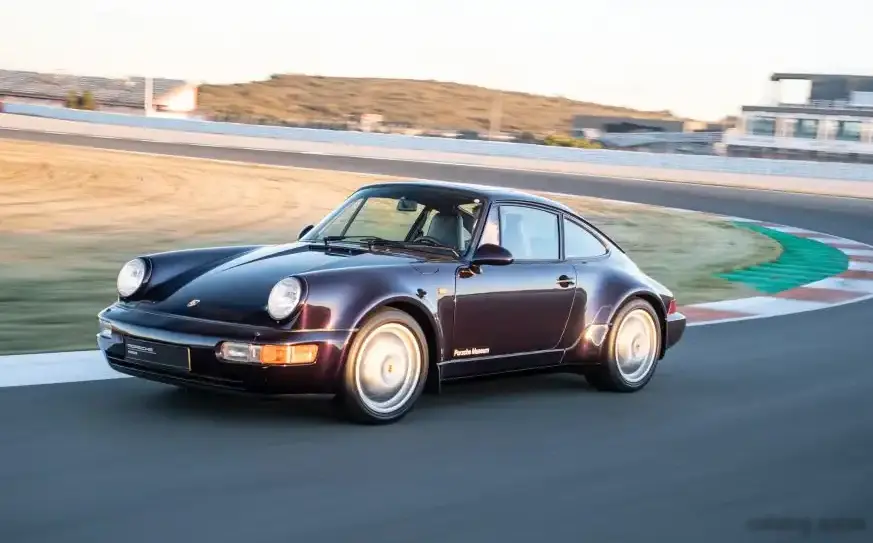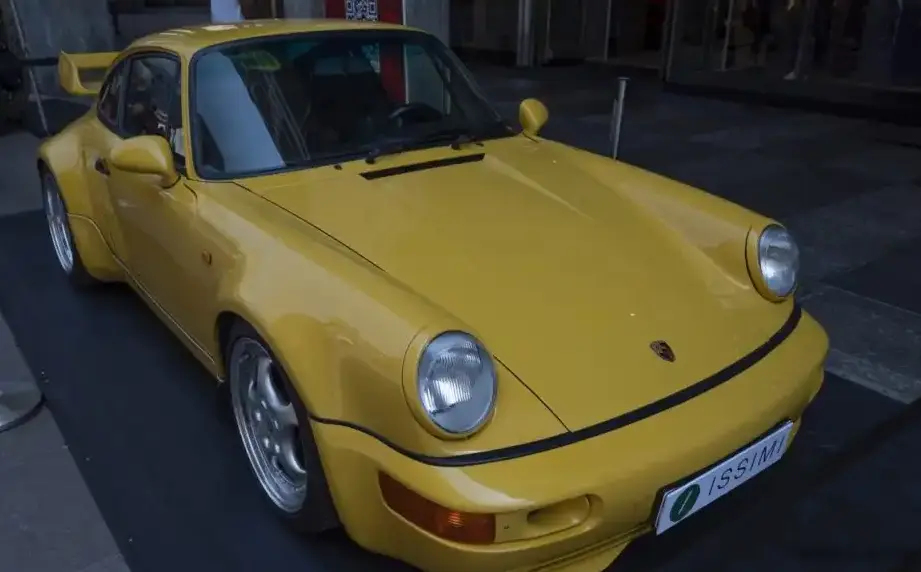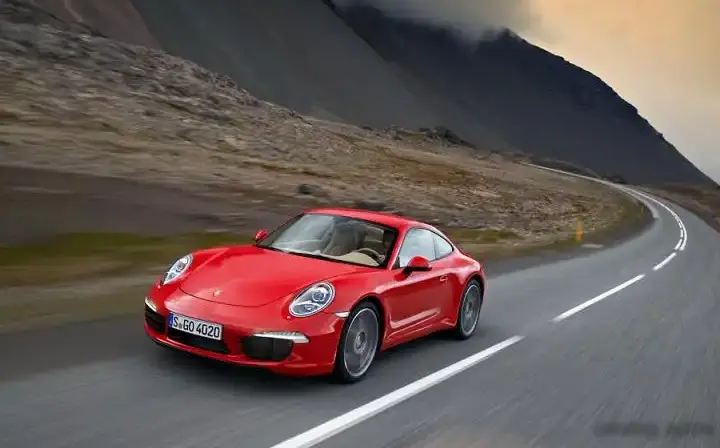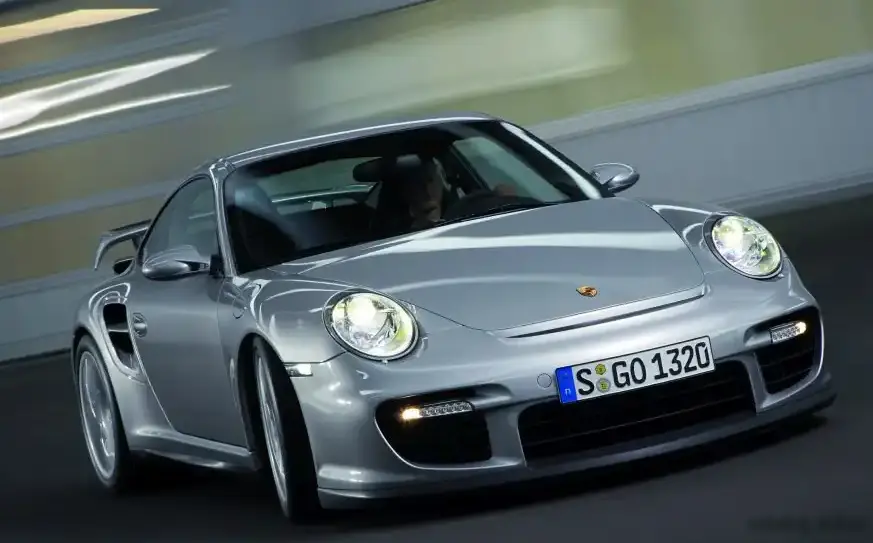
The Porsche 911 (997) GT2 3.6, produced from 2007 to 2009, represents the pinnacle of performance within the 997 generation of Porsche’s iconic sports car. Positioned as the most track-focused variant of the 997, the GT2 3.6 was designed to deliver uncompromising performance, bridging the gap between the more approachable Carrera models and the even more extreme GT3. It was a limited-production model aimed at enthusiasts seeking a raw, visceral driving experience. The 997 generation itself was a significant evolution of the 911 formula, introducing more refinement and technology while retaining the core characteristics that defined the model for decades.
Technical Specifications
| Brand | Porsche |
| Model | 911 |
| Generation | 911 (997) |
| Type (Engine) | GT2 3.6 (530 Hp) |
| Start of production | 2007 |
| End of production | 2009 |
| Powertrain Architecture | Internal Combustion engine |
| Body type | Coupe |
| Seats | 2 |
| Doors | 2 |
| Fuel consumption (economy) – urban | 18.8 l/100 km (12.5 US mpg, 15 UK mpg, 5.3 km/l) |
| Fuel consumption (economy) – extra urban | 8.9 l/100 km (26.4 US mpg, 31.7 UK mpg, 11.2 km/l) |
| Fuel consumption (economy) – combined | 12.5 l/100 km (18.8 US mpg, 22.6 UK mpg, 8 km/l) |
| CO2 emissions | 298 g/km |
| Fuel Type | Petrol (Gasoline) |
| Acceleration 0 – 100 km/h | 3.7 sec |
| Acceleration 0 – 62 mph | 3.7 sec |
| Acceleration 0 – 60 mph | 3.5 sec |
| Maximum speed | 329 km/h (204.43 mph) |
| Emission standard | Euro 4 |
| Weight-to-power ratio | 2.7 kg/Hp, 368.1 Hp/tonne |
| Weight-to-torque ratio | 2.1 kg/Nm, 472.2 Nm/tonne |
| Power | 530 Hp @ 6500 rpm |
| Power per litre | 147.2 Hp/l |
| Torque | 680 Nm @ 2200-4500 rpm (501.54 lb.-ft. @ 2200-4500 rpm) |
| Engine layout | Rear, Longitudinal |
| Engine Model/Code | M97.70S |
| Engine displacement | 3600 cm3 (219.69 cu. in.) |
| Number of cylinders | 6 |
| Engine configuration | Boxer |
| Cylinder Bore | 100 mm (3.94 in.) |
| Piston Stroke | 76.4 mm (3.01 in.) |
| Compression ratio | 9:1 |
| Number of valves per cylinder | 4 |
| Fuel injection system | Multi-port manifold injection |
| Engine aspiration | Turbocharger, Intercooler |
| Valvetrain | DOHC |
| Engine oil capacity | 8 l (8.45 US qt | 7.04 UK qt) |
| Coolant | 28.2 l (29.8 US qt | 24.81 UK qt) |
| Kerb Weight | 1440 kg (3174.66 lbs.) |
| Max. weight | 1750 kg (3858.09 lbs.) |
| Max load | 310 kg (683.43 lbs.) |
| Trunk (boot) space – minimum | 105 l (3.71 cu. ft.) |
| Fuel tank capacity | 90 l (23.78 US gal | 19.8 UK gal) |
| Length | 4469 mm (175.94 in.) |
| Width | 1852 mm (72.91 in.) |
| Height | 1285 mm (50.59 in.) |
| Wheelbase | 2350 mm (92.52 in.) |
| Drag coefficient (Cd) | 0.32 |
| Minimum turning circle | 10.9 m (35.76 ft.) |
| Drivetrain Architecture | Rear wheel drive |
| Number of gears and type of gearbox | 6 gears, manual transmission |
| Front suspension | Independent type McPherson |
| Rear suspension | Independent multi-link suspension |
| Front brakes | Ventilated discs |
| Rear brakes | Ventilated discs |
| Assisting systems | ABS (Anti-lock braking system) |
| Steering type | Steering rack and pinion |
| Power steering | Hydraulic Steering |
| Tires size | 235/35 R19ZR; 295/30 R19ZR |
| Wheel rims size | 8.5J x 19; 12J x 19 |
Powertrain & Engine Architecture
The heart of the 997 GT2 3.6 is the M97.70S engine, a 3.6-liter twin-turbocharged flat-six (boxer) engine. This engine is derived from the unit used in the 911 Turbo, but extensively modified for increased performance. Key changes included larger turbochargers, a revised intercooler system, and strengthened internal components. The engine utilizes multi-port fuel injection and a dual-mass flywheel. The engine produces 530 horsepower at 6500 rpm and a substantial 680 Nm (501.54 lb-ft) of torque available from 2200 to 4500 rpm. The engine’s flat-six configuration contributes to a low center of gravity, enhancing handling. The GT2 3.6 exclusively came with a six-speed manual transmission, prioritizing driver engagement and control. This transmission featured shorter gear ratios compared to other 997 models, optimizing acceleration.
Driving Characteristics
The 997 GT2 3.6 delivers a raw and exhilarating driving experience. The combination of the powerful twin-turbo engine and the manual transmission provides immediate response and a direct connection to the car. Acceleration is brutal, with 0-60 mph achieved in around 3.5 seconds and a top speed exceeding 204 mph. The car’s handling is exceptionally precise, thanks to its rear-wheel-drive layout, stiffened suspension, and wide tires. However, the GT2 3.6 demands respect from the driver; its power and responsiveness can be challenging to manage at the limit. Compared to the naturally aspirated GT3, the GT2 offers more low-end torque and a broader powerband, making it more accessible on the road. However, the GT3 provides a more linear and predictable power delivery, favored by some drivers.
Equipment & Trim Levels
The GT2 3.6 was sparsely equipped, focusing on weight reduction and performance. Standard features included sport seats, a Club Sport package (which deleted the rear seats and added a roll cage), and a limited-slip differential. Optional extras included carbon fiber interior trim, ceramic composite brakes (PCCB), and a sports exhaust system. The interior was functional and driver-focused, with minimal distractions. Upholstery was primarily Alcantara and leather, emphasizing a sporty aesthetic. Air conditioning and a basic audio system were standard, but many owners opted to delete these features to further reduce weight.
Chassis & Braking
The GT2 3.6 features a modified chassis compared to other 997 models. It boasts a wider track, lowered ride height, and stiffer springs and dampers. The suspension utilizes Porsche Active Suspension Management (PASM), allowing the driver to adjust the damping characteristics. Braking is provided by large, ventilated discs at all four corners. The optional PCCB system offered even greater stopping power and fade resistance. The car’s lightweight construction, achieved through the use of aluminum and composite materials, contributes to its agility and responsiveness.
Market Reception & Comparison
The 997 GT2 3.6 was widely praised by automotive journalists for its exceptional performance and engaging driving experience. Critics lauded its power, handling, and track capabilities. However, some noted its uncompromising nature and challenging dynamics, making it less suitable for everyday driving. Compared to the 911 Turbo of the same era, the GT2 offered a more focused and visceral experience, sacrificing some comfort and refinement for increased performance. Fuel economy was predictably poor, reflecting the car’s high-performance nature. Reliability was generally good, but the complex turbocharging system required careful maintenance.
Legacy
The 997 GT2 3.6 remains a highly sought-after Porsche model among collectors and enthusiasts. Its limited production numbers and exceptional performance have contributed to its increasing value. The M97.70S engine, while powerful, requires diligent maintenance to prevent issues related to turbocharger wear and oil leaks. Today, the 997 GT2 3.6 is considered a modern classic, representing a golden age of analog performance in a technologically advanced package. It continues to deliver an unforgettable driving experience, embodying the spirit of Porsche’s engineering excellence.