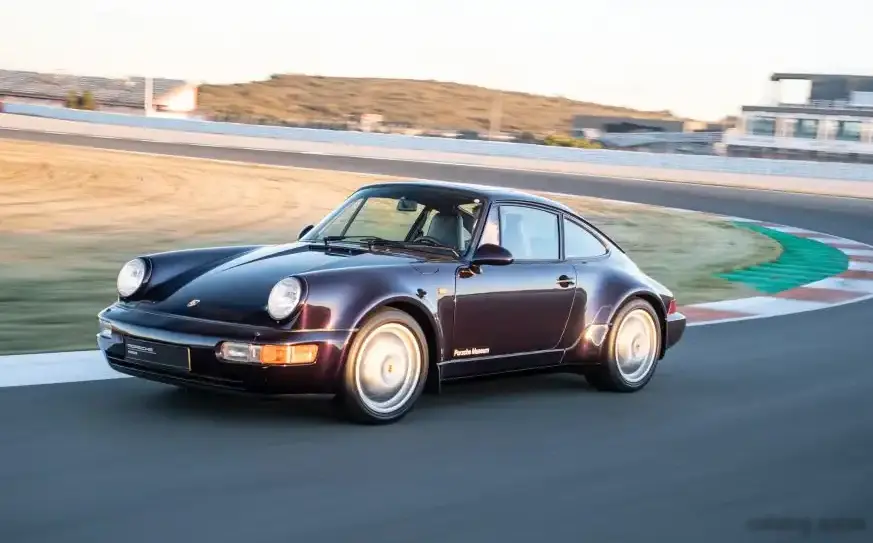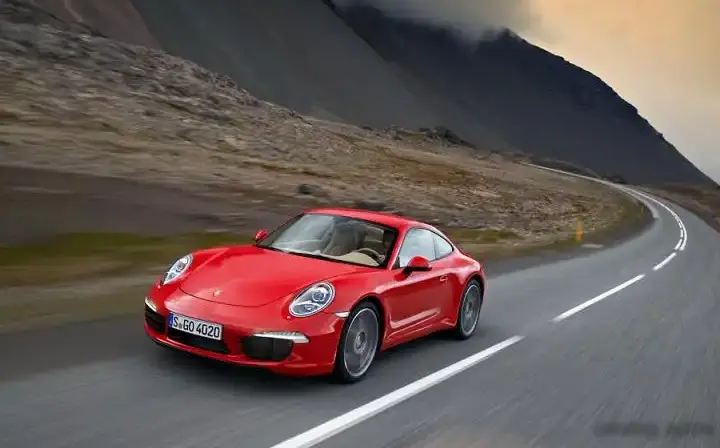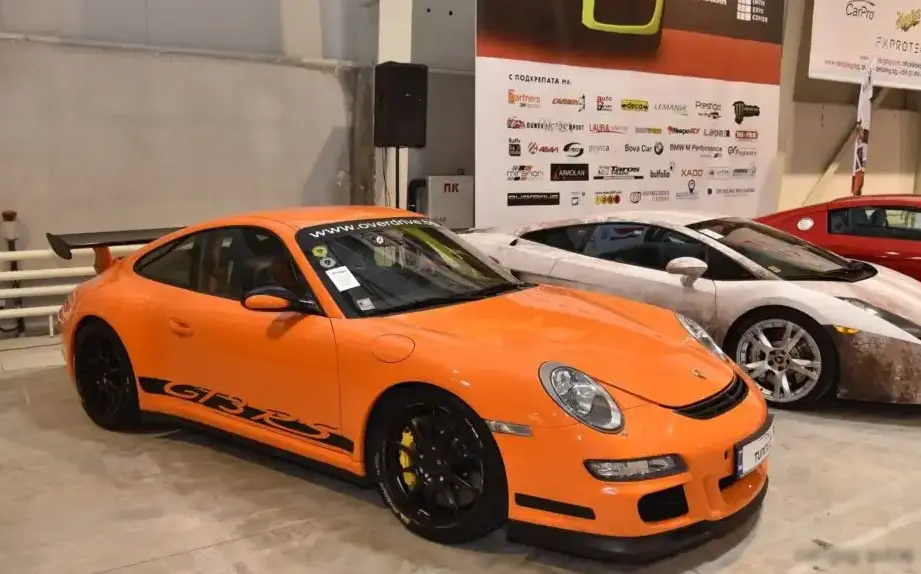
The Porsche 911 (997) GT3 3.6, produced from 2006 to 2009, represents a focused, high-performance iteration of the 997 generation 911. Positioned above the Carrera and Carrera S models, the GT3 was designed as a track-oriented machine, prioritizing driver engagement and lap times over everyday usability. It served as Porsche’s entry point into the naturally aspirated, rear-wheel-drive GT car lineage, bridging the gap between the more approachable Carrera models and the even more extreme GT3 RS. The 997.1 GT3, as the 2006-2009 model is often referred to, established a formula that would continue to define the GT3 for years to come.
Technical Specifications
| Brand | Porsche |
| Model | 911 |
| Generation | 911 (997) |
| Type (Engine) | GT3 3.6 (415 Hp) |
| Start of production | 2006 |
| End of production | 2009 |
| Powertrain Architecture | Internal Combustion engine |
| Body type | Coupe |
| Seats | 2-4 |
| Doors | 2 |
| Fuel consumption (economy) – urban | 19.8 l/100 km (11.9 US mpg, 14.3 UK mpg, 5.1 km/l) |
| Fuel consumption (economy) – extra urban | 8.9 l/100 km (26.4 US mpg, 31.7 UK mpg, 11.2 km/l) |
| Fuel consumption (economy) – combined | 12.8 l/100 km (18.4 US mpg, 22.1 UK mpg, 7.8 km/l) |
| CO2 emissions | 307 g/km |
| Fuel Type | Petrol (Gasoline) |
| Acceleration 0 – 100 km/h | 4.3 sec |
| Acceleration 0 – 62 mph | 4.3 sec |
| Acceleration 0 – 60 mph | 4.1 sec |
| Maximum speed | 310 km/h (192.63 mph) |
| Emission standard | Euro 4 |
| Weight-to-power ratio | 3.4 kg/Hp, 297.5 Hp/tonne |
| Weight-to-torque ratio | 3.4 kg/Nm, 290.3 Nm/tonne |
| Power | 415 Hp @ 7600 rpm |
| Power per litre | 115.3 Hp/l |
| Torque | 405 Nm @ 5500 rpm (298.71 lb.-ft. @ 5500 rpm) |
| Engine layout | Rear, Longitudinal |
| Engine Model/Code | M97.76 |
| Engine displacement | 3600 cm3 (219.69 cu. in.) |
| Number of cylinders | 6 |
| Engine configuration | Boxer |
| Cylinder Bore | 100 mm (3.94 in.) |
| Piston Stroke | 76.4 mm (3.01 in.) |
| Compression ratio | 12:1 |
| Number of valves per cylinder | 4 |
| Fuel injection system | Multi-port manifold injection |
| Engine aspiration | Naturally aspirated engine |
| Valvetrain | DOHC |
| Engine oil capacity | 9 l (9.51 US qt | 7.92 UK qt) |
| Coolant | 28 l (29.59 US qt | 24.64 UK qt) |
| Kerb Weight | 1395 kg (3075.45 lbs.) |
| Max. weight | 1680 kg (3703.77 lbs.) |
| Max load | 285 kg (628.32 lbs.) |
| Trunk (boot) space – maximum | 105 l (3.71 cu. ft.) |
| Fuel tank capacity | 90 l (23.78 US gal | 19.8 UK gal) |
| Length | 4445 mm (175 in.) |
| Width | 1808 mm (71.18 in.) |
| Height | 1280 mm (50.39 in.) |
| Wheelbase | 2355 mm (92.72 in.) |
| Drag coefficient (Cd) | 0.29 |
| Minimum turning circle | 10.9 m (35.76 ft.) |
| Drivetrain Architecture | Rear wheel drive |
| Number of gears and type of gearbox | 6 gears, manual transmission |
| Front suspension | Independent type McPherson |
| Rear suspension | Independent multi-link suspension |
| Front brakes | Ventilated discs |
| Rear brakes | Ventilated discs |
| Assisting systems | ABS (Anti-lock braking system) |
| Steering type | Steering rack and pinion |
| Power steering | Hydraulic Steering |
| Tires size | 235/35 R19ZR; 305/30 ZR19 |
| Wheel rims size | 8.5J x 19; 12J x 19 |
Powertrain & Engine Architecture
At the heart of the 997.1 GT3 lies the M97.76 engine, a 3.6-liter naturally aspirated flat-six. This engine is a direct descendant of the engines used in Porsche’s motorsport programs, featuring a dry-sump lubrication system for reliable oiling during high-g cornering. The engine boasts a high compression ratio of 12:1 and utilizes individual throttle bodies, contributing to its sharp throttle response. Fuel is delivered via multi-port fuel injection. The valvetrain employs dual overhead camshafts (DOHC) and four valves per cylinder, maximizing airflow and contributing to the engine’s high-revving nature. The engine produces 415 horsepower at 7,600 rpm and 298 lb-ft of torque at 5,500 rpm. The sole transmission option was a six-speed manual gearbox, specifically tuned for precise shifts and a direct connection to the engine.
Driving Characteristics
The 997.1 GT3 delivers a raw and engaging driving experience. The naturally aspirated engine requires the driver to work for the power, demanding precise gear selection to stay within the optimal powerband. While not possessing the low-end grunt of turbocharged engines, the GT3 rewards drivers with a linear power delivery and a thrilling rush towards its 8,400 rpm redline. The manual transmission is a key component of this experience, offering a tactile and rewarding shift feel. Compared to the standard Carrera or even the Carrera S, the GT3’s steering is more direct and communicative, providing exceptional feedback. The suspension is firm, prioritizing control and minimizing body roll, but remains compliant enough for occasional street use.
Equipment & Trim Levels
The GT3 was relatively spartan in its equipment levels, reflecting its focus on performance. Standard features included sport seats, a Club Sport package (which deleted the rear seats and added a roll cage), and a unique GT3 steering wheel. Air conditioning and a radio were optional extras, allowing buyers to further reduce weight. Interior trim was typically Alcantara and leather, with a minimalist design emphasizing functionality. Exterior styling cues included a distinctive front bumper with a larger air intake, a rear wing, and unique alloy wheels.
Chassis & Braking
The GT3 featured a modified chassis compared to the standard 997, with stiffer springs, dampers, and anti-roll bars. The suspension geometry was also revised to optimize handling balance. The braking system consisted of ventilated discs at all four corners, providing ample stopping power for track use. ABS was standard, but Porsche’s PSM (Porsche Stability Management) system could be disabled for experienced drivers seeking maximum control. The GT3’s weight distribution was carefully balanced, contributing to its neutral handling characteristics.
Market Reception & Comparison
The 997.1 GT3 was widely praised by automotive journalists for its exceptional performance and engaging driving experience. Critics lauded its naturally aspirated engine, precise handling, and direct steering feel. Compared to the Carrera S, the GT3 offered a significantly more focused and rewarding driving experience, albeit with a less comfortable ride and fewer creature comforts. The GT3 also stood out from the turbocharged 911 Turbo, offering a different kind of performance – one that prioritized driver skill and engagement over sheer power. Fuel economy, while not a primary concern for GT3 buyers, was reasonable for a high-performance sports car, averaging around 18.4 US mpg in combined driving.
Legacy
The 997.1 GT3 has become a highly sought-after model among Porsche enthusiasts. Its naturally aspirated engine and analog driving experience are increasingly appreciated in a world of turbocharged engines and electronic driver aids. The M97.76 engine is known for its reliability, provided it is properly maintained. Regular oil changes and valve adjustments are crucial for long-term durability. Today, well-maintained examples command high prices on the used car market, reflecting their status as a modern classic. The 997.1 GT3 established a benchmark for track-focused sports cars and continues to be a benchmark against which other performance cars are judged.