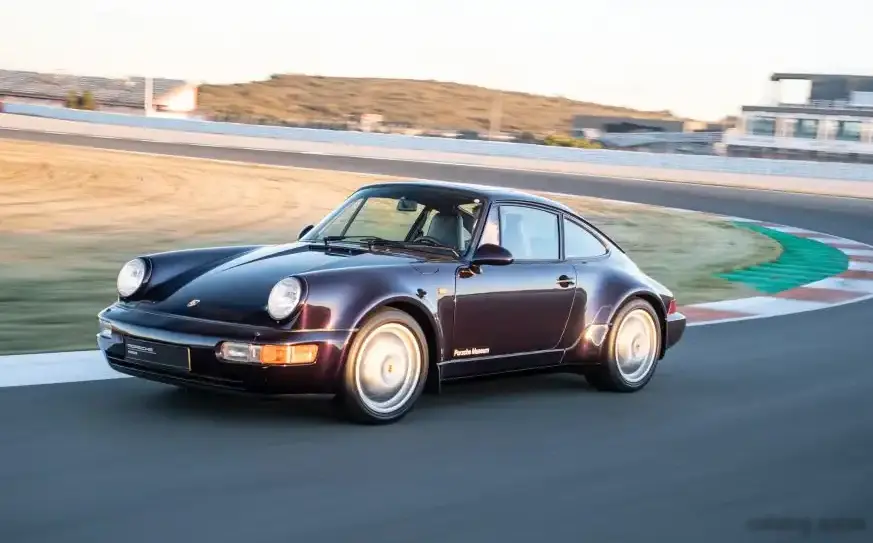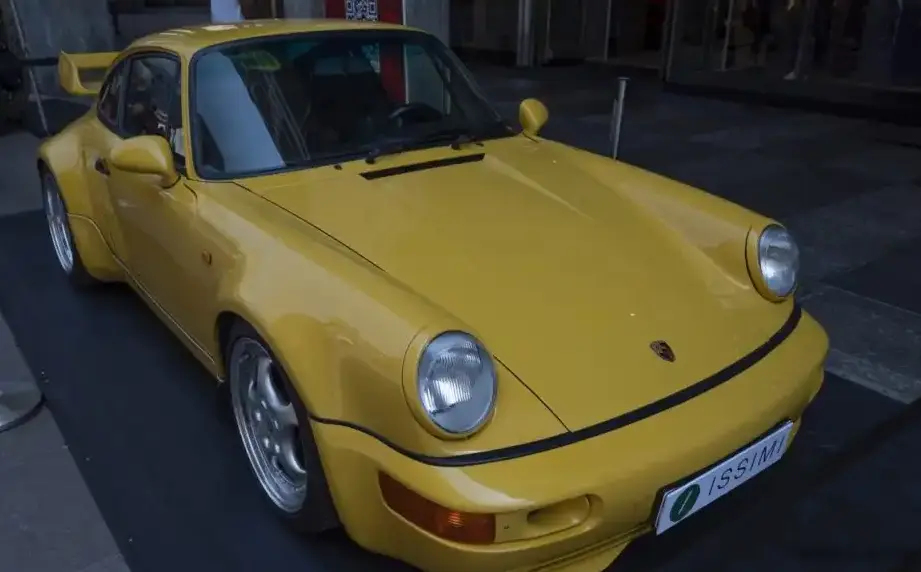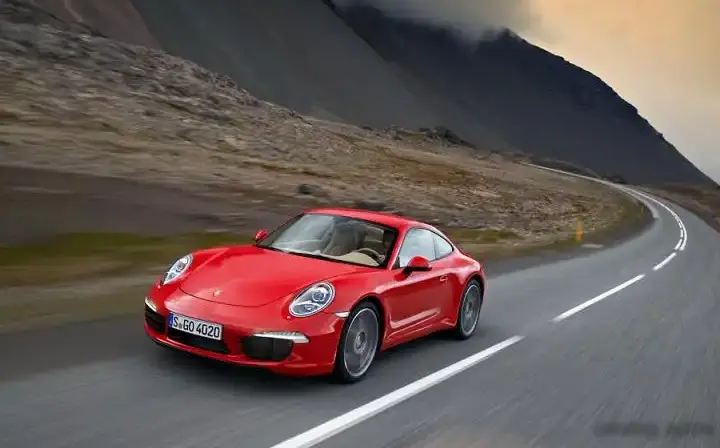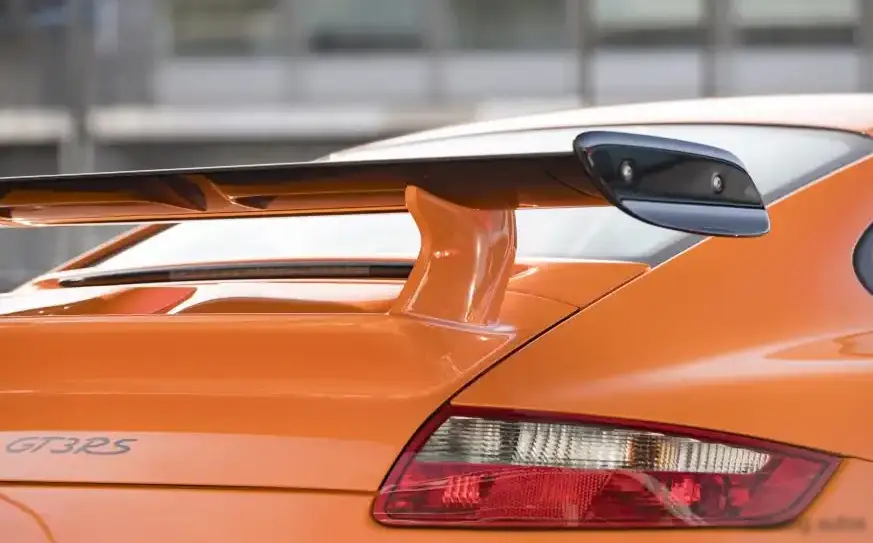
The Porsche 911 (997) GT3 RS 3.6, produced from 2006 to 2009, represents a focused, track-oriented iteration of the 997 generation 911. Building upon the already capable 997 GT3, the RS (RennSport) variant further amplified performance through weight reduction, aerodynamic enhancements, and a more aggressive setup. Positioned as the highest-performance, naturally aspirated 911 of its time, it catered to enthusiasts seeking a visceral driving experience and a direct connection to motorsport technology. The 997.1 generation GT3 RS 3.6 served as a bridge between the original 997 GT3 and the later, more technologically advanced 997.2 models.
Technical Specifications
| Brand | Porsche |
| Model | 911 |
| Generation | 911 (997) |
| Type (Engine) | GT3 RS 3.6 (415 Hp) |
| Start of production | 2006 |
| End of production | 2009 |
| Powertrain Architecture | Internal Combustion engine |
| Body type | Coupe |
| Seats | 2-4 |
| Doors | 2 |
| Fuel consumption (economy) – urban | 19.8 l/100 km (11.9 US mpg, 14.3 UK mpg, 5.1 km/l) |
| Fuel consumption (economy) – extra urban | 8.9 l/100 km (26.4 US mpg, 31.7 UK mpg, 11.2 km/l) |
| Fuel consumption (economy) – combined | 12.8 l/100 km (18.4 US mpg, 22.1 UK mpg, 7.8 km/l) |
| CO2 emissions | 307 g/km |
| Fuel Type | Petrol (Gasoline) |
| Acceleration 0 – 100 km/h | 4.2 sec |
| Acceleration 0 – 62 mph | 4.2 sec |
| Acceleration 0 – 60 mph | 4.0 sec |
| Maximum speed | 310 km/h (192.63 mph) |
| Emission standard | Euro 4 |
| Weight-to-power ratio | 3.3 kg/Hp, 301.8 Hp/tonne |
| Weight-to-torque ratio | 3.4 kg/Nm, 294.5 Nm/tonne |
| Power | 415 Hp @ 7600 rpm |
| Power per litre | 115.3 Hp/l |
| Torque | 405 Nm @ 5500 rpm (298.71 lb.-ft. @ 5500 rpm) |
| Engine layout | Rear, Longitudinal |
| Engine Model/Code | M97.76 |
| Engine displacement | 3600 cm3 (219.69 cu. in.) |
| Number of cylinders | 6 |
| Engine configuration | Boxer |
| Cylinder Bore | 100 mm (3.94 in.) |
| Piston Stroke | 76.4 mm (3.01 in.) |
| Compression ratio | 12:1 |
| Number of valves per cylinder | 4 |
| Fuel injection system | Multi-port manifold injection |
| Engine aspiration | Naturally aspirated engine |
| Valvetrain | DOHC |
| Engine oil capacity | 9 l (9.51 US qt | 7.92 UK qt) |
| Coolant | 28 l (29.59 US qt | 24.64 UK qt) |
| Kerb Weight | 1375 kg (3031.36 lbs.) |
| Max. weight | 1680 kg (3703.77 lbs.) |
| Max load | 305 kg (672.41 lbs.) |
| Trunk (boot) space – maximum | 105 l (3.71 cu. ft.) |
| Fuel tank capacity | 90 l (23.78 US gal | 19.8 UK gal) |
| Length | 4460 mm (175.59 in.) |
| Width | 1852 mm (72.91 in.) |
| Height | 1280 mm (50.39 in.) |
| Wheelbase | 2360 mm (92.91 in.) |
| Drag coefficient (Cd) | 0.30 |
| Minimum turning circle | 10.9 m (35.76 ft.) |
| Drivetrain Architecture | Rear wheel drive |
| Number of gears and type of gearbox | 6 gears, manual transmission |
| Front suspension | Independent type McPherson |
| Rear suspension | Independent multi-link suspension |
| Front brakes | Ventilated discs |
| Rear brakes | Ventilated discs |
| Assisting systems | ABS (Anti-lock braking system) |
| Steering type | Steering rack and pinion |
| Power steering | Hydraulic Steering |
| Tires size | 235/35 R19ZR; 305/30 ZR19 |
| Wheel rims size | 8.5J x 19; 12J x 19 |
INTRODUCTION
The 911 (997) GT3 RS 3.6 represents the pinnacle of naturally aspirated performance within the 997.1 generation of Porsche’s iconic sports car. Produced between 2006 and 2009, it was designed as a homologation special for racing, but also offered to the public as a supremely capable track day weapon. The “RS” designation, standing for RennSport, signifies Porsche’s motorsport heritage and a commitment to maximizing performance. Based on the 997 platform, the GT3 RS 3.6 benefited from extensive modifications over the standard 911, including a more powerful engine, reduced weight, and enhanced aerodynamics. It was a direct descendant of the 911 Carrera RS models of the 1970s, continuing a tradition of lightweight, high-performance 911s.
Powertrain & Engine Architecture
At the heart of the 997 GT3 RS 3.6 lies the M97.76 engine, a 3.6-liter naturally aspirated flat-six (boxer) engine. This engine is a dry-sump design, crucial for maintaining oil supply during the high g-forces experienced on a track. The engine produces 415 horsepower at 7,600 rpm and 405 Nm (298.71 lb-ft) of torque at 5,500 rpm. It features a high 12:1 compression ratio and individual throttle bodies for each cylinder, contributing to its sharp throttle response. Fuel is delivered via a multi-port fuel injection system. The engine’s valvetrain utilizes dual overhead camshafts (DOHC) and four valves per cylinder. The engine is mated exclusively to a six-speed manual transmission, prioritizing driver engagement and control. The gearbox features shorter ratios compared to the standard 911, further enhancing acceleration.
Driving Characteristics
The driving experience in the 997 GT3 RS 3.6 is defined by its raw, unfiltered connection to the road. The naturally aspirated engine delivers a linear powerband, rewarding drivers who maintain momentum. The six-speed manual transmission requires precise shifts, but provides a satisfyingly mechanical feel. The car’s lightweight construction (1375 kg / 3031.36 lbs) contributes to its agility and responsiveness. Steering is direct and communicative, providing ample feedback. The suspension is firm, prioritizing control over comfort, and the car exhibits minimal body roll in corners. Compared to the standard 997 or even the base GT3, the RS model feels significantly more focused and demanding. While the standard GT3 offered a more balanced experience for everyday use, the RS was unapologetically geared towards track performance. The shorter gear ratios mean the engine is frequently kept in its powerband, resulting in exhilarating acceleration.
Equipment & Trim Levels
The 997 GT3 RS 3.6 was relatively sparsely equipped compared to other 911 variants, reflecting its focus on weight reduction. Standard features included sport seats, a Club Sport package (which deleted the rear seats and added a roll cage), and a fire extinguisher. Air conditioning and a radio were optional extras, often omitted by owners prioritizing weight savings. Interior trim was minimalist, with Alcantara and carbon fiber accents dominating the cabin. Exterior options included various paint colors, although many were finished in iconic Porsche racing liveries. The RS model did not offer the extensive customization options available on other 911s; the emphasis was on performance, not luxury.
Chassis & Braking
The chassis of the 997 GT3 RS 3.6 features a modified suspension setup compared to the standard 911. It utilizes adjustable dampers and stiffer springs, lowering the ride height and reducing body roll. The front suspension employs a McPherson strut design, while the rear utilizes a multi-link setup. Braking duties are handled by ventilated discs at all four corners, providing exceptional stopping power. The RS model also benefited from a wider track width, enhancing stability and grip. The standard wheels were 19-inch alloys, wrapped in high-performance tires (235/35 ZR19 front, 305/30 ZR19 rear). ABS (Anti-lock braking system) was standard, but traction control was deliberately limited to allow for more driver control.
Market Reception & Comparison
The 997 GT3 RS 3.6 was widely praised by automotive journalists for its exceptional performance and engaging driving experience. Critics lauded its raw power, precise handling, and track-focused setup. Compared to the standard 911 GT3, the RS model was considered more hardcore and demanding, but ultimately more rewarding for experienced drivers. Fuel economy, unsurprisingly, was not a strong point, with combined figures around 18.4 US mpg. Reliability was generally good, although the high-revving engine and track-focused components required diligent maintenance. The RS commanded a significant premium over the standard GT3, reflecting its limited production and enhanced performance.
Legacy
The 997 GT3 RS 3.6 has become a highly sought-after collector’s item. Its combination of performance, rarity, and driving purity has cemented its status as a modern classic. The M97.76 engine is known for its durability when properly maintained, although regular inspections and oil changes are crucial. Today, well-maintained examples command high prices in the used car market. The 997.1 GT3 RS 3.6 represents a pivotal moment in Porsche’s history, bridging the gap between traditional analog sports cars and the more technologically advanced models that followed. It remains a benchmark for naturally aspirated performance and a testament to Porsche’s commitment to driving excellence.