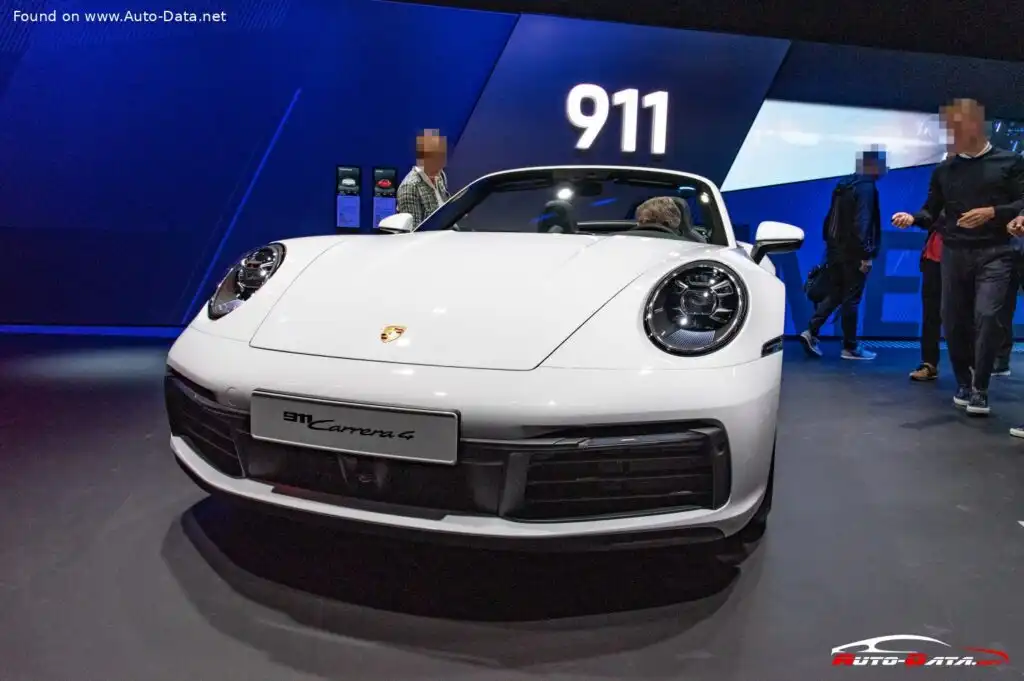
The Porsche 911 Cabriolet (992) Carrera 4 3.0, producing 385 horsepower, represents a compelling blend of performance, luxury, and open-air driving enjoyment. Introduced in September 2019 and continuing through May 2024, this variant occupies a significant position within the broader 992 generation of the iconic 911. It serves as a step up from the base Carrera models, offering all-wheel drive for enhanced stability and traction, and utilizes Porsche’s sophisticated PDK dual-clutch transmission. This model caters to drivers seeking a more capable and refined 911 experience without venturing into the higher performance tiers like the Carrera S or Turbo models.
Technical Specifications
| Brand | Porsche |
| Model | 911 |
| Generation | 911 Cabriolet (992) |
| Type (Engine) | Carrera 4 3.0 (385 Hp) PDK |
| Start of production | September, 2019 |
| End of production | May, 2024 |
| Powertrain Architecture | Internal Combustion engine |
| Body type | Cabriolet |
| Seats | 4 |
| Doors | 2 |
| Fuel consumption (urban) | 13.2 l/100 km (17.8 US mpg, 21.4 UK mpg, 7.6 km/l) |
| Fuel consumption (extra urban) | 6.9 l/100 km (34.1 US mpg, 40.9 UK mpg, 14.5 km/l) |
| Fuel consumption (combined) | 9.2 l/100 km (25.6 US mpg, 30.7 UK mpg, 10.9 km/l) |
| CO2 emissions | 211 g/km |
| Fuel Type | Petrol (Gasoline) |
| Acceleration 0 – 100 km/h | 4.4 sec |
| Acceleration 0 – 62 mph | 4.4 sec |
| Acceleration 0 – 60 mph | 4.2 sec |
| Acceleration 0 – 200 km/h | 15.6 sec |
| Maximum speed | 289 km/h (179.58 mph) |
| Emission standard | Euro 6d-TEMP-EVAP-ISC |
| Weight-to-power ratio | 4.2 kg/Hp, 236.9 Hp/tonne |
| Weight-to-torque ratio | 3.6 kg/Nm, 276.9 Nm/tonne |
| Power | 385 Hp @ 6500 rpm |
| Power per litre | 129.2 Hp/l |
| Torque | 450 Nm @ 1950-5000 rpm (331.9 lb.-ft. @ 1950-5000 rpm) |
| Maximum engine speed | 7500 rpm |
| Engine layout | Rear, Longitudinal |
| Engine Model/Code | DKCA |
| Engine displacement | 2981 cm3 (181.91 cu. in.) |
| Number of cylinders | 6 |
| Engine configuration | Boxer |
| Cylinder Bore | 91 mm (3.58 in.) |
| Piston Stroke | 76.4 mm (3.01 in.) |
| Compression ratio | 10.2:1 |
| Number of valves per cylinder | 4 |
| Fuel injection system | Direct injection |
| Engine aspiration | BiTurbo, Intercooler |
| Engine oil capacity | 8.3 l (8.77 US qt | 7.3 UK qt) |
| Kerb Weight | 1625 kg (3582.51 lbs.) |
| Max. weight | 2040 kg (4497.43 lbs.) |
| Max load | 415 kg (914.92 lbs.) |
| Trunk (boot) space – minimum | 132 l (4.66 cu. ft.) |
| Fuel tank capacity | 67 l (17.7 US gal | 14.74 UK gal) |
| Length | 4519 mm (177.91 in.) |
| Width | 1852 mm (72.91 in.) |
| Width including mirrors | 2024 mm (79.69 in.) |
| Height | 1297 mm (51.06 in.) |
| Wheelbase | 2450 mm (96.46 in.) |
| Front track | 1591 mm (62.64 in.) |
| Rear (Back) track | 1557 mm (61.3 in.) |
| Drag coefficient (Cd) | 0.29 |
| Drivetrain Architecture | All wheel drive (4×4) |
| Number of gears and type of gearbox | 8 gears, automatic transmission PDK |
| Front suspension | Independent, type McPherson with coil spring and anti-roll bar |
| Rear suspension | Independent multi-link spring suspension with stabilizer |
| Front brakes | Ventilated discs, 330 mm |
| Rear brakes | Ventilated discs, 330 mm |
| Tires size | Front wheel tires: 235/40 ZR19 Rear wheel tires: 295/35 ZR20 |
INTRODUCTION
The 992-generation Porsche 911, launched in late 2019, represented a significant evolution of the iconic sports car. The Carrera 4 3.0 PDK variant, as the name suggests, features a 3.0-liter twin-turbocharged flat-six engine producing 385 horsepower, coupled with Porsche’s seven-speed PDK (Porsche Doppelkupplung) dual-clutch automatic transmission and all-wheel drive. This configuration positions itself as a versatile option within the 911 range, offering a balance between performance, everyday usability, and all-weather capability. It’s designed for enthusiasts who appreciate the 911’s heritage but desire a more accessible and technologically advanced driving experience.
Powertrain & Engine Architecture
At the heart of the Carrera 4 3.0 PDK lies the DKCA engine, a 3.0-liter horizontally opposed (boxer) six-cylinder engine. This engine utilizes direct fuel injection and twin turbochargers to deliver a broad torque curve and responsive power delivery. The twin-turbo setup contributes to the engine’s 450 Nm (331.9 lb-ft) of torque available from 1950 to 5000 rpm. The PDK transmission is a seven-speed dual-clutch unit known for its incredibly fast and smooth gear changes. It offers both automatic and manual shifting modes, allowing drivers to tailor the driving experience to their preferences. The all-wheel-drive system is a sophisticated system that actively distributes torque between the front and rear axles, enhancing traction and stability, particularly in adverse conditions.
Driving Characteristics
The Carrera 4 3.0 PDK delivers a refined yet engaging driving experience. The PDK transmission provides seamless shifts, contributing to brisk acceleration – 0 to 60 mph in approximately 4.2 seconds. While not as overtly aggressive as the Carrera S models, the 385 hp engine provides ample power for spirited driving on both the road and track. The all-wheel-drive system inspires confidence, especially on slippery surfaces, and allows for earlier throttle application when exiting corners. The steering is precise and communicative, providing excellent feedback to the driver. Compared to manual transmission versions, the PDK offers convenience and quicker acceleration, but some purists may prefer the greater driver involvement of a manual gearbox.
Equipment & Trim Levels
The Carrera 4 3.0 PDK came standard with a comprehensive list of features, including Porsche Communication Management (PCM) with a 10.9-inch touchscreen display, Porsche Active Suspension Management (PASM), and a leather interior. Optional extras were plentiful, allowing buyers to personalize their vehicles. Popular options included adaptive cruise control, a premium sound system, sport seats, and various interior trim packages. The Cabriolet version, of course, featured a fully automatic retractable soft top, adding to the open-air driving experience.
Chassis & Braking
The 992-generation 911 utilizes a sophisticated chassis design with independent suspension at all four corners. The front suspension employs a McPherson strut design, while the rear features a multi-link setup. Porsche Active Suspension Management (PASM) electronically adjusts the damping characteristics based on driving conditions and driver input. The braking system consists of ventilated discs on all four wheels, providing ample stopping power. The Carrera 4 3.0 PDK typically features 330mm discs front and rear.
Market Reception & Comparison
The Carrera 4 3.0 PDK was generally well-received by automotive critics. It was praised for its blend of performance, comfort, and all-weather capability. Compared to the base Carrera models, the Carrera 4 offered improved traction and stability, making it a more practical choice for drivers in regions with inclement weather. Compared to the Carrera S models, it offered a slightly less intense driving experience but at a lower price point. Fuel economy was respectable for a sports car of this caliber, averaging around 25.6 US mpg in combined driving.
Legacy
The Porsche 911 Carrera 4 3.0 PDK (992) is expected to hold its value well due to the enduring appeal of the 911 nameplate and the quality of Porsche engineering. The PDK transmission and twin-turbocharged engine are generally considered reliable, although regular maintenance is crucial. As a relatively recent model, parts availability is currently good. This variant represents a sweet spot in the 992 lineup, offering a compelling combination of performance, luxury, and usability that will likely continue to appeal to enthusiasts for years to come.