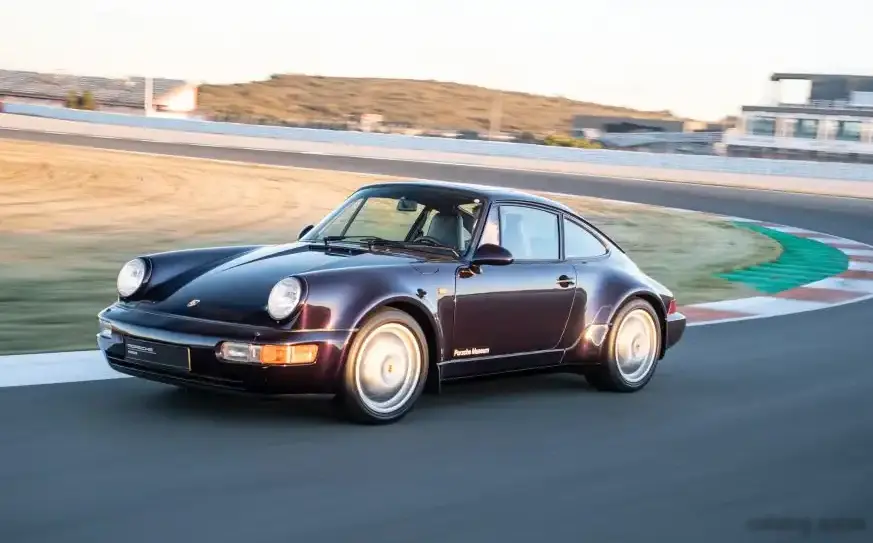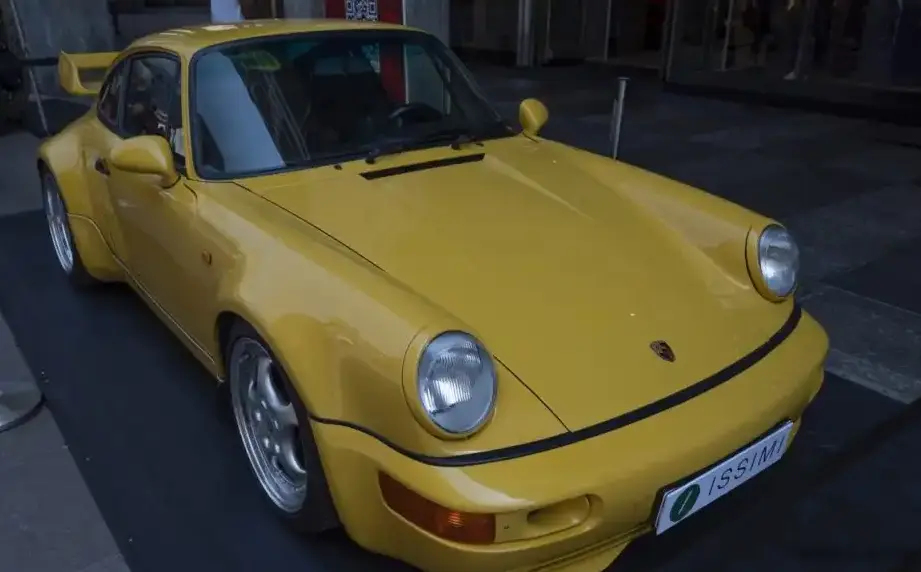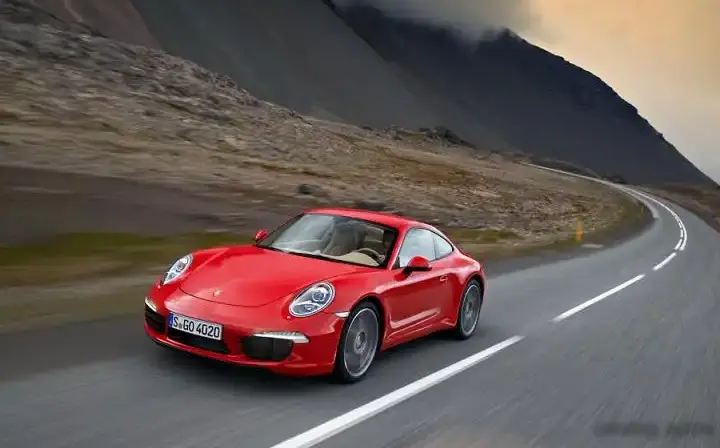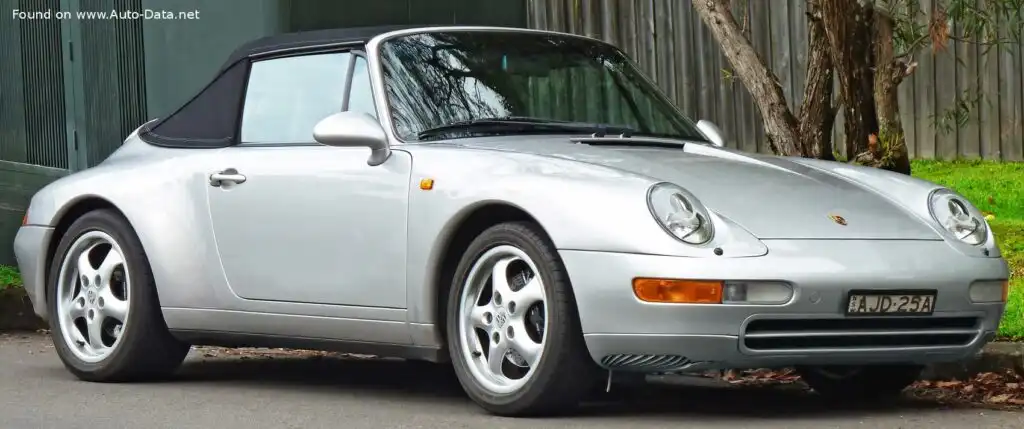
The Porsche 911 Cabriolet (993) Carrera 3.6, produced from 1995 to 1997, represents a pivotal moment in the 911 lineage. As the final iteration of the air-cooled 911 before the introduction of water cooling with the 996 generation, the 993 combined classic 911 aesthetics with significant technological advancements. The Carrera 3.6, with its 3.6-liter engine producing 285 horsepower, served as a premium offering within the 993 Cabriolet range, positioned above the earlier 3.0-liter models but below the more focused and powerful Carrera S and Turbo variants. It was designed to offer a blend of performance, comfort, and open-air driving enjoyment, appealing to enthusiasts seeking a refined and engaging sports car experience.
Technical Specifications
| Brand | Porsche |
| Model | 911 |
| Generation | 911 Cabriolet (993) |
| Type (Engine) | Carrera 3.6 (285 Hp) |
| Start of production | 1995 |
| End of production | 1997 |
| Powertrain Architecture | Internal Combustion engine |
| Body type | Cabriolet |
| Seats | 4 |
| Doors | 2 |
| Fuel consumption (economy) – urban | 17.9 l/100 km (13.1 US mpg, 15.8 UK mpg, 5.6 km/l) |
| Fuel consumption (economy) – extra urban | 8.9 l/100 km (26.4 US mpg, 31.7 UK mpg, 11.2 km/l) |
| Fuel consumption (economy) – combined | 12.2 l/100 km (19.3 US mpg, 23.2 UK mpg, 8.2 km/l) |
| CO2 emissions | 289 g/km |
| Fuel Type | Petrol (Gasoline) |
| Acceleration 0 – 100 km/h | 5.4 sec |
| Acceleration 0 – 62 mph | 5.4 sec |
| Acceleration 0 – 60 mph | 5.1 sec |
| Maximum speed | 275 km/h (170.88 mph) |
| Weight-to-power ratio | 4.8 kg/Hp, 208 Hp/tonne |
| Weight-to-torque ratio | 4 kg/Nm, 248.2 Nm/tonne |
| Power | 285 Hp @ 6100 rpm |
| Power per litre | 79.2 Hp/l |
| Torque | 340 Nm @ 5250 rpm (250.77 lb.-ft. @ 5250 rpm) |
| Engine layout | Rear, Longitudinal |
| Engine Model/Code | M64.21 |
| Engine displacement | 3600 cm3 (219.69 cu. in.) |
| Number of cylinders | 6 |
| Engine configuration | Boxer |
| Compression ratio | 11.3:1 |
| Number of valves per cylinder | 2 |
| Fuel injection system | Multi-port manifold injection |
| Engine aspiration | Naturally aspirated engine |
| Valvetrain | SOHC |
| Engine oil capacity | 9 l (9.51 US qt | 7.92 UK qt) |
| Kerb Weight | 1370 kg (3020.33 lbs.) |
| Max. weight | 1710 kg (3769.9 lbs.) |
| Max load | 340 kg (749.57 lbs.) |
| Trunk (boot) space – maximum | 123 l (4.34 cu. ft.) |
| Length | 4245 mm (167.13 in.) |
| Width | 1735 mm (68.31 in.) |
| Height | 1300 mm (51.18 in.) |
| Wheelbase | 2272 mm (89.45 in.) |
| Front track | 1405 mm (55.31 in.) |
| Rear (Back) track | 1444 mm (56.85 in.) |
| Drivetrain Architecture | The Internal combustion engine (ICE) drives the rear wheels of the vehicle. |
| Drive wheel | Rear wheel drive |
| Number of gears and type of gearbox | 6 gears, manual transmission |
| Front suspension | Independent type McPherson |
| Rear suspension | Independent multi-link suspension |
| Front brakes | Ventilated discs |
| Rear brakes | Ventilated discs |
| Assisting systems | ABS (Anti-lock braking system) |
| Steering type | Steering rack and pinion |
| Power steering | Hydraulic Steering |
| Tires size | 205/55 R16; 245/45 R16 |
| Wheel rims size | 7J x 16; 9J x 16 |
Powertrain & Engine Architecture
The heart of the 993 Carrera 3.6 is the M64.21 engine, a 3.6-liter naturally aspirated flat-six. This engine represented a significant evolution of the air-cooled 911 powerplant. It featured increased displacement compared to earlier 993 models, achieved through a larger bore and stroke. The engine utilized a multi-port fuel injection system, carefully tuned to optimize performance and emissions. The valvetrain employed a single overhead camshaft (SOHC) design, a characteristic of the traditional 911 engine architecture. The engine’s dry-sump lubrication system, a hallmark of Porsche engineering, ensured reliable oil supply even under extreme cornering forces. The standard transmission for the Carrera 3.6 was a six-speed manual, though a four-speed Tiptronic automatic was also available. The automatic transmission, while offering convenience, was generally considered to slightly diminish the car’s overall performance compared to the manual.
Driving Characteristics
The 993 Carrera 3.6 offered a distinctly engaging driving experience. The 285 horsepower engine provided ample power for spirited driving, with a noticeable surge in acceleration as the revs climbed. The rear-wheel-drive layout and the engine’s rearward placement contributed to the 911’s characteristic handling balance. The six-speed manual transmission allowed for precise gear selection, maximizing the engine’s powerband. Compared to the more powerful Carrera S, the 3.6 felt more approachable and less demanding to drive at the limit. The automatic transmission, while smooth, resulted in slightly slower acceleration times and a less connected feel. The suspension, tuned for a balance of comfort and control, provided a relatively compliant ride for a sports car, while still maintaining excellent body control during cornering.
Equipment & Trim Levels
The Carrera 3.6 Cabriolet came reasonably well-equipped as standard. Interior features included leather upholstery, power windows, power steering, and an upgraded audio system. Optional extras were plentiful, allowing buyers to personalize their cars. Popular options included heated seats, a limited-slip differential, and various interior trim packages. The Cabriolet featured a fully automatic electro-hydraulic fabric top, offering convenient open-air motoring. The dashboard layout was typical of the 993, with a clean and functional design.
Chassis & Braking
The 993 chassis represented a significant advancement over previous 911 generations. It featured a redesigned suspension system with improved geometry and increased rigidity. The front suspension utilized McPherson struts, while the rear employed a multi-link setup, enhancing both handling and ride comfort. Braking duties were handled by ventilated disc brakes on all four wheels, providing ample stopping power. An Anti-lock Braking System (ABS) was standard. The Carrera 3.6 typically featured a smaller diameter stabilizer bar compared to the Carrera S, contributing to its slightly softer ride.
Market Reception & Comparison
The 993 Carrera 3.6 was well-received by automotive critics, praised for its blend of performance, refinement, and classic 911 character. It was seen as a more accessible entry point into the 993 range compared to the more expensive and focused Carrera S and Turbo models. Fuel economy, while not a primary concern for 911 buyers, was reasonable for a sports car of its performance level. Reliability was generally good, although maintenance costs could be substantial due to the car’s complex engineering and the need for specialized Porsche service. Compared to the earlier 964 generation, the 993 offered a more modern and refined driving experience.
Legacy
The Porsche 911 (993) Carrera 3.6 holds a special place in Porsche history as the last of the air-cooled 911s. The M64.21 engine is considered a robust and reliable powerplant when properly maintained. Today, the 993 Carrera 3.6 is a highly sought-after collectible, with values steadily increasing. Its combination of classic 911 aesthetics, engaging driving dynamics, and relative rarity make it a desirable car for enthusiasts and collectors alike. The 993’s influence can still be seen in modern 911s, representing a bridge between the past and the future of Porsche’s iconic sports car.