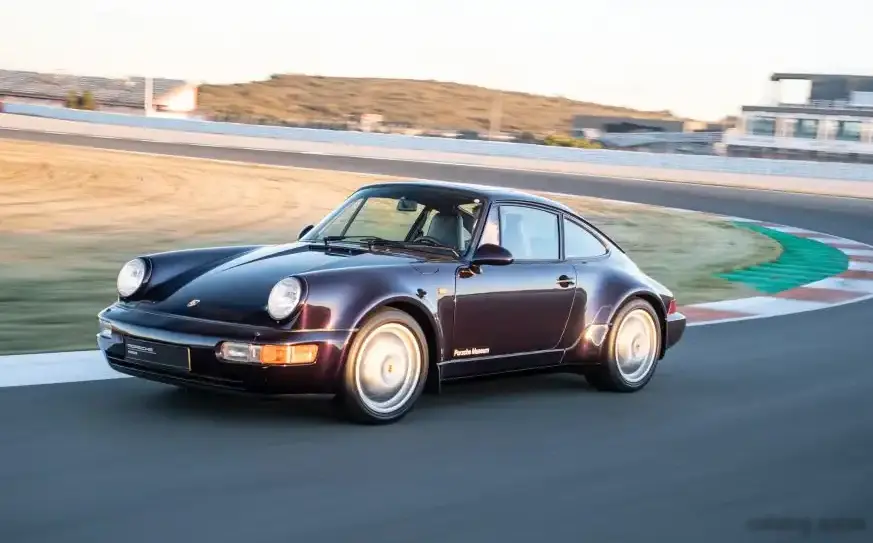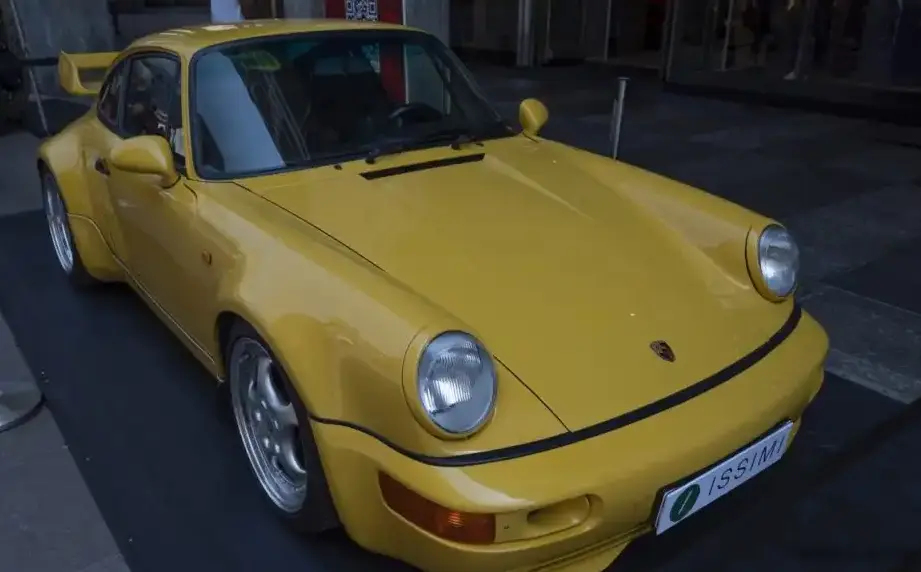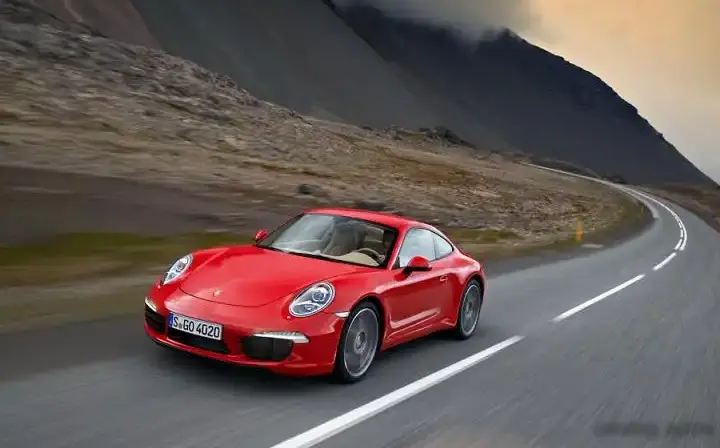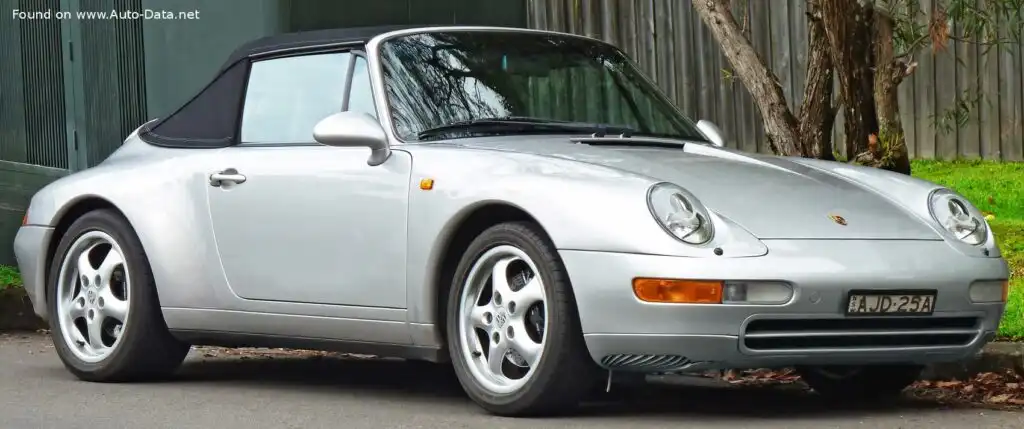
The Porsche 911 Cabriolet (993) Carrera 3.6, equipped with the Tiptronic S automatic transmission, represents a pivotal point in the 911 lineage. Produced between 1995 and 1997, this variant was the last of the air-cooled 911s, bridging the gap between the classic heritage of the earlier models and the more modern, water-cooled 996 generation. It sat in the mid-range of the 993 Cabriolet lineup, offering a blend of performance and convenience that appealed to buyers seeking a more relaxed driving experience without sacrificing the iconic 911 feel. The 993 generation itself was a significant departure from its predecessor, the 964, featuring a completely redesigned chassis, suspension, and interior, while retaining the signature rear-engine layout.
Technical Specifications
| Brand | Porsche |
| Model | 911 |
| Generation | 911 Cabriolet (993) |
| Type (Engine) | Carrera 3.6 (285 Hp) Tiptronic |
| Start of production | 1995 |
| End of production | 1997 |
| Powertrain Architecture | Internal Combustion engine |
| Body type | Cabriolet |
| Seats | 4 |
| Doors | 2 |
| Fuel consumption (urban) | 18.2 l/100 km (12.9 US mpg, 15.5 UK mpg, 5.5 km/l) |
| Fuel consumption (extra urban) | 8.7 l/100 km (27 US mpg, 32.5 UK mpg, 11.5 km/l) |
| Fuel consumption (combined) | 12.2 l/100 km (19.3 US mpg, 23.2 UK mpg, 8.2 km/l) |
| CO2 emissions | 289 g/km |
| Fuel Type | Petrol (Gasoline) |
| Acceleration 0 – 100 km/h | 5.4 sec |
| Acceleration 0 – 62 mph | 5.4 sec |
| Acceleration 0 – 60 mph | 5.1 sec |
| Maximum speed | 275 km/h (170.88 mph) |
| Weight-to-power ratio | 4.9 kg/Hp, 204.3 Hp/tonne |
| Weight-to-torque ratio | 4.1 kg/Nm, 243.7 Nm/tonne |
| Power | 285 Hp @ 6100 rpm |
| Power per litre | 79.2 Hp/l |
| Torque | 340 Nm @ 5250 rpm (250.77 lb.-ft. @ 5250 rpm) |
| Engine layout | Rear, Longitudinal |
| Engine Model/Code | M64.22 |
| Engine displacement | 3600 cm3 (219.69 cu. in.) |
| Number of cylinders | 6 |
| Engine configuration | Boxer |
| Compression ratio | 11.3:1 |
| Number of valves per cylinder | 2 |
| Fuel injection system | Multi-port manifold injection |
| Engine aspiration | Naturally aspirated engine |
| Valvetrain | SOHC |
| Engine oil capacity | 9 l (9.51 US qt | 7.92 UK qt) |
| Kerb Weight | 1395 kg (3075.45 lbs.) |
| Trunk (boot) space – maximum | 123 l (4.34 cu. ft.) |
| Length | 4245 mm (167.13 in.) |
| Width | 1735 mm (68.31 in.) |
| Height | 1300 mm (51.18 in.) |
| Wheelbase | 2272 mm (89.45 in.) |
| Front track | 1405 mm (55.31 in.) |
| Rear (Back) track | 1444 mm (56.85 in.) |
| Drivetrain Architecture | Rear wheel drive |
| Number of gears and type of gearbox | 4 gears, automatic transmission Tiptronic S |
| Front suspension | Independent type McPherson |
| Rear suspension | Independent multi-link suspension |
| Front brakes | Ventilated discs |
| Rear brakes | Ventilated discs |
| Assisting systems | ABS (Anti-lock braking system) |
| Steering type | Steering rack and pinion |
| Power steering | Hydraulic Steering |
| Tires size | 205/55 R16; 245/45 R16 |
| Wheel rims size | 7J x 16; 9J x 16 |
Powertrain & Engine Architecture
At the heart of the 993 Carrera 3.6 Tiptronic lies the M64.22 engine, a 3.6-liter naturally aspirated flat-six. This engine represents the final evolution of Porsche’s long-standing air-cooled design. It featured hydraulic chain tensioners, addressing a common reliability concern in earlier air-cooled 911s. The engine utilized a multi-port fuel injection system, carefully tuned to deliver a balance of power and drivability. The valvetrain employed a single overhead camshaft (SOHC) design, operating two valves per cylinder. The Tiptronic S transmission, a four-speed automatic, allowed drivers to select gears manually via buttons on the steering wheel, offering a degree of control not found in traditional automatics. This transmission was known for its relatively quick shifts and smooth operation, though it wasn’t as responsive as the available six-speed manual.
Driving Characteristics
The 993 Carrera 3.6 Tiptronic offered a distinct driving experience compared to its manual counterparts and other 993 variants. While the manual transmission provided a more engaging and direct connection to the engine, the Tiptronic S offered a more relaxed and accessible driving style. The automatic transmission’s gear ratios were optimized for comfortable cruising and effortless acceleration. The 285 horsepower and 340 Nm (250.77 lb-ft) of torque provided ample power for both city driving and highway passing. However, the automatic transmission did introduce a slight performance penalty compared to the manual, with 0-60 mph times typically around 5.1 seconds, slightly slower than the manual version. The rear-engine layout and relatively soft suspension settings (compared to the track-focused models) contributed to a comfortable ride, but also required careful throttle control to avoid oversteer.
Equipment & Trim Levels
The Carrera 3.6 Tiptronic came standard with a well-appointed interior featuring leather upholstery, power windows, power steering, and an upgraded audio system. Optional extras included a sunroof, heated seats, and a more comprehensive sound system. The interior design was a significant improvement over the 964, with a more ergonomic layout and higher-quality materials. Exterior features included the signature 911 silhouette, a retractable rear spoiler, and alloy wheels. The Tiptronic models often featured a slightly more luxurious trim package, appealing to buyers prioritizing comfort and convenience.
Chassis & Braking
The 993 generation benefited from a completely redesigned chassis, offering improved rigidity and handling compared to previous 911s. The suspension utilized independent McPherson struts at the front and a multi-link setup at the rear. Ventilated disc brakes were standard on all four wheels, providing ample stopping power. ABS (Anti-lock Braking System) was also standard. The Carrera 3.6 Tiptronic typically featured a slightly softer suspension setup than the more performance-oriented Carrera S models, prioritizing ride comfort over ultimate handling precision.
Market Reception & Comparison
The 993 Carrera 3.6 Tiptronic was generally well-received by automotive critics. It was praised for its comfortable ride, refined interior, and the convenience of the Tiptronic S transmission. However, some critics noted that the automatic transmission didn’t fully capture the engaging driving experience of the manual version. Compared to the more powerful Carrera S models, the 3.6 offered a more accessible price point and a more relaxed driving experience. Fuel economy was reasonable for a sports car of its era, averaging around 19.3 US mpg combined. Reliability was generally good, although maintenance costs could be high due to the complexity of the air-cooled engine.
Legacy
The Porsche 911 (993) Carrera 3.6 Tiptronic holds a special place in Porsche history as the last of the air-cooled 911s. Today, it is a highly sought-after collectible, particularly among enthusiasts who appreciate the unique character of the air-cooled engine. The M64.22 engine, when properly maintained, is known for its durability and longevity. However, regular maintenance is crucial to prevent oil leaks and other common issues associated with air-cooled engines. The Tiptronic S transmission, while not as desirable as the manual to some, remains a reliable and convenient option for those seeking a more relaxed driving experience. Values for well-maintained examples have steadily increased in recent years, reflecting the car’s iconic status and historical significance.