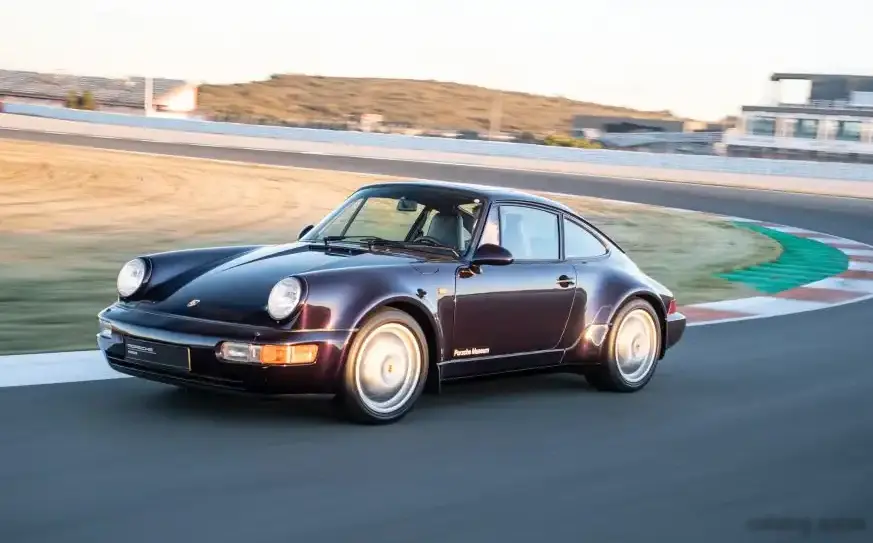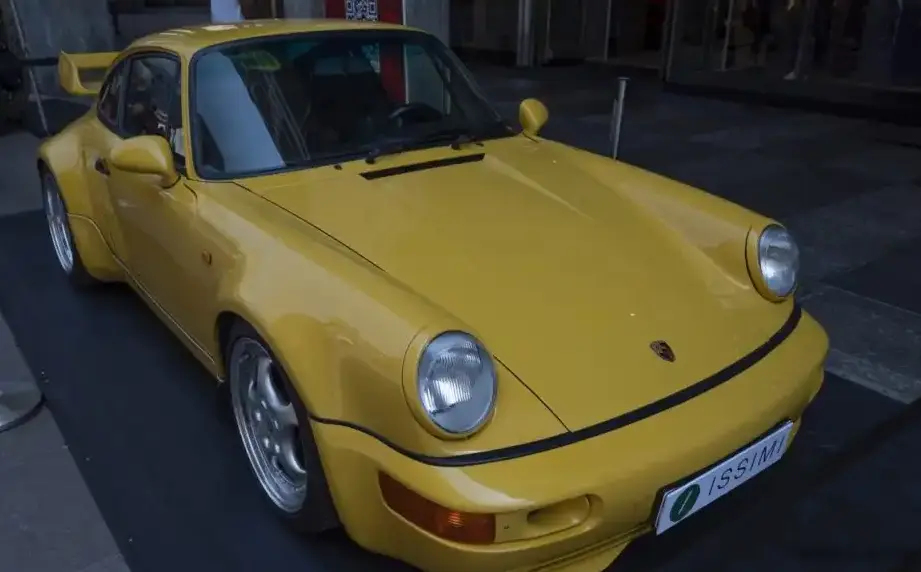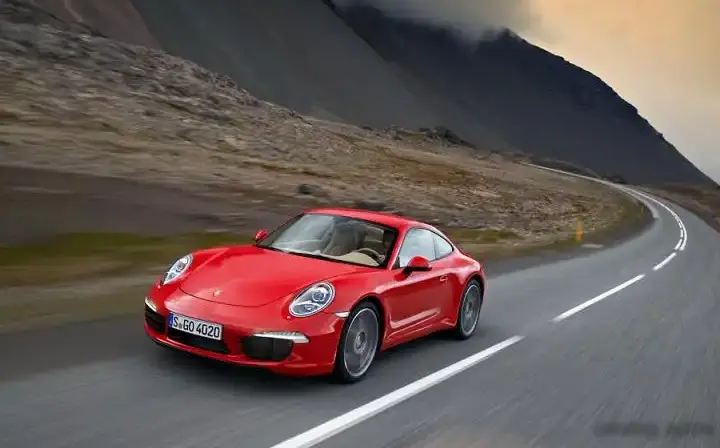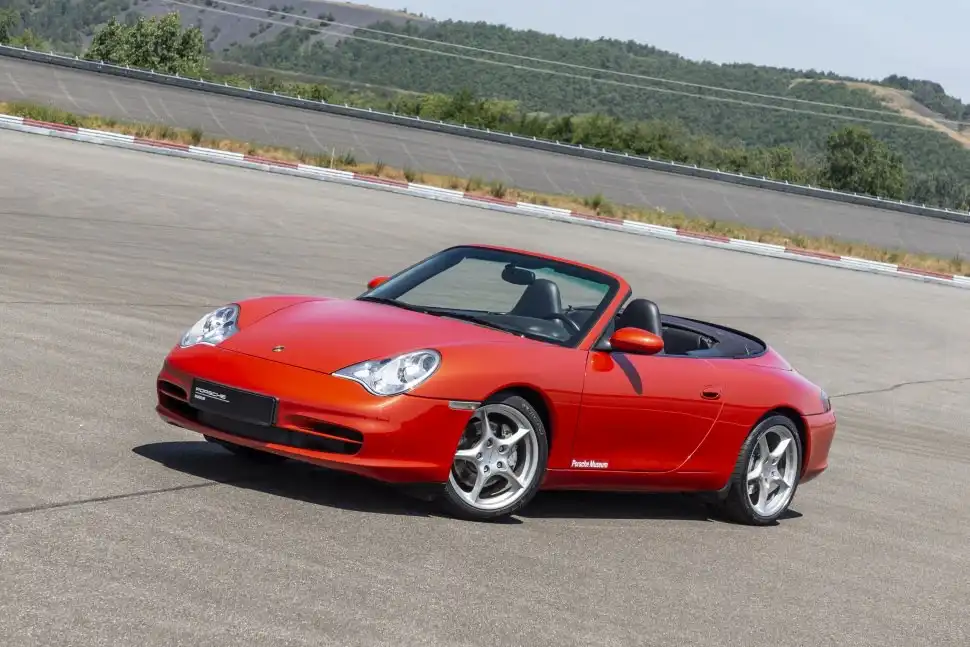
The Porsche 911 Turbo Cabriolet (996, facelift 2001) represents a significant evolution in the iconic 911 lineage, blending open-top motoring with the exhilarating performance of Porsche’s turbocharged engine technology. Produced from 2000 to 2005, this variant occupied the top echelon of the 996 Cabriolet range, offering a compelling combination of speed, luxury, and exclusivity. It was part of the broader 996 generation, a pivotal model that marked Porsche’s transition to water-cooled engines and a more modern production process, while still retaining the core 911 characteristics that enthusiasts cherished. This specific model, with its 3.6-liter twin-turbocharged engine, catered to drivers seeking the ultimate open-air Porsche experience without compromising on performance.
Technical Specifications
| Brand | Porsche |
| Model | 911 |
| Generation | 911 Cabriolet (996, facelift 2001) |
| Type (Engine) | Turbo 3.6 (420 Hp) |
| Start of production | 2000 year |
| End of production | 2005 year |
| Powertrain Architecture | Internal Combustion engine |
| Body type | Cabriolet |
| Seats | 4 |
| Doors | 2 |
| Fuel consumption (economy) – urban | 18.8 l/100 km (12.5 US mpg, 15 UK mpg, 5.3 km/l) |
| Fuel consumption (economy) – extra urban | 12.8 l/100 km (18.4 US mpg, 22.1 UK mpg, 7.8 km/l) |
| Fuel Type | Petrol (Gasoline) |
| Acceleration 0 – 100 km/h | 4.3 sec |
| Acceleration 0 – 62 mph | 4.3 sec |
| Acceleration 0 – 60 mph | 4.1 sec |
| Maximum speed | 305 km/h (189.52 mph) |
| Power | 420 Hp @ 6000 rpm |
| Power per litre | 116.7 Hp/l |
| Torque | 560 Nm @ 2700-4600 rpm (413.03 lb.-ft. @ 2700-4600 rpm) |
| Engine layout | Rear, Longitudinal |
| Engine Model/Code | M96.70 |
| Engine displacement | 3600 cm3 (219.69 cu. in.) |
| Number of cylinders | 6 |
| Engine configuration | Boxer |
| Compression ratio | 9.4:1 |
| Number of valves per cylinder | 4 |
| Fuel injection system | Multi-port manifold injection |
| Engine aspiration | Twin-Turbo, Intercooler |
| Engine oil capacity | 8 l (8.45 US qt, 7.04 UK qt) |
| Coolant | 28 l (29.59 US qt, 24.64 UK qt) |
| Trunk (boot) space – maximum | 110 l (3.88 cu. ft.) |
| Fuel tank capacity | 63 l (16.64 US gal, 13.86 UK gal) |
| Length | 4465 mm (175.79 in.) |
| Width | 1830 mm (72.05 in.) |
| Height | 1295 mm (50.98 in.) |
| Wheelbase | 2350 mm (92.52 in.) |
| Drive wheel | All wheel drive (4×4) |
| Number of gears and type of gearbox | 6 gears, manual transmission |
| Front suspension | Independent type McPherson |
| Rear suspension | Independent multi-link suspension |
| Front brakes | Ventilated discs |
| Rear brakes | Ventilated discs |
| Assisting systems | ABS (Anti-lock braking system) |
| Steering type | Steering rack and pinion |
| Power steering | Hydraulic Steering |
| Tires size | 225/40 R18; 295/30 R18 |
| Wheel rims size | 8J x 18; 11J x 18 |
Powertrain & Engine Architecture
The heart of the 996 Turbo Cabriolet is the M96.70 engine, a 3.6-liter twin-turbocharged flat-six. This engine builds upon the foundation of the naturally aspirated 996 engines but incorporates significant enhancements for increased power and durability. Key features include a revised crankshaft, strengthened connecting rods, and larger fuel injectors. The twin turbochargers, utilizing variable turbine geometry (VTG), minimize turbo lag and provide a broad, flat torque curve. Fuel delivery is managed by a multi-port fuel injection system, ensuring precise fuel metering for optimal combustion. The engine’s boxer configuration contributes to a low center of gravity, enhancing handling and stability. The 6-speed manual transmission was standard, providing precise gear changes and allowing drivers to fully exploit the engine’s power.
Driving Characteristics
The 996 Turbo Cabriolet delivers a driving experience that is both exhilarating and refined. The twin-turbocharged engine provides immense power, with 420 horsepower and 413 lb-ft of torque available across a wide rev range. Acceleration is remarkably quick, with 0-60 mph times consistently in the low 4-second range. The all-wheel-drive system ensures excellent traction, even in challenging conditions. While the manual transmission offers a more engaging driving experience, the Turbo’s power delivery is manageable and rewarding. Compared to the naturally aspirated 996 Carrera models, the Turbo offers a significantly higher level of performance and a more aggressive character. The Cabriolet configuration adds an element of open-air enjoyment, though it does come with a slight weight penalty compared to the coupe.
Equipment & Trim Levels
The 996 Turbo Cabriolet came generously equipped as standard. Interior features included leather upholstery, power-adjustable seats, automatic climate control, and a high-end audio system. Exterior features included a unique Turbo body kit, larger brakes, and distinctive wheels. Optional extras were plentiful, allowing buyers to personalize their vehicles. Popular options included sport seats, a navigation system, and a Tiptronic automatic transmission (though less common in the Turbo). The interior trim could be customized with various leather colors and wood or carbon fiber accents.
Chassis & Braking
The 996 Turbo Cabriolet features a robust chassis designed to handle the increased power output. The suspension utilizes independent McPherson struts at the front and a multi-link setup at the rear, providing a comfortable yet controlled ride. Larger brakes, with ventilated discs at all four corners, provide exceptional stopping power. The all-wheel-drive system distributes power to all four wheels, enhancing traction and stability. The steering is precise and responsive, providing excellent feedback to the driver. Compared to the standard 996 Cabriolet, the Turbo model benefits from a stiffer chassis and upgraded suspension components.
Market Reception & Comparison
The 996 Turbo Cabriolet was widely praised by automotive critics for its exceptional performance, handling, and overall refinement. It was considered a benchmark in the high-performance convertible segment. While fuel economy was not a strong point (around 12.5 mpg city and 18.4 mpg highway), the Turbo’s performance capabilities justified the consumption for many enthusiasts. Compared to the 996 Carrera Cabriolet, the Turbo offered a significant performance advantage, but at a considerably higher price point. The Turbo also differed from the 996 GT3, which focused on track performance and featured a naturally aspirated engine and a more stripped-down interior.
Legacy
The 996 Turbo Cabriolet remains a highly sought-after Porsche model today. Its combination of performance, luxury, and open-top motoring continues to appeal to enthusiasts. The M96.70 engine, while known for potential IMS bearing issues (a common concern across the 996 generation), is generally considered reliable when properly maintained. Values for well-maintained examples have been steadily increasing in recent years, reflecting the model’s growing collectibility. The 996 Turbo Cabriolet represents a pivotal moment in Porsche’s history, bridging the gap between the classic air-cooled 911s and the modern water-cooled generation.