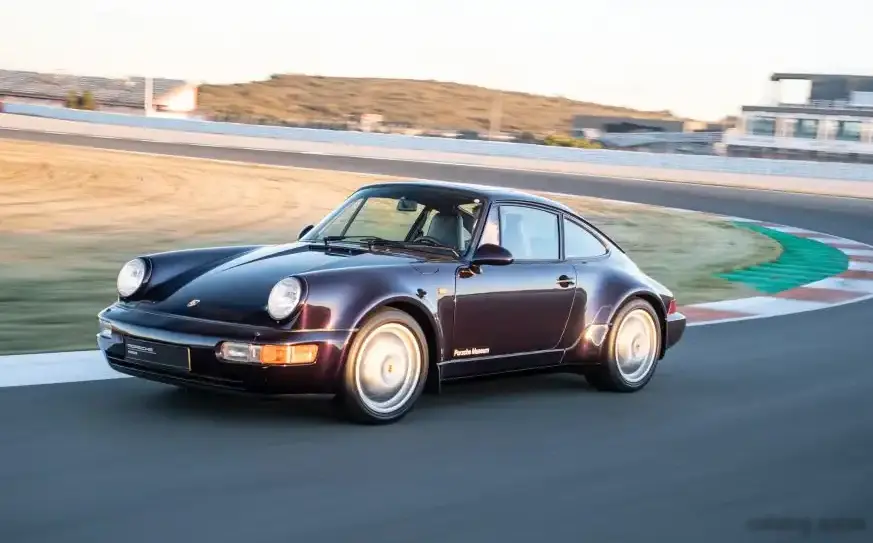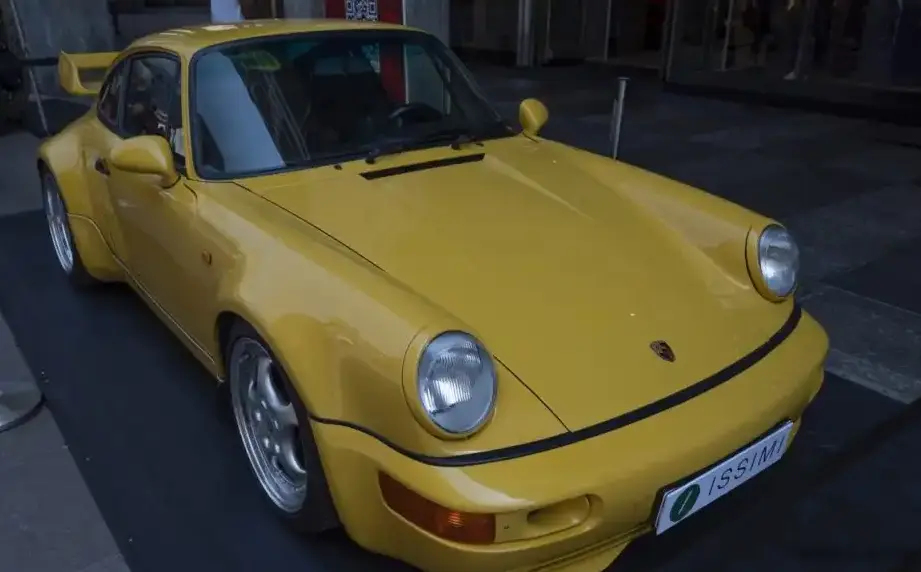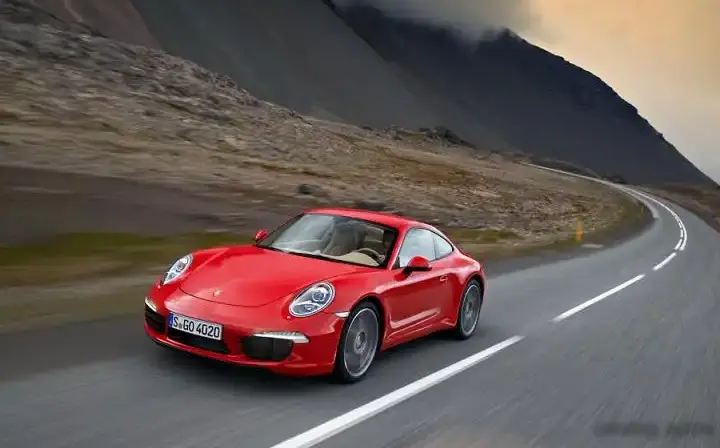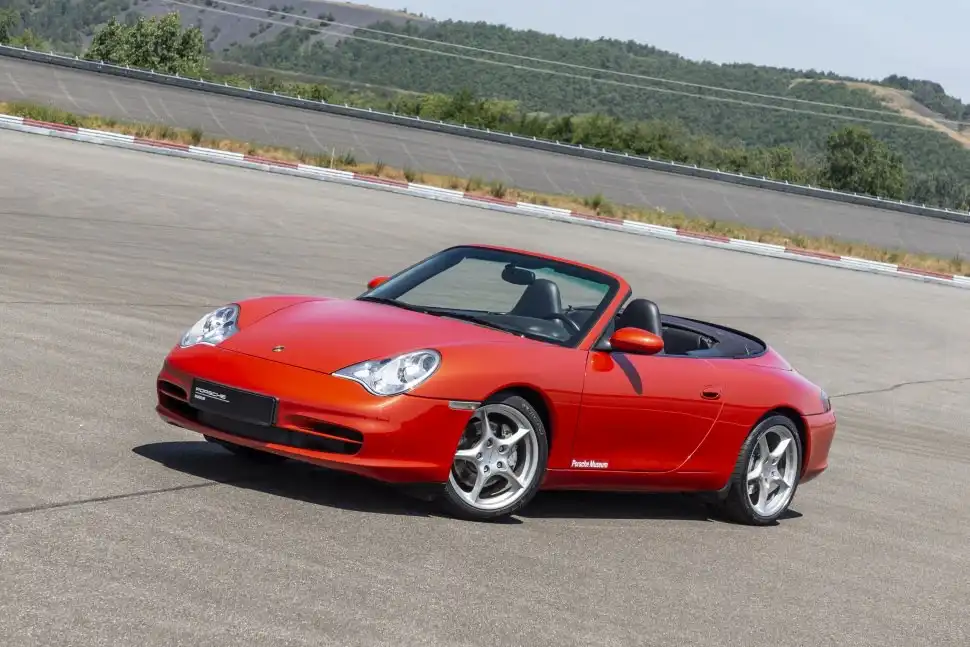
The Porsche 911 Cabriolet (996) Turbo 3.6 with the Tiptronic S transmission, produced from 2000 to 2005, represents a significant evolution in the iconic 911 lineage. This variant, part of the 996 generation’s facelifted models, brought forced induction and advanced transmission technology to the open-top 911 experience. It occupied the high-performance end of the Cabriolet range, positioned above the naturally aspirated models and offering a blend of exhilarating speed and relative ease of use thanks to the automatic gearbox. The 996 generation itself was a pivotal moment for Porsche, marking the first complete redesign of the 911 since its original introduction, and the Turbo models were at the forefront of showcasing the new platform’s capabilities.
Technical Specifications
| Brand | Porsche |
| Model | 911 |
| Generation | 911 Cabriolet (996, facelift 2001) |
| Type (Engine) | Turbo 3.6 (420 Hp) Tiptronic S |
| Start of production | 2000 year |
| End of production | 2005 year |
| Powertrain Architecture | Internal Combustion engine |
| Body type | Cabriolet |
| Seats | 4 |
| Doors | 2 |
| Fuel consumption (economy) – urban | 18.8 l/100 km (12.5 US mpg, 15 UK mpg, 5.3 km/l) |
| Fuel consumption (economy) – extra urban | 12.8 l/100 km (18.4 US mpg, 22.1 UK mpg, 7.8 km/l) |
| Fuel Type | Petrol (Gasoline) |
| Acceleration 0 – 100 km/h | 4.9 sec |
| Acceleration 0 – 62 mph | 4.9 sec |
| Acceleration 0 – 60 mph | 4.7 sec |
| Maximum speed | 295 km/h (183.3 mph) |
| Power | 420 Hp @ 6000 rpm |
| Power per litre | 116.7 Hp/l |
| Torque | 560 Nm @ 2700-4600 rpm (413.03 lb.-ft. @ 2700-4600 rpm) |
| Engine layout | Rear, Longitudinal |
| Engine Model/Code | M96.70 |
| Engine displacement | 3600 cm3 (219.69 cu. in.) |
| Number of cylinders | 6 |
| Engine configuration | Boxer |
| Compression ratio | 9.4:1 |
| Number of valves per cylinder | 4 |
| Fuel injection system | Multi-port manifold injection |
| Engine aspiration | Twin-Turbo, Intercooler |
| Engine oil capacity | 8 l (8.45 US qt, 7.04 UK qt) |
| Coolant | 28 l (29.59 US qt, 24.64 UK qt) |
| Trunk (boot) space – maximum | 100 l (3.53 cu. ft.) |
| Fuel tank capacity | 63 l (16.64 US gal, 13.86 UK gal) |
| Length | 4465 mm (175.79 in.) |
| Width | 1830 mm (72.05 in.) |
| Height | 1295 mm (50.98 in.) |
| Wheelbase | 2350 mm (92.52 in.) |
| Drive wheel | All wheel drive (4×4) |
| Number of gears and type of gearbox | 5 gears, automatic transmission Tiptronic S |
| Front suspension | Independent type McPherson |
| Rear suspension | Independent multi-link suspension |
| Front brakes | Ventilated discs |
| Rear brakes | Ventilated discs |
| Assisting systems | ABS (Anti-lock braking system) |
| Steering type | Steering rack and pinion |
| Power steering | Hydraulic Steering |
| Tires size | 225/40 R18; 295/30 R18 |
| Wheel rims size | 8J x 18; 11J x 18 |
Powertrain & Engine Architecture
At the heart of the 996 Turbo Cabriolet lies the M96.70 engine, a 3.6-liter twin-turbocharged flat-six. This engine builds upon the foundation of the naturally aspirated M96 series, but incorporates significant enhancements to handle the increased power output. Key features include strengthened internal components, revised cylinder heads, and, crucially, two KKK turbochargers with variable turbine geometry (VTG). The VTG system allows for optimized boost pressure across the rev range, minimizing turbo lag and providing a broad torque curve. Fuel delivery is managed by a multi-port fuel injection system, and the engine utilizes an air-to-air intercooler to cool the compressed intake air. The Tiptronic S transmission is a five-speed automatic with a torque converter and the ability for manual gear selection via steering wheel-mounted paddles or the gear selector. This transmission was designed to handle the substantial torque output of the turbocharged engine and offered quicker shift times compared to the standard Tiptronic.
Driving Characteristics
The 996 Turbo Cabriolet Tiptronic S delivers a markedly different driving experience compared to its naturally aspirated siblings. The twin-turbochargers provide a surge of power that is not present in the base Carrera models. While the Tiptronic S transmission offers convenience, it doesn’t quite match the responsiveness of the six-speed manual gearbox available in the Turbo. However, the automatic transmission does provide smooth and relatively quick shifts, making it a more accessible option for drivers who prefer not to constantly engage a clutch. The all-wheel-drive system ensures excellent traction, particularly when launching from a standstill, contributing to the impressive 0-60 mph time of around 4.7 seconds. The car feels planted and stable at high speeds, and the suspension provides a comfortable ride for a performance-oriented vehicle. The gear ratios are tuned to prioritize acceleration, with shorter gearing in the lower ranges to maximize responsiveness.
Equipment & Trim Levels
The 996 Turbo Cabriolet came generously equipped as standard. Interior features included leather upholstery, power-adjustable seats, automatic climate control, and a Bose sound system. The exterior featured unique Turbo-specific bodywork, including wider fenders, a rear wing, and distinctive wheels. Optional extras were plentiful, allowing buyers to personalize their vehicles. These included features like sport seats, carbon fiber interior trim, navigation systems, and various exterior color options. The Tiptronic S transmission was itself an option, with the six-speed manual being the standard transmission for the Turbo models.
Chassis & Braking
The 996 Turbo Cabriolet utilizes a robust chassis designed to handle the increased power and performance. The suspension features independent McPherson struts at the front and a multi-link setup at the rear. The suspension geometry is optimized for both handling and ride comfort. Braking duties are handled by ventilated disc brakes on all four wheels, providing ample stopping power. The car is equipped with Porsche Stability Management (PSM), an electronic stability control system that helps to maintain control in challenging driving conditions. The wider track width compared to the standard Carrera models contributes to improved stability and cornering ability.
Market Reception & Comparison
The 996 Turbo Cabriolet was widely praised by automotive critics for its blistering performance and refined driving experience. The combination of the turbocharged engine, all-wheel drive, and Tiptronic S transmission made it a formidable performer on both the road and the track. Compared to the naturally aspirated 911 Cabriolets, the Turbo offered a significant increase in power and torque, resulting in much quicker acceleration. Fuel economy, however, was considerably lower. Compared to the Turbo models equipped with the manual transmission, the Tiptronic S version was often seen as slightly less engaging, but more user-friendly. Reliability was generally good, although the M96 engine is known for potential IMS bearing issues, a concern that applies to all M96-based 911s.
Legacy
The 996 Turbo Cabriolet remains a highly sought-after Porsche today. Its combination of performance, luxury, and open-top driving enjoyment makes it a desirable classic. While the potential IMS bearing issue requires attention, well-maintained examples command strong prices in the used car market. The 996 Turbo, in general, is credited with bridging the gap between the traditional 911 and the more technologically advanced models that followed. It demonstrated Porsche’s ability to successfully integrate forced induction and advanced transmission technology into the iconic 911 platform, paving the way for future generations of high-performance 911s.