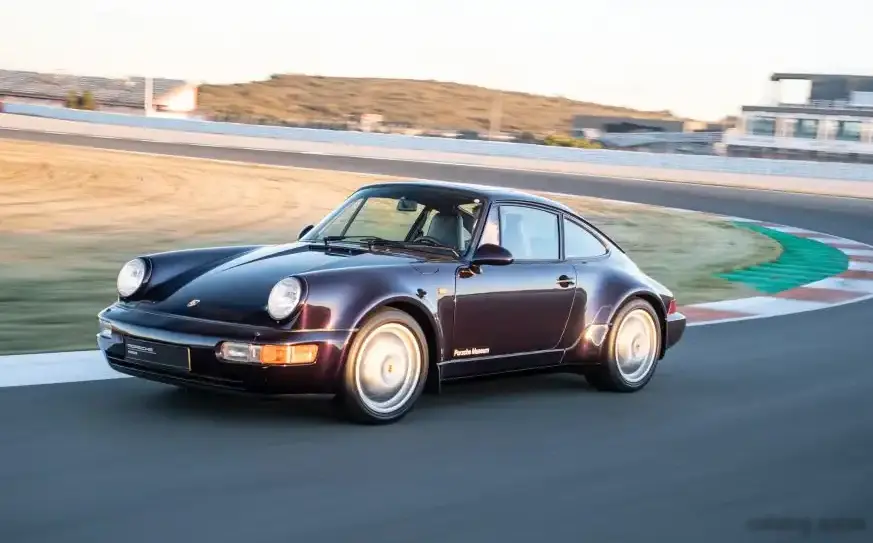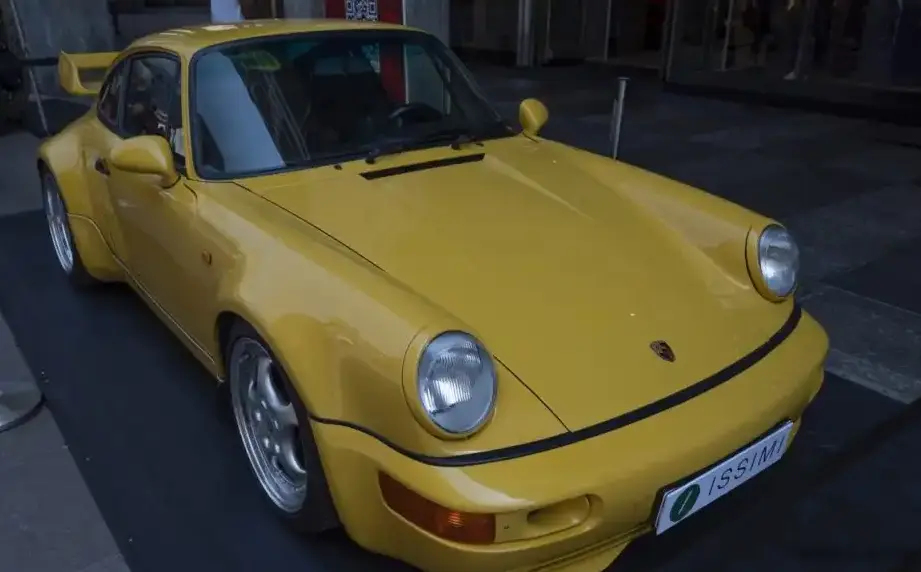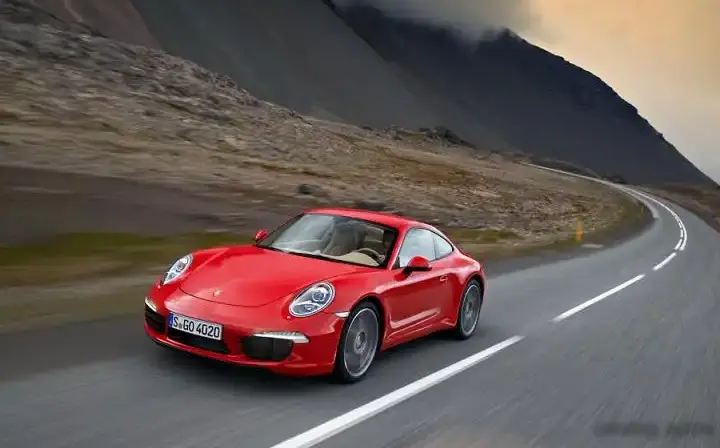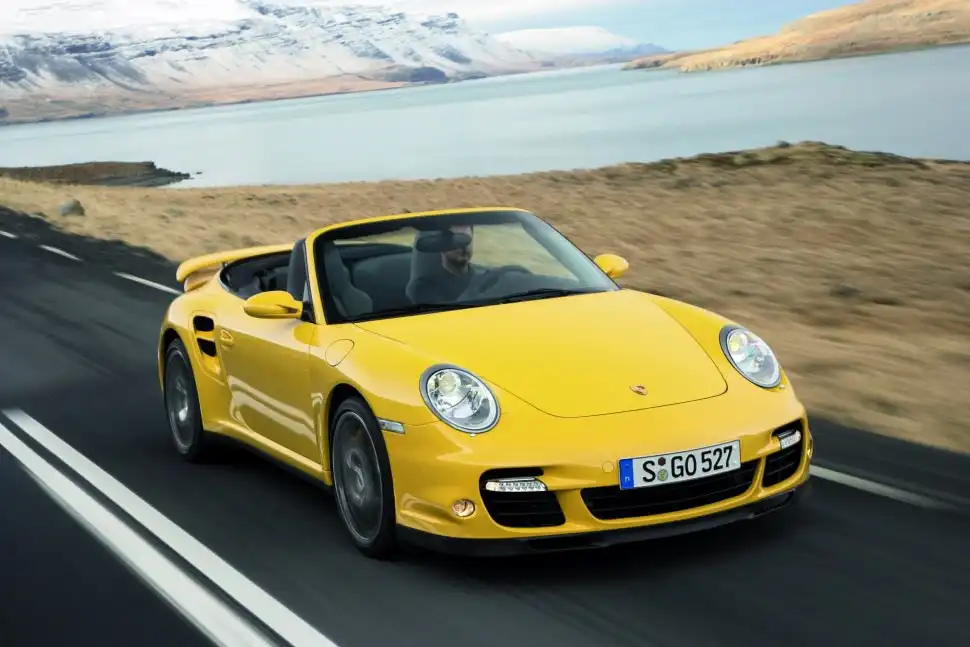
The Porsche 911 Cabriolet (997) Carrera 4S 3.8, produced from 2005 to 2008, represents a significant evolution in the iconic 911 lineage. Positioned as a high-performance, all-wheel-drive variant within the 997 generation (2004-2012), the Carrera 4S 3.8 offered open-top motoring with a substantial increase in power and refinement compared to earlier 997 models. It sat near the top of the 997 Cabriolet range, below the even more potent Carrera 4S models with optional performance upgrades, and above the base Carrera and Carrera 4 variants. The 997 generation itself was a pivotal point for Porsche, blending traditional 911 characteristics with modern technology and improved build quality.
Technical Specifications
| Brand | Porsche |
| Model | 911 |
| Generation | 911 Cabriolet (997) |
| Type (Engine) | Carrera 4S 3.8 (355 Hp) |
| Start of production | 2005 |
| End of production | 2008 |
| Powertrain Architecture | Internal Combustion engine |
| Body type | Cabriolet |
| Seats | 4 |
| Doors | 2 |
| Fuel consumption (economy) – urban | 17.5 l/100 km (13.4 US mpg, 16.1 UK mpg, 5.7 km/l) |
| Fuel consumption (economy) – extra urban | 8.5 l/100 km (27.7 US mpg, 33.2 UK mpg, 11.8 km/l) |
| Fuel consumption (economy) – combined | 11.8 l/100 km (19.9 US mpg, 23.9 UK mpg, 8.5 km/l) |
| CO2 emissions | 285 g/km |
| Fuel Type | Petrol (Gasoline) |
| Acceleration 0 – 100 km/h | 4.9 sec |
| Acceleration 0 – 62 mph | 4.9 sec |
| Acceleration 0 – 60 mph | 4.7 sec |
| Maximum speed | 288 km/h (178.95 mph) |
| Weight-to-power ratio | 4.4 kg/Hp, 227.6 Hp/tonne |
| Weight-to-torque ratio | 3.9 kg/Nm, 256.4 Nm/tonne |
| Power | 355 Hp @ 6600 rpm |
| Power per litre | 92.8 Hp/l |
| Torque | 400 Nm @ 4600 rpm (295.02 lb.-ft. @ 4600 rpm) |
| Engine layout | Rear, Longitudinal |
| Engine Model/Code | M97.01 |
| Engine displacement | 3824 cm3 (233.35 cu. in.) |
| Number of cylinders | 6 |
| Engine configuration | Boxer |
| Compression ratio | 11.8:1 |
| Fuel injection system | Multi-port manifold injection |
| Engine aspiration | Naturally aspirated engine |
| Engine oil capacity | 8.5 l (8.98 US qt | 7.48 UK qt) |
| Coolant | 31 l (32.76 US qt | 27.28 UK qt) |
| Kerb Weight | 1560 kg (3439.21 lbs.) |
| Max. weight | 1930 kg (4254.92 lbs.) |
| Max load | 370 kg (815.71 lbs.) |
| Trunk (boot) space – minimum | 105 l (3.71 cu. ft.) |
| Fuel tank capacity | 67 l (17.7 US gal | 14.74 UK gal) |
| Length | 4427 mm (174.29 in.) |
| Width | 1852 mm (72.91 in.) |
| Height | 1300 mm (51.18 in.) |
| Wheelbase | 2350 mm (92.52 in.) |
| Drag coefficient (Cd) | 0.29 |
| Minimum turning circle | 10.9 m (35.76 ft.) |
| Drive wheel | All wheel drive (4×4) |
| Number of gears | 6 |
| Gearbox type | Manual transmission |
| Front suspension | Independent type McPherson |
| Rear suspension | Independent multi-link suspension |
| Front brakes | Ventilated discs |
| Rear brakes | Ventilated discs |
| Assisting systems | ABS (Anti-lock braking system) |
| Steering type | Steering rack and pinion |
| Power steering | Hydraulic Steering |
| Tires size | 235/35 ZR19; 305/30 ZR19 |
| Wheel rims size | 8J x 19; 11J x 19 |
Powertrain & Engine Architecture
At the heart of the Carrera 4S 3.8 lies the M97.01 engine, a 3.8-liter naturally aspirated flat-six (boxer) engine. This engine represented a significant upgrade from the 3.6-liter units found in earlier 997s, offering increased displacement and refined internals. The M97.01 featured a dry-sump lubrication system, a hallmark of Porsche engineering, which ensures consistent oil supply even under extreme cornering forces. Fuel delivery was handled by a multi-port fuel injection system, carefully calibrated to optimize performance and efficiency. The engine’s 11.8:1 compression ratio contributed to its responsive nature. The six-speed manual transmission was standard, providing precise gear changes and a direct connection to the engine. Porsche’s all-wheel-drive system, Porsche Traction Management (PTM), distributed power between the front and rear axles, enhancing traction and stability, particularly in adverse weather conditions.
Driving Characteristics
The Carrera 4S 3.8 offered a compelling blend of performance and usability. The increased displacement and power output resulted in noticeably quicker acceleration compared to the 3.6-liter models. The 0-60 mph sprint took approximately 4.7 seconds, and the car could reach a top speed of 178.95 mph. The all-wheel-drive system provided exceptional grip, inspiring confidence on both dry and wet roads. The manual transmission, while requiring more driver involvement than the optional Tiptronic S automatic, offered a more engaging driving experience. The engine’s torque curve was broad and accessible, making it easy to drive in everyday situations. However, the Carrera 4S 3.8 wasn’t solely about outright speed; it also delivered a refined and comfortable ride, making it suitable for long-distance cruising.
Equipment & Trim Levels
The Carrera 4S 3.8 came standard with a generous array of features, including leather upholstery, automatic climate control, a Bose sound system, and bi-xenon headlights. Optional extras were plentiful, allowing buyers to personalize their cars to their specific tastes. Popular options included sport seats, a navigation system, a sunroof, and various interior trim packages. The Cabriolet models featured a fully automatic retractable soft top, which could be lowered or raised in a matter of seconds. Interior trim options ranged from standard leather to more exclusive materials like carbon fiber and Alcantara.
Chassis & Braking
The 997 Carrera 4S 3.8 utilized a sophisticated chassis design, featuring independent suspension at all four corners. The front suspension employed McPherson struts, while the rear suspension utilized a multi-link setup. This configuration provided excellent handling and ride comfort. Braking duties were handled by ventilated discs at all four corners, providing ample stopping power. The anti-lock braking system (ABS) and Porsche Stability Management (PSM) further enhanced safety and control. The Carrera 4S 3.8 also featured a hydraulic power steering system, offering precise and responsive steering feel.
Market Reception & Comparison
The 997 Carrera 4S 3.8 was widely praised by automotive critics for its performance, handling, and refinement. It was considered a significant improvement over earlier 997 models, offering a more engaging and rewarding driving experience. Compared to the base Carrera and Carrera 4, the 4S 3.8 offered a substantial power increase and the added security of all-wheel drive. While the fuel economy wasn’t exceptional (around 19.9 US mpg combined), it was considered acceptable for a high-performance sports car. Reliability was generally good, although some owners reported issues with the intermediate shaft (IMS) bearing, a common concern for some 997 models.
Legacy
The Porsche 911 Cabriolet (997) Carrera 4S 3.8 remains a highly desirable sports car in the used car market. Its combination of performance, style, and relative reliability has ensured its enduring appeal. While the IMS bearing issue is a potential concern, many owners have proactively addressed it with preventative maintenance. The 997 generation is widely regarded as a sweet spot in the 911 lineage, offering a classic Porsche driving experience with modern amenities. The Carrera 4S 3.8, in particular, represents a compelling choice for enthusiasts seeking a high-performance, all-wheel-drive 911 Cabriolet.