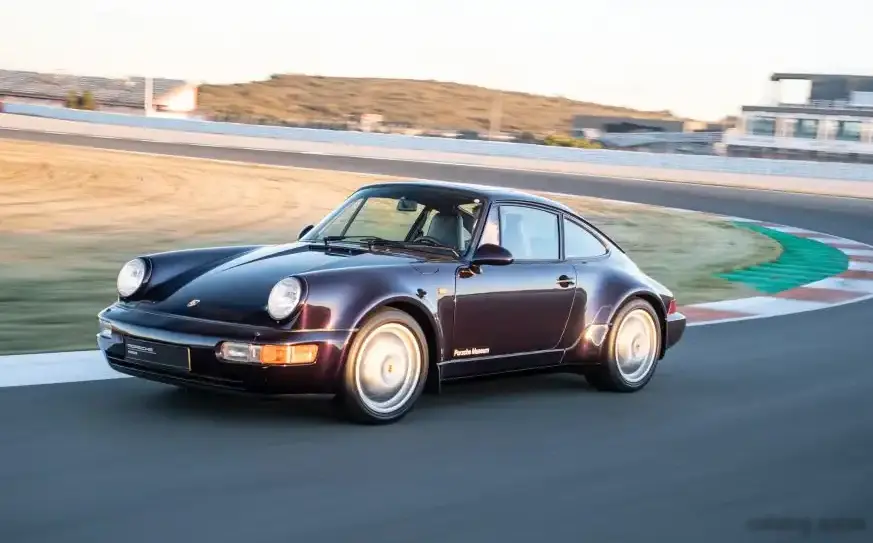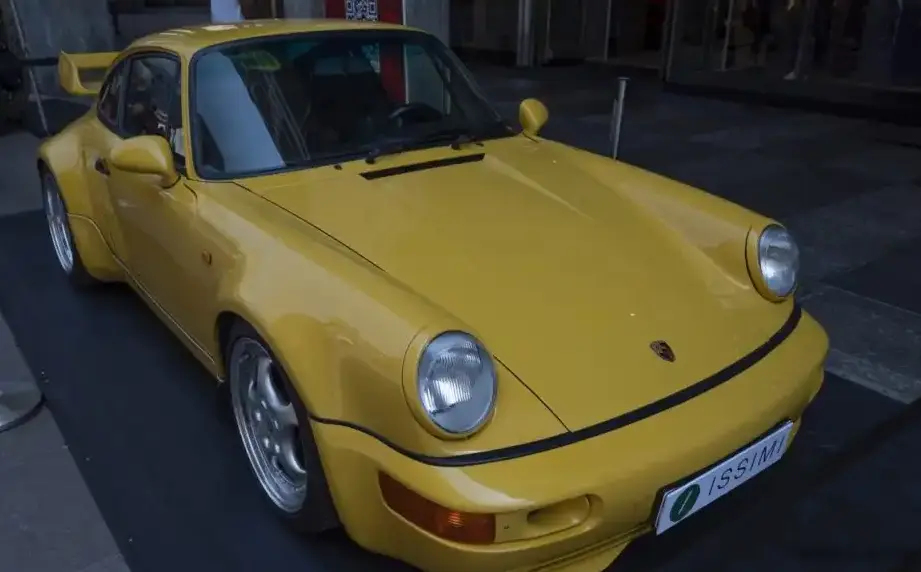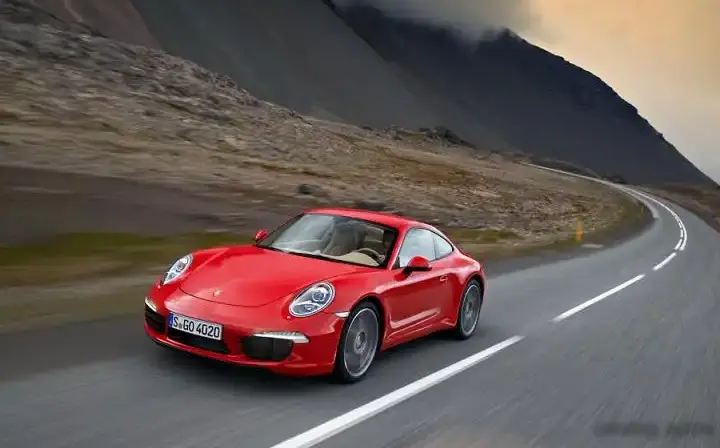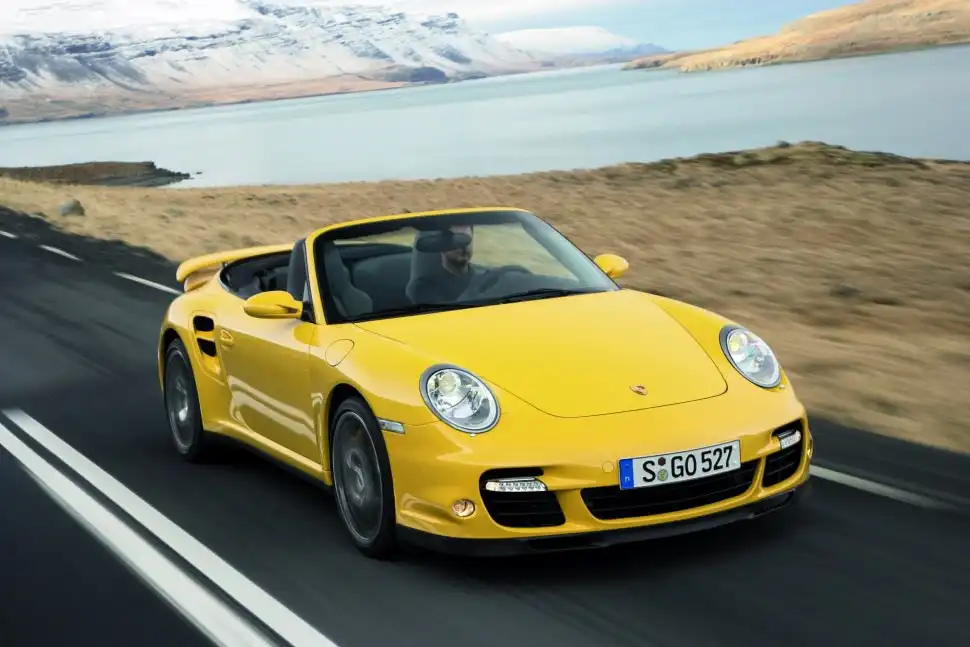
The Porsche 911 Cabriolet (997) Carrera S 3.8, produced from 2006 to 2008, represents a significant evolution in the iconic 911 lineage. Falling within the second generation of the 997 series, this variant offered an open-top experience combined with a substantial performance upgrade over the base Carrera models. It occupied a mid-to-high position within the 997 Cabriolet range, appealing to drivers seeking a blend of exhilarating performance and open-air driving pleasure. The 997 generation as a whole marked a move towards more modern technology and improved build quality while retaining the classic 911 silhouette and driving dynamics.
Technical Specifications
| Brand | Porsche |
| Model | 911 |
| Generation | 911 Cabriolet (997) |
| Type (Engine) | Carrera S 3.8 (355 Hp) |
| Start of production | 2006 |
| End of production | 2008 |
| Powertrain Architecture | Internal Combustion engine |
| Body type | Cabriolet |
| Seats | 4 |
| Doors | 2 |
| Fuel consumption (urban) | 17.3 l/100 km (13.6 US mpg, 16.3 UK mpg, 5.8 km/l) |
| Fuel consumption (extra urban) | 8.4 l/100 km (28 US mpg, 33.6 UK mpg, 11.9 km/l) |
| Fuel consumption (combined) | 11.6 l/100 km (20.3 US mpg, 24.4 UK mpg, 8.6 km/l) |
| CO2 emissions | 280 g/km |
| Fuel Type | Petrol (Gasoline) |
| Acceleration 0 – 100 km/h | 4.9 sec |
| Acceleration 0 – 62 mph | 4.9 sec |
| Acceleration 0 – 60 mph | 4.7 sec |
| Maximum speed | 293 km/h (182.06 mph) |
| Emission standard | Euro 4 |
| Weight-to-power ratio | 4.2 kg/Hp, 235.9 Hp/tonne |
| Weight-to-torque ratio | 3.8 kg/Nm, 265.8 Nm/tonne |
| Power | 355 Hp @ 6600 rpm |
| Power per litre | 92.8 Hp/l |
| Torque | 400 Nm @ 4600 rpm (295.02 lb.-ft. @ 4600 rpm) |
| Engine layout | Rear, Longitudinal |
| Engine Model/Code | M97.01 |
| Engine displacement | 3824 cm3 (233.35 cu. in.) |
| Number of cylinders | 6 |
| Engine configuration | Boxer |
| Compression ratio | 11.8:1 |
| Number of valves per cylinder | 4 |
| Fuel injection system | Multi-port manifold injection |
| Engine aspiration | Naturally aspirated engine |
| Valvetrain | DOHC |
| Engine oil capacity | 8.5 l (8.98 US qt | 7.48 UK qt) |
| Coolant | 31 l (32.76 US qt | 27.28 UK qt) |
| Kerb Weight | 1505 kg (3317.96 lbs) |
| Max. weight | 1885 kg (4155.71 lbs) |
| Max load | 380 kg (837.76 lbs) |
| Fuel tank capacity | 64 l (16.91 US gal | 14.08 UK gal) |
| Length | 4427 mm (174.29 in) |
| Width | 1808 mm (71.18 in) |
| Height | 1300 mm (51.18 in) |
| Wheelbase | 2350 mm (92.52 in) |
| Drag coefficient (Cd) | 0.29 |
| Minimum turning circle | 10.9 m (35.76 ft) |
Powertrain & Engine Architecture
At the heart of the 997 Carrera S Cabriolet lies the M97.01 engine, a 3.8-liter naturally aspirated flat-six (boxer) engine. This engine represented a significant upgrade from the standard Carrera’s 3.6-liter unit, delivering 355 horsepower at 6,600 rpm and 400 Nm (295 lb-ft) of torque at 4,600 rpm. The engine utilizes a multi-port fuel injection system, ensuring precise fuel delivery for optimal combustion. The DOHC (Dual Overhead Camshaft) valvetrain, with four valves per cylinder, further enhances breathing and contributes to the engine’s high-revving nature. The engine’s dry-sump lubrication system, a hallmark of Porsche engineering, ensures consistent oil supply even under extreme cornering forces. While a six-speed manual transmission was standard, the Carrera S was also available with an optional five-speed Tiptronic S automatic transmission. This automatic featured manual shift capability, allowing drivers to select gears for more control.
Driving Characteristics
The 997 Carrera S Cabriolet with the automatic transmission offered a unique driving experience. While not as engaging as the manual version for purists, the Tiptronic S provided smooth and relatively quick shifts. The increased power and torque of the 3.8-liter engine, compared to the base Carrera, resulted in noticeably quicker acceleration. The 0-60 mph sprint took approximately 4.7 seconds, and top speed was rated at 182 mph. The automatic transmission’s gear ratios were tuned to balance performance and fuel efficiency. In everyday driving, the automatic offered convenience, particularly in urban environments. However, the manual mode allowed drivers to exploit the engine’s power band during spirited driving. The rear-wheel-drive configuration and the engine’s rearward placement contributed to the 911’s characteristic handling balance, though the Cabriolet’s softer chassis compared to the Coupe did introduce a slight degree of body roll.
Equipment & Trim Levels
The Carrera S Cabriolet came standard with a generous array of features. Interior appointments included leather upholstery, power-adjustable seats, and a high-quality audio system. Standard exterior features included 19-inch alloy wheels, bi-xenon headlights, and a power-operated soft top. Optional extras were plentiful, allowing buyers to personalize their vehicles. Popular options included Porsche Active Suspension Management (PASM), which adjusted the damping characteristics for improved ride comfort and handling, and a navigation system. Sport Chrono Package was also available, adding a stopwatch, launch control, and a more aggressive engine map. Interior trim options included various leather colors and wood or carbon fiber accents.
Chassis & Braking
The 997 Carrera S Cabriolet utilized an independent suspension system at all four corners. The front suspension employed McPherson struts with coil springs and an anti-roll bar, while the rear featured a multi-link setup. The Cabriolet’s chassis was reinforced compared to earlier 911s to compensate for the lack of a fixed roof, but it remained slightly less rigid than the Coupe. Braking duties were handled by ventilated discs on all four wheels. The braking system was enhanced by ABS (Anti-lock Braking System) and Porsche Stability Management (PSM), providing enhanced stability and control. The steering system was a rack-and-pinion setup with hydraulic power assistance, offering precise and responsive steering feel.
Market Reception & Comparison
The 997 Carrera S Cabriolet was generally well-received by automotive critics. It was praised for its powerful engine, engaging handling, and luxurious interior. The automatic transmission was considered a competent option, though some reviewers preferred the more involving experience of the manual gearbox. Compared to the base Carrera Cabriolet, the S model offered a significant performance advantage. Against competitors like the Mercedes-Benz SL and BMW Z8, the 911 Carrera S Cabriolet stood out for its unique driving dynamics and iconic design. Fuel economy, while not a primary concern for buyers in this segment, was reasonable for a high-performance sports car, averaging around 20 mpg in combined driving. Reliability was generally good, though maintenance costs could be high due to the Porsche’s complex engineering.
Legacy
The 997 Carrera S Cabriolet remains a desirable sports car in the used market today. The M97.01 engine is known for its durability, although regular maintenance is crucial. The intermediate service (IMS) bearing issue, prevalent in some earlier 997 models, is less of a concern with the 3.8-liter engines, but it’s still a factor to consider during pre-purchase inspections. The 997 generation is widely regarded as a sweet spot in the 911 lineage, offering a blend of classic Porsche character and modern technology. The Carrera S Cabriolet, in particular, provides a compelling combination of performance, luxury, and open-air driving enjoyment, ensuring its continued appeal to enthusiasts for years to come.