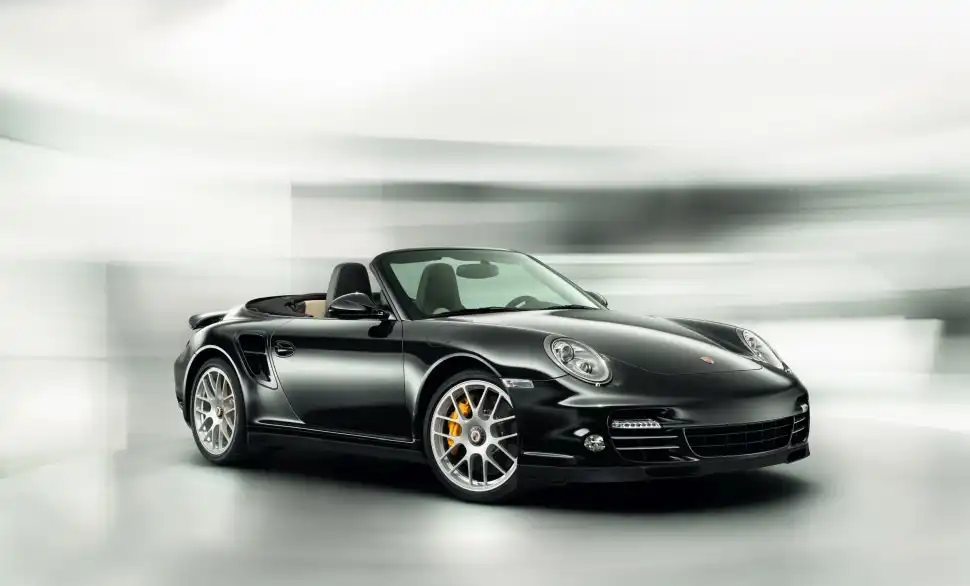
The Porsche 911 Cabriolet Carrera 3.6 (345 hp), produced from 2008 to 2012, represents a significant iteration of the iconic 911 lineage. This variant falls within the 997 generation, specifically the facelifted model introduced in 2008, often referred to as the 997.2. Positioned as a mid-range offering within the 911 Cabriolet lineup, it bridged the gap between the base Carrera models and the more performance-focused Carrera S variants. The 997.2 facelift brought with it a host of improvements over the original 997, including direct fuel injection, a revised engine management system, and subtle styling updates, enhancing both performance and efficiency.
Technical Specifications
| Brand | Porsche |
| Model | 911 |
| Generation | 911 Cabriolet (997, facelift 2008) |
| Type (Engine) | Carrera 3.6 (345 Hp) |
| Start of production | 2008 |
| End of production | 2012 |
| Powertrain Architecture | Internal Combustion engine |
| Body type | Cabriolet |
| Seats | 4 |
| Doors | 2 |
| Fuel consumption (economy) – urban | 15.6 l/100 km (15.1 US mpg, 18.1 UK mpg, 6.4 km/l) |
| Fuel consumption (economy) – extra urban | 7.5 l/100 km (31.4 US mpg, 37.7 UK mpg, 13.3 km/l) |
| Fuel consumption (economy) – combined | 10.4 l/100 km (22.6 US mpg, 27.2 UK mpg, 9.6 km/l) |
| CO2 emissions | 245 g/km |
| Fuel Type | Petrol (Gasoline) |
| Acceleration 0 – 100 km/h | 5.1 sec |
| Acceleration 0 – 62 mph | 5.1 sec |
| Acceleration 0 – 60 mph | 4.8 sec |
| Maximum speed | 289 km/h (179.58 mph) |
| Emission standard | Euro 5 |
| Weight-to-power ratio | 4.3 kg/Hp, 230 Hp/tonne |
| Weight-to-torque ratio | 3.8 kg/Nm, 260 Nm/tonne |
| Power | 345 Hp @ 6500 rpm |
| Power per litre | 95.5 Hp/l |
| Torque | 390 Nm @ 4400 rpm (287.65 lb.-ft. @ 4400 rpm) |
| Engine layout | Rear, Longitudinal |
| Engine Model/Code | MA1.02 |
| Engine displacement | 3614 cm3 (220.54 cu. in.) |
| Engine configuration | Boxer |
| Compression ratio | 12.5:1 |
| Fuel injection system | Direct injection |
| Engine aspiration | Naturally aspirated engine |
| Engine oil capacity | 7.5 l (7.93 US qt, 6.6 UK qt) |
| Coolant | 28.9 l (30.54 US qt, 25.43 UK qt) |
| Kerb Weight | 1500 kg (3306.93 lbs) |
| Max. weight | 1880 kg (4144.69 lbs) |
| Max load | 380 kg (837.76 lbs) |
| Trunk (boot) space – maximum | 135 l (4.77 cu. ft.) |
| Fuel tank capacity | 64 l (16.91 US gal, 14.08 UK gal) |
| Length | 4435 mm (174.61 in) |
| Width | 1808 mm (71.18 in) |
| Height | 1310 mm (51.57 in) |
| Wheelbase | 2350 mm (92.52 in) |
| Drag coefficient (Cd) | 0.30 |
| Minimum turning circle | 10.9 m (35.76 ft) |
| Drivetrain Architecture | Rear wheel drive |
| Number of gears and type of gearbox | 6 gears, manual transmission |
| Front suspension | Independent type McPherson |
| Rear suspension | Independent multi-link suspension |
| Front brakes | Ventilated discs |
| Rear brakes | Ventilated discs |
| Assisting systems | ABS (Anti-lock braking system) |
| Steering type | Steering rack and pinion |
| Power steering | Hydraulic Steering |
| Tires size | 235/40 ZR18; 265/40 ZR18 |
| Wheel rims size | 8J x 18; 10.5J x 18 |
Powertrain & Engine Architecture
At the heart of the 911 Carrera 3.6 lies the MA1.02 engine, a 3.6-liter naturally aspirated flat-six (boxer) engine. The 997.2 facelift brought direct fuel injection (DFI) to this engine, a significant upgrade from the port fuel injection used in the earlier 997. DFI allows for more precise fuel metering, resulting in improved power, efficiency, and reduced emissions. The engine produces 345 horsepower at 6,500 rpm and 390 Nm (287.65 lb-ft) of torque at 4,400 rpm. The engine features a relatively high 12.5:1 compression ratio, contributing to its performance. The standard transmission for this model was a six-speed manual, though a five-speed Tiptronic S automatic transmission was also available. The automatic transmission, while offering convenience, was often criticized for being less responsive than the manual and slightly impacting fuel economy.
Driving Characteristics
The 911 Carrera 3.6 with the manual transmission delivers a classic Porsche driving experience. Acceleration from 0 to 60 mph takes approximately 4.8 seconds, and it reaches a top speed of 179.58 mph. The engine’s power delivery is linear and predictable, making it accessible for drivers of varying skill levels. The rear-engine layout provides unique handling characteristics, with a tendency towards oversteer, but the well-tuned suspension and precise steering mitigate this, offering a balanced and engaging drive. The automatic transmission, while smooth, alters the driving experience, offering slightly slower acceleration and a less direct connection to the engine. Gear ratios are optimized for both acceleration and cruising, providing adequate power in most situations.
Equipment & Trim Levels
The 911 Carrera 3.6 Cabriolet came standard with a generous array of features, including leather upholstery, automatic climate control, a Bose sound system, and bi-xenon headlights. Optional extras were plentiful, allowing buyers to personalize their vehicles. Popular options included sport seats, a navigation system, a sunroof, and various interior trim packages. The Cabriolet models featured a fully automatic retractable soft top, which could be raised or lowered in approximately 11 seconds. Interior materials were of high quality, reflecting Porsche’s commitment to luxury and craftsmanship.
Chassis & Braking
The 997.2 Carrera 3.6 utilizes an independent suspension system, with McPherson struts at the front and a multi-link setup at the rear. This configuration provides a comfortable ride while maintaining excellent handling characteristics. Brakes are ventilated discs on all four wheels, providing ample stopping power. ABS (Anti-lock Braking System) is standard. The chassis is constructed from a combination of steel and aluminum, contributing to its rigidity and relatively low weight. The steering system is a rack-and-pinion setup with hydraulic power assistance, offering precise and responsive steering feel.
Market Reception & Comparison
The 911 Carrera 3.6 Cabriolet was well-received by automotive critics, who praised its performance, handling, and overall refinement. Compared to the base Carrera models, the 3.6 offered a noticeable increase in power and torque, enhancing the driving experience. However, the Carrera S models provided even more performance, albeit at a higher price point. The 1.8L Automatic versions were often seen as a good balance between performance and usability, appealing to drivers who wanted the 911 experience without the added complexity of a manual transmission or the higher cost of the S model. Fuel economy, while not a primary concern for 911 buyers, was respectable for a sports car of its caliber.
Legacy
The Porsche 911 Carrera 3.6 (997.2) has proven to be a reliable and durable sports car. The direct fuel injection system, introduced with the facelift, has generally proven to be robust. Regular maintenance, including oil changes and inspections, is crucial for long-term reliability. On the used car market, these models are highly sought after, commanding premium prices due to their performance, iconic status, and relative scarcity. The 997 generation is often considered by enthusiasts to be a sweet spot in the 911 lineage, offering a blend of classic Porsche characteristics and modern technology.