Technical Specifications
| Brand | Porsche |
| Model | 911 |
| Generation | 911 Cabriolet (997, facelift 2008) |
| Type (Engine) | Carrera 3.6 (345 Hp) PDK |
| Start of production | 2008 |
| End of production | 2012 |
| Powertrain Architecture | Internal Combustion engine |
| Body type | Cabriolet |
| Seats | 4 |
| Doors | 2 |
| Fuel consumption (economy) – urban | 14.9 l/100 km (15.8 US mpg, 19 UK mpg, 6.7 km/l) |
| Fuel consumption (economy) – extra urban | 7 l/100 km (33.6 US mpg, 40.4 UK mpg, 14.3 km/l) |
| Fuel consumption (economy) – combined | 9.9 l/100 km (23.8 US mpg, 28.5 UK mpg, 10.1 km/l) |
| CO2 emissions | 233 g/km |
| Fuel Type | Petrol (Gasoline) |
| Acceleration 0 – 100 km/h | 4.9 sec |
| Acceleration 0 – 62 mph | 4.9 sec |
| Acceleration 0 – 60 mph | 4.7 sec |
| Maximum speed | 287 km/h (178.33 mph) |
| Emission standard | Euro 5 |
| Weight-to-power ratio | 4.4 kg/Hp, 225.5 Hp/tonne |
| Weight-to-torque ratio | 3.9 kg/Nm, 254.9 Nm/tonne |
| Power | 345 Hp @ 6500 rpm |
| Power per litre | 95.5 Hp/l |
| Torque | 390 Nm @ 4400 rpm (287.65 lb.-ft. @ 4400 rpm) |
| Engine layout | Rear, Longitudinal |
| Engine Model/Code | MA1.02 |
| Engine displacement | 3614 cm3 (220.54 cu. in.) |
| Engine configuration | Boxer |
| Compression ratio | 12.5:1 |
| Fuel injection system | Direct injection |
| Engine oil capacity | 7.5 l (7.93 US qt | 6.6 UK qt) |
| Coolant | 28.9 l (30.54 US qt | 25.43 UK qt) |
| Kerb Weight | 1530 kg (3373.07 lbs) |
| Max. weight | 1910 kg (4210.83 lbs) |
| Max load | 380 kg (837.76 lbs) |
| Trunk (boot) space – maximum | 135 l (4.77 cu. ft.) |
| Fuel tank capacity | 64 l (16.91 US gal | 14.08 UK gal) |
| Length | 4435 mm (174.61 in) |
| Width | 1808 mm (71.18 in) |
| Height | 1310 mm (51.57 in) |
| Wheelbase | 2350 mm (92.52 in) |
| Drag coefficient (Cd) | 0.30 |
| Minimum turning circle | 10.9 m (35.76 ft) |
| Drivetrain Architecture | Rear wheel drive |
| Number of gears and type of gearbox | 7 gears, automatic transmission PDK |
| Front suspension | Independent type McPherson |
| Rear suspension | Independent multi-link suspension |
| Front brakes | Ventilated discs |
| Rear brakes | Ventilated discs |
| Assisting systems | ABS (Anti-lock braking system) |
| Steering type | Steering rack and pinion |
| Power steering | Hydraulic Steering |
| Tires size | 235/40 ZR18; 265/40 ZR18 |
| Wheel rims size | 8J x 18; 10.5J x 18 |
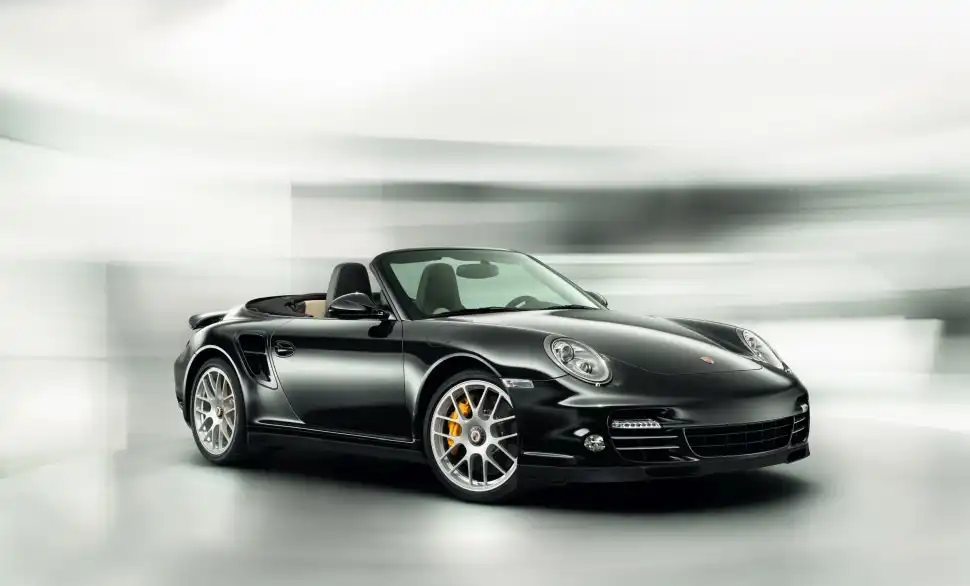
The 997.2 generation 911 Cabriolet, launched in 2008, represented a significant refresh of the 997 platform. The Carrera 3.6 with the PDK transmission was a key component of this update. It built upon the success of the original 997, incorporating direct fuel injection (DFI) for improved efficiency and power delivery, along with subtle styling revisions. The facelift aimed to enhance the 911’s appeal to a broader audience while maintaining its core performance characteristics. The Cabriolet body style offered the open-air experience synonymous with Porsche, making it a popular choice for drivers seeking both performance and enjoyment.
Powertrain & Engine Architecture
At the heart of the Carrera 3.6 PDK lies the MA1.02 engine, a 3.6-liter naturally aspirated flat-six. This engine benefited from the introduction of direct fuel injection, a crucial upgrade over the previous generation. DFI allowed for more precise fuel metering, resulting in increased power output and improved fuel economy. The engine produced 345 horsepower at 6500 rpm and 390 Nm (287.65 lb-ft) of torque at 4400 rpm. The valvetrain employed four valves per cylinder, contributing to the engine’s responsiveness and high-revving nature.
The Porsche Doppelkupplung (PDK) is a seven-speed dual-clutch transmission. Unlike a traditional automatic, the PDK features two separate clutches – one for odd-numbered gears and one for even-numbered gears. This allows for incredibly fast and seamless gear changes, providing both sporty performance and comfortable cruising. The PDK offered both fully automatic and manual shifting modes, controlled via steering wheel-mounted paddles or the gear selector. The transmission’s programming was tuned to balance performance and efficiency, adapting to the driver’s style and road conditions.
Driving Characteristics
The 911 Carrera 3.6 PDK delivered a refined yet engaging driving experience. While not as brutally fast as the Carrera S models, the 345 hp engine provided ample power for spirited driving. The PDK transmission played a crucial role in maximizing the engine’s potential, offering lightning-fast shifts and eliminating the torque interruption associated with traditional automatics. Acceleration from 0 to 60 mph took approximately 4.7 seconds, and the car could reach a top speed of 178.33 mph. The rear-wheel-drive configuration and the 911’s inherent balance contributed to excellent handling characteristics. The suspension, while firm, provided a comfortable ride for everyday use. Compared to manual transmission versions, the PDK offered a more accessible driving experience, particularly in urban environments.
Equipment & Trim Levels
The Carrera 3.6 PDK Cabriolet came standard with a comprehensive list of features, including leather upholstery, automatic climate control, a Bose sound system, and bi-xenon headlights. Optional extras were plentiful, allowing buyers to personalize their vehicles. Popular options included sport seats, a navigation system, a sunroof, and various interior trim packages. The Cabriolet also featured a fully automatic retractable soft top, which could be raised or lowered in a matter of seconds. Interior color choices were extensive, ranging from classic black to more vibrant hues.
Chassis & Braking
The 997.2 Cabriolet utilized a robust chassis with independent suspension at all four corners. The front suspension employed a McPherson strut design, while the rear featured a multi-link setup. This configuration provided excellent handling and stability. The braking system consisted of ventilated discs on all four wheels, providing ample stopping power. Anti-lock braking system (ABS) was standard. The Cabriolet’s chassis was reinforced to compensate for the lack of a fixed roof, ensuring structural rigidity and minimizing body flex.
Market Reception & Comparison
The 911 Carrera 3.6 PDK Cabriolet was well-received by automotive critics. It was praised for its blend of performance, comfort, and refinement. The PDK transmission was particularly lauded for its responsiveness and ease of use. Compared to the base Carrera with a manual transmission, the PDK version offered quicker acceleration and a more relaxed driving experience. Against the more powerful Carrera S models, the 3.6 offered a more affordable entry point into the 911 world, while still delivering a thrilling driving experience. Fuel economy was respectable for a high-performance sports car, averaging around 23.8 US mpg in combined driving.
Legacy
The MA1.02 engine and PDK transmission have proven to be remarkably reliable. With proper maintenance, these powertrains can withstand significant mileage. The 997.2 generation 911, including the Carrera 3.6 PDK Cabriolet, has become a highly sought-after model in the used car market. Its combination of classic 911 styling, modern technology, and engaging driving dynamics makes it a compelling choice for enthusiasts. Values have remained relatively strong, reflecting the enduring appeal of the 911 nameplate and the desirability of this particular variant.