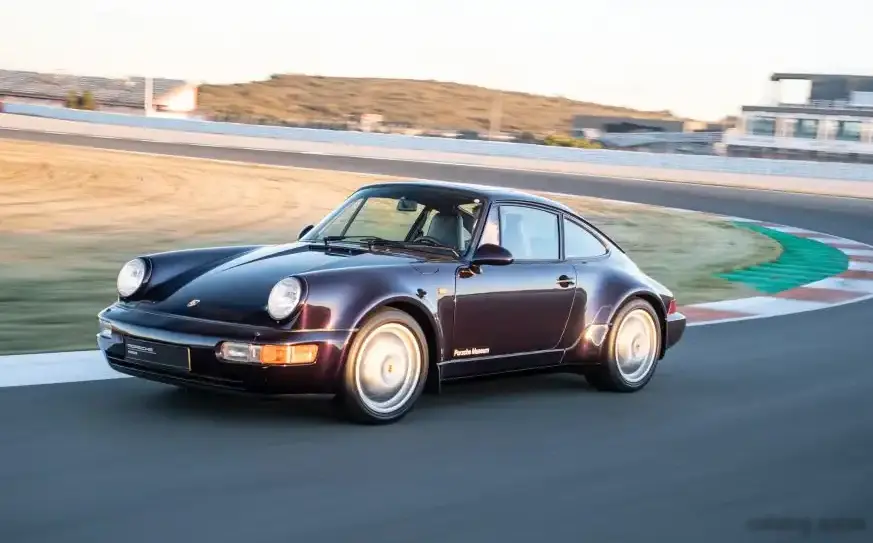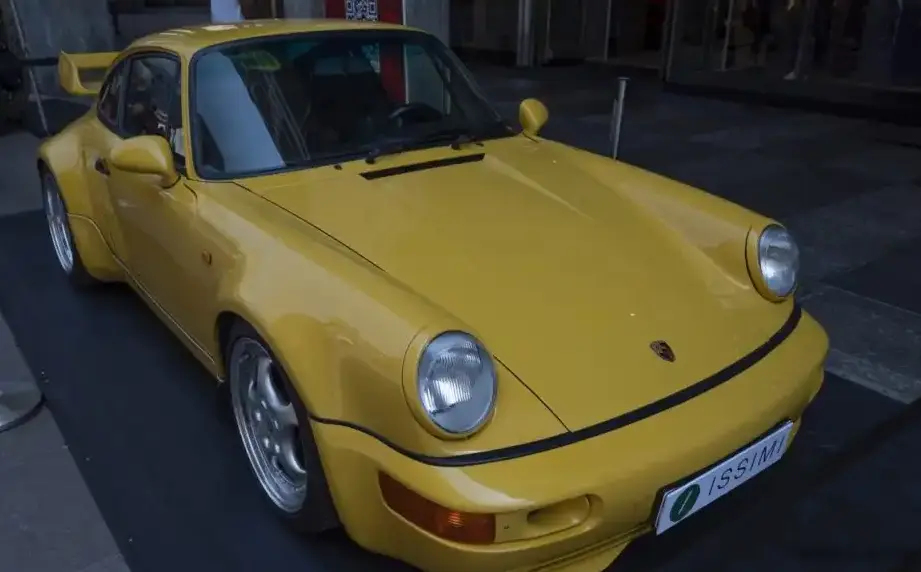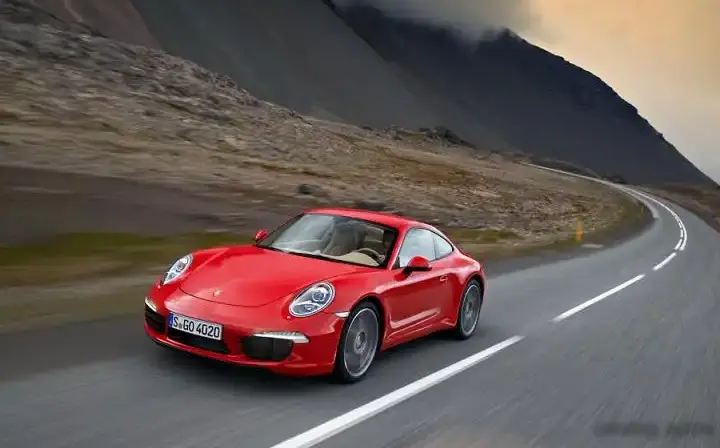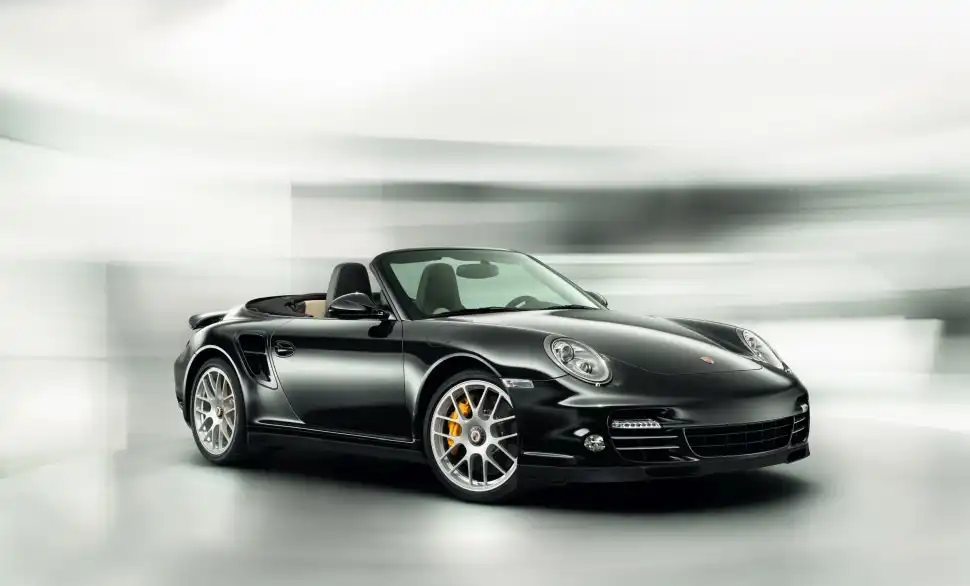
The Porsche 911 Turbo S Cabriolet, produced from 2010 to 2011, represents the pinnacle of open-top performance within the 997.2 generation of the iconic 911. This facelifted version of the 997, introduced in 2009, brought with it a host of improvements including revised styling, enhanced interior features, and most notably, the introduction of the Turbo S variant. The Turbo S Cabriolet combined the exhilarating performance of the Turbo model with the open-air driving experience of a convertible, offering a uniquely potent and luxurious package. It sat at the very top of the 911 Cabriolet range, commanding a significant premium over the standard Carrera and Turbo models.
Technical Specifications
| Brand | Porsche |
| Model | 911 |
| Generation | 911 Cabriolet (997, facelift 2008) |
| Type (Engine) | Turbo S 3.8 (530 Hp) PDK |
| Start of production | 2010 |
| End of production | 2011 |
| Powertrain Architecture | Internal Combustion engine |
| Body type | Cabriolet |
| Seats | 4 |
| Doors | 2 |
| Fuel consumption (economy) – urban (NEDC) | 16.7 l/100 km (14.1 US mpg, 16.9 UK mpg, 6 km/l) |
| Fuel consumption (economy) – extra urban (NEDC) | 8.2 l/100 km (28.7 US mpg, 34.4 UK mpg, 12.2 km/l) |
| Fuel consumption (economy) – combined (NEDC) | 11.5 l/100 km (20.5 US mpg, 24.6 UK mpg, 8.7 km/l) |
| CO2 emissions (NEDC) | 270 g/km |
| Fuel Type | Petrol (Gasoline) |
| Acceleration 0 – 100 km/h | 3.4 sec |
| Acceleration 0 – 62 mph | 3.4 sec |
| Acceleration 0 – 60 mph | 3.2 sec |
| Acceleration 0 – 200 km/h | 11.3 sec |
| Maximum speed | 315 km/h (195.73 mph) |
| Emission standard | Euro 5 |
| Weight-to-power ratio | 3.1 kg/Hp, 319.3 Hp/tonne |
| Weight-to-torque ratio | 2.4 kg/Nm, 421.7 Nm/tonne |
| Power | 530 Hp @ 6250-6750 rpm |
| Power per litre | 139.5 Hp/l |
| Torque | 700 Nm @ 2100-4250 rpm (516.29 lb.-ft. @ 2100-4250 rpm) |
| Engine layout | Rear, Longitudinal |
| Engine Model/Code | MA1.70S |
| Engine displacement | 3800 cm3 (231.89 cu. in.) |
| Number of cylinders | 6 |
| Engine configuration | Boxer |
| Cylinder Bore | 102 mm (4.02 in.) |
| Piston Stroke | 77.5 mm (3.05 in.) |
| Compression ratio | 9.8:1 |
| Number of valves per cylinder | 4 |
| Fuel injection system | Direct injection |
| Engine aspiration | BiTurbo, Intercooler |
| Valvetrain | DOHC, VarioCam Plus |
| Engine oil capacity | 8 l (8.45 US qt | 7.04 UK qt) |
| Coolant | 29 l (30.64 US qt | 25.52 UK qt) |
| Kerb Weight | 1660 kg (3659.67 lbs.) |
| Max. weight | 2010 kg (4431.29 lbs.) |
| Max load | 350 kg (771.62 lbs.) |
| Trunk (boot) space – maximum | 105 l (3.71 cu. ft.) |
| Fuel tank capacity | 67 l (17.7 US gal | 14.74 UK gal) |
| Length | 4450 mm (175.2 in.) |
| Width | 1852 mm (72.91 in.) |
| Width including mirrors | 1952 mm (76.85 in.) |
| Height | 1300 mm (51.18 in.) |
| Wheelbase | 2350 mm (92.52 in.) |
| Drag coefficient (Cd) | 0.32 |
| Minimum turning circle | 10.9 m (35.76 ft.) |
| Drivetrain Architecture | All wheel drive (4×4) |
| Number of gears and type of gearbox | 7 gears, automatic transmission PDK |
| Front suspension | Independent, type McPherson with coil spring and anti-roll bar |
| Rear suspension | Independent multi-link spring suspension with stabilizer |
| Front brakes | Ventilated discs, 380 mm |
| Rear brakes | Ventilated discs, 350 mm |
| Assisting systems | ABS (Anti-lock braking system) |
| Steering type | Steering rack and pinion |
| Power steering | Hydraulic Steering |
| Tires size | Front wheel tires: 235/35 ZR19 Rear wheel tires: 305/30 ZR19 |
| Wheel rims size | Front wheel rims: 8.5J x 19 Rear wheel rims: 11J x 19 |
INTRODUCTION
The 997.2 generation Porsche 911 Turbo S Cabriolet, produced between 2010 and 2011, represented a significant leap forward in performance and technology for Porsche’s iconic sports car. Built on the 997 platform, which debuted in 2004 and received a substantial facelift in 2009, the Turbo S Cabriolet was positioned as the ultimate expression of open-top 911 driving. It combined the exhilarating performance of the Turbo S coupe with the added enjoyment of a retractable soft top. This model year saw Porsche refine the 911 formula, offering a blend of raw power, sophisticated engineering, and everyday usability.
Powertrain & Engine Architecture
At the heart of the 911 Turbo S Cabriolet lies the MA1.70S 3.8-liter twin-turbocharged flat-six engine. This engine, a hallmark of Porsche engineering, produced a formidable 530 horsepower at 6,250-6,750 rpm and 700 Nm (516 lb-ft) of torque between 2,100 and 4,250 rpm. The engine utilized direct fuel injection, a sophisticated valvetrain featuring VarioCam Plus (variable valve timing and lift), and two turbochargers with variable turbine geometry. This allowed for exceptional responsiveness and a broad torque curve. The engine’s layout is a rear-mounted, longitudinal boxer configuration, contributing to a low center of gravity and improved handling. The engine oil capacity is 8 liters, and it requires a specific Porsche-approved oil specification. The engine is mated to Porsche’s seven-speed PDK (Porsche Doppelkupplung) dual-clutch transmission, which provides incredibly fast and smooth gear changes. This transmission is crucial to the car’s blistering acceleration and overall performance.
Driving Characteristics
The 911 Turbo S Cabriolet delivers a driving experience that is both visceral and refined. The PDK transmission, combined with the engine’s immense torque, allows for breathtaking acceleration – 0 to 60 mph in just 3.2 seconds and 0 to 100 km/h in 3.4 seconds. The all-wheel-drive system provides exceptional traction, ensuring that the power is effectively put to the ground, even in challenging conditions. While the Cabriolet body style adds some weight compared to the coupe, the performance penalty is minimal. The steering is precise and communicative, providing the driver with a strong sense of connection to the road. The suspension, tuned for performance, offers a firm but compliant ride, striking a balance between comfort and control. Compared to the standard 911 Carrera Cabriolet, the Turbo S offers a significantly more powerful and engaging driving experience. Compared to the standard Turbo Cabriolet, the ‘S’ model provides even quicker acceleration and more aggressive performance characteristics.
Equipment & Trim Levels
The Turbo S Cabriolet came standard with a comprehensive list of features, reflecting its position as the flagship model. Interior appointments included full leather upholstery, heated and ventilated front seats, a Bose surround sound system, and a navigation system. Standard exterior features included 19-inch alloy wheels, ceramic composite brakes (PCCB), and a sport exhaust system. Optional extras included adaptive sports seats, a carbon fiber interior trim package, and extended leather upholstery. The dashboard layout is typical of the 997 generation, with a central tachometer flanked by gauges for speed, oil temperature, and coolant temperature. The infotainment system, while dated by today’s standards, offered a range of features including a CD player, radio, and Bluetooth connectivity.
Chassis & Braking
The 911 Turbo S Cabriolet features a sophisticated chassis designed to maximize performance and handling. The suspension utilizes independent McPherson struts at the front and a multi-link setup at the rear, both with coil springs and anti-roll bars. The standard fitment of Porsche Ceramic Composite Brakes (PCCB) provides exceptional stopping power and fade resistance. The braking system consists of ventilated discs measuring 380 mm at the front and 350 mm at the rear. The car’s all-wheel-drive system is a permanent all-wheel-drive system, distributing power to all four wheels for optimal traction. The steering is a rack-and-pinion system with hydraulic power assistance, providing precise and responsive steering feel.
Market Reception & Comparison
The 911 Turbo S Cabriolet was widely praised by automotive critics for its exceptional performance, luxurious interior, and overall driving experience. It was lauded as one of the fastest and most capable convertibles on the market. Fuel economy, while not a primary concern for buyers of this vehicle, was reasonable for its performance level, with combined fuel consumption of around 20.5 US mpg. Reliability was generally good, although the complex twin-turbocharged engine and PDK transmission required regular maintenance. Compared to other high-performance convertibles of the time, such as the Ferrari California and the Mercedes-Benz SL63 AMG, the 911 Turbo S Cabriolet offered a unique blend of performance, practicality, and Porsche heritage.
Legacy
The 911 Turbo S Cabriolet (997.2) remains a highly sought-after vehicle in the used car market. Its combination of performance, luxury, and exclusivity has ensured its continued desirability among Porsche enthusiasts. The MA1.70S engine, while complex, has proven to be relatively reliable when properly maintained. The PDK transmission is also known for its durability. However, potential buyers should be aware of the high maintenance costs associated with owning a high-performance Porsche. Today, these cars represent a significant investment, but offer a thrilling and rewarding driving experience that few other vehicles can match. The 997.2 Turbo S Cabriolet solidified the 911’s reputation as a benchmark for sports car performance and engineering.