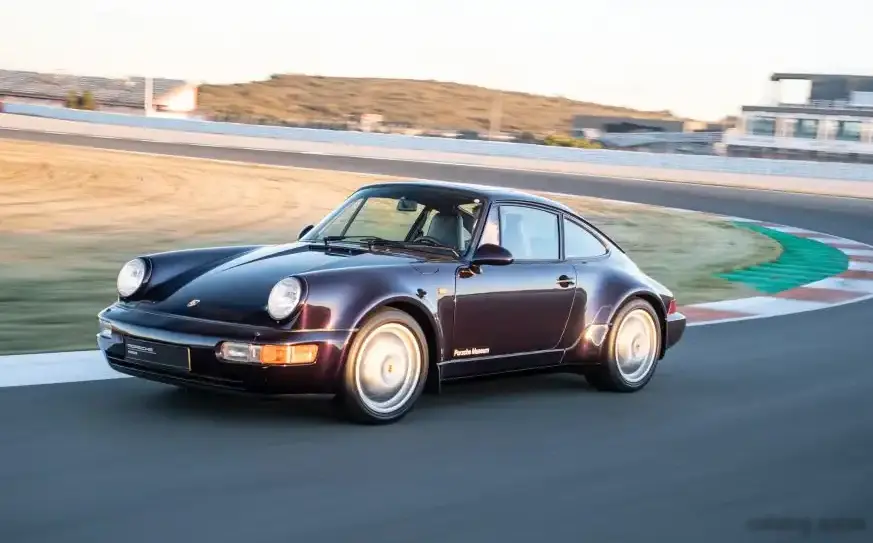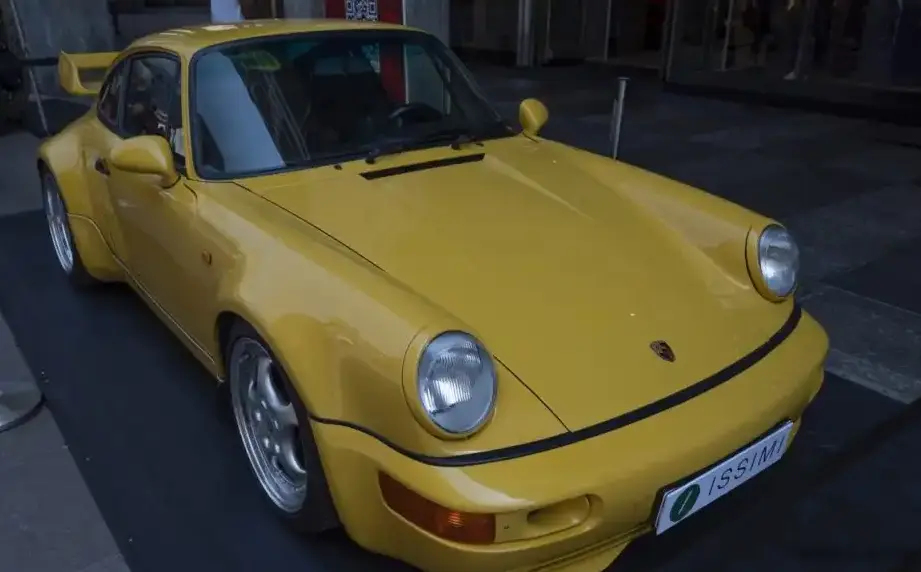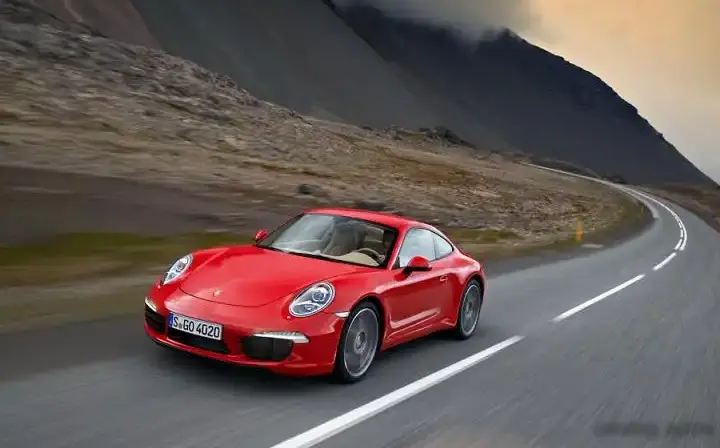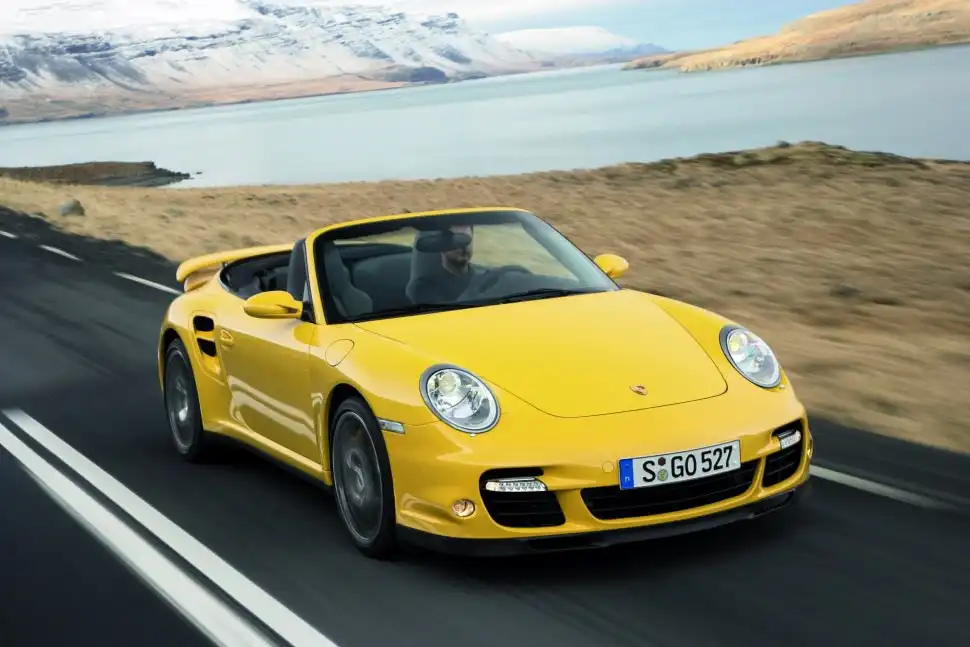
The Porsche 911 Turbo Cabriolet (997) 3.6, produced from 2007 to 2008, represented the pinnacle of open-top performance within the 997 generation of the iconic 911. Positioned as the flagship convertible, it combined the thrill of a turbocharged engine with the open-air experience of a Cabriolet. This variant sat at the top of the 997 Cabriolet range, offering significantly more power and performance than the base Carrera or Carrera S models. It was a relatively short-lived production run, superseded by updated models in subsequent years, making it a sought-after vehicle among Porsche enthusiasts.
Technical Specifications
| Brand | Porsche |
| Model | 911 |
| Generation | 911 Cabriolet (997) |
| Type (Engine) | Turbo 3.6 (480 Hp) |
| Start of production | 2007 |
| End of production | 2008 |
| Powertrain Architecture | Internal Combustion engine |
| Body type | Cabriolet |
| Seats | 4 |
| Doors | 2 |
| Fuel consumption (economy) – urban | 19.2 l/100 km (12.3 US mpg, 14.7 UK mpg, 5.2 km/l) |
| Fuel consumption (economy) – extra urban | 9.5 l/100 km (24.8 US mpg, 29.7 UK mpg, 10.5 km/l) |
| Fuel consumption (economy) – combined | 12.9 l/100 km (18.2 US mpg, 21.9 UK mpg, 7.8 km/l) |
| Fuel Type | Petrol (Gasoline) |
| Acceleration 0 – 100 km/h | 4 sec |
| Acceleration 0 – 62 mph | 4 sec |
| Acceleration 0 – 60 mph | 3.8 sec |
| Maximum speed | 310 km/h (192.63 mph) |
| Emission standard | Euro 4 |
| Weight-to-power ratio | 3.4 kg/Hp, 290 Hp/tonne |
| Weight-to-torque ratio | 2.7 kg/Nm, 374.6 Nm/tonne |
| Power | 480 Hp @ 6000 rpm |
| Power per litre | 133.3 Hp/l |
| Torque | 620 Nm @ 1950-5000 rpm (457.29 lb.-ft. @ 1950-5000 rpm) |
| Engine layout | Rear, Longitudinal |
| Engine Model/Code | M97.70 |
| Engine displacement | 3600 cm3 (219.69 cu. in.) |
| Number of cylinders | 6 |
| Engine configuration | Boxer |
| Cylinder Bore | 100 mm (3.94 in.) |
| Piston Stroke | 76.4 mm (3.01 in.) |
| Compression ratio | 9:1 |
| Number of valves per cylinder | 4 |
| Fuel injection system | Multi-port manifold injection |
| Engine aspiration | Turbocharger, Intercooler |
| Engine oil capacity | 8 l (8.45 US qt | 7.04 UK qt) |
| Coolant | 25 l (26.42 US qt | 22 UK qt) |
| Kerb Weight | 1655 kg (3648.65 lbs.) |
| Max. weight | 2000 kg (4409.25 lbs.) |
| Max load | 345 kg (760.59 lbs.) |
| Fuel tank capacity | 64 l (16.91 US gal | 14.08 UK gal) |
| Length | 4427 mm (174.29 in.) |
| Width | 1808 mm (71.18 in.) |
| Height | 1310 mm (51.57 in.) |
| Wheelbase | 2350 mm (92.52 in.) |
| Drag coefficient (Cd) | 0.31 |
| Minimum turning circle | 10.9 m (35.76 ft.) |
| Drive wheel | All wheel drive (4×4) |
| Number of gears | 6 |
| Gearbox type | Manual transmission |
| Front suspension | Independent, type McPherson with coil spring and anti-roll bar |
| Rear suspension | Independent multi-link suspension |
| Front brakes | Ventilated discs, 350 mm |
| Rear brakes | Ventilated discs, 350 mm |
| Assisting systems | ABS (Anti-lock braking system) |
| Steering type | Steering rack and pinion |
| Power steering | Hydraulic Steering |
| Tires size | 235/35 ZR19; 305/30 ZR19 |
| Wheel rims size | 8.5J x 19; 11J x 19 |
Powertrain & Engine Architecture
The heart of the 997 Turbo Cabriolet is the M97.70 engine, a 3.6-liter twin-turbocharged flat-six (boxer) engine. This engine builds upon the foundation of the Mezger engine family, renowned for its robustness and performance. The twin turbochargers, with variable turbine geometry (VTG), provide exceptional responsiveness and minimize turbo lag. Fuel is delivered via multi-port fuel injection, carefully managed by the engine control unit (ECU) to optimize combustion. The engine produces 480 horsepower at 6000 rpm and a substantial 620 Nm (457 lb-ft) of torque available from a low 1950 rpm, sustaining through 5000 rpm. The standard transmission for this model year was a six-speed manual, although a five-speed Tiptronic S automatic transmission was also available as an option. The automatic, while offering convenience, was generally considered slightly less responsive than the manual.
Driving Characteristics
The 997 Turbo Cabriolet delivers a truly exhilarating driving experience. The combination of all-wheel drive and the potent turbocharged engine results in blistering acceleration – 0 to 60 mph in around 3.8 seconds and a top speed of 192.63 mph. The all-wheel-drive system provides excellent traction, particularly when launching from a standstill or cornering at high speeds. Compared to the naturally aspirated Carrera models, the Turbo offers a significantly broader powerband and a more immediate response. While the manual transmission provides a more engaging experience for purists, the Tiptronic S automatic offers smooth and relatively quick shifts. The Cabriolet configuration adds a slight weight penalty compared to the coupe, but the impact on performance is minimal. The suspension is tuned for a balance between comfort and handling, providing a surprisingly compliant ride for a high-performance sports car.
Equipment & Trim Levels
The 997 Turbo Cabriolet came generously equipped as standard. Interior features included leather upholstery, power-adjustable seats with memory function, a Bose sound system, and automatic climate control. Optional extras were plentiful, allowing buyers to personalize their vehicles. Popular options included adaptive sport seats, a navigation system, a sport chrono package (which added a stopwatch and launch control), and various interior trim options. The exterior featured unique Turbo-specific bodywork, including wider fenders, a rear wing, and distinctive wheels. The soft top was fully automatic and could be raised or lowered in a matter of seconds.
Chassis & Braking
The 997 Turbo Cabriolet utilizes a robust chassis with independent suspension at all four corners. The front suspension employs a McPherson strut design, while the rear features a multi-link setup. Both ends are equipped with coil springs and anti-roll bars to minimize body roll. Braking is provided by ventilated discs on all four wheels, measuring 350 mm in diameter. The braking system is assisted by ABS (Anti-lock Braking System) and Porsche Stability Management (PSM), enhancing safety and control. The standard wheel and tire combination was 19-inch, with wider tires at the rear to maximize traction.
Market Reception & Comparison
The 997 Turbo Cabriolet was widely praised by automotive critics for its exceptional performance, handling, and overall refinement. It was often lauded as one of the most capable and enjoyable sports cars on the market. Compared to the naturally aspirated 911 Carrera Cabriolet, the Turbo offered a significant performance advantage, but at a considerably higher price. The Turbo also provided a more luxurious and well-equipped interior. Fuel economy, while not a primary concern for buyers of this vehicle, was reasonable for its performance level, averaging around 18.2 US mpg in combined driving. Reliability was generally good, although the complex turbocharging system required regular maintenance.
Legacy
The 997 Turbo Cabriolet remains a highly desirable vehicle in the used car market. Its combination of performance, luxury, and open-top driving enjoyment continues to appeal to enthusiasts. The M97.70 engine, while requiring diligent maintenance, is known for its durability when properly cared for. Values have generally held up well, particularly for well-maintained examples with low mileage and a comprehensive service history. The 997 generation 911, and the Turbo variant in particular, is considered by many to be a sweet spot in the 911 lineage, offering a blend of classic Porsche character and modern technology.