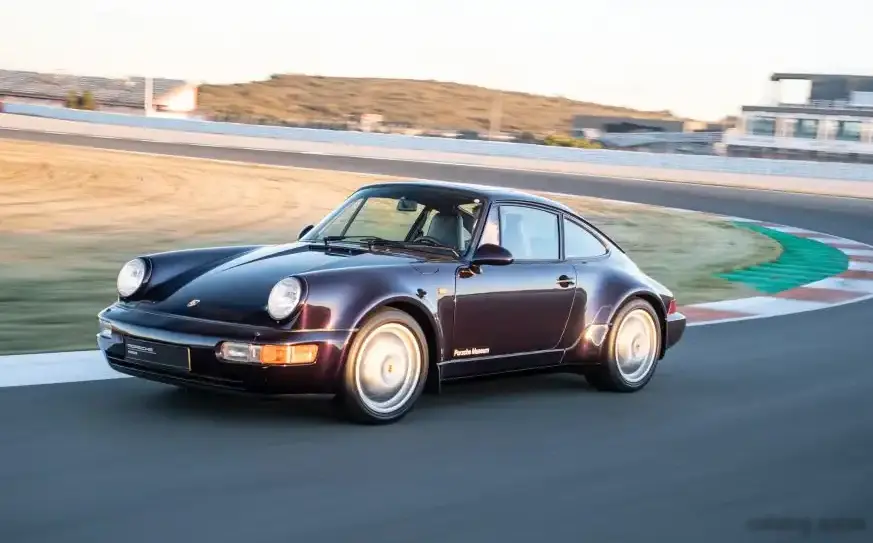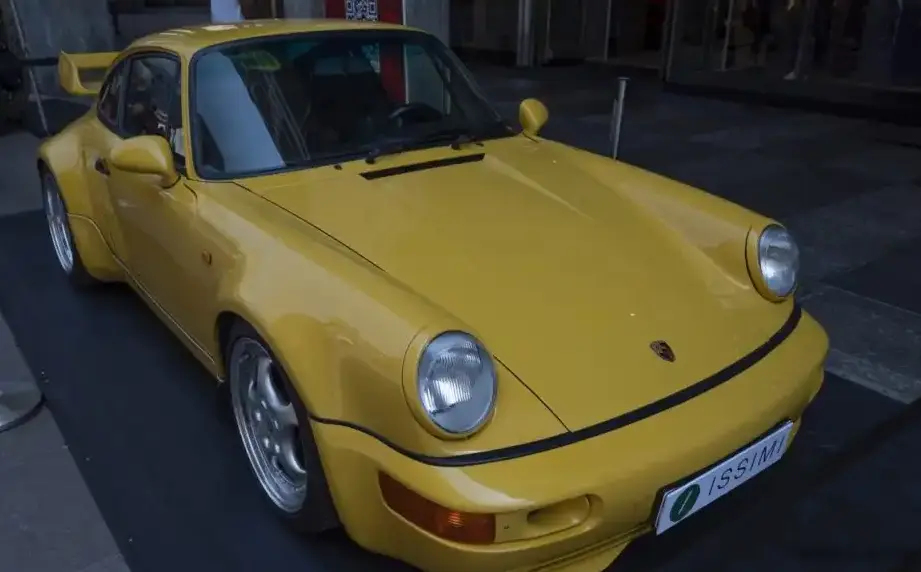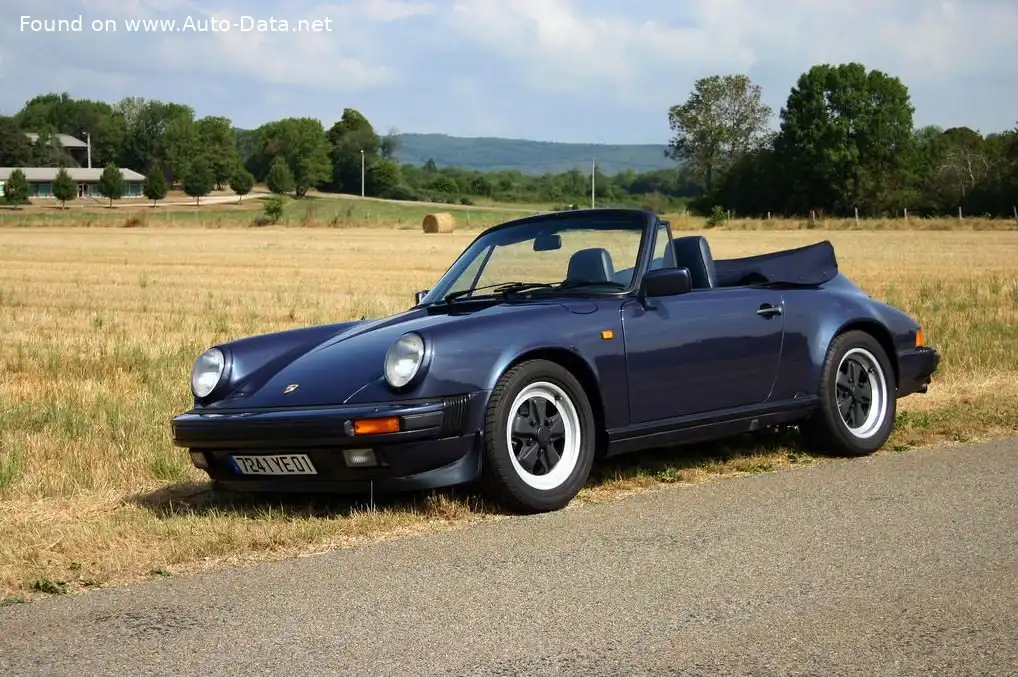
The Porsche 911 Cabriolet (G) 3.2 Carrera CAT, produced between 1984 and 1989, represents a pivotal point in the evolution of Porsche’s iconic sports car. This variant, part of the G-Series (1974-1989) and specifically utilizing the 930.21 engine code, was the final iteration of the original 911 silhouette before a significant redesign. It bridged the gap between the earlier, more raw 911s and the more modern 964 generation. The “CAT” designation refers to the catalytic converter, mandated in many markets during this period to meet increasingly stringent emissions regulations. Positioned as the mainstream Carrera model, it offered a balance of performance and relative affordability within the 911 range, sitting above the base Carrera but below the more potent 911 Turbo.
Technical Specifications
| Brand | Porsche |
| Model | 911 |
| Generation | 911 Cabriolet (G) |
| Type (Engine) | 3.2 Carrera CAT (207 Hp) |
| Start of production | 1984 |
| End of production | 1989 |
| Powertrain Architecture | Internal Combustion engine |
| Body type | Cabriolet |
| Seats | 4 |
| Doors | 2 |
| Fuel consumption (urban) | 15.5 l/100 km (15.2 US mpg, 18.2 UK mpg, 6.5 km/l) |
| Fuel consumption (extra urban) | 7.9 l/100 km (29.8 US mpg, 35.8 UK mpg, 12.7 km/l) |
| Fuel Type | Petrol (Gasoline) |
| Acceleration 0 – 100 km/h | 6.5 sec |
| Acceleration 0 – 62 mph | 6.5 sec |
| Acceleration 0 – 60 mph | 6.2 sec |
| Maximum speed | 235 km/h (146.02 mph) |
| Weight-to-power ratio | 6 kg/Hp, 165.6 Hp/tonne |
| Weight-to-torque ratio | 4.8 kg/Nm, 209.6 Nm/tonne |
| Power | 207 Hp @ 5900 rpm |
| Power per litre | 65.4 Hp/l |
| Torque | 262 Nm @ 4800 rpm (193.24 lb.-ft. @ 4800 rpm) |
| Maximum engine speed | 6500 rpm |
| Engine layout | Rear, Longitudinal |
| Engine Model/Code | 930.21 |
| Engine displacement | 3164 cm3 (193.08 cu. in.) |
| Number of cylinders | 6 |
| Engine configuration | Boxer |
| Cylinder Bore | 95 mm (3.74 in.) |
| Piston Stroke | 74.4 mm (2.93 in.) |
| Compression ratio | 9.5:1 |
| Number of valves per cylinder | 2 |
| Fuel injection system | Multi-port manifold injection |
| Engine aspiration | Naturally aspirated engine |
| Valvetrain | SOHC |
| Engine oil capacity | 13 l (13.74 US qt | 11.44 UK qt) |
| Kerb Weight | 1250 kg (2755.78 lbs.) |
| Fuel tank capacity | 85 l (22.45 US gal | 18.7 UK gal) |
| Length | 4291 mm (168.94 in.) |
| Width | 1652 mm (65.04 in.) |
| Height | 1320 mm (51.97 in.) |
| Wheelbase | 2272 mm (89.45 in.) |
| Front track | 1372 mm (54.02 in.) |
| Rear track | 1380 mm (54.33 in.) |
| Ride height (ground clearance) | 130 mm (5.12 in.) |
| Minimum turning circle | 10.95 m (35.93 ft.) |
| Drivetrain Architecture | Rear wheel drive |
| Number of gears | 5 gears, manual transmission |
| Front suspension | Spring Strut, Wishbone |
| Rear suspension | Trailing arm |
| Front brakes | Ventilated discs |
| Rear brakes | Ventilated discs |
| Steering type | Steering rack and pinion |
| Front tires | 185/70 R15 |
| Rear tires | 215/60 R15 |
| Front wheel rims | 6J x 15 |
| Rear wheel rims | 7J x 15 |
Powertrain & Engine Architecture
The heart of the 3.2 Carrera CAT is the 3.2-liter, naturally aspirated flat-six engine, designated 930.21. This engine represented a significant upgrade over the earlier 3.0-liter engines, offering increased displacement and improved torque. It featured a Bosch K-Jetronic fuel injection system, a mechanical system known for its reliability and consistent fuel delivery. The engine utilized a single overhead camshaft (SOHC) design per cylinder bank, operating two valves per cylinder. The boxer configuration, with horizontally opposed cylinders, contributed to a low center of gravity, enhancing handling. The 5-speed manual transmission (Type 915) was standard, providing a direct connection between the engine and the rear wheels. The transmission was known for its robust construction, but also for a sometimes notchy shift feel, a characteristic of many 915-equipped 911s.
Driving Characteristics
The 3.2 Carrera CAT offered a compelling driving experience. While not the fastest 911 variant, its 207 horsepower and 193 lb-ft of torque provided ample power for spirited driving. Acceleration from 0-60 mph took approximately 6.2 seconds, and it could reach a top speed of 146 mph. The manual transmission’s gear ratios were well-matched to the engine’s powerband, delivering strong acceleration in each gear. Compared to the earlier 3.0-liter Carreras, the 3.2 offered noticeably improved torque, making it more tractable in everyday driving situations. It also felt more refined than the earlier models, with reduced engine noise and vibration. Compared to the 911 Turbo, the 3.2 Carrera CAT was significantly less powerful and offered a more predictable, less demanding driving experience.
Equipment & Trim Levels
The 3.2 Carrera CAT came reasonably well-equipped as standard. Interior appointments included comfortable cloth or leather seats, a leather-wrapped steering wheel, and basic instrumentation. Optional extras were plentiful, allowing buyers to customize their cars. Popular options included a limited-slip differential, sport suspension, air conditioning, a sunroof, and upgraded audio systems. The Cabriolet version, of course, featured a fully automatic, electrically operated soft top. Interior trim options included various leather colors and wood trim accents.
Chassis & Braking
The 911 Cabriolet (G) utilized a steel unibody construction. Suspension consisted of torsion bar springs with shock absorbers, providing a firm but compliant ride. The front suspension employed a MacPherson strut design, while the rear featured a trailing arm setup. Braking was handled by ventilated disc brakes on all four wheels, offering excellent stopping power. Steering was via a rack and pinion system, providing precise and responsive control. The Cabriolet models received additional chassis reinforcement to compensate for the lack of a fixed roof, adding weight but maintaining structural rigidity.
Market Reception & Comparison
The 3.2 Carrera CAT was well-received by automotive critics. It was praised for its improved performance, refined driving experience, and relative reliability. Fuel economy, while not exceptional, was reasonable for a sports car of its era, averaging around 18 mpg in mixed driving. Compared to other trims in the 911 lineup, the 3.2 Carrera CAT offered a sweet spot between performance and price. It was more affordable than the Turbo but offered more power and refinement than the base Carrera. Its reliability was generally considered good, although maintenance costs could be high due to the car’s complex engineering.
Legacy
The Porsche 911 Cabriolet (G) 3.2 Carrera CAT remains a highly sought-after classic Porsche. The 3.2-liter engine is known for its durability and relatively straightforward maintenance. Well-maintained examples command strong prices in the used car market. The car’s timeless design, engaging driving experience, and iconic status continue to appeal to enthusiasts. It represents a significant chapter in the 911’s history, marking the end of an era and paving the way for the more modern 964 generation. The 930.21 engine, in particular, is regarded as one of the most reliable and enjoyable Porsche engines ever produced.